

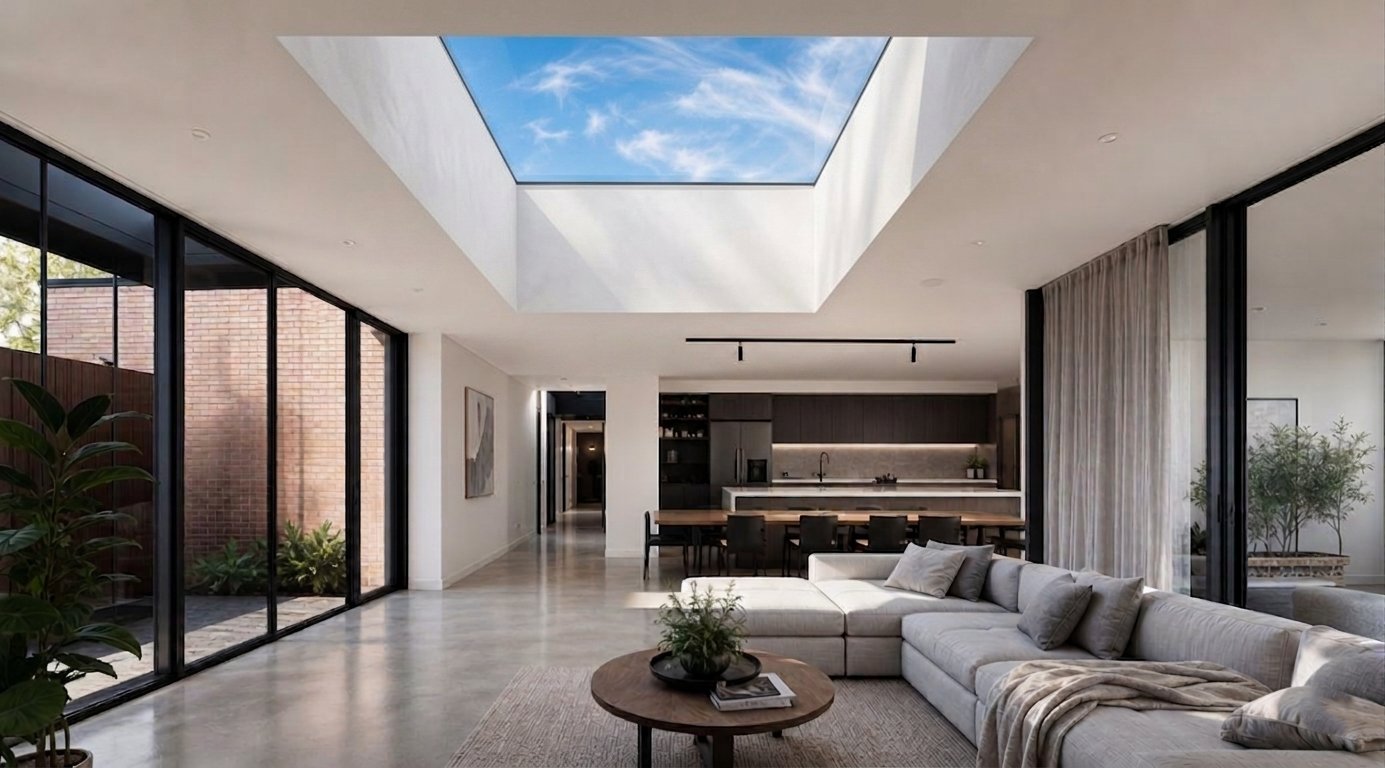
You're probably staring at a room that's almost right. The palette is clean. The joinery is sharp. The floorboards, stone, or polished concrete already give the space a modern Australian feel. But the ceiling still reads flat, and the natural light doesn't quite land where you want it.
That's where the frame starts to matter.
A black skylight frame changes the way a skylight is read inside the home. Instead of disappearing into the ceiling, it gives the opening definition. It turns daylight into a design feature and makes the view upward feel deliberate, almost like a curated architectural detail rather than a simple roof penetration. In the right room, it works like a picture frame for the sky.
Table of Contents
The Modern Skylight as an Architectural Centrepiece
In a modern renovation, the skylight often finishes the room rather than merely lighting it. Think of an open-plan kitchen with oak cabinetry, pale walls, black tapware, and a restrained material palette. A white ceiling can make most openings recede. A black frame does the opposite. It draws a crisp line around the light and gives the ceiling real presence.

That's why black has become such a strong move in modern skylight design. It pairs easily with contemporary Australian interiors because it already belongs to the language of the home. Window frames, shower screens, cabinet hardware, steel detailing, and door furniture often sit in the same visual family. The skylight frame then feels resolved, not tacked on.
Framing the sky instead of hiding the opening
A black frame creates contrast. Contrast gives shape. Shape gives drama.
In a hallway, that means the skylight reads as an intentional ceiling feature. In a bathroom, it can make a compact opening feel sculptural. In a living zone with a raked or high ceiling, it helps the skylight hold its own against other strong architectural lines.
A skylight can either disappear into the ceiling or define it. The frame decides which one happens.
For design-led projects, that distinction matters. The cleanest interiors usually rely on a small number of strong details repeated well. A black skylight frame does that job without asking for more decoration.
If you're exploring ideas for a cleaner, sharper ceiling line, this collection of modern skylight design inspiration shows why the frame finish deserves just as much attention as the glass size.
What a Skylight Frame Really Does
Stand under a finished skylight in a modern Australian home and the eye goes straight to the opening. What gives that opening its shape, shadow line, and sense of intent is the frame. The glass brings in daylight. The skylight frame is what holds the unit true, keeps the detailing clean, and turns a hole in the roof into an architectural feature.

It carries the load and keeps the opening true
A double glazed skylight puts real demand on the frame. It has to support the glazing, resist wind pressure, hold fixings properly, and stay square as the roof expands, contracts, and moves over time. If the frame twists or flexes, performance drops quickly. Sightlines look off, seals come under stress, and the finished opening loses that crisp, resolved look good interiors rely on.
Cheap units often reveal their weaknesses first. Not in the brochure. On the ceiling line.
It forms part of the weather defence
Leaks rarely start because rain somehow came through solid glass. They usually begin at junctions. The frame sits right at that junction between skylight and roof, so it has to work cleanly with the flashing system and accept fixings without creating weak points.
On site, I look for frames that are designed as part of an assembly, not as an isolated trim piece. Sealant alone is not a waterproofing strategy. A well-made frame helps create a controlled path for water to shed away from the opening and keeps the whole installation more predictable.
It shapes comfort, not just appearance
Frame choice affects how the skylight behaves once the novelty wears off and people start living under it every day. A poorly designed frame can contribute to heat gain, winter heat loss, drafts around the reveal, and condensation at the perimeter. A better frame supports the glazing properly and helps the unit perform like a considered part of the building envelope.
That has a design effect as well. The frame is what your eye reads at ceiling level. In a modern interior, especially one with black fixtures, window trims, or steel detailing, the frame can either disappear awkwardly or give the sky a clean border. For many homeowners researching what a skylight is and how each part works, this is the point where the frame stops looking like a technical afterthought and starts reading as part of the room.
It has to cope with renovation realities
A large share of skylight work in Australia happens in existing homes, not pristine new builds. That changes the job. Older rafters are not always perfectly straight. Ceiling depths vary. Roof access can be tight. Finishes already exist and need to stay neat.
In those conditions, frame quality shows up in the install and in the final appearance. A well-made frame gives the installer a stable base to work from and gives the homeowner a cleaner result from below.
Practical rule: If you treat the frame like a minor accessory, you'll usually pay for it later in fit, finish, or weather performance.
Why Black Aluminium Is the Modern Standard
If you want a skylight that looks sharp and stays sharp, black powder-coated aluminium is the material most modern projects keep coming back to. Not because it's fashionable for a season, but because it solves several problems at once.

Slim sightlines change the whole look
Aluminium has the structural strength to support a clean, crisp profile. That matters visually. Bulkier frames reduce the elegance of the opening and can make the skylight feel more like a utility item than part of the architecture.
Black powder-coated aluminium gives you a narrow, confident line. From inside, that reads as refined and intentional. From outside, it sits comfortably on both contemporary and updated older homes.
A black finish also does something white frames rarely manage. It gives depth to the opening. Instead of blending into the plasterboard, it creates a neat border that sharpens the view upward.
It suits Australian conditions better than many homeowners realise
Frame choice in Australia isn't just about insulation values on paper. Roof-mounted skylights have to deal with intense sun, rain events, wind exposure, coastal conditions, and the realities of retrofit work. The more useful question is often not “which material sounds good in a brochure?” but “which one stays stable, presentable, and dependable on a real roof?”
Australia's code environment reflects that. Roof-mounted windows and skylights must comply with AS 2047 and AS/NZS 4285, and coastal or high-wind locations need close attention to corrosion resistance, fixing details, and waterproofing, as outlined in this Australian compliance and frame-detail reference.
Where timber and plastic options fall short
Timber can look warm, especially in traditional interiors. But roof conditions are unforgiving. Maintenance matters more overhead than it does on a protected internal joinery detail. If the coating lapses or moisture gets where it shouldn't, timber can become work.
uPVC and similar plastic-based options can suit some budgets, but they often don't give the same architectural finish. In many modern interiors, they can read softer, thicker, and less resolved. That may be acceptable for a standard window. It's less convincing in a skylight that's meant to function as a design focal point.
A quick read through this powder coating guide helps explain why the finish itself matters just as much as the base material.
Black works across more interiors than people expect
Black isn't only for industrial-style homes. It works in minimalist spaces, coastal-contemporary homes, warm neutral schemes, and even heritage renovations with updated interiors. The reason is simple. Black outlines forms cleanly.
Use it with:
Stone and concrete finishes for a gallery-like feel
Timber ceilings or joinery to add contrast without clutter
White walls and pale floors when you want the ceiling opening to hold visual weight
Bathrooms with black fixtures for consistency across the room
The strongest skylight frames don't try to disappear. They make the opening look finished.
Structural and Waterproofing Essentials
A black skylight frame can make a ceiling opening look sharp, deliberate, and architectural. None of that holds up if the roof build is careless. The frame is only as good as the structure and waterproofing around it.
The opening has to be structurally right
A skylight frame should sit true from the start. If the opening is twisted, oversized, undersized, or poorly supported, the installer ends up forcing a precise product into an imprecise hole. That usually shows up later as uneven gaps, stressed seals, lining cracks, or a frame that never quite looks settled.
On site, I look for four things first:
Accurate opening size. The opening needs to match the product dimensions exactly, not a site estimate.
Proper support. Trimmers and surrounding members need to carry load cleanly without deflection.
Roof-specific detailing. Tile, corrugated metal, deck roofing, pitch, and water flow all change the installation method.
Square and level framing. A well-made black frame highlights errors fast. Crooked work is harder to hide when the frame line is crisp and visible from below.
For builders who like checklists, this framing inspection checklist is a good reminder that small framing errors often turn into bigger finishing and waterproofing problems.
Flashing controls where the water goes
Leaks rarely come from one dramatic failure. More often, water gets a small opening, follows gravity, and finds a weak point in the build-up around the frame. Good flashing design stops that by shedding water in layers and returning it to the roof surface before it reaches the interior.
That is why flashing has to suit the actual roof covering. Tile roofs need details that respect tile profile and overlap. Metal roofs need clean junctions that work with sheet profile, fall, and drainage. A generic flashing approach might look acceptable on install day, then struggle through heavy rain, leaf build-up, or wind-driven weather.
One detail that matters more than many homeowners realise is the back tray flashing detail. It carries water away from the high side of the skylight opening, where pooling and backup can start if the roof is detailed poorly.
Waterproofing and thermal performance work together
A skylight is part of the roof system, but it also shapes how the room feels. If the frame is installed cleanly, flashed properly, and sealed where it should be sealed, the result is drier, more stable, and visually better resolved. That matters even more with a black powder-coated aluminium frame, because sharp sightlines draw attention to every junction. Good detailing makes that strong frame look intentional, not patched into place.
Australian projects also need to account for energy performance requirements. Skylights affect heat gain, heat loss, and overall comfort, so the right specification and installation method matter well beyond keeping water out.
On site check: Ask the installer where water is directed after it hits the flashing. A good answer explains the drainage path, not just the sealant.
Choosing Your Perfect Vivid Skylight
Once the frame finish, material, and roof details are clear, the next choice is how the skylight will function in the room. Some spaces only need daylight. Others also need airflow, privacy control, or a solution where a traditional roof opening isn't possible.
Match the product to the room, not the trend
A fixed skylight suits rooms that need clean overhead light without any ventilation requirement. Living rooms, corridors, stairwells, and many kitchens fit this brief well. The visual effect is simple and strong, especially when the opening is proportioned carefully and the frame finish ties into the rest of the interior.
Operable skylights make more sense where air movement matters. Bathrooms, laundries, and upper-level spaces often benefit from being able to release warm air. Electric and solar-powered opening options are useful when the skylight is out of reach or when convenience is part of the brief.
For homeowners comparing materials and long-term upkeep before deciding, Superior Home Improvement's frame comparison gives a helpful broad overview of how different frame types are typically judged.
When a traditional skylight can't go in
Some rooms don't sit directly under the roof. Others have structural constraints, services, apartment conditions, or locations where a conventional skylight just isn't practical. That doesn't mean the ceiling has to stay visually dead.
Vivid Skylights offers a different path through its AuraGlow LED skylight range. It's designed for spaces where a traditional skylight can't be installed, and it projects light in a way that resembles a skylight effect while shifting colour through the day to suggest the changing sky. In design terms, it gives you the feeling of an illuminated ceiling opening without requiring the same roof conditions.
Practical buying filters
Use these criteria before you settle on a unit:
Room function. Is the room only dark, or is it also humid and poorly ventilated?
Roof access. Can the skylight be reached, or does it need powered operation?
Interior style. Will a black frame strengthen the room's existing materials and detailing?
Build context. Is this a new build, a re-roof, or a retrofit into an older home?
If you're weighing those variables, this guide on choosing the right skylight is a sensible place to narrow the options.
Installation, Maintenance, and Long-Term Care
A well-made skylight stays low-fuss if it's installed correctly and looked after with a bit of common sense. Most homeowners don't need a complicated maintenance routine. They need to know what to inspect, what to clean, and what signs deserve attention early.
DIY versus professional fitting
Some competent renovators are comfortable framing openings and following manufacturer installation instructions closely. That can work when the roof type is straightforward, access is safe, and the installer understands waterproofing details, not just carpentry.
Professional installation still makes sense for many projects, especially on tiled roofs, complex rooflines, or homes where finish quality and warranty confidence matter. A skylight can look deceptively simple from inside. On the roof, it's a precision job.
What to keep an eye on after installation
Black powder-coated aluminium is relatively low maintenance. It doesn't ask for the kind of ongoing treatment that some other materials can. Still, regular checks are smart.
Focus on:
Frame condition. Keep the frame clean and free of grime build-up.
Roof area around the unit. Remove debris that could interfere with water flow.
Internal lining. Watch for staining, swelling, or unexplained damp patches.
Operable hardware. Test opening and closing action so small issues don't linger.
If your skylight has tracks, screens, or moving parts, these track-cleaning tips from South Mountain Window Cleaning are useful for keeping operating areas cleaner without being rough on the finish.
Condensation and leaks are not the same thing
Many homeowners overlook that water near a skylight doesn't always mean rain is getting in. Bathrooms, kitchens, and tightly sealed homes can generate condensation on cooler surfaces, especially if ventilation is poor.
A true leak usually follows weather patterns. Condensation usually follows indoor humidity patterns. The difference matters because the fix is completely different.
If moisture appears only after certain weather, inspect the roof side. If it appears during everyday use of the room, inspect ventilation first.
Long-term care comes down to catching small issues before they become repairs. Clean the unit sensibly, keep drainage paths clear, and don't ignore subtle changes around the reveal or ceiling finish.
Your Skylight Frame Checklist and FAQs
A skylight frame should be chosen with the same care as flooring, tapware, or window joinery. It affects how the room looks, how the unit performs, and how confident you feel every time it rains.
Modern Skylight Buyer's Checklist
| Consideration | What to Look For |
|---|---|
| Frame material | Powder-coated aluminium with a finish that suits the interior |
| Frame colour | Black if you want the skylight to act as a defined architectural feature |
| Roof compatibility | A unit and flashing system suited to your roof type and pitch |
| Glazing performance | Double glazing and a specification appropriate to your climate and room use |
| Installation detail | Correct framing, squareness, sealing, and water-shedding design |
| Skylight type | Fixed for daylight, operable for daylight plus ventilation, alternative ceiling-light solution where roof install isn’t possible |
| Ongoing care | Low-maintenance finishes and access for cleaning or servicing |
FAQs
Can I choose a white frame instead of black
You can, and in some interiors it will blend more subtly into the ceiling. But if the goal is strong modern skylight design, black usually gives the opening more definition and visual intent.
Are black frames too harsh for smaller rooms
Not usually. In bathrooms, hallways, and compact kitchens, a black frame often sharpens the opening and makes it look more refined.
Do operable skylights suit modern interiors
Yes. If the frame profile is clean and the controls are integrated well, operable units can look just as resolved as fixed ones while adding ventilation.
Is the frame really more important than the glass
Both matter. But the frame influences structure, finish, waterproofing, and the visual quality of the opening. If the frame choice is poor, good glass won't rescue the overall result.
If you're comparing options for a black skylight frame or narrowing down a modern skylight design for your home, Vivid Skylights offers fixed, electric opening, solar powered opening, and AuraGlow LED skylight options with Australia-wide delivery. Start with the product details and sizing tools, then match the frame, function, and roof type to the room you want to improve.