

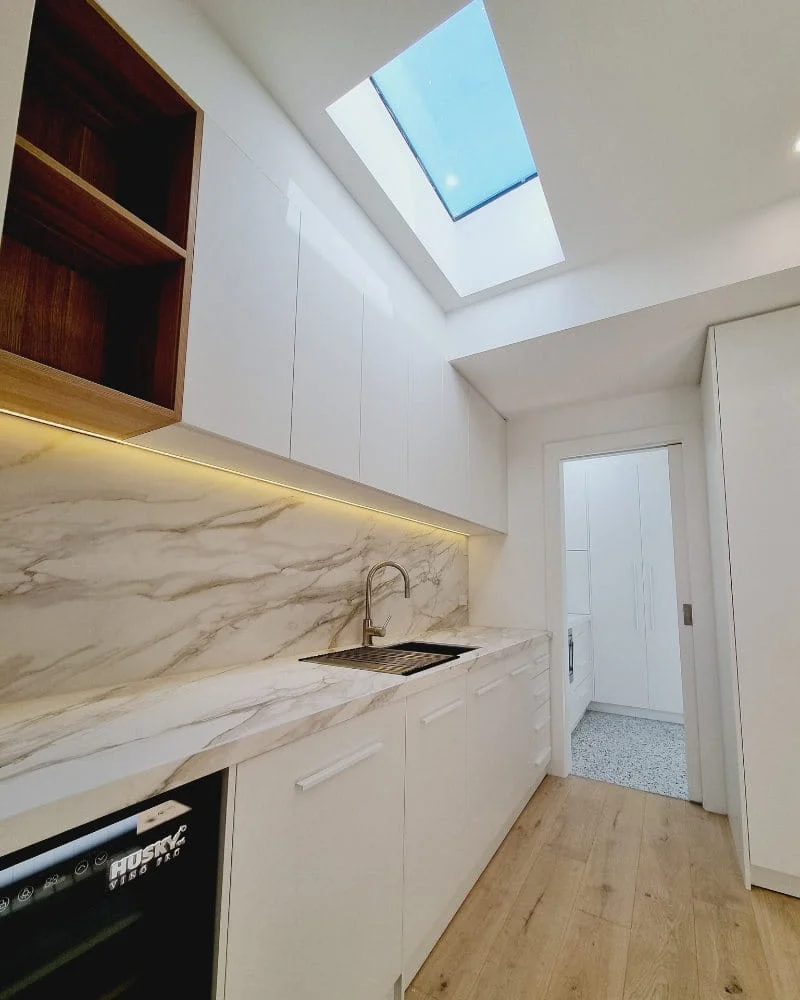
A lot of homeowners start in the same place. There’s one room that never feels quite right. It might be the kitchen that’s bright at the bench but gloomy at the back wall, a hallway that needs lights on during the day, or a bedroom under the roofline that feels boxed in. The space works, but it doesn’t feel connected to the sky outside.
That’s usually when choosing the right skylight moves from a nice idea to a practical renovation decision. The right unit can make a room feel larger, calmer and easier to use during the day. The wrong one can create glare, summer heat and an installation headache that could have been avoided with better planning.
In Melbourne homes, the decision is rarely just about picking a rectangle of glass. Roof pitch matters. Truss spacing matters. So does whether you want light only, light plus airflow, or a non-traditional solution where a roof opening isn’t realistic. If you’re also weighing budget, it helps to understand the broader factors behind skylight installation cost before you commit to a size or operating style.
Natural light changes how a home feels, but good results come from methodical choices. For a practical overview of what daylight can do for comfort and liveability, Vivid’s guide to the benefits of skylights is a useful starting point.
Table of Contents
Your First Step to a Brighter Home
The first decision isn’t brand, shape or controls. It’s identifying what the room is missing.
Some spaces need daylight because they feel dim even in the middle of the afternoon. Others already have enough light, but hold warm stale air near the ceiling. In some homes, the challenge is structural. There may not be a practical path for a conventional roof opening at all.
Start with the room, not the product
A dark hallway and a family room under a raked ceiling shouldn’t be treated the same way. The hallway usually needs soft, even illumination. The family room may need broader light spread, control of summer heat and a cleaner line of sight from inside.
A simple room check helps:
Look at how you use the space: A kitchen, bathroom, bedroom and stair void all behave differently.
Notice when the room feels worst: Morning glare, midday heat or all-day dullness point to different solutions.
Check the roof above it: Roof pitch, cladding and framing often narrow the sensible options quickly.
Practical rule: If you can describe the problem clearly, the skylight choice usually becomes much easier.
Common mistakes that create poor outcomes
The most common early mistake is chasing the biggest unit that will fit. More glass doesn’t always mean a better room. In Melbourne conditions, skylight performance depends on balancing daylight, heat control and placement.
The second mistake is choosing a unit before checking the roof framing. A skylight that clashes with common rafter or truss spacing can turn a straightforward job into an avoidable redesign.
The third is treating all roof types the same. Tiled and metal roofs, pitched roofs and low-pitch roofs each need compatible detailing if you want a clean finish and reliable drainage.
What a good decision process looks like
Homeowners get better results when they work in this order:
Define the goal
Confirm the room size and roof structure
Match the skylight to the roof type
Choose glazing and accessories based on how the room is used
That sequence keeps the project grounded in how the home performs, rather than how a product photo looks.
Define Your Goal Light Air or an Innovative Alternative
Some people want more daylight. Others want to vent heat from the top of the room. Others have a space where a standard skylight isn’t practical, but still want the visual effect of overhead light. Those are three different jobs, and they call for three different answers.

Start with the outcome you want
If your room already has enough air movement and feels dark, a fixed skylight is usually the cleanest option. It brings in daylight without adding moving parts, which suits living rooms, hallways and many kitchen layouts.
If the room traps warm air, an operable skylight earns its place. That’s particularly useful in bathrooms, upper-level bedrooms and open-plan spaces where hot air gathers at ceiling level. Electric and solar-powered openers give you that ventilation without needing a pole or manual reach. Around 30% of customers choose motorised skylights with rain sensors because they want more ventilation and a fresher, more passive-feeling home.
Then there’s the room where a traditional skylight just won’t work. Maybe the roof space is too constrained, or there’s another structural obstacle in the way. In that situation, AuraGlow LED skylights create the visual impression of a skylight without a conventional roof opening. They’re designed to project light in a way that feels overhead and natural, with colour shifts through the day that mimic the changing sky. If that’s the challenge you’re solving, the AuraGlow skylight alternative is the relevant option to look at.
Vivid Skylights At a Glance Fixed vs Operable vs AuraGlow
| Feature | Fixed Skylight | Operable (Electric/Solar) | AuraGlow LED Skylight |
|---|---|---|---|
| Main purpose | Bring in natural daylight | Bring in daylight and ventilation | Create a skylight effect where a traditional install isn’t suitable |
| Best for | Living rooms, kitchens, hallways, voids | Bathrooms, bedrooms, upper-storey rooms, humid spaces | Internal rooms, difficult roof spaces, design-led renovations |
| Airflow | No | Yes | No roof ventilation |
| Controls | None needed | Electric or solar powered opening | Integrated lighting control |
| Ideal when | The room is dark but otherwise comfortable | The room is dark and holds heat or moisture | You want the appearance of skylight-style overhead light without a standard roof penetration |
Some homeowners don’t need a venting skylight. They need a better-lit room. Others need the room to breathe. Keeping those two goals separate saves a lot of second-guessing.
One product can’t solve every problem equally well. Choosing the right skylight starts by deciding whether your main goal is light, air, or a convincing alternative when a conventional installation isn’t possible.
Sizing and Placing Your Skylight for Perfect Australian Light
A skylight can be the right product and still be the wrong result. I see that on Melbourne projects where the homeowner chooses a unit by appearance first, then finds the room feels patchy, glary, or hotter than expected because the size and position were never worked through properly.
Get the size right before you choose the model
A good starting point is to size the skylight in proportion to the room, then adjust for how the room is used. Rooms that already borrow decent light from windows usually need less overhead glazing. Internal corridors, walk-in robes, and back-of-house areas often need more help.
The practical questions are simple:
How dark is the room now?
How much wall glazing already exists?
Do you want soft ambient light or a stronger shaft of daylight?
Will the room ever need blackout control, such as a bedroom or media area?
That last point matters more than many homeowners expect. A skylight over a kitchen island can be generous and still feel right. The same size over a bedroom can become a problem without a blockout blind.
On Melbourne roofs, framing often makes the first sizing decision for you. Common truss and rafter spacing is around 600mm or 900mm, and that affects what fits neatly between members and what triggers extra structural work. Width is usually the sticking point, not length. A unit that lines up with the existing roof frame is often the difference between a straightforward install and a more expensive one involving reframing, extra labour, and delays.
For homeowners trying to connect daylight goals with practical room performance, Vivid’s guide to minimum lux levels under Australian standards gives useful context.
On site: The cleanest-looking skylight is often the one that suits the roof structure first, then the room size second. Forcing an extra-wide unit into a standard truss layout rarely improves the finished result.
Placement matters as much as size
Placement decides whether the light feels comfortable at 8am, 1pm, and late afternoon. That is why generic overseas advice can send Australian homeowners off course. Melbourne sits in the Southern Hemisphere, so orientation needs to be read properly for local sun patterns, not copied from a U.S. diagram.
In broad terms:
North-facing positions tend to suit living areas that want steady daytime light.
East-facing positions can work well where morning light is welcome, such as kitchens and breakfast areas.
West-facing positions need more caution because late sun can be harsh in summer.
South-facing positions often give a softer light quality, but the roof slope, glazing spec, and season still matter.
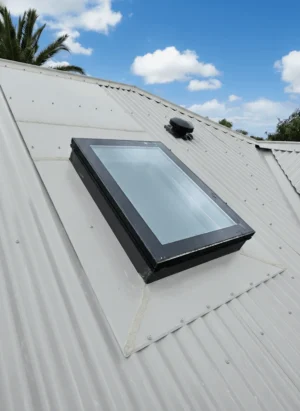
The room below matters just as much as compass direction. A skylight centred over a circulation path lights movement. The same unit placed over the edge of a room can leave the main seating or working area dull. In open-plan homes, two smaller skylights usually spread light more evenly than one oversized unit, especially across long kitchen and living zones.
I’ve seen this play out in Melbourne renovations where homeowners wanted one dramatic opening over a large family room. It looked impressive on the plan, but the brighter centre and darker corners made the room feel uneven. Splitting that area into two units often produces calmer, more usable light across the whole space.
Roof pitch also changes the outcome. A steeper pitch can sharpen the way light enters the room and alter how direct the sun feels through the day. On many Melbourne homes, standard pitched roofs around 22.5 degrees behave very differently from flatter roof sections, even with the same skylight size. That is one reason placement should be worked out on the actual roof plan, not just by room dimensions.
Here’s a short explainer that helps visualise how placement decisions affect the finished result:
If a traditional skylight position is compromised by framing, services, or an awkward roof layout, that does not always mean abandoning the goal of overhead light. In some homes, especially internal spaces or tricky renovation zones, the AuraGlow LED alternative gives a more controlled result than forcing a roof penetration into the wrong spot.
Matching a Skylight to Your Specific Roof Type
A skylight doesn’t sit in isolation. It has to work as part of the roof system. That means the right flashing, the right profile for the roof pitch, and the right fit for the roof material already on the house.
Tiled and metal roofs need the right flashing approach
Practical compatibility matters more than brochure language. Tiled roofs and metal roofs shed water differently, and the flashing has to suit that behaviour. A skylight that performs well on one roof type can become difficult to detail neatly on another if the flashing package isn’t designed for it.
For homeowners, the main thing to check is simple:
Tiled roof: Make sure the skylight system includes flashing designed for tile profiles.
Metal roof: Confirm the flashing matches the roof sheeting and drainage path.
Retrofit work: Look closely at how the unit integrates with the existing roof, not just the opening itself.
That compatibility is one reason many installers prefer systems made for common Australian roof conditions rather than adapting a generic import. If your home has a standard sloped roof, the pitched roof skylight range gives a clearer picture of what fits without forcing awkward detailing.
Pitched and low-pitch roofs need different skylight detailing
In Melbourne, common roof pitches are around 22.5 degrees for pitched roofs, while many flatter roof areas sit around 2 degrees. Those two conditions shouldn’t use the same assumptions.
On a pitched roof, water run-off is already doing much of the work. On a low-pitch or near-flat roof, the skylight design has to manage drainage much more actively. Frameless top glazing and water-shedding details become more important because pooled water is a bigger risk when the roof doesn’t move it away quickly.
A skylight can be suitable for a tiled roof, a metal roof, a pitched roof or a low-pitch roof. The detail that changes is how it’s integrated, not just the glass in the opening.
This is also where homeowners sometimes overcomplicate the choice. You don’t need a custom engineering exercise for every house. You need a unit that suits the roof material, fits the framing, and has flashing and drainage details matched to the pitch.
Decoding Glazing and High Performance Features
The glass is often what gets noticed first. What occupants live with, though, is the performance behind it. That includes insulation, summer heat control, maintenance, frame durability and how the skylight handles Australian conditions over time.
Why double glazing changes the result
A modern skylight should be treated as a building component, not just an opening for light. Double glazing helps moderate temperature movement through the unit, which matters in Melbourne where homes can move through cold mornings, warm afternoons and sharp seasonal swings.
Low-E coatings matter for the same reason. They help manage solar heat gain without giving away the daylight benefit. In practical terms, that means the room is more likely to feel balanced, rather than bright but hard to live in.
If you’re comparing skylights the way you’d compare quality windows, it helps to understand the basics behind glass performance ratings. This guide to energy-efficient window tips for DFW is US-based, but it gives a useful plain-English explanation of U-factor that homeowners can apply when assessing overhead glazing as well.
For a product-specific look at what that construction means in practice, Vivid’s double glazed skylights page outlines the core build approach.
Frame strength and bushfire performance matter
Australian homeowners also need to think beyond thermal comfort. In some areas, material choice is part of the safety conversation.
Bushfire resistance is a critical feature in Australia. Skylights compliant with AS 3959, using toughened glass and strong powder-coated aluminium frames, are important for homes in BAL-rated zones, where radiant heat can exceed 40 kW/m² during a fire event, as noted in this bushfire-focused skylight reference.
That’s one reason strong black powder-coated aluminium frames are specified so often. They do more than look sharp against a roofline. They add structural confidence in tough weather and in harsher site conditions.
A few performance features are worth prioritising:
Double glazing: Better thermal stability than basic single-pane alternatives.
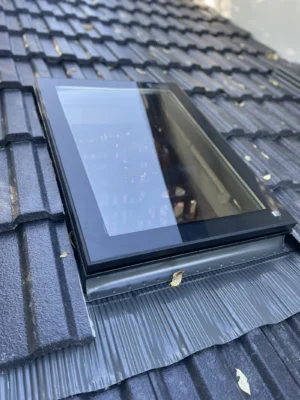
Low-E glass: Helps control heat gain while preserving useful daylight.
Self-cleaning glass: Reduces maintenance on a hard-to-reach part of the home.
Powder-coated aluminium framing: Supports durability and weather resistance.
Good glazing doesn’t only make a skylight look premium. It makes the room easier to live in all year.
Customising Your Skylight with Openers and Accessories
A fixed skylight changes the light in a room. The right opener or accessory changes how that room works on an ordinary Melbourne day.
I see this most often in bathrooms, upstairs bedrooms and living areas with raked ceilings. The homeowner starts out focused on daylight, then real use takes over. A bathroom needs steam to clear before mould starts building up on paint and cornices. A hot second storey needs a reliable way to dump trapped air in late afternoon. A bedroom needs darkness at 6 am in January, not just nice light in winter.
When an opening skylight is worth the extra cost
Operable units suit rooms that hold heat or moisture. In Melbourne homes, that often means ensuites, family bathrooms and upper-floor spaces under dark roofing. Opening the skylight gives warm, stale air somewhere to go, which can make the room feel fresher without relying only on mechanical extraction or air conditioning.
Motorised opening skylights are usually the practical choice once the unit is out of reach, which is common with higher ceilings and stair voids. At Vivid Skylights, the rain sensor is one of the features homeowners mention back to us most often after installation. It solves a simple problem well. You can ventilate the room, leave for work, and the skylight closes itself if the weather turns.
Flyscreens matter too. On paper they look like a small extra. In practice, they decide whether you will use the opening function on summer evenings.
The accessories that fix predictable problems
Bedrooms are the clearest example. Top light gives privacy and a softer feel than a wall window, but many homeowners hesitate for the same reason. Early light can ruin sleep. A blockout blind fixes that and makes the skylight usable year-round, not just pleasant during the day.
One Melbourne client in the eastern suburbs put a skylight over a master bedroom walkway, then added a blockout blind after the first summer. The feedback was straightforward. They loved the daylight, but they wanted control. Once the blind was fitted, the room worked the way they had hoped from the start.
If the goal is daylight without changing ventilation at all, an alternative like the AuraGlow LED skylight can be the smarter choice in some parts of the house. It suits internal bathrooms, hallways, laundries and ground-floor rooms where a traditional shaft is difficult or the roof position is poor. That is a different solution, but it belongs in the same decision because it solves a similar problem with less structural work.
A good fit usually looks like this:
Bedroom: Blockout blind for sleep control and seasonal flexibility.
Bathroom or ensuite: Opening skylight with flyscreen for moisture and airflow.
Living room with a high ceiling: Electric opening for day-to-day comfort without ladders or poles.
Tight roof cavity or difficult roof location: AuraGlow LED alternative where a conventional skylight is impractical.
Melbourne orientation still matters here, but the accessory decision should follow the room problem first. South-facing light is softer. West-facing light can be harsher in late afternoon. In a bedroom, that often points to adding blind control early instead of treating it as an afterthought. In a bathroom, ventilation usually matters more than light filtering.
Choose the accessory that solves the room’s weak point. That is what makes a skylight easy to live with five years later.
Your Final Skylight Decision Checklist
By the time you’re ready to order, the decision should feel narrower than it did at the start. You’re not choosing from every skylight on the market. You’re choosing the unit and accessories that suit one room, one roof and one purpose.
Seven questions worth answering before you order

Run through this checklist before you commit:
Goal: Do you need daylight only, daylight plus ventilation, or a non-traditional alternative?
Room size: Have you sized the skylight to suit the space rather than just the roof opening?
Framing: Have you checked the roof truss or rafter spacing first?
Roof type: Is the unit suitable for tiled, metal, pitched or low-pitch conditions?
Glazing: Are you choosing double glazing and appropriate glass performance for comfort?
Accessories: Will a blind, flyscreen or motorised opener improve how the room works?
Installation path: Are you clear on whether the job suits DIY planning or professional fitting?
A few final practical points matter too:
Budget: Include the skylight, flashing, finishing work and any accessories in the same decision.
Warranty: A 10-year leak-free warranty adds confidence, especially for retrofit work.
Timing: It’s often easier to plan the skylight alongside wider roof or ceiling works.
Good decisions on skylights are rarely complicated. They’re usually just specific.
Frequently Asked Questions About Vivid Skylights
Can you deliver outside Melbourne
Yes. Delivery is available nationwide across Australia, which is useful for homeowners, builders and renovators sourcing for projects beyond Melbourne.
What warranty do the skylights include
The range includes a 10-year leak-free warranty. That matters because the long-term result depends on more than the glass. It also depends on how confidently the skylight integrates with the roof.
What if a traditional skylight can’t be installed
That’s where AuraGlow LED skylights come into the conversation. They’re designed for spaces where a standard roof opening isn’t practical but the room still needs the visual effect of overhead light. The light presentation changes through the day to mimic the feel of the sky rather than behaving like a basic flat ceiling light.
How do I get pricing for supply or installation
The simplest path is to gather the room dimensions, roof type, roof pitch and any known rafter or truss spacing first. From there, you can narrow the likely skylight size and request pricing with much better accuracy. If you want a professional fitting estimate, use the online Skylight Pricing Estimator rather than guessing from product dimensions alone.
If you’re weighing fixed, electric, solar-powered or alternative skylight options for your home, Vivid Skylights is a practical place to compare sizes, roof-type compatibility and installation pathways for projects across Australia.