

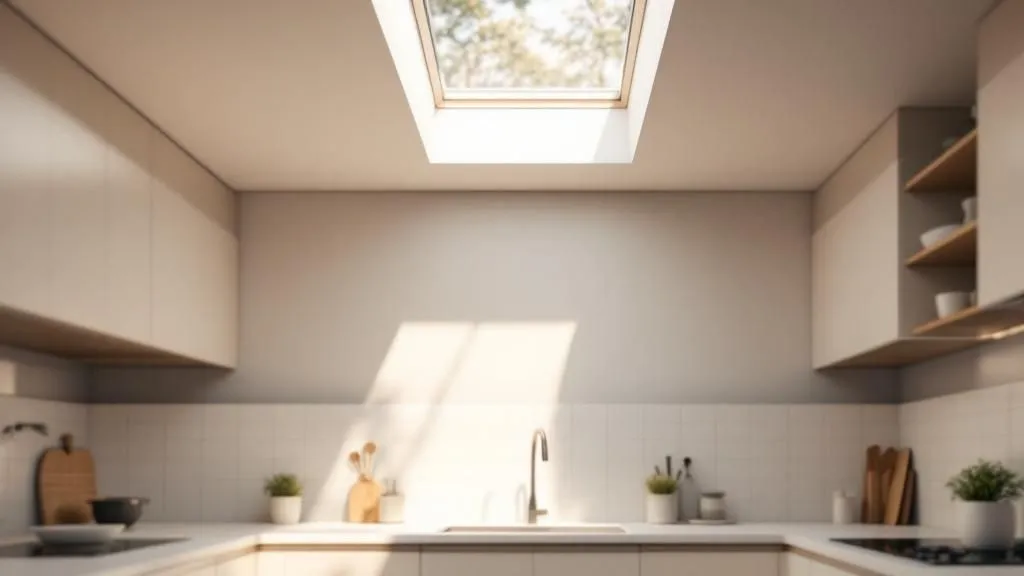
A dark room changes how a home feels. It becomes the place you pass through quickly, not the place you want to use. In many Australian homes, that problem isn’t poor decorating. It starts with the building itself, especially in older layouts where thermal performance mattered more than daylight.
That’s why natural light solutions for dark rooms have become such a practical renovation focus. In Victoria, 68% of homeowners cite insufficient natural light as a top renovation driver, and renovations incorporating daylighting solutions increased 32%, with homes fitted with high-quality skylights seeing average property value uplifts of 4 to 7% according to this Australian daylighting overview. If you’re weighing a broader renovation, ideas that expand your London kitchen with glass can also help you think about how overhead light and glazed additions reshape a room, even though the construction context differs from Australia.
For most homeowners, the question isn’t whether more daylight would help. It’s which solution will work with your roof, your ceiling, your budget, and the way you use the room. If you want a practical starting point, this guide on ways to brighten a dark room is a useful companion to the room-by-room advice below.
Table of Contents
From Gloomy to Glowing Transforming Your Home's Dark Corners
Installation Insights and Technical Considerations for Australia
From Gloomy to Glowing Transforming Your Home's Dark Corners
Most dark rooms share the same symptoms. You switch on lights in the middle of the day, colours look flat, and the room feels smaller than it is. Hallways, internal bathrooms, kitchens under deep eaves, and back rooms with limited glazing are the usual trouble spots.

The first step is to stop treating darkness as a styling problem only. Pale paint and mirrors help, but they can’t create daylight where the building envelope blocks it. Real improvement comes from changing how light enters the room, and overhead daylight is often the cleanest way to do that.
Start with the room’s actual limitation
A dark room usually falls into one of three categories:
Poor window access: The room has windows, but they’re too small, shaded, or badly oriented.
Deep plan location: The room sits far from an exterior wall, so side light never reaches the centre.
No window at all: Powder rooms, laundries, hallways, and walk-in robes often rely entirely on artificial lighting.
Once you know which one you’re dealing with, the right solution becomes much clearer.
Practical rule: If the room is dark in the middle of the day with curtains open, the room needs a daylight entry strategy, not just brighter bulbs.
What tends to work best in Australian homes
In Australian housing, especially older stock, roof-based daylighting often solves the problem faster than trying to enlarge wall openings. A roof opening can bypass fences, neighbouring walls, deep verandahs, and awkward orientation. That’s why skylights, operable roof windows, and sunlight tunnels show up so often in smart renovations.
The biggest change isn’t only visual. A gloomy room becomes usable. A kitchen bench becomes a place you can prep food without shadows. A bathroom feels cleaner. A hallway stops feeling like leftover space.
Natural light solutions for dark rooms work best when they’re chosen for the room’s constraints, not for trend appeal. That’s the difference between a minor lift and a room that feels properly transformed.
Why Natural Light is Essential for Your Health and Home
A brighter room looks better. Beyond appearances, it usually feels better to live in. Daylight affects mood, comfort, alertness, and how long you’re happy to spend in a space.
Australian health data also gives this issue more weight than many homeowners realise. Inadequate natural light is linked to increased odds of depression, and a 2024 study on south-east Melbourne homes found a 28% reduction in depressive symptoms after daylighting retrofits, as discussed in this wellbeing and daylight research reference.
Daylight affects more than appearance
People often notice the design benefit first. The room looks larger, cleaner, and calmer. But the deeper value is that daylight helps support more natural daily rhythms.
That matters in practical ways:
Morning use improves: Rooms feel easier to wake up in and easier to use early in the day.
Work-from-home spaces become more comfortable: Daylight tends to reduce that flat, artificially lit feeling that makes a room tiring.
Bathrooms and laundries feel fresher: Light changes how people perceive cleanliness and ventilation, even before any fan or window upgrade.
If you want a deeper look at the broader design and lifestyle upside, this guide to the benefits of natural light in the home is worth reading.
Dark rooms often create secondary problems
A dark room rarely stays a single-issue problem. Homeowners compensate in ways that create new compromises.
Common examples include:
Lights on all day: Functional, but it flattens the room and adds running costs.
Heavier reliance on cool artificial lighting: This can make already dim rooms feel harsher rather than brighter.
Reduced use of the room: The space becomes storage, overflow, or something you tolerate instead of enjoy.
Better daylight doesn’t just improve the room. It changes whether the room earns its floor area.
There’s also an emotional side to this. Homes with one or two persistently dark rooms often feel more closed-in than their actual size suggests. When those rooms are corrected, the whole house can feel more balanced.
That’s why natural light solutions for dark rooms are rarely cosmetic upgrades in practice. They usually solve a liveability problem that people have adapted to for years.
A Complete Guide to Natural Lighting Solutions
There isn’t one universal fix for a dark room. Some spaces need direct overhead daylight. Others need light borrowed from adjacent rooms, or better reflection of the daylight they already have. The best results usually come from matching the method to the room’s structure.

If you’re comparing products and applications, this overview of natural lighting products is a solid place to see the main categories in one place.
The main options and where they work best
Skylights give the strongest architectural change. They bring light from above, which reaches deeper into a room than side windows usually can. In kitchens and living zones, that overhead light tends to spread more evenly across benches, floors, and circulation space.
Sunlight tunnels or solar tubes are excellent where a full skylight won’t fit or where ceiling space is tight. In Australian conditions, sunlight tunnels can achieve up to 95% light transmission efficiency, and a standard 14-inch unit can effectively illuminate a 25m² room while reducing artificial lighting needs by 60 to 80% during the day, according to this sunlight tunnel guide. They’re especially useful for hallways, walk-in robes, small bathrooms, and other compact rooms.
Internal glazing helps when one room has access to daylight and the adjoining room doesn’t. This can mean glazed internal doors, highlight windows above doors, or fixed internal panels. It won’t create new daylight, but it can redistribute what you already have.
Clerestory windows suit homes where wall height and roof design allow high-level glazing. They work well in renovations with raked ceilings or split roof lines, but they’re usually more invasive than roof-based daylighting.
Light shelves, mirrors, and reflective finishes are support strategies. They don’t replace a daylight opening, but they make existing daylight travel further. In low-budget upgrades, these can be worthwhile. In windowless rooms, they won’t be enough on their own.
Use reflective design to multiply daylight, not to substitute for it.
Natural Light Solutions Compared
| Solution | Light Quality | Best For | Relative Cost | Invasiveness |
|---|---|---|---|---|
| Skylights | Strong overhead daylight with broad spread | Kitchens, living areas, bathrooms, larger dark rooms | Medium to high | Medium |
| Sunlight tunnels | Focused natural light delivered through a compact path | Hallways, robes, compact bathrooms, internal zones | Medium | Low to medium |
| Windows and glazed doors | Familiar side lighting, strongest near the opening | Exterior-facing rooms | Medium to high | Medium to high |
| Clerestory windows | High-level wall light with good reach | Renovations with suitable roof and wall design | High | High |
| Internal glazing | Borrowed light rather than new daylight | Adjacent rooms and corridors | Low to medium | Low to medium |
| Mirrors and reflective surfaces | Amplifies existing light only | Rooms that already receive some daylight | Low | Low |
A common mistake is trying to solve a structural daylight problem with decorating alone. Another is over-specifying a large roof opening in a tiny room where a compact daylight system would do the job with less disruption.
Good results come from proportion. The right unit, in the right part of the roof, with the right shaft treatment, will outperform a bigger but poorly positioned opening every time.
How to Choose the Right Skylight for Your Room
The right skylight depends on what the room needs most. Some spaces need pure daylight. Others need daylight plus airflow. That distinction matters more than most brochures suggest.

If you’re comparing formats and room fit, this guide on choosing the right skylight helps narrow the shortlist quickly.
Match the skylight to the room, not the trend
Kitchens often show the biggest visual improvement from skylights because they’re usually larger rooms with more surfaces to catch and reflect light. Overhead daylight spreads across joinery, splashbacks, benchtops, and circulation areas, so the change feels immediate.
Bathrooms and powder rooms are different. In a room with no windows, an operable unit often makes more sense than a fixed one because the gain isn’t only daylight. It’s also ventilation. That’s particularly useful in spaces where moisture, odour, and stale air build up quickly.
A practical example is a powder room project in Malvern where an operable skylight turned a dark, enclosed space into a room that felt bright and ventilated rather than closed off. That kind of result is hard to match with wall lighting alone.
For rooms that also need safe exit planning, especially below-ground conversions, Trademaster Construction’s basement safety guide is a useful reminder that daylight and ventilation don’t replace egress requirements.
What fixed, electric and solar opening units do differently
A simple way to choose is to think in terms of function.
Fixed skylights: Best where the room only needs more light. They suit living rooms, kitchens, stair voids, and circulation areas where ventilation isn’t the main problem.
Electric opening skylights: Best where convenience matters. They’re a strong fit for bathrooms, high ceilings, and rooms where manual access is awkward.
Solar opening skylights: Best where you want ventilation benefits with less dependence on internal wiring at the unit location. They’re especially practical for dark rooms with no windows.
The shaft design also matters. A skylight doesn’t just perform at the glass. The way the shaft opens into the room affects how the light spreads. A splayed shaft throws light wider and helps avoid the spotlight effect that can happen with a straight, narrow shaft.
Here’s a closer look at how operable systems work in practice:
If the room is windowless and regularly humid or stuffy, an opening skylight usually gives a better long-term result than a fixed unit.
The right answer isn’t always the most advanced model. It’s the one that solves the room’s actual problem cleanly.
Installation Insights and Technical Considerations for Australia
A skylight can be well made and still underperform if the installation is poor. Most of the avoidable disappointments happen at the design and detailing stage, not because the idea of a skylight was wrong.
The shaft design matters as much as the unit
If the ceiling is flat and the roof sits above it, the shaft becomes the path that carries light into the room. A narrow vertical shaft limits spread. A shaft that splays outward helps throw daylight across more of the space.
That’s one of the most effective detailing moves available in dark-room projects. It doesn’t need gimmicks. It just needs to be planned properly from roof opening to ceiling line.
Other installation details matter too:
Placement over use zones: Light should land where the room needs it, not just where framing is easiest.
Roof compatibility: The flashing and waterproofing detail must suit the roof type and pitch.
Ceiling finish: Lighter shaft linings generally help distribute light more evenly.
Australian climate changes the specification
Australian conditions are harder on skylights than many homeowners expect. The sun, UV exposure, rain events, and roof temperature swings all affect long-term performance. According to this Australian article on dark-room lighting solutions, harsh UV can cause standard skylight materials to degrade 30% faster than in temperate climates, while features such as powder-coated aluminium frames and self-cleaning glass can extend lifespan by over 40%.
That changes what “good value” means. A cheaper unit can stop being cheaper if it discolours, corrodes, or develops water management issues early.
For Australian projects, key specifications usually include:
Double glazing: Important for thermal comfort and condensation control.
Powder-coated aluminium framing: Better suited to weather exposure than less durable alternatives.
Top-glazed, anti-pooling design: Helpful on roofs where standing water can become an issue.
Quality flashing kits: Non-negotiable for weatherproofing, especially on tiled roofs.
A skylight should be chosen like an exterior building product, not like a decorative fitting.
The strongest installations balance three things at once. They bring in useful daylight, they manage weather properly, and they stay stable under Australian sun.
The Future of Light The AuraGlow LED Innovation
Some rooms cannot accommodate a conventional skylight. Apartments, lower floors of multi-storey homes, and internal rooms beneath another level don’t have a direct roof path. In those cases, the usual advice about shafts, glazing, and roof penetrations doesn’t help much.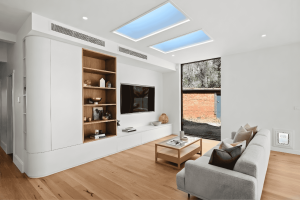
That’s where a ceiling-based alternative changes the conversation. The AuraGlow LED skylight is designed for spaces where traditional skylights can’t be installed but the room still needs the visual effect of overhead sky light.
When a real skylight isn’t possible
The best use cases are straightforward. You’ve got a dark internal room. There’s no practical route to the roof. You still want the soft overhead presence that makes a room feel open rather than lamp-lit.
That could be:
An apartment corridor
A ground-floor room under another storey
A walk-in robe or ensuite in a tightly planned layout
A renovation where structural work to the roof isn’t viable
In those settings, a simulated skylight effect can be more convincing and more comfortable than standard downlights or a central ceiling fitting.
Why the effect feels different from a standard ceiling light
The point isn’t brute brightness. It’s the illusion of natural overhead light and the visual calm that comes with it. AuraGlow changes colour through the day to mimic the shifting character of the sky, so the room feels less static than it would under ordinary artificial lighting.
That idea has obvious crossover with high-end lighting design. If you’re comparing how specialist lighting is planned in other settings, London lighting installation services offer a useful example of how layered lighting can be used to shape mood and usability, even though the product category is different.
AuraGlow suits people who want a design-led answer to a structural limitation. It doesn’t replace a real skylight where a real skylight is possible. It solves a different problem, and for the right room, that distinction matters.
Your Decision Checklist for a Brighter Home
If you’re deciding between options, keep the process simple and practical.
Ask these questions in order
Does the room have direct roof access?
If yes, a skylight or sunlight tunnel is usually the strongest daylight solution.Does the room also need ventilation?
If yes, look closely at an operable unit rather than a fixed one.Is the room small and enclosed?
Compact spaces often suit sunlight tunnels especially well.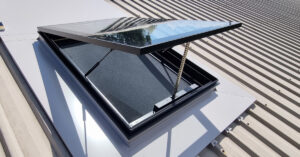
Is there no viable roof path at all?
That’s when a ceiling-based alternative such as AuraGlow becomes the logical option.Will the product suit Australian weather exposure?
Don’t compromise on materials, glazing, or flashing quality.
Keep the final decision grounded in use
Choose based on how the room functions day to day. A kitchen needs broad, usable light. A powder room often needs light and airflow. A hallway may only need a compact daylight boost. An internal room with no roof access needs a different answer altogether.
If you get those fundamentals right, natural light solutions for dark rooms stop being abstract renovation ideas and become very clear, room-specific upgrades.
If you’re ready to brighten a dark room properly, Vivid Skylights offers double glazed fixed, electric opening, and solar powered operable skylights, plus Australia-wide delivery for homeowners, renovators, and trade professionals. For spaces where a traditional skylight can’t be installed, the AuraGlow LED skylight range gives you a design-focused alternative. You can explore the gallery, use the Skylight Pricing Estimator, or get in touch for advice specific to your roof, room, and renovation plans.