

If you're planning a kitchen renovation, finishing a dark hallway, or designing a new home office, one question usually shows up early. Will this space be bright enough? Individuals often judge that by feel. Builders, certifiers, and lighting designers don’t. They use lux, and in Australia that question ties back to specific standards.
That matters for more than comfort. Poor lighting affects safe movement, task visibility, and how usable a room feels day to day. It also affects how a renovation performs once you move in. A space can look good on a plan and still feel gloomy in real life if the light level is wrong.
Natural daylight changes the conversation. A lot of guides on minimum lux levels australian standards focus on artificial fittings alone. In practice, daylight from a well-placed skylight often solves the problem more elegantly, especially in rooms that sit away from external walls or suffer from poor orientation. For homes, renovations, and light commercial work, that’s often the difference between merely complying and creating a room people enjoy using.
Table of Contents
Introduction Is Your Space Bright Enough?
People usually notice bad lighting after the job is finished. The kitchen looks sharp, the joinery is clean, the tiles are right, but the room still feels flat. Or the hallway works during the day with doors open, then feels cave-like the moment the house settles into normal use.
That’s why lighting should be checked before finishes are locked in. Minimum lux levels australian standards give you a baseline for whether a space supports safe movement and practical use. They don’t replace design judgement, but they stop guesswork from driving decisions.
For homeowners, the common trouble spots are internal bathrooms, corridors, laundries, walk-in robes, and studies pushed into leftover floor area. For builders, it’s often the same issue in a different form. A room can satisfy the floor plan and still underperform because glazing, orientation, ceiling depth, and roof layout were never considered together.
Practical rule: If a room relies on one small vertical window and sits deep in the plan, check the lighting early. Don’t wait until plaster is up to discover you needed overhead daylight.
Good lighting does two jobs at once. It meets a measurable threshold, and it makes the room feel open, calm, and usable. That’s where a lot of conventional lighting layouts fall short. They can hit a number at night but still leave the space feeling dim or closed in during the day.
What Are Lux Levels and Why They Matter
Lux measures the amount of light reaching a surface. In practice, it tells you whether a benchtop, floor, desk, or vanity has enough usable light for the way the room is used.
For compliance, lux gives builders, designers, and homeowners a common number to work to. For day-to-day use, it affects how confidently people move through a space and how comfortably they handle ordinary tasks. A corridor with low light feels uncertain. A bathroom mirror with poor light makes grooming harder. A study that only just scrapes through on paper can still feel gloomy for most of the day.
Australian lighting standards set baseline illuminance levels for different settings. One of the key benchmarks is 20 lux for safe movement through interior building spaces, reflected in AS/NZS 1680.0 and referenced by the NCC. That figure matters, but it should be read for what it is. A minimum.
Lux and Safety
The 20 lux threshold is aimed at safe passage, not high-quality living or detailed visual work. It helps reduce the risk of missteps and hesitation in circulation areas, especially in internal parts of a plan where side windows do very little.
A practical way to read lux levels is:
Below the minimum: people are more likely to slow down, misjudge edges, or avoid using the room without switching extra lights on
Around the minimum: the space may satisfy basic movement requirements
Well above the minimum: the room usually feels easier to use and more comfortable to spend time in
That gap between minimum and usable light is where many projects miss the mark.
Why minimum doesn’t mean good
I see this often in homes with internal bathrooms, long hallways, laundries, and walk-in robes. The artificial lighting layout may tick a compliance box, yet the room still feels closed in during the day because there is no meaningful daylight reaching the surfaces that matter.
That is the key trade-off. Electric lighting can meet a minimum at selected points and times. Natural daylight from above can improve the room for much longer parts of the day, reduce reliance on switches, and make the space feel larger and calmer at the same time.
For that reason, lux should be treated as the starting point for design, not the finish line. If a room is already marginal on natural light, a well-placed skylight often does more than help meet the standard. It can push the space past bare compliance into something that works, whether that means a fixed skylight for consistent daylight, an operable unit where ventilation is part of the brief, or an AuraGlow LED model for areas that still need dependable light after dark.
Quick Reference Guide Australian Minimum Lux Levels
A quick lux table is useful at the start of a project because it tells you whether you are dealing with basic circulation light, task light, or emergency light. It also shows where a room may technically pass while still feeling dim in daily use, which is often the point where daylight from above starts to earn its keep.

How to read the table
Treat these figures as a working reference. Some are baseline minimums tied to specific compliance settings. Others are practical design targets used where residential rooms do not have a single neat room-by-room lux figure in the standards.
That distinction matters on real jobs. A hallway may only need enough light for safe movement, while a study nook, vanity, or workbench needs a noticeably higher level to be comfortable to use. If the brief includes approvals or roof changes, check the wider documentation early, especially on renovation work that may also trigger building permit requirements for skylight installations.
Minimum recommended lux levels
| Area / Task | Recommended Minimum Lux (lx) |
|---|---|
| Interior building spaces for safe movement | 20 |
| Walkways and access areas during construction or renovation | 40 |
| General work areas during construction or renovation | 160 |
| General office tasks | 320 to 400 |
| Accessible areas for lip-reading and sign language | 150 |
| Accessible signage | 240 |
| Accessible general areas where applicable | 160 |
| Stairwells during emergency operation | 1 |
| General areas during emergency operation at floor level | 0.2 minimum, 0.5 average |
A few notes make the table easier to apply on site:
Interior circulation: 20 lux is a basic safety threshold for movement through indoor spaces, as noted earlier.
Construction activity: 40 lux for walkways and 160 lux for general work areas reflect the stronger lighting needed where people are moving, carrying materials, or working around hazards, as noted earlier.
Office tasks: 320 to 400 lux suits routine desk-based work better than circulation-level lighting.
Accessibility: Lighting for accessible spaces often needs to be brighter and more even, particularly where people rely on clear facial visibility, signage, and surface definition.
Emergency conditions: These values are deliberately lower because the goal is safe evacuation, not normal use of the room.
The practical takeaway is simple. Minimum lux is the floor. Good rooms usually need more, or they need the light in the right place. That is why skylights can solve problems that extra downlights do not fully fix. A fixed skylight can lift ambient daylight in a corridor or bathroom, an operable unit can improve both light and ventilation in a humid room, and an AuraGlow LED model can keep the space dependable after sunset where daylight alone will not cover the full operating hours.
The Key Australian Lighting Standards Explained
The numbers above don’t come out of thin air. In Australian practice, the main reference point is the AS/NZS 1680 series, which deals with interior lighting. Different parts of that series deal with general principles, interiors, and task-based applications.
Which standards matter most
For most residential and renovation questions, these are the documents that shape the conversation:
AS/NZS 1680.0 sets the general foundation for interior lighting and the minimum interior illuminance level discussed earlier.
AS/NZS 1680.2.4 is relevant when the discussion shifts to work areas and task lighting.
AS/NZS 2293.1:2018 deals with emergency lighting and exit signs.
NCC performance requirements tie the practical building outcome back to compliance expectations.
If you’re working on an approval pathway, roof alteration, or structural change, lighting doesn’t sit in isolation. It often intersects with permit and documentation questions. That broader approval context is worth understanding before the roof is opened, especially on renovation jobs that look simple at first glance. Vivid Skylights has a useful overview of building permit requirements that helps frame those practical steps.
What builders and owners usually miss
The common mistake is treating standards as a shopping list for light fittings. They’re not. They describe the lighting outcome a space should achieve.
That changes how you approach design. Instead of asking only how many downlights to install, ask where light is needed, what the room is used for, how shadows will behave, and whether daylight can carry some of the load during normal daytime use.
Another point gets overlooked often. A standard might set a minimum, but site conditions decide whether that minimum is easy or hard to achieve. Ceiling height, room depth, wall colour, glazing orientation, and roof structure all affect the result.
How to Measure Lux Levels in Your Space
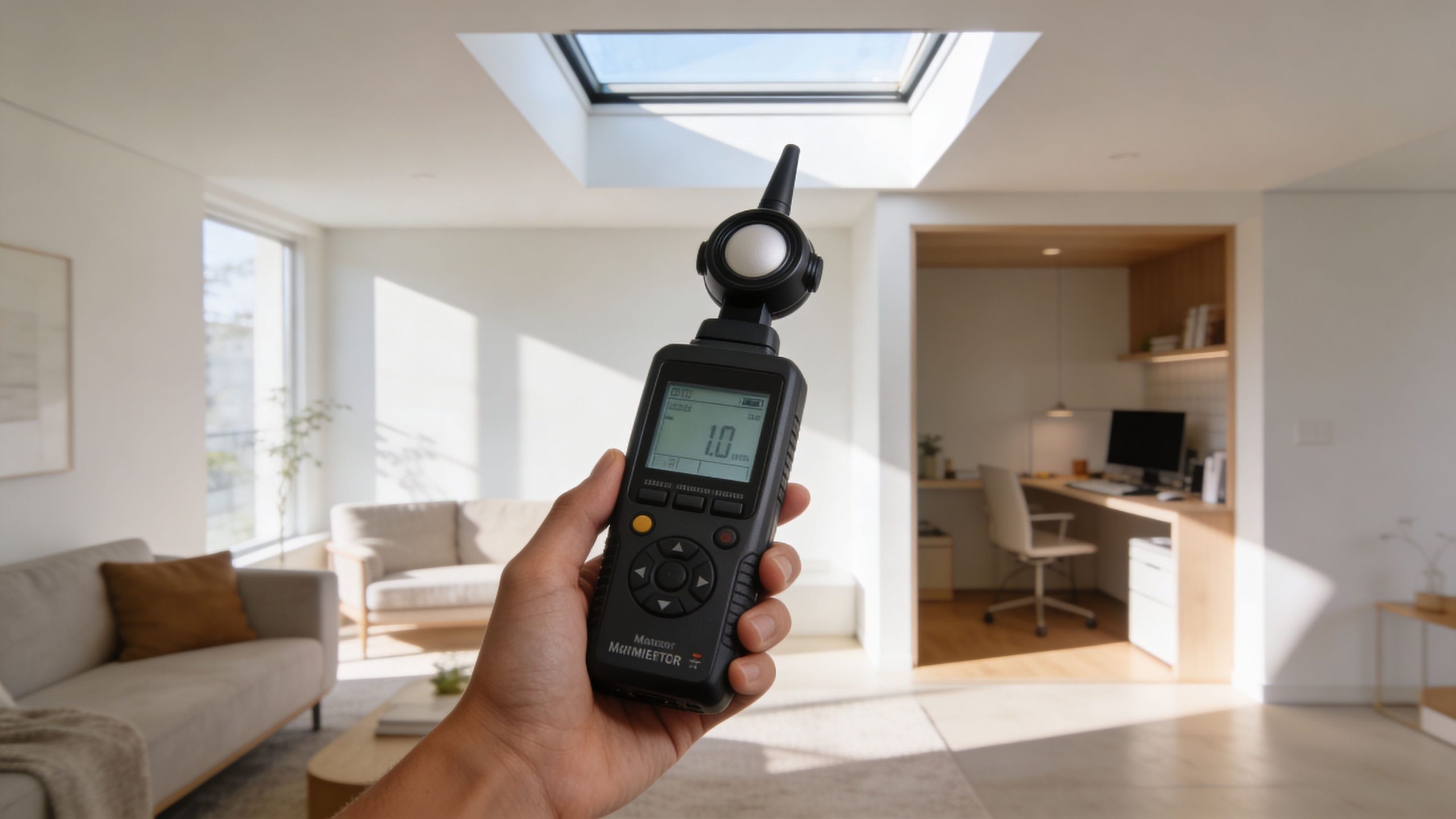
You don’t need a full lighting design package to get a useful reading. For an existing room, a basic measurement can tell you quickly whether the space is plainly underlit or roughly where it should be.
Two ways to check a room
These are common starting points:
A smartphone lux app
It’s convenient and good for rough comparison. If you’re checking whether one corner of a room is dramatically darker than another, it can help.A dedicated digital light meter
This is the better tool if you want readings you can rely on for design decisions, troubleshooting, or discussions with a builder or electrician.
Smartphone apps vary because the phone sensor wasn’t built as a calibrated measuring instrument. They’re fine for informal checks. They’re not what I’d trust when the margin is tight.
What to measure and when
Take readings where the task happens, not just in the middle of the room. Bench height matters in kitchens. Desk height matters in studies. Floor level matters when you’re checking circulation or safety.
Use a simple process:
Check at the right time: measure the room during normal use conditions
Take multiple points: don’t rely on one reading
Record weather conditions: daylight varies significantly
Test with doors and blinds as they’re usually used
If you’re planning a daylighting upgrade, reviewing different natural lighting products can help you match the solution to the room type before you commit to structural work.
A single bright patch doesn’t mean the room is well lit. What matters is how the space performs across the whole usable area.
Achieving Lux Standards Naturally with Skylights
A room can hit the minimum lux target on paper and still feel flat, patchy, or gloomy in daily use. Natural light changes that. In practice, a well-placed skylight often gives a room better usable brightness than adding stronger lamps to the ceiling or walls.
In deep rooms, light from above reaches further into the floor area and softens the hard contrast that side windows often leave behind. That matters in kitchens, hallways, bathrooms, and open-plan areas where people move through the whole space, not just the perimeter.

Where daylight works best
Skylights make the biggest difference where conventional glazing falls short. Common examples include rooms set well back from external walls, spaces with poor orientation, and layouts where cabinetry, partitions, or narrow openings block side light before it gets to the task area.
They are also useful on renovation and construction projects where daytime visibility matters and temporary lighting is doing too much of the work. As noted earlier, site and work-area lux targets still need to be met. Daylight can reduce the load on artificial lighting during working hours, but only if the skylight size, position, and shaft design are right.
That is the trade-off many homeowners miss. A larger unit is not automatically better. Put too much glass in the wrong location and you can create glare, summer heat gain, or a bright hot spot on the floor while the rest of the room stays dull. Go too small and the skylight reads as a feature instead of a real lighting solution.
Choosing between fixed and operable units
Fixed skylights suit spaces where the main goal is reliable daylight. They work well in living rooms, stairwells, corridors, and many kitchens because they keep the design simple and focus on light output.
Operable skylights suit rooms that need airflow as well as brightness. Bathrooms, laundries, and upper-floor spaces are the usual candidates. Releasing warm air at the ceiling can improve comfort at the same time as lifting daylight levels.
Vivid Skylights offers specific solutions for these different challenges. Fixed units suit clean daylighting upgrades. Operable models suit rooms where heat and moisture build-up are part of the brief. If roof access is available but the room still feels dim for most of the day, the practical benefits of skylights for natural lighting and comfort are usually stronger than clients expect.
Shading also needs to be considered early, especially under strong summer sun or in west-facing roof planes. If you are comparing ways to control brightness and glare in heavily glazed spaces, this guide to the best blinds for sunrooms is useful for planning comfort properly rather than trying to fix it later.
A second look at daylight performance helps when clients are still weighing up whether overhead glazing is worth it at all:
The Solution for Rooms Without Roof Access
Not every dark room sits directly under the roof. That’s the sticking point in many two-storey homes, apartments, ground-floor corridors, and interior rooms boxed in by structure above.
When a traditional skylight is not possible
In those cases, cutting a roof opening may not be an option at all. The room still needs light, and standard ceiling fittings often don’t create the same visual effect as daylight from above.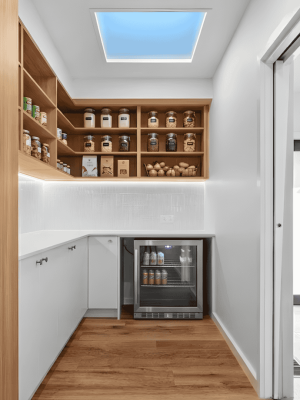
That’s where a well-designed artificial skylight can be the right answer, not a compromise. The goal isn’t just brightness. It’s to create the perception of an opening to the sky so the room feels less enclosed.
Why the effect matters as much as the output
The AuraGlow LED skylight approach stands out. Instead of behaving like a normal ceiling light, it projects the visual character of a skylight and shifts colour through the day to mimic the changing sky. That matters in spaces where people respond as much to the quality of light as to the raw level.
It suits projects such as:
Lower-floor hallways: where there’s no direct roof path
Internal bathrooms: where daylight feel matters but structure limits options
Commercial interiors: where the design brief calls for overhead light without roof penetration
The benefit is psychological as much as functional. A room that appears connected to the sky usually feels larger, calmer, and more inviting than one lit only by flat artificial fittings.
If you’re assessing whether that approach suits a specific room, Vivid Skylights has more detail on its artificial skylight range.
Understanding Compliance for Renovations and New Builds
Compliance sounds simple until a real project starts. On site, it usually means balancing the NCC, the relevant standards, the intended use of the room, and what can be built within the structure and budget.
What compliance means in practice
A cosmetic refresh usually won’t trigger the same lighting scrutiny as a major renovation or new build. But once you’re altering layout, changing room function, modifying roof structure, or lodging for approval, the lighting outcome matters more.
For builders and designers, the key issue is not whether a fitting schedule exists. It’s whether the completed space provides lighting appropriate to how the room will be used. That includes circulation, task areas, accessibility, and in some cases emergency considerations.
A practical workflow looks like this:
Define the room use clearly: hallway, kitchen, study, bathroom, office
Check the applicable performance pathway: especially where approvals are involved
Model or assess daylight early: before ceiling and roof decisions are locked
Use artificial lighting to complement daylight: not to patch over a poor envelope design
Why daylight is becoming more important
The compliance conversation has shifted. NCC 2022 energy efficiency updates place growing emphasis on reducing reliance on artificial lighting, and integrating daylight through high-performance double-glazed skylights challenges the old habit of meeting fixed lux minima with bulbs alone, as discussed in the GBCA lighting comfort draft referenced in the verified data.
That doesn’t remove the need for proper artificial lighting. It changes the design priority. More teams are treating daylight as a primary input, then using electric lighting to support the room when daylight drops away.
Good compliance work doesn’t ask, “How do we scrape across the line?” It asks, “How do we make the building perform properly in normal use?”
That’s a better standard to design by.
Worked Example From Dark to Dazzling
A common problem shows up in home offices and small studies. The room technically has a window, but the desk sits well back from it. By the time cabinetry, screens, and body shadow come into play, the workspace feels dull for most of the day.
A common renovation problem
Take a simple study under a pitched roof. Before any overhead daylight is introduced, the room often feels acceptable near the window and noticeably flat deeper inside. The owner adds a desk lamp, then brighter globes, then cooler colour temperatures, but the room still feels like a compromise.
That’s usually because the issue isn’t just intensity. It’s light distribution.

What changed after adding overhead light
Once daylight enters from above, the room usually stops behaving like a cave with one bright edge. The centre of the room lifts, shadows soften, and the desk becomes easier to use without relying on artificial light during the day.
This is also where project coordination matters. If the work forms part of a larger renovation or approval process, owners often need clarity on who signs off what and when. For that side of the process, this explanation of a building certifier is a useful companion read.
The practical lesson is simple. If a room lacks useful side light, adding more lamps rarely changes the feel of the space in the same way as bringing light in from above.
Frequently Asked Questions About Lux Levels
Do minimum lux levels mean a room will feel comfortable
No. Minimums are a floor, not a promise of comfort. A room can satisfy a basic threshold and still feel gloomy because of contrast, poor light distribution, dark finishes, or lack of daylight character.
Are emergency lighting levels the same as normal lighting levels
No. They serve a different purpose entirely. AS/NZS 2293.1:2018 requires emergency lighting of 0.2 lux minimum at floor level in general areas and 1 lux on stairs, maintained for 90 minutes after a power failure, and those values are for evacuation rather than normal tasks, as explained in this emergency lighting overview.
Can daylight count toward the lighting outcome
In practical design terms, yes, daylight absolutely matters. It can improve usability, reduce daytime dependence on artificial fittings, and change how a room performs in real life. For formal compliance questions, the exact pathway depends on the project type, documentation, and the relevant approval framework.
What if my room still feels dark after I meet the minimum
Check the quality of the light, not just the reading. Common reasons include:
Uneven spread: one bright spot and dull edges
Poor surface reflectance: dark walls, joinery, or flooring absorb light
Wrong source location: light arrives from the side when the room needs overhead illumination
Glare issues: brightness in the wrong place can make the rest of the room feel darker
For room-specific queries about product choice, installation details, and common planning questions, Vivid Skylights answers many of them in its skylights FAQ.
If you’re trying to improve a dark home, plan a renovation properly, or choose between fixed, electric opening, solar powered, or AuraGlow LED options, Vivid Skylights is a strong place to start. They supply double glazed skylights nationwide across Australia, with solutions for standard roof installations and for rooms where a traditional skylight isn’t possible.