

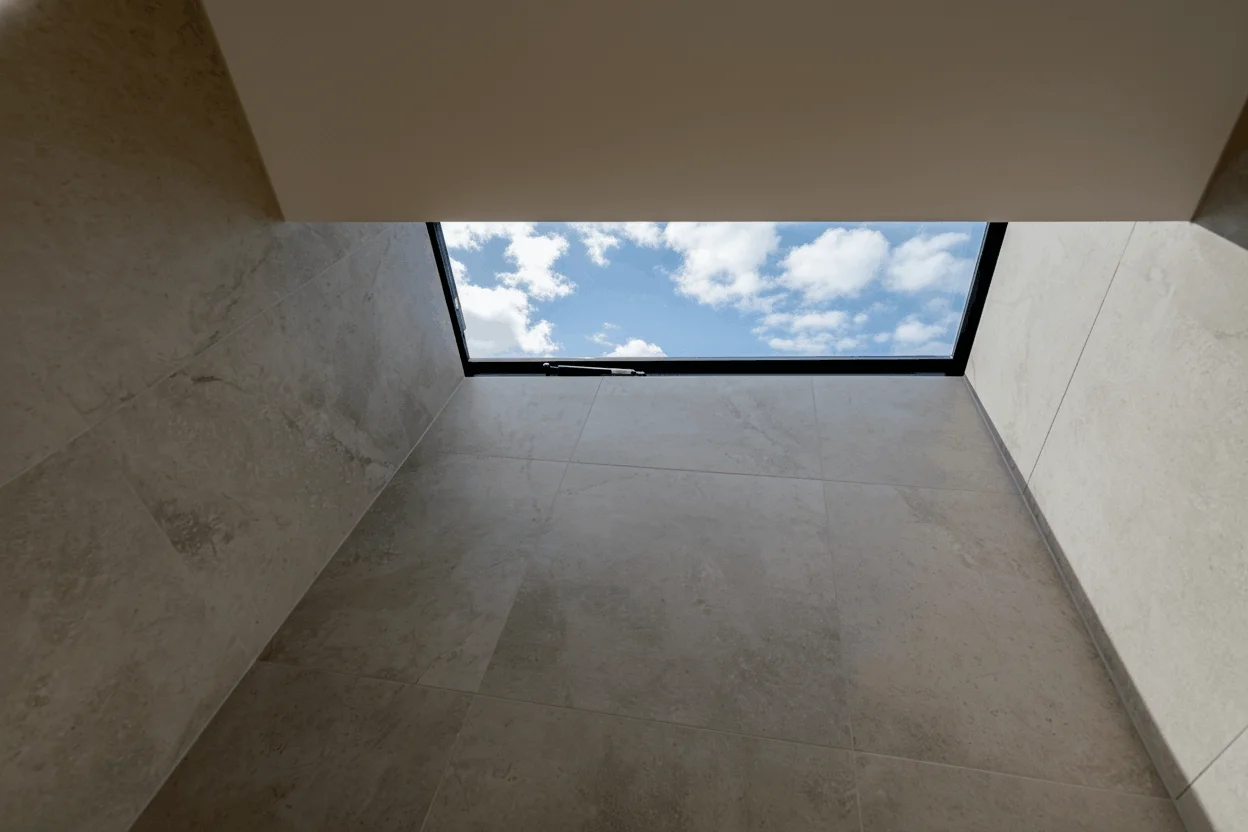
Most Queensland homeowners still hear the same warning: skylights make a room hotter. That advice was often fair when people were dealing with old acrylic domes, basic single glazing, and poor installation. In Brisbane and across Queensland, that kind of setup could absolutely turn a ceiling opening into a heat problem.
But that’s not the right question anymore. The essential question isn’t whether a skylight lets in heat. It’s whether the skylight controls solar gain, limits heat transfer, manages BNE humidity, and still gives you useful daylight. Queensland homes need more than “less sun”. They need daylight that works with the climate, not against it.
That’s why generic advice misses the mark. Queensland’s need is not just less heat, but controlling solar gain while still capturing winter daylight and reducing reliance on air conditioning in a state where cooling loads are often dominant, as noted in this Queensland skylight guidance. Roof orientation, glazing choice, and ventilation matter far more than the old blanket statement that “skylights are hot”.
Table of Contents
The Skylight Myth Busting Heat in the Sunshine State
The fear is real. If you’ve lived under an old skylight that cooked the room below by lunch time, you’re not imagining it. Older skylights often admitted harsh overhead sun with very little thermal control, and in Queensland that can feel punishing.
Modern skylights work differently. The glass, coatings, seals, frame design, and ventilation options all change the result. A current, properly selected unit isn’t just a hole in the roof. It’s part of the home’s thermal envelope.

What used to go wrong
The old problems were predictable:
Thin glazing: Heat moved through the skylight fast, so the room warmed up quickly.
No control layer: Without Low-E coatings or solar tints, overhead sun came in hard.
Poor installation: Gaps, weak flashing, and badly insulated shafts let heat and moisture move where they shouldn’t.
No ventilation option: Warm air built up high in the room and had nowhere to go.
A lot of homeowners still judge skylights by those older failures.
What works in Queensland now
For energy efficient skylights for queensland climate, the goal isn’t maximum sun at any cost. The goal is balanced daylight with controlled heat entry. That means choosing glazing and operation style for Brisbane’s long warm season, not just buying whatever looks bright in a showroom.
Practical rule: In Queensland, a skylight should be treated like a climate-control product first and a daylight product second.
That’s why product selection needs to be tied to location, roof pitch, room use, and exposure. A hallway, bathroom, raked living room, and upstairs landing all behave differently once summer heat settles in.
If you’re comparing options for a local project, the first useful step is reviewing skylight types designed for Brisbane homes and roof conditions. The right unit can brighten a room without recreating the old “greenhouse ceiling” problem people worry about.
The trade-off most people miss
A darker room isn’t automatically a cooler room. If the space stays shut up, needs lights on all day, and traps warm stale air near the ceiling, comfort can still be poor. Good skylight design in Queensland is about choosing less unwanted heat, not less daylight altogether.
That distinction matters. It’s the difference between a skylight that adds stress in summer and one that helps the house feel lighter, calmer, and easier to cool.
The Science of Cool Daylight Low-E, U-Value, and SHGC
Queensland skylight performance is decided less by brand claims and more by three specs: Low-E glass, U-Value, and SHGC. Get these right and you can bring in daylight without turning the ceiling into a heat source. Get them wrong and the room below can feel harder to cool for most of the year.

A useful starting point is the glazing numbers themselves. The Australian climate glazing overview explains why lower U-Values and lower SHGC ratings are generally better suited to hot Australian conditions, especially where roofs take sustained summer sun.
U-Value means how quickly heat crosses the skylight
U-Value measures the rate of heat transfer through the whole skylight assembly, including glass and frame. Lower is better. A lower number means outdoor heat has a harder time pushing through into the room, and indoor cooled air has a harder time escaping.
That matters more in Queensland than many homeowners expect. Roof surfaces run hot, ceiling cavities store heat, and the skylight sits right in the line of it. If the unit has a high U-Value, the glass does a poor job of resisting that temperature difference, so the room feels the load sooner.
A simple way to read it is this. U-Value is the insulation score.
SHGC controls how much of the sun’s heat gets in
SHGC, short for Solar Heat Gain Coefficient, measures how much solar radiation passes through the skylight as heat. Lower SHGC means less of that overhead sun ends up warming the room below.
This is often the number that makes the biggest difference in a Queensland summer. Direct sun through a roof window is harsher than side light through a wall window because the sun angle is higher and the exposure is more intense. In practical terms, SHGC is the bouncer at the door. It decides how much solar heat gets through with the daylight.
In a Queensland home, daylight alone is not the goal. Controlled daylight is.
What Low-E glass actually does
Low-E stands for low emissivity. The coating is microscopically thin, but its job is straightforward. It reflects a portion of infrared heat while still allowing visible light to pass through, which is why a good skylight can feel bright without feeling punishing.
That is the part many people miss. Clear glass can look impressive in a showroom and still perform poorly on a hot roof. Low-E coatings shift that balance by reducing radiant heat transfer, which is exactly what you want in a climate with long hot seasons and high humidity.
Here is the practical breakdown:
Low-E coating: reflects part of the infrared heat that would otherwise pass into the room
Double glazing: slows conductive heat flow by adding an insulating space between panes
Tinted or reflective glazing: cuts glare and trims peak solar load where exposure is severe
If you want the technical detail without the jargon, this guide to how Low-E skylight glass works explains the coating in plain English.
Why these numbers matter more in Queensland
In a cooler climate, a skylight spec sheet might be mostly about retaining warmth. In Queensland, the job is different. The skylight has to manage harsh sun, high roof temperatures, and muggy conditions without sacrificing the daylight that makes the room usable and pleasant.
That is why I tell homeowners to read the spec label before they look at frame colour or shape. U-Value tells you how well the unit resists heat flow. SHGC tells you how aggressively the sun will load the room. Low-E is one of the key tools that improves both.
The right combination depends on the room and the roof above it. A west-facing upper-level hallway, a bathroom under dark roof sheets, and a bright kitchen all behave differently. The common rule is simple. In Queensland, a skylight should earn its place by controlling heat as well as delivering light.
Harnessing Airflow with Ventilated Skylights
A skylight that only adds light can still leave a Queensland room hot, sticky, and unpleasant by mid-afternoon. In this climate, the better question is not just how much daylight you want. It is how the skylight will help dump heat and moisture that collect at ceiling level.
That matters most in Queensland homes with raked ceilings, upstairs rooms, dark roofing, or wet areas that never seem to dry properly. Hot air rises and gets trapped at the highest point. Humid air does the same. An operable skylight gives that built-up air an exit path, which is why opening units often outperform fixed ones in bathrooms, kitchens, and upper-storey living spaces.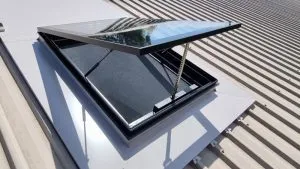
Why the highest point matters
Ceiling-level heat behaves like a lid sitting over the room. You may have the air conditioner running, but the top layer still stores warmth and moisture. Open a skylight at the highest point and that layer can escape first. Lower windows or doors then pull replacement air through the house.
That is the stack effect in plain terms. It works like opening the release valve at the top of a hot, steamy room.
In practice, homeowners notice the change quickly. The room feels less heavy. Steam clears faster after showers. Upstairs spaces are easier to settle down in at night.
Rooms where operable units earn their keep
Some rooms need more than daylight. These are the places where an opening skylight usually justifies the extra spend:
Bathrooms: lets steam out before it lingers on paint, mirrors, and ceilings
Kitchens: releases heat, cooking vapour, and odours that gather overhead
Upper-floor living areas: vents the hottest air that builds through the day
Bedrooms with poor cross-flow: helps purge warm air before sleep
Laundry areas: improves moisture removal where damp air tends to hang around
If a room always feels hotter above head height, or stays muggy long after the source of moisture is gone, a fixed unit is often the wrong call.
For homeowners comparing options, it helps to review skylight designs built for natural roof ventilation and airflow control.
Electric and solar operation make a difference
An operable skylight only works if you use it. That sounds obvious, but it is where many manual units fall short in real homes. If the skylight is high over a stairwell or above a kitchen island, people stop opening it regularly.
Electric and solar-powered models solve that practical problem. They make it easy to vent the room for twenty minutes in the morning, clear steam after a shower, or purge trapped heat late in the day. Rain sensors also matter in Queensland. They remove the worry about sudden storms rolling through while the skylight is open.
A short demonstration helps show how this kind of operation works in real homes:
What doesn’t work well
The common mistake is matching the skylight to the light problem only, not the room’s moisture and heat load. I see this a lot in bathrooms and upstairs voids. The homeowner gets more daylight, but the room still feels stale because the trapped air has nowhere to go.
Air conditioning helps with temperature. It does not always fix that damp, layered feeling near the roofline. In Queensland, that distinction matters. The best-performing skylight for a humid home often does two jobs at once. It brings in daylight and lets the house breathe.
Selecting Your Ideal Vivid Skylight for Queensland
The right skylight depends on what the room needs most. Some spaces need controlled daylight only. Others need daylight plus active heat and moisture relief. And some rooms can’t take a traditional roof window at all, which is where a non-traditional lighting solution becomes useful.
The cleanest way to decide is to match the skylight type to the room, not the other way around.
Vivid Skylights Solution Finder for Queensland Homes
| Skylight Type | Best For | Key Benefit for QLD | Models |
|---|---|---|---|
| Fixed skylight | Hallways, stairwells, living areas that already ventilate well | Daylight without adding an opening where it isn’t needed | Double glazed fixed skylights |
| Operable skylight | Bathrooms, kitchens, upper-storey rooms, humid areas | Releases trapped hot air and helps manage moisture | Electric opening skylights, solar powered opening skylights |
| AuraGlow LED skylight | Ground-floor rooms, apartments, internal spaces where roof installation isn’t possible | Creates a skylight-like visual effect where a traditional unit can’t be installed | AuraGlow LED skylight range |
If you want to compare actual options, the full Vivid Skylights range shows fixed, electric opening, and solar powered opening models.
Fixed versus operable
A fixed skylight suits spaces that are naturally dark but don’t have a strong ventilation problem. Think central corridors, walk-in robes, or a living area that already has good cross-breezes. In those cases, the skylight’s main job is clean daylight.
An operable skylight is a better fit where heat and humidity linger. Bathrooms and kitchens are the obvious examples, but upstairs voids and enclosed family rooms can benefit just as much. In Queensland, that extra function often matters more than people expect.
Orientation matters more than most buyers think
The same skylight can behave very differently depending on where it sits on the roof. In Queensland, overhead sun is intense, so orientation should be considered early.
General guidance for Australian homes often favours placements that reduce harsh summer exposure while still providing useful daylight. In many homes, a softer orientation can be more comfortable than placing a skylight where it takes the strongest midday load. That’s especially true in Brisbane, where light quality matters, but solar gain control matters more.
When a traditional skylight isn’t possible
Some homes don’t have a clean roof path above the room that needs light. You might have another storey overhead, complicated framing, services in the ceiling, or a location where cutting the roof just isn’t practical.
That’s where the AuraGlow LED skylight has a legitimate role. It isn’t a roof window. It’s a lighting product designed to create a skylight-style effect, with light that changes colour throughout the day to mimic the shifting feel of the sky. For internal rooms, apartments, and tricky floorplans, that can solve a design problem without pretending to be something it isn’t.
The smartest skylight choice is often the one that suits the room’s limits, not the one with the biggest visual impact on paper.
Maximising Performance with Smart Features and Installation
A skylight’s performance doesn’t stop at the glass. The frame, blind, flashing, shaft detail, and installation quality all influence whether the finished result feels composed or compromised.
That’s why two skylights with similar glazing can perform very differently once they’re installed in real roofs.
A documented Queensland case study showed that a homeowner who installed two Low-E glass ventilated skylights achieved a 15% reduction in monthly energy bills during the Queensland summer, and high-performing skylights in Australia can reach up to 5 stars for summer cooling performance under WERS, according to this skylight energy efficiency case study and WERS overview.
Smart features that help in real life
A skylight should give you control, not just exposure. Features worth paying attention to include:
Block-out blinds: These help manage intense light during heatwaves or in rooms where you want more control later in the day.
Rain-sensing automation: This matters in Queensland because summer weather can shift quickly.
Well-designed flashing kits: Proper flashing protects against water entry and helps keep the opening weather-tight.
One practical example in the market is Vivid Skylights, which supplies double glazed fixed and operable skylights, including electric and solar powered opening models, and can deliver nationwide across Australia.
Installation quality decides whether the specs survive the build
A skylight can have strong paper specs and still disappoint if the opening is poorly detailed. Weak flashing, gaps around the frame, or a badly insulated shaft can undo much of the benefit you paid for.
That’s why professional planning matters even when the product itself is well designed. For homeowners who want a broader read on what installers should account for when cutting into a roof, this skylight installation guide for Sydney homeowners is useful because the core flashing and weatherproofing principles apply well beyond Sydney.
For product-specific fitting information, Vivid also provides guidance on the installation of skylights.
Think in systems, not single parts
A high-performing skylight is a system. Glass controls solar gain. The frame limits conduction. The blind adds user control. The flashing protects the roof. The install quality keeps the assembly sealed and stable.
A skylight doesn’t fail because one brochure spec looked wrong. It usually fails because the whole assembly wasn’t treated as one thermal and weatherproof system.
That systems view is what separates a comfortable Queensland skylight from an expensive source of glare, heat, or leaks.
Your Bright, Comfortable, and Efficient QLD Home Awaits
Queensland homeowners don’t need to choose between a brighter home and a cooler one. They need a skylight strategy that respects the climate. That means controlling solar gain, paying attention to U-Value and SHGC, using Low-E glass properly, and adding ventilation where humidity and trapped heat are part of daily life.
That’s also why the old advice about skylights being “too hot” no longer tells the full story. Outdated products caused plenty of those complaints. Modern units, selected well and installed properly, can do the opposite. They can reduce dependence on artificial lighting, help release built-up hot air, and make difficult rooms feel more liveable through summer.
For energy efficient skylights for queensland climate, the practical path is clear. Match the skylight to the room. Treat orientation seriously. Don’t ignore airflow. And don’t separate product choice from installation quality.
If you’re planning a renovation or trying to improve a dark, stuffy room, start by looking at real examples and real product types. The right choice can make a home feel brighter in the morning, calmer in the afternoon, and more comfortable through the sticky parts of a Brisbane summer.
If you’re ready to explore options, browse Vivid Skylights for fixed, electric opening, solar powered, and AuraGlow LED skylight solutions, review the gallery for design inspiration, and use the online pricing estimator to map out the next step for your home.