

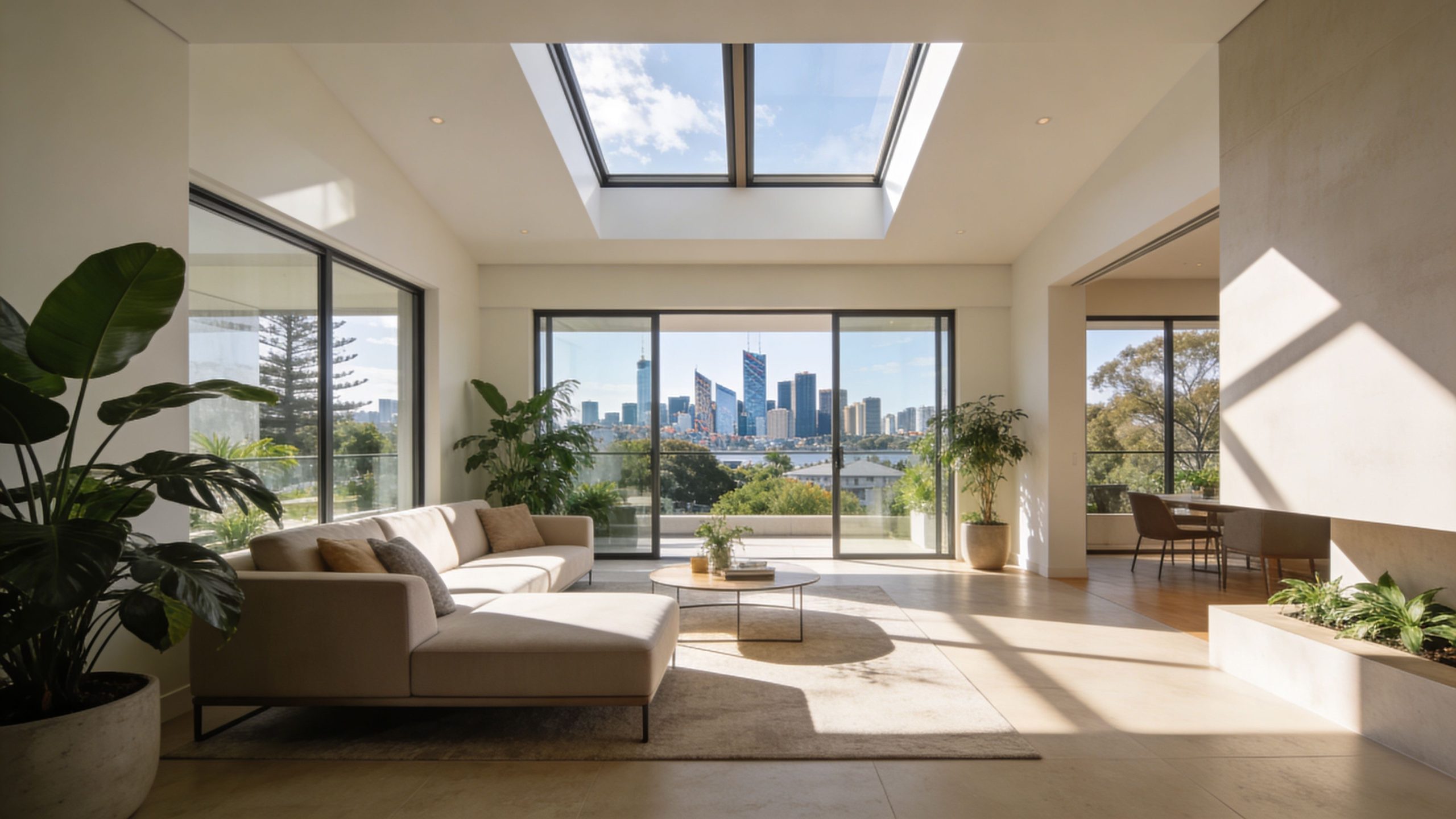
A lot of Brisbane homes have the same problem. Outside, the day is bright and clear. Inside, the hallway stays dim, the bathroom needs the switch on at midday, and the living area traps warm air under the ceiling until the air con does all the work.
That mismatch is usually a roof and light problem, not a decorating problem. Good skylights can change how a home feels because they bring daylight deeper into the plan and, in the right configuration, help hot air escape as well. In Brisbane, that matters more than it does in cooler cities because sun, humidity, sudden storms, and harsh UV all affect how a skylight performs over time.
This is why brisbane skylights need a local lens. A skylight that looks fine in a brochure can be the wrong choice if the glazing, flashing, or opening system doesn’t suit Queensland conditions. Homeowners also need to think about approvals, roof type, and whether a traditional skylight is even possible in the room they want to brighten.
Table of Contents
Choosing the Right Skylight for Your Brisbane Roof and Climate
The Smart Alternative When a Traditional Skylight Won’t Work
Brighten Your Brisbane Home with Natural Light
If your home feels darker and stuffier than it should, skylights are often the cleanest fix. They don’t depend on side boundaries, neighbouring houses, or fence height the way windows do. They pull light from above, where Brisbane has plenty of it.
That changes more than brightness. Rooms feel taller, bathrooms feel less closed in, and central parts of the home stop feeling like leftover space. In many homes, the biggest win is that lights stay off during the day more often, and airflow improves when the right venting model is used.
A skylight also works well as part of a broader passive solar energy strategy, where the home uses orientation, glazing, shading, and ventilation to improve comfort without relying on mechanical systems for every adjustment. That matters in Brisbane because comfort isn’t only about cooling power. It’s also about how the home handles sun and trapped heat before the air conditioner has to step in.
Why Brisbane homes benefit so much
Some homes in Brisbane have deep floor plans, low natural light in the centre, or older layouts that weren’t designed around modern living zones. Others have raked ceilings, renovated rooflines, or extensions where wall windows can’t do enough.
Skylights are especially useful in places like:
Internal bathrooms: They gain privacy and daylight at the same time.
Hallways and stairwells: These are usually the darkest parts of the house.
Living zones under large roof spans: Light from above spreads more evenly than a single side window.
Kitchens: Task areas feel sharper and more pleasant in natural light.
A well-placed skylight doesn’t just brighten a room. It changes which parts of the home people actually enjoy using.
If you’re weighing whether the upgrade is worth it, the practical starting point is to look at how natural light improves the home environment in everyday spaces you already use.
Understanding Your Skylight Options
A Brisbane homeowner usually starts with one question. “Do I just need more light, or do I need this skylight to solve another problem as well?”
That question matters because “skylight” covers a few very different products. Choose the right one and the room feels brighter, easier to use, and better matched to our climate. Choose the wrong one and you can end up with glare, unwanted heat, or a unit that would have been far more useful if it opened.
What a skylight does
At the basic level, a skylight is a glazed opening in the roof that brings daylight into the home. The better way to assess one is to ask what you need from it day to day.
Some rooms only need borrowed daylight. Others need ventilation for steam and trapped heat. A high ceiling or stair void may need remote operation because manual access is impractical. In Brisbane, glazing deserves close attention too. Strong sun, high UV, and long warm seasons mean the glass specification can matter as much as the frame or opening method.
Modern skylight glazing can block a very high proportion of UV, which helps limit fading on timber floors, rugs, joinery, and furniture. Vivid Skylights explains the role of laminated and LowE glazing in UV and heat protection.
If you’re sorting through products, this guide to different types of skylights for Australian homes gives a useful overview before you compare sizes, shaft depth, and roof pitch.
Double-glazed glass units are often the better fit for Brisbane homes than older acrylic dome styles, especially where comfort is as important as daylight. They cost more upfront, but they usually give better thermal performance, less noise transfer in heavy rain, and a cleaner finish inside modern renovations.
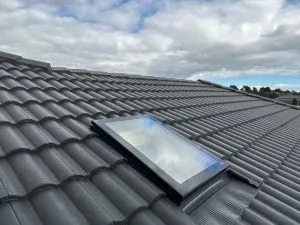
Fixed skylights
A fixed skylight stays closed. It is designed to bring in daylight without adding airflow.
This type suits rooms where moisture and heat are already handled well, or where the main problem is a dark ceiling plane. Common examples include:
Hallways and corridors
Stairwells
Living areas with good cross-ventilation
Bathrooms with effective exhaust fans
The main advantage is simplicity. Fixed units have fewer moving parts, fewer control decisions, and often a lower installed cost than opening models.
They are not always the cheapest option overall, though. If a room regularly gets hot or steamy, saving money on a fixed skylight can mean missing the feature that would have made the biggest difference.
Operable skylights
An operable skylight opens to release heat, humidity, or stale air. In Brisbane, that can be a practical upgrade rather than a luxury, particularly in bathrooms, kitchens, upper-storey voids, and rooms under dark roof sheeting.
There are two common versions.
Electric opening models
Electric units suit homes where reliable push-button control matters. They work well over raked ceilings, stairwells, and other locations where reaching the sash is unrealistic.
They also make sense during renovations where wiring is already being planned. In that case, adding powered operation can be straightforward.
Solar-powered opening models
Solar-powered units provide similar ventilation without the same wiring path as a hardwired electric model. That can make installation easier in finished homes where ceiling access is limited.
For many Brisbane homeowners, the appeal is practical. Less disruption during install, no wall chasing for new cabling in some layouts, and straightforward control in areas that are awkward to reach.
Rain sensors are worth having. A skylight that closes itself during a storm is far better suited to Brisbane’s summer weather pattern than one that relies on someone being home to react.
A quick visual helps if you’re deciding between fixed and opening units:
Practical rule: Choose fixed when the room only needs daylight. Choose operable when the room also needs to release heat or moisture.
The Unbeatable Benefits for Brisbane Living
Brisbane skylights aren’t just about making a room brighter. Their primary value lies in how they change daily comfort in a climate where light, heat, humidity, and privacy all need to be balanced.
Light changes how rooms work
Natural light alters the way people use a home. A dark kitchen corner becomes a place where someone wants to prep meals. A hallway stops feeling like a tunnel. A bathroom can stay private without feeling boxed in.
The effect is architectural as much as practical. Light from above spreads differently from light coming through a wall window. It reaches deeper into the room and often makes the ceiling feel higher. That’s why even a modest skylight can have a larger visual effect than homeowners expect.
A few rooms tend to gain the most:
Ensuites and bathrooms: Better light without direct overlooking.
Open-plan living zones: More even brightness through the centre of the home.
Stairwells: Safer and more pleasant to move through during the day.
Home offices: Better visual comfort than relying on overhead artificial light all day.
Ventilation matters in a humid city
Brisbane doesn’t just get hot. It gets humid, and heat often gathers at the highest point in the room. That’s where venting skylights have a real lifestyle advantage.
Warm air rises. If the skylight opens, that trapped air has somewhere to go. In the right house, that can help the whole space feel less stale, especially in upper-storey rooms, loft-style areas, kitchens, and bathrooms.
Homes feel more comfortable when they can release heat naturally instead of holding it under the ceiling until the air conditioner catches up.
Skylights outperform the idea that they’re only a design feature. The right unit can support everyday comfort, particularly during muggy weather when air movement matters almost as much as temperature.
Design value is real
Homeowners usually start by asking about light. They finish by talking about how the room feels. Skylights sharpen finishes, bring life to timber, tile, and stone, and give a space a cleaner connection to the outdoors.
They also help awkward rooms make more sense. A narrow extension can feel balanced. A renovated Queenslander can gain light without losing privacy. A modern home with a low-pitch roof can feel less flat and more resolved.
Three design outcomes show up again and again:
Rooms feel larger: Light from above reduces that compressed feeling in enclosed areas.
The ceiling becomes a feature: The eye is drawn upward, which improves perceived volume.
The home feels more considered: Skylights often make a renovation look intentional rather than patched together.
For many Brisbane homeowners, that’s the combination they want. Better light, more comfort, and a finish that looks like it belongs with the house.
Choosing the Right Skylight for Your Brisbane Roof and Climate
A Brisbane homeowner usually notices the problem in late January. The room is dark, the roof space is baking, and a cheap skylight can turn extra daylight into extra heat. Choosing well in this city means looking past the brochure photo and checking how the unit will handle glare, stormwater, roof pitch, and a long run of humid weather.
Brisbane is hard on poorly specified skylights. Strong UV, heavy summer rain, and hot roof cavities expose weak glazing and average flashing fast. The right product can make a room brighter without making it harsher to live in. The wrong one can add glare, push more heat into the space, and create detailing problems around the roof opening.
That is why I steer Brisbane homeowners toward insulated glass, low-E coatings, and roof-matched flashing instead of basic acrylic domes or lightly specified single glazing. The National Construction Code sets the performance framework for glazing and energy efficiency, and the Queensland Building and Construction Commission makes it clear that roof work must be installed to suit local weather exposure and waterproofing requirements. Those rules matter because Brisbane storms find every shortcut.
Match the product to the roof first
The roof decides a lot more than homeowners expect. Tiled roofs, corrugated metal roofs, concealed-fix metal roofs, and low-pitch sections all need different flashing details and different installation methods.
A few examples from local jobs:
Tiled roofs need flashing that sits cleanly with the tile profile and drains properly around laps.
Metal roofs need careful set-out around ribs, fixings, and thermal movement in the sheet.
Low-pitch roofs need glazing and flashing that clear water quickly, because slow drainage increases risk over time.
Older roofs often need extra checking before installation, especially if battens, sarking, or previous repairs are inconsistent.
Frameless top glazing helps here because it sheds water more cleanly than designs with edges that can catch debris and slow run-off. If your home has sheet roofing, review skylight systems made for metal roof applications.
If you’re comparing roof materials as part of a larger renovation, this guide to a cedar wood shake roof gives useful context on how roof material changes detailing and weathering, even though most Brisbane homes use tile or metal.

Glazing matters more in Brisbane than in cooler cities
A skylight that performs acceptably in a cooler southern climate can feel wrong here. Brisbane homes deal with stronger sun angles, hotter roof spaces, and longer periods where solar gain becomes a comfort issue instead of a benefit.
For that reason, double-glazed skylights with low-E glass are usually the sensible starting point. They help limit radiant heat, soften glare, and reduce the harsh midday feel you get from lower-spec glazing. Good glass also helps protect finishes inside the home. Flooring, joinery, fabrics, and artwork all benefit from better UV control. For broader guidance on how glazing affects heat gain and fading, the Australian Glass and Window Association’s information on energy performance and glass selection is a useful reference, and Your Home’s glazing guidance explains how orientation, insulation, and shading affect comfort in Australian conditions.
Choose by room use, not just by size
A hallway, bathroom, raked living area, and upper-storey stair void do not need the same skylight. The right unit depends on what the room is doing every day.
| Skylight Type | Best For | Ventilation | Brisbane Climate Suitability |
|---|---|---|---|
| Fixed double-glazed skylight | Hallways, bathrooms, living rooms where airflow already works | No | Strong choice when the goal is daylight with improved thermal performance |
| Electric opening double-glazed skylight | High ceilings, kitchens, upper-storey rooms, humid spaces | Yes | Well suited where heat and moisture need active release |
| Solar-powered opening double-glazed skylight | Hard-to-reach areas, renovations where simple operation matters | Yes | Useful where ventilation is needed without relying on a standard powered opening setup |
| LED skylight alternative | Internal rooms where roof installation isn’t possible | No external venting | Suitable when a traditional roof penetration won’t work |
A fixed unit suits many living areas and circulation spaces. Opening units earn their keep in bathrooms, kitchens, and upper-level rooms where built-up heat and moisture need a way out. In homes with high ceilings, motorised opening can be the difference between a skylight that gets used and one that stays shut.
What Vivid Skylights offers Brisbane homeowners
One product line that fits these local requirements is Vivid Skylights, which offers double-glazed fixed, electric opening, and solar-powered opening units, along with flashing kits for tiled roofs, low-pitch options, and nationwide delivery across Australia.
The practical rule is simple. Judge the skylight by the roof above it, the room below it, and the Brisbane summer it has to survive.
The Smart Alternative When a Traditional Skylight Won’t Work
Not every dark room can take a conventional skylight. Some sit on the ground floor under another storey. Some are boxed in by structure, services, or roof framing. Others are internal rooms where running a shaft would be messy, bulky, or visually awkward.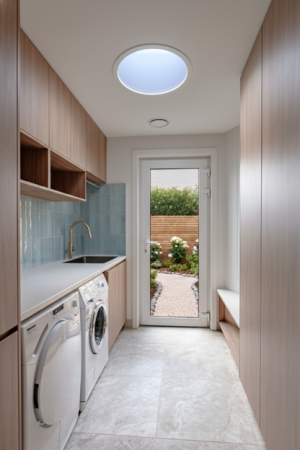
A common problem room
Take the typical internal powder room or laundry. It often has no external wall, no good borrowed light, and no realistic path for a full roof opening. Homeowners still want it to feel brighter and less enclosed, but a standard skylight is not practical.
That’s where a different approach makes sense. Instead of forcing a roof penetration into a bad situation, you use a lighting product designed to mimic the visual effect of a skylight.
How AuraGlow changes the feel of the space
AuraGlow LED skylights are made for exactly that scenario. They create the appearance of overhead daylight in spaces where a traditional skylight can’t be installed. The effect is cleaner and more architectural than a standard ceiling fitting, which is why they work well in rooms that need more than just extra lumens.
The feature that gives them their edge is the shifting colour tone through the day. Instead of producing one flat light output from morning to night, they change colour in a way that suggests the natural variation of the sky. That makes the room feel less artificial and less closed off.
They’re a smart fit for:
Ground-floor bathrooms
Internal laundries
Walk-in robes
Hallways with no roof access
Rooms below upper levels
If you’re dealing with one of those layouts, a purpose-built skylight alternative is often the more sensible answer than trying to engineer a traditional skylight into a space that doesn’t suit it.
Planning Your Brisbane Skylight Project Step by Step
A good skylight project usually goes wrong before installation, not during it. The common mistakes are choosing the product too early, underestimating approval requirements, or assuming any roofer can detail any skylight on any roof.
Start with the room not the product
Before you compare models, work out what the room needs.
Ask these questions first:
Is the problem mainly darkness? If yes, a fixed skylight may be enough.
Does the room also trap heat or humidity? Then an operable unit is worth considering.
Is the room directly under the roof? If not, you may need an alternative approach.
What roof type sits above it? Tile, metal, and low-pitch roofs all affect the detail.
That early thinking avoids a common Brisbane mistake. Homeowners often choose based on appearance alone, then discover later that orientation, roof framing, or council requirements change the brief.
Check approvals before the roof cut
Brisbane City Council requirements, managed under the QBCC framework, often mean building approval is needed for roof penetrations, so homeowners should budget for permit costs and allow for approval timelines before work starts, as noted in this guide on things to know before installing a new skylight.
The important point isn’t to assume approval is always required or never required. It’s to verify it for your home and project scope. Renovations, structural changes, and energy-efficiency compliance can all affect the answer.
A practical checklist looks like this:
Confirm the project scope: A straightforward replacement is different from a new roof penetration.
Check with your certifier or council contact: Get clarity before ordering or cutting.
Allow for documentation: Roof changes may need drawings or supporting details.
Consider renovation timing: Approval delays can affect other trades.
If you want local help with product fit and install logistics, this page on skylight installation in Brisbane is a useful reference point.
The cleanest skylight job is the one where approvals, roof details, and product choice are sorted before anyone touches the ceiling.
DIY or professional installation
Some skylight systems are designed to be straightforward to install, especially when the unit comes with dedicated flashing and clear product support. But “DIY possible” and “DIY advisable” aren’t the same thing.
DIY can work when the installer understands roofing, waterproofing, framing, and interior finishing. If any of those areas are weak, the risk isn’t only a messy finish. It’s leaks, drainage problems, and non-compliant work.
Professional installation makes more sense when:
The roof is difficult to access
The pitch is low and drainage detailing is critical
The project involves structural changes
The ceiling shaft needs careful finishing
You want one party responsible for the weatherproofing outcome
Cost planning should include more than the unit itself. Think about ceiling repair, painting, electrical work for powered units, access requirements, and any approval or certification costs. Finance options can also help spread the investment, especially on renovation projects where several upgrades happen at once.
How to Choose the Best Skylight Supplier
Most skylight problems don’t start with the concept of a skylight. They start with a weak specification, vague warranty language, or a supplier who treats Brisbane like every other climate.
Questions worth asking before you buy
A supplier should be able to answer practical questions clearly, without hand-waving.
Use this shortlist:
Is double glazing standard or optional? In Brisbane, that matters.
What are the thermal performance details? Ask specifically about SHGC and related glazing performance.
Is the flashing suited to my roof type? Tile and metal need different approaches.
What does the warranty cover? A product warranty and a leak warranty aren’t always the same thing.
Can the unit be supplied for my location? Delivery and support matter if you’re outside a metro showroom network.
Are there opening options? Ventilation can be just as important as light.
This isn’t nit-picking. During recent Brisbane heatwaves, homes with older, poorly specified skylights saw AC usage rise by 15-20%, while modern units with a Solar Heat Gain Coefficient of 0.25 or less can cut cooling costs by over 10% by rejecting solar heat, according to Vivid Skylights’ Brisbane skylights guidance.
What strong answers look like
Good suppliers are specific. They tell you what the frame is made from, what glazing is included, what flashing comes with the unit, and how the product suits low-pitch or high-rainfall conditions.
Weak suppliers stay general. They talk about “quality” and “premium” without giving the details that decide performance.
A strong answer usually includes:
Clear product scope: Fixed, electric opening, and solar-powered options are identified properly.
Roof compatibility: The supplier knows whether the unit suits tile, metal, or low-pitch roofs.
Delivery clarity: You know if the product can be shipped to Brisbane or elsewhere in Australia.
After-sales certainty: Warranty terms are easy to understand and not buried in vague language.
If a supplier can’t explain how the skylight handles heat, water, and roof type, keep looking.
For homeowners, architects, and builders, that clarity matters more than a polished brochure. It tells you whether the product has been thought through for real conditions.
Transform Your Home with Vivid Skylights Today
The right skylight changes more than light levels. It changes comfort, usability, and how the home feels from morning to evening. In Brisbane, that only happens when the product suits the climate, the roof, and the room.
Some spaces need a fixed unit to pull daylight into the centre of the house. Others need an operable skylight to release heat and humidity. Some rooms can’t take a traditional roof opening at all and are better served by an LED alternative that recreates the effect overhead. 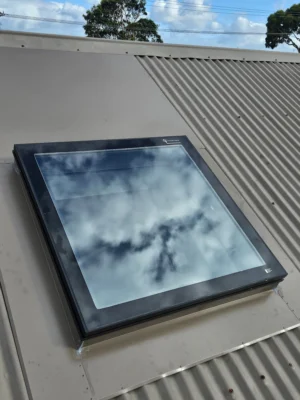
The practical path is simple. Start with the room. Check the roof. Confirm any approval requirements. Then choose a skylight with the right glazing, the right flashing, and the right operating style for how you live.
If you’re ready to move from ideas to decisions, look through completed projects in the gallery, use the online pricing estimator to get a budget sense, and speak with the team about the roof type, room layout, and opening option that suit your Brisbane project.
If you’re planning a skylight upgrade, explore the options at Vivid Skylights for fixed, electric opening, solar-powered, and LED skylight solutions, along with gallery inspiration, pricing tools, and Australia-wide delivery.