

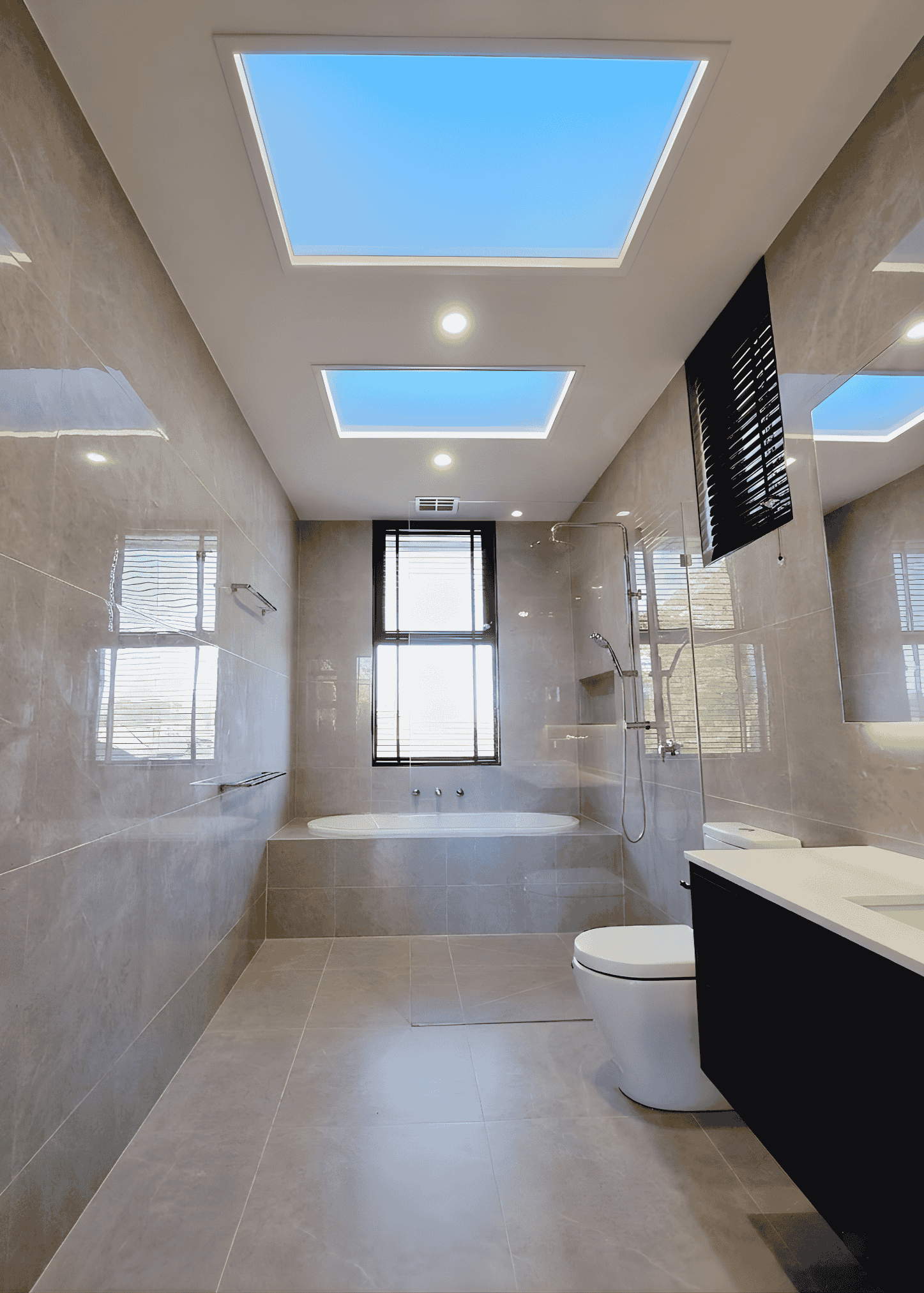
A lot of Australian homes look bright from the street and still feel dim where daily life happens. The hallway stays gloomy. The kitchen island needs lights on by mid-morning. The bathroom in the middle of the floorplan never feels fresh.
That’s usually when people start searching for a skylight alternative. They know the room needs better light, but they’re not always sure whether the answer is a traditional skylight, a sun tunnel, a window redesign, or a newer option like an LED skylight effect.
The right choice depends on structure first, then comfort, then budget. Roof pitch, ceiling cavity, room use, glare, ventilation, and weather exposure all matter. In Australia, they matter even more because roofs vary so much from older tiled homes to modern low-pitch builds, and because nobody wants a bright room that becomes too hot, too harsh, or harder to waterproof.
A good decision starts by comparing the available options side by side.
| Alternative | Daylight Quality | Thermal Control | Typical Cost | Best For |
|---|---|---|---|---|
| Traditional double-glazed skylight | Broad, natural light with sky view | Strong when glazing and flashing are well specified | Higher upfront than simple ceiling-based options | Living areas, kitchens, bathrooms, renovations |
| Sun tunnel | Focused natural light | Generally controlled well due to small opening | Usually lower than full skylights | Hallways, laundries, smaller internal rooms |
| Clerestory window | Natural side light, softer than overhead | Depends on glazing and orientation | Project-dependent | Extensions, architectural redesigns |
| Light well | Can deliver dramatic top light | Depends on shaft design and glazing | Often tied to major building works | New builds or major renovations |
| LED skylight alternative | Artificial light designed to mimic daylight | No roof penetration, so roof thermal issues are avoided | Varies by size and specification | Apartments, lower floors, rooms with no roof access |
Table of Contents
Is Your Home Missing Out on Natural Light
You walk into the hallway at midday and still reach for the switch. The bathroom feels closed in even after a renovation. The kitchen looks flat unless every downlight is on. In a lot of Melbourne homes, especially brick veneers, older weatherboards, and narrow townhouses, the problem sits in the middle of the floor plan where side windows cannot do much.

I see this often in Melbourne projects with hipped roofs, extensions at the rear, or covered outdoor areas that cut daylight from the back of the house. The room is technically usable, but it never feels settled. People leave lights on through the day, avoid spending time there, and assume the layout is the actual issue.
Usually, it is a daylighting issue.
Practical rule: If a room needs electric lights in clear daytime conditions, treat that as a design issue, not a decorating issue.
That matters in Australia because light quality affects more than appearance. It changes how large a room feels, how comfortable it is to use, and whether a renovation improves daily living. In cooler Melbourne winters, better daylight can also make central areas feel less gloomy and more connected to the rest of the home, even when the footprint stays exactly the same.
The good news is that a skylight alternative is not one single product category. The right answer might be a roof window, a sun tunnel, a borrowed-light window, a reworked ceiling detail, or, where the structure rules out true daylight, a high-quality LED skylight panel. The trade-offs depend on roof form, ceiling cavity depth, orientation, waterproofing details, and whether the work needs to satisfy current Australian installation and energy-efficiency requirements.
Many homeowners rule out good options too early. They assume a skylight will overheat the room, a window move will be too disruptive, or nothing can be done because of trusses or a low-pitch roof. A proper assessment usually gives a clearer answer. Some rooms need natural light from above. Others need a practical substitute that suits the roof, the budget, and the way the home is built.
Why Homeowners Look for Skylight Alternatives
People usually start with doubts, not product categories. They don’t wake up wanting a clerestory window or a light well. They want a darker part of the home to feel usable, and they’re trying to avoid a bad decision.
Structural concerns
Some roofs are straightforward. Others are crowded with trusses, services, solar gear, or awkward framing. In older homes, ceiling cavities can be unpredictable. In newer homes, the issue is often layout efficiency rather than age.
That’s why homeowners look for a skylight alternative in the first place. They’re trying to find out whether they can improve light without major structural work.
A few common concerns come up again and again:
Roof complexity: Valleys, hips, low clearances, and packed roof spaces can limit where a full skylight fits.
Ceiling alignment: A room may sit under another storey, a bulkhead, or a roof section that doesn’t line up cleanly above.
Project disruption: Some people are happy to open plaster and modify framing. Others want a lighter-touch solution.
Performance worries
Old assumptions still influence current buying decisions. Many people associate skylights with leaks, summer heat, glare, and winter heat loss.
Those concerns aren’t irrational. They come from older products, weak detailing, or poor installation practice. But they still shape how people search. Instead of asking, “What gives me the best light?” they ask, “What can I install with the least risk?”
Most hesitation comes down to three things. Water, heat, and buildability.
Cost and practicality
Budget matters, but so does where the money goes. Some alternatives look cheaper because they avoid roof work. Others cost less upfront but deliver a flatter quality of light. Some options only make sense during a renovation, not as a standalone upgrade.
That’s why broad comparisons can be misleading. A homeowner might compare a full glazed skylight with a simple ceiling panel and think they’re choosing between two equal lighting products. They’re not. One changes the architectural feel of the room. The other gives a controlled light effect without changing the roof.
The useful question isn’t “What’s the cheapest way to brighten a room?” It’s “What works in this house, on this roof, for this room, without creating a new problem?”
The Modern Skylight A Benchmark for Comparison
A lot of advice about skylight alternatives is built around an outdated idea of what a skylight is. If the mental picture is a basic acrylic dome or an older unit with weak detailing, the comparison starts off skewed.

What a current skylight should solve
A modern skylight should do more than let light in. It should manage weather, reduce the common drawbacks associated with older units, and suit the roof type without awkward site improvisation.
That’s why I treat the current benchmark as a double-glazed, properly flashed, thermally sensible skylight rather than a generic opening in the roof. If an alternative can’t match the light quality, comfort, and finish of that benchmark, the trade-off needs to be deliberate.
The features worth judging against are practical:
Double glazing: Important for comfort and a more stable indoor environment.
Frameless top glazing: Helps water run off rather than collect around edges.
Powder-coated aluminium framing: A durable fit for Australian conditions.
Self-cleaning glass: Useful on roof glazing where access is limited.
Blinds and screens: Important when a room needs light control as well as daylight.
For wet climates, warranty confidence matters too. Vivid Skylights states a 10-year leak-free warranty and attributes that to design features such as frameless top glazing that helps prevent water pooling.
If you want to see what that modern specification looks like in practice, this modern skylight overview is a useful reference point.
Fixed or operable
A fixed unit is about one thing. Bring in daylight.
An operable unit adds another job. It helps release heat and stale air from rooms that tend to trap both. That’s especially useful in bathrooms, kitchens, raked ceilings, and upper-level spaces where air stratifies.
Some projects call for electric opening. Others suit solar-powered opening, especially when wiring access is inconvenient. The important point is that a real comparison between a skylight and a skylight alternative should include ventilation, not just brightness.
This short video helps show how a contemporary skylight changes the feel of a room in a way that’s hard to capture in words alone.
A strong skylight doesn’t need excuses. It should already answer the classic objections before you compare it with alternatives.
Comparing Your Practical Skylight Alternative Options
A typical Melbourne renovation runs into the same question fast. The back of the house feels dim, the hallway has no window, or the bathroom sits under a crowded roof space. The right answer depends less on trends and more on roof form, room use, and how much building work the home can reasonably support.

Code also matters. In Australia, habitable rooms generally need access to natural light for compliance, which is why artificial ceiling lights and LED skylight-style products do not solve every approval issue on their own. For the actual requirements, refer to the National Construction Code housing provisions.
That distinction saves a lot of confusion. Some products improve amenity. Others can contribute to a compliant daylighting strategy.
Skylight Alternative Feature Comparison
| Alternative | Daylight Quality | Thermal Control | Typical Cost | Best For |
|---|---|---|---|---|
| Sun tunnel | Strong but concentrated. Good for smaller zones rather than broad room coverage | Usually easier to control because the roof opening is compact | Moderate | Hallways, WC rooms, laundries |
| Roof lantern or rooflight | High daylight potential, often dramatic | Can be challenging if orientation and glazing are poorly handled | Higher and usually project-specific | Extensions, larger architectural spaces |
| Clerestory window | Softer side light with less direct overhead impact | Can perform well with the right orientation and glazing | Varies with wall changes | Renovations where wall height can be redesigned |
| Light well | Can bring beautiful top light deep into a plan | Depends heavily on shaft design and insulation | Usually tied to major works | New builds and major remodels |
| LED skylight effect | Consistent ceiling-based illumination that mimics daylight | No roof penetration, so roof waterproofing isn’t part of the equation | Varies by system | Internal rooms without roof access |
When shading matters as much as daylight
Some homes do not need more incoming light. They need better control of the light they already have.
West-facing glazing is the usual culprit in Melbourne. The room gets glare in the afternoon, the floor heats up, and people assume a skylight alternative will fix the problem. Often it will not. The better first step is to manage solar gain and glare, then decide whether the room still feels underlit. This guide to solar screens for windows is useful if you are weighing shading before adding more glazing.
A brighter room is not automatically a better room. Comfort, heat load, and glare need the same attention as light levels.
A practical shortlist helps:
Choose an LED skylight effect for rooms that cannot connect to the roof and mainly need a daylight feel rather than a true sky opening.
Choose a clerestory window when the renovation already includes wall or roofline changes.
Choose a light well only if you are comfortable with structural work and some loss of floor or ceiling space.
Choose a modern glazed skylight when you want broad natural light and the roof structure can support it properly.
The Ultimate Alternative When Structure Says No
Some rooms cannot accommodate a conventional daylight opening. There may be another storey above, a concrete slab overhead, heritage limits, services in the way, or a roof layout that makes the work disproportionate to the result.
That’s where an LED-based skylight alternative earns its place.
Where LED skylights make sense
Melbourne has a large stock of homes with daylight challenges that aren’t easy to solve structurally. According to the earlier-cited daylighting reference, 28% of Melbourne homes built before 2000 lack adequate daylighting. That makes non-structural lighting solutions relevant in a lot of renovations and room upgrades.
The useful application areas are usually obvious:
Internal bathrooms: No roof path, no window, no practical way to open the structure.
Ground-floor apartments: Plenty of need for daylight effect, almost no chance of roof access.
Hallways and dressing rooms: Spaces that need visual lift more than sky views.
Converted rooms: Former storage or utility areas that now need to feel habitable and calm.
Why the illusion matters
Not all artificial skylight products feel convincing. Some just read as a bright ceiling panel. The more successful systems create a sense of depth and a light quality that feels closer to overhead daylight than ordinary fittings do.
AuraGlow is designed for exactly that situation. It’s an artificial skylight for rooms where a traditional installation can’t happen, and it creates a skylight-like ceiling effect while shifting colour through the day to reflect the changing feel of the sky. You can see that approach in this AuraGlow artificial skylight range.
That distinction matters. Homeowners usually aren’t searching for “more lumens.” They want the room to feel less enclosed. They want a ceiling that reads as open rather than flat and dead.
If structure won’t allow real daylight, the next best move is improving how the room is experienced, not just making it brighter.
An LED skylight won’t replace the sky view, ventilation, or natural variation of a true roof opening. It does solve a different problem very well. It gives difficult spaces a calmer, more uplifting ceiling presence without structural disruption. For many homes, that’s the difference between a room that feels makeshift and one that feels intentional.
A Decision Checklist for Australian Homes
The right choice usually becomes clear once you match the product to the roof, the room, and the type of homeowner making the decision.
By roof type
Terracotta or concrete tile roofs
These roofs can suit traditional skylights well when flashing and roof integration are handled properly. They also suit sun tunnels in many cases. If the room below is a bathroom, hallway, or kitchen, roof-based daylighting often makes good sense.
Colorbond and other metal roofs
Metal roofs can be excellent for clean, modern daylight openings, especially when the layout above the room is uncomplicated. The key is getting the placement, waterproofing details, and thermal intent right.
Low-pitch roofs
Low-pitch projects need more care in product selection and detailing. Consequently, homeowners sometimes jump too quickly to a skylight alternative because they assume low pitch rules out roof glazing. Sometimes it does. Sometimes it just changes the specification.
Upper-storey or no-roof-access rooms
Once there’s no direct path to the roof, stop trying to force a traditional approach. That’s where window redesign, borrowed light strategies, or LED skylight systems start to make more sense.
By homeowner priority
Some buyers care most about budget. Others care about architectural finish. Others want the simplest install possible.
The budget-conscious DIY renovator: Start with whether the room needs true natural light or needs to feel brighter. If it’s a small internal room under roof space, a sun tunnel may be enough. If there’s no roof path, an LED skylight effect may avoid larger trade costs.
The design-focused renovator: If the room is a major living space, broad glazed daylight usually gives the strongest result. Small alternatives can brighten, but they often don’t transform.
The comfort-focused household: Prioritise products with good glazing logic, shading options, and ventilation where needed.
The practical family home update: Focus on rooms used every day first. Kitchen, main bathroom, hallway, stair void.
A helpful next step is this guide on how to increase natural light in house, especially if you’re still deciding whether your issue is daylight entry, room layout, or surface reflectivity.
Questions worth answering before you buy
Is the room directly under the roof?
If yes, roof-based daylight options stay on the table.Do you want sky view or just better illumination?
Those are different goals, and they lead to different products.Does the room trap heat or moisture?
If yes, ventilation matters. A fixed light-only solution may not be enough.Is this a renovation or a quick upgrade?
Some options only make sense when ceilings and walls are already being opened.Are you solving compliance, comfort, or aesthetics?
Be honest about the objective. It stops overspending and underperforming.
Choosing the Right Light with Vivid Skylights
A skylight alternative can absolutely be the right move. AuraGlow LED skylight systems are useful where structure rules out traditional daylighting.
But for many Australian homes, a modern double-glazed skylight still gives the strongest all-round result because it combines natural overhead light with a more architectural feel, and in some cases, ventilation as well. That’s especially true when the room sits directly under the roof and the goal is to make the space feel transformed rather than merely brighter.
Vivid Skylights supplies fixed, electric opening, and solar-powered operable skylights, and also offers the AuraGlow LED skylight range for spaces where a conventional installation isn’t possible. The range is available with Australia-wide delivery, and the company’s broader product information is collected on the Vivid Skylights website.
The sensible approach is to choose the product that fits the house rather than forcing the house to fit the product. If your roof and room allow a true skylight, compare against a modern double-glazed benchmark. If they don’t, choose the cleanest alternative that solves the specific constraint.
If you’re weighing up a skylight alternative for your home, browse the gallery and product range at Vivid Skylights. It’s a practical place to compare fixed, operable, sun tunnel, and AuraGlow LED options before you commit to structural work or settle for a room that still feels too dark.