

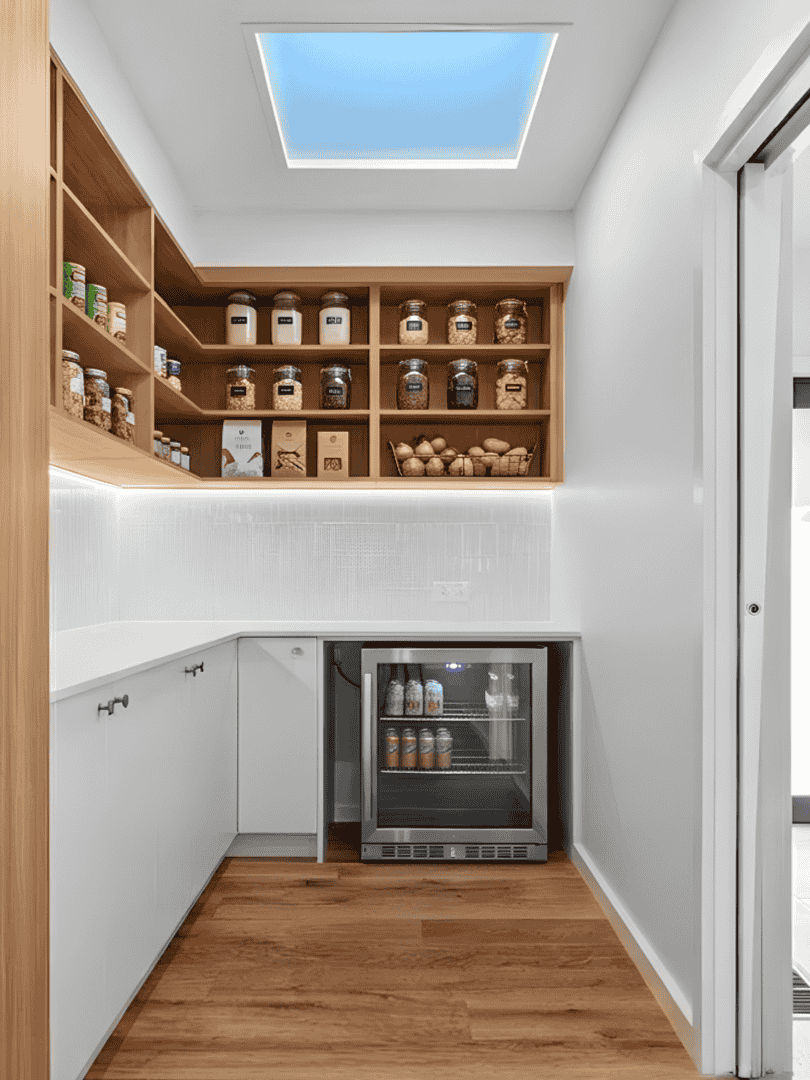
A lot of homeowners start in the same place. There’s one room in the house that never feels finished because it never feels properly lit.
It might be the hallway between the bedrooms, a bathroom in the middle of the floor plan, or a downstairs study created during a renovation. You can repaint it, add mirrors, and upgrade the fittings, but it still reads as dim because the problem isn’t styling. It’s missing daylight.
That’s where the skylight artificial conversation matters. A real skylight is usually the best answer when the roof and ceiling layout allow it. But some homes don’t have a clean path to the roof, and that’s where newer LED skylight systems have become a practical option rather than a gimmick.
Table of Contents
Bringing Light to Seemingly Impossible Spaces
You walk into the hallway at noon, switch off the lights, and it still feels flat. The cabinetry may be excellent and the finishes may be new, but the room reads as enclosed because daylight never really reaches it.
That pattern shows up often in Australian homes with deeper floor plans, rear additions, internal bathrooms, and corridors pushed away from the roofline. In my work, these spaces usually fall into three practical categories: rooms with clear roof access, rooms sitting under another storey, and rooms where the structural work needed for a real skylight does not make sense for the budget.

The first group should usually start by assessing a real skylight properly. A high-performance, double-glazed unit can improve daylight, ventilation, and the overall feel of the room in a way no artificial fitting fully replicates. If the roof can be accessed without major structural compromise, that option deserves a serious look first.
The second and third groups are where the decision gets more interesting. A first-floor bathroom under a second storey, a ground-floor corridor in a terrace, or a walk-in robe boxed in by trusses may have no practical path to the sky. In those cases, homeowners are comparing two real options: expensive building work to create a roof opening, or a convincing daylight-effect fitting such as an artificial skylight solution for difficult spaces.
A simple rule helps. If a room feels gloomy in the middle of the day with all lights off, solve the daylight problem before spending more on decorative lighting. Pendants, wall lights, and LED strips can improve mood and function, but they rarely fix the closed-in feeling caused by poor ambient light.
Some homes that look unsuitable at first can still take a real skylight if the renovation scope is broad enough.
For everyone else, artificial skylights have a clear job. They are not a substitute for real sky where a quality skylight can be installed. They are a practical answer for spaces where a traditional skylight is blocked by structure, cost, or both.
What Exactly Is an Artificial Skylight
An artificial skylight isn’t just a bright ceiling panel. The better systems are designed to create the impression of sky depth, not just throw more light into the room.
More than a flat light fitting
The key difference is how the light is shaped and diffused.
Advanced artificial skylights employ Rayleigh scattering nanotechnology to replicate the sky’s visual depth. This technology scatters shorter blue light wavelengths more than longer red ones, mimicking the atmospheric effect and enabling human-centric lighting that dynamically shifts from a warm sunrise to a cool midday peak (artificialsky.tech).
That sounds technical, but the practical effect is simple. The ceiling doesn’t just look illuminated. It looks like it opens upward.
In a well-designed unit, you’re looking for several things working together:
A framed skylight appearance: The fitting should read like an architectural opening, not a generic office panel.
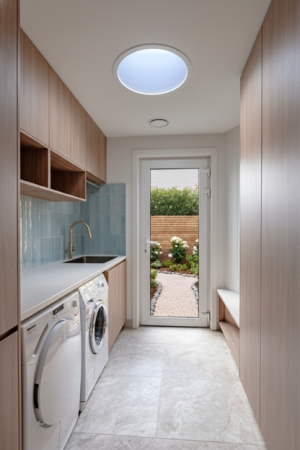
A controlled diffuser: This softens the LEDs so the light feels broad and even rather than harsh.
Colour tuning through the day: The best systems change from warmer tones to cooler daylight-like tones, which helps the room feel more natural.
Placement that suits the room shape: Even a good product can look wrong if it’s undersized or pushed into the wrong part of the ceiling.
A strong local example of this category is the newer AuraGlow-style approach, where the fitting is designed to create a skylight effect in rooms where a roof unit can’t be installed. If you want to see how that concept is positioned in practice, this artificial skylight range is the relevant reference: https://vividskylights.com.au/artificial-skylight/
Why colour change matters
Static white light is one of the reasons older fake skylight products never felt convincing.
Natural daylight changes constantly. Morning light is different from midday light. Late afternoon is different again. Artificial skylights that shift colour temperature through the day get closer to that lived experience, which is why they feel more believable in bathrooms, hallways, dressing rooms, and lower-ground spaces.
A short product video helps show how this category is presented visually in real interiors.
The mistake is treating an artificial skylight like a brighter downlight. It needs to be specified like an architectural feature.
That means thinking about trim, ceiling proportion, room function, and what you want the room to feel like when the fitting is on during the middle of the day.
Natural vs Artificial Skylights A Head-to-Head Comparison
Real skylights and artificial skylights solve related problems, but they don’t perform the same way.
The cleanest way to compare them is to look at what changes in daily use. Not just on installation day.

What changes day to day
Light quality is the biggest difference. A real skylight gives you actual daylight, cloud movement, and the subtle variation that makes a room feel alive. An artificial skylight can get visually close, especially in enclosed spaces, but it’s still a controlled lighting product.
Placement flexibility swings the other way. A real skylight needs roof access and suitable structure. An artificial skylight can go into rooms that would otherwise never receive a roof window.
Maintenance profile is different too. Real skylights involve glazing, flashing, and roof integration. Artificial skylights avoid roof penetrations but depend on electrical components and controls.
If the room can accept a properly designed roof skylight, that option usually wins on authenticity. If the room can’t, forcing the issue often costs more than the result is worth.
For readers weighing LED daylight-style products specifically, this page on skylight LED lighting gives a useful product-category reference point: https://vividskylights.com.au/skylight-led-lighting/
Comparison of Skylight Options
| Feature | Vivid Skylights Traditional Skylight | Vivid Skylights AuraGlow (Artificial) |
|---|---|---|
| Best use case | Rooms with direct roof access | Rooms without viable roof access |
| Type of light | Real natural daylight | Simulated skylight-style LED light |
| Visual effect | Genuine connection to sky | Sky-like ceiling feature |
| Ventilation | Available with opening models | No roof ventilation function |
| Placement | Limited by roof position and structure | Flexible within interior ceiling layouts |
| Structural work | Requires roof and ceiling integration | Typically simpler interior installation |
| Ongoing energy use | Uses daylight during the day | Uses electricity whenever operating |
| Ideal rooms | Kitchens, living areas, upper bathrooms | Hallways, lower-floor studies, internal bathrooms |
A homeowner deciding between the two should ask three blunt questions.
Can the room physically take a real skylight without major reconstruction?
Do you want daylight, or do you need the appearance of daylight?
Will the room be used mostly in daytime, evening, or both?
If the answer to the first question is yes, real skylights deserve serious priority. If the answer is no, a well-designed skylight artificial product is often the only option that still feels architectural.
When to Choose an Artificial Skylight for Your Home
Artificial skylights make the most sense when the room is blocked by the building itself.
That usually means you’re dealing with one of the spaces homeowners complain about most. Internal bathrooms. Ground-floor studies under an upper level. Hallways in the middle of the plan. Converted storage areas. Basements and lower-ground multipurpose rooms.
Spaces where roof access isn’t realistic
These are the clearest candidates.
Two-storey homes: The lower floor often has rooms with no direct roof line above.
Apartments and attached dwellings: You can’t cut into a roof you don’t control.
Basement conversions: Gyms, offices, media rooms, and guest spaces often need a daylight effect more than another lamp.
Renovations with complex services overhead: Ducting, plumbing, or structure can make a traditional skylight impractical.
In those rooms, the right artificial skylight can shift the emotional feel of the space. The room stops reading as enclosed and starts reading as intentional.
Where it works best aesthetically
Some rooms don’t need a dramatic lighting statement. Others do.
Artificial skylights tend to work best where the ceiling plane is visible and simple. A centred installation in a hallway, over a vanity zone, or above a compact study nook usually reads better than a badly proportioned unit dropped randomly into a busy ceiling.
A few design cues help:
Match the scale to the room: Too small and it looks token. Too large and it can dominate.
Keep surrounding fittings quiet: Don’t crowd it with too many downlights.
Use it where the eye naturally lifts: Transitional spaces benefit most because people register the ceiling as they move through them.
A skylight artificial product works best when it replaces visual deadness, not when it competes with six other lighting ideas in the same room.
If a room has no realistic path to the roof and still needs a brighter, calmer feel, artificial becomes less of a compromise and more of a smart specification.
Installation Design and Cost Considerations
Installation is where many homeowners make the wrong comparison. They compare products without comparing the building work each one needs.
A traditional skylight and an artificial skylight don’t sit in the same construction category. One changes the roof envelope. The other usually changes the ceiling fitout and electrical layout.
What changes on site
For a real skylight, the job typically involves roof opening, flashing, ceiling finishing, and careful integration with the roof type. That’s why planning matters so much. Pitch, rafter layout, shaft depth, and internal ceiling position all affect the final result.
For an artificial skylight, the process is usually closer to a specialised light installation. You still need the location resolved properly, and you still want clean finishing, but there’s generally less disruption because you’re not penetrating the roof.
That doesn’t mean artificial units should be treated casually.
Choose the room first: Don’t buy the fitting before you’ve decided what problem it’s solving.
Confirm the ceiling details: Recess depth, framing, and access all affect the finish.
Coordinate the switching and controls: Especially if colour change or scene-setting is part of the appeal.
Think about sightlines: The fitting should look intentional from the doorway, not like an afterthought.
If you’re budgeting a roof-based option and want a practical overview of likely project variables, this skylight cost and installation page is the right starting point: https://vividskylights.com.au/skylight-cost-and-installation/
Budgeting without surprises
The cheapest quote often leaves out the details that affect the finished room.
For real skylights, ask who is handling roof work, interior trim-out, and weatherproofing. For artificial skylights, ask who is responsible for electrical supply, wall controls, and patching around the fitting if required.
If multiple trades are involved, the handover points matter. Homeowners who haven’t managed that kind of scope before may find this guide on how to hire a general contractor helpful because it explains how to assess who’s coordinating what.
A good decision usually comes down to this. Spend on a real skylight when the building can support it cleanly. Spend on an artificial skylight when structural work would be excessive relative to the room.
The Complete Daylighting Solution from Vivid Skylights
Most homeowners don’t need a single answer for the whole house. They need the right daylighting method for each room.
That’s why the strongest approach combines both categories. Use real double-glazed skylights where the roof layout makes sense. Use an artificial skylight where the room sits too deep inside the building to access natural overhead light.
This matters in renovations because houses rarely behave consistently. A kitchen or living room might suit a fixed or operable roof skylight beautifully, while the nearby hallway or lower-floor room may need an LED skylight-style solution instead.
The advantage of working with a specialist range is that you’re not forced into one product type for every problem. You can choose roof glazing for the rooms that need authentic daylight and ventilation, then use a sky-mimicking LED option for the spaces that would otherwise stay dark.
There’s also practical value in having access to fixed units, electric opening options, solar-powered operable models, and interior LED skylight solutions through one supplier, especially when the project is being delivered across multiple rooms or staged over time.
For a full overview of the company and product categories, this is the relevant page: https://vividskylights.com.au/vivid-skylights/
Good daylighting design isn’t about insisting on one product. It’s about choosing the most believable and practical source of overhead light for each space.
That’s the core decision. Not natural versus artificial in the abstract, but what works best in the actual room you’re trying to improve.
Frequently Asked Questions
Do artificial skylights feel like real daylight
They can look convincing from across the room, especially in a hallway, laundry, walk-in robe, or other space that has no realistic roof access. The visual effect can be strong enough to make the ceiling feel higher and the room feel less enclosed.
They still do not match the changing quality of real daylight through glass. A high-performance glazed skylight gives you natural variation across the day, a view of actual sky light, and in some models, ventilation as well.
Are real skylights better for wellbeing
In practice, yes.
Real skylights bring in natural daylight, which is usually the better result for rooms where people spend time during the day. That matters most in kitchens, living areas, home offices, and bathrooms used in the morning. Artificial skylights improve comfort and appearance in dark rooms, but they are still a substitute solution rather than a full replacement for genuine daylight.
Do artificial skylights need much maintenance
Usually less than a roof skylight on the building side, because there is no roof penetration, flashing, or exterior glazing to service. The trade-off is that you are relying on LEDs, drivers, and control components that can age over time.
For homeowners, the maintenance list is fairly simple. Keep the diffuser clean, check for colour shift or dimming as the unit ages, and ask about replacement parts before you buy. That last point matters, because a cheap unit can become difficult to service a few years down the track.
Which rooms should get a real skylight first
Start with the rooms that will give you the biggest daylight return for the spend. In most Australian homes, that means the kitchen, main living area, and any bathroom that can benefit from both daylight and moisture control.
If the roof layout allows it, a double-glazed real skylight usually delivers better long-term value in those spaces than an artificial alternative. Save the artificial skylight option for internal rooms where a shaft, roof opening, or suitable skylight position just is not possible.
Where can I check practical product questions
For common homeowner questions on sizing, opening options, glass choices, and planning, the Vivid Skylights FAQ page is a useful place to start.
If you're comparing a real skylight with a skylight artificial option, Vivid Skylights offers both. Their range includes double-glazed fixed and operable skylights, electric and solar-powered opening models, and the AuraGlow LED skylight range for rooms where a traditional skylight cannot be installed. They deliver nationwide across Australia, which helps when you want one daylighting plan across several rooms, even if each room needs a different solution.