

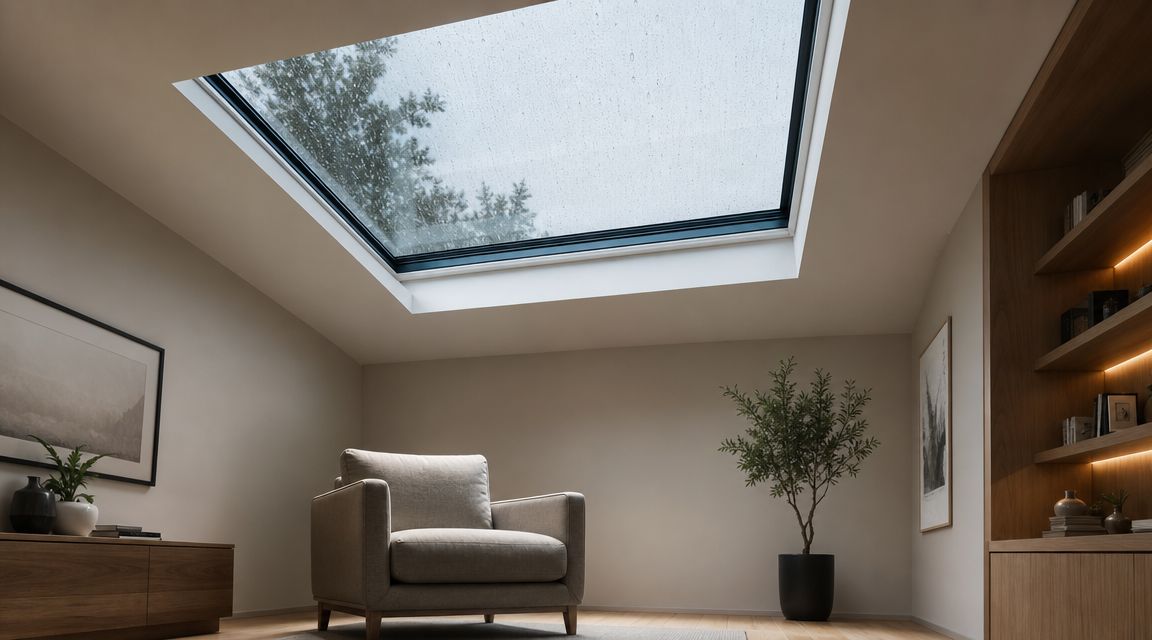
If you've ever sat under an old skylight during a hard summer storm, you know the sound. The first drops hit the roof, then the whole room starts ringing like a drum. On many Australian homes, especially those with metal sheet roofing, the skylight isn't just letting in light. It's also becoming the loudest part of the ceiling.
The good news is that skylight rain noise reduction is usually very achievable. The bad news is that a lot of homeowners chase the wrong fix first. They add thickness but ignore sealing. They blame the roof alone when the skylight frame is leaking sound. Or they try to quiet a plastic dome that was never designed for acoustic comfort in the first place.
Table of Contents
That Racket on the Roof Why Skylights Get So Loud in the Rain
You notice it the first time a hard storm hits at night. Rain lands on the roof, then the area under the skylight starts sounding like someone is tapping a drum overhead. On older homes with plastic dome skylights, especially on Australian metal roofs, that sharp rattle is common.
The reason is simple. Rain noise at a skylight is largely a vibration problem. Each drop hits the outer surface, the panel moves, and that movement passes into the frame, shaft, and room below. Lightweight acrylic domes are far more prone to that effect than modern insulated glass units.
Why old skylights sound like a drum
Older acrylic domes are light and flexible. That helps with cost and weight, but it hurts acoustic performance. Instead of absorbing much of the impact, the dome tends to flick and resonate. The result is the hard, hollow rain noise many homeowners describe in bedrooms, hallways, and studies.
Metal roofing can make it worse. A Colorbond or other sheet-metal roof already has its own rain signature. Add a lightweight plastic skylight into that roof plane and you create another surface that responds quickly to every drop. The sounds combine, and the skylight often becomes the most noticeable point in the room.

What a quieter skylight does differently
A quieter skylight needs more than a thicker surface. It needs a build-up that resists vibration, separates the outside impact from the inside surface, and limits resonance through the unit as a whole. That is why modern double-glazed glass skylights are in a different class from old domes.
Vivid Skylights units are designed around that reality. The double-glazed construction gives the skylight more mass than plastic, and the sealed air gap helps interrupt the transfer of rain impact into the room. In practice, that means less high-pitched ticking, less hollow drumming, and a more controlled sound during heavy rain.
Material choice matters here. A clear comparison of glass skylights vs plastic skylights shows why older domes struggle. Plastic is lighter and easier to excite. Modern double-glazed glass is heavier, stiffer, and better at keeping the outer weather noise from becoming indoor noise.
The complaint is usually more specific than “it's loud”
Homeowners usually describe one of four problems:
Sharp impact noise from heavy drops striking the outer surface
Hollow resonance that makes the room feel acoustically live
Sound leakage at the frame or shaft rather than straight through the middle
Noise spikes during wind-driven rain on exposed roof areas
That difference matters because the fix depends on the symptom. If the issue is frame leakage, sealing details become a big part of the job. If the issue is the panel itself ringing under rain, the long-term answer is usually replacement, not another patch.
In my experience, the biggest change comes when an old plastic dome is replaced with a properly installed, high-performance double-glazed skylight. That is especially true on metal roofs, where cheap skylights tend to advertise every storm.
Quieter Instantly DIY Fixes for Skylight Rain Noise
If your current skylight is structurally sound and you want relief before replacing it, start with the simplest acoustic wins first. The best DIY work usually doesn't begin with adding another panel. It begins with stopping obvious sound leakage.

Start with sealing before adding anything
A surprising number of noisy skylights have small gaps around the internal frame or trim. Those gaps don't look dramatic, but acoustically they matter. Sound takes the easy path. If the edge leaks, the glazing never gets the chance to do its job.
A careful homeowner should inspect:
Frame junctions: Look where the skylight lining meets the ceiling finish.
Visible shrinkage: Old sealants can crack or pull away over time.
Movement points: Corners and joints often open slightly as materials expand and contract.
If you're checking those areas, a practical primer on how to seal a skylight properly helps you avoid cosmetic fixes that don't improve acoustic performance.
What to do and what to skip
A decent DIY insert can work well, but only when it's fitted tightly and mounted rigidly. The mistakes are predictable.
Measure the opening exactly. A loose insert is disappointing before the first storm even arrives.
Use acoustic sealant at the perimeter. Weatherstripping can help, but a full acoustic seal is more effective for isolation.
Choose a rigid panel. Lightweight panels that flex tend to pass more vibration.
Expect improvement, not perfection. If the roof assembly itself is lively, an insert helps but won't rewrite the whole system.
Other quick measures can still help at the margin:
Cellular or heavy blinds: They can soften the room side of the sound, especially the reflected harshness.
Interior furnishings: Soft finishes don't stop impact transmission, but they can reduce the way the room re-amplifies it.
Maintenance checks: Loose trims and rattling hardware often add their own noise on windy, rainy nights.
DIY fixes are best for reducing annoyance quickly. They're less effective when the skylight material itself is the main problem.
The Ultimate Fix Upgrading to an Acoustic Glass Skylight
A storm on a metal roof can be loud enough without a plastic dome adding its own drumbeat. When the skylight itself is the weak point, sealants and add-ons only go so far. Replacing an older acrylic dome with a modern glass unit is usually the step that changes the room from sharp, intrusive rain noise to a softer background sound.

The three ingredients that actually quiet rain
The quietest skylights use three things working together. More mass in the glass, separation between panes, and a laminated layer that absorbs some of the vibration before it reaches the room. On Australian metal roofs, that combination matters even more because the incoming sound is often a fast, high-frequency impact, not a dull background rumble.
Here's the practical breakdown:
| Element | What it does for rain noise |
|---|---|
| Mass | Heavier glass is harder to excite than thin plastic or light sheet glazing |
| Decoupling | Two panes reduce the direct transfer of impact energy into the room |
| Damping | Laminated glass softens the sharp ping that makes rain sound harsh |
That is why modern double-glazed skylights feel different in bad weather. They are built as an acoustic assembly, not just a clear opening in the roof.
Why modern double glazing performs better than old domes
Older perspex or acrylic domes let in light cheaply, but acoustically they are a poor match for heavy rain. They are light, they flex, and they tend to exaggerate the top-end crackle that wakes people up at 2 am. Glass behaves differently. A well-built double-glazed unit is stiffer, heavier, and less prone to turning each raindrop into a sharp tap.
Vivid Skylights has leaned into that problem directly with double glazed skylights designed for quieter performance. For homeowners on Colorbond and other metal roofs, that matters. The roof sheet is already lively in a storm, so the skylight needs to calm the sound, not add to it.
You still hear the rain. You just stop hearing the skylight.
Where the upgrade makes the biggest difference
Bedrooms usually show the biggest improvement first. The issue there is not average sound level so much as the sudden impact spikes that interrupt sleep. Home offices come next, especially during calls. Living rooms benefit too, although people often tolerate more storm noise there because the space is already active.
The common thread is simple. If the existing unit is a lightweight dome, the glazing itself is often the limiting factor. No blind or interior panel can fully compensate for a skylight that vibrates too easily.
Replacement makes more sense when the old skylight is the problem
Retrofits have their place, especially if the skylight is otherwise sound and the budget is tight. But once the original unit is old, noisy, and thermally poor, replacement is usually the cleaner fix. You get better acoustic control, better insulation, and a longer-lasting unit in one job.
The main trade-off is upfront cost. Acoustic glass skylights cost more than basic domes, and the gain depends on choosing the right glazing build-up rather than the cheapest glass option. In practice, homeowners who are bothered enough by rain noise to research solutions are usually happier after replacing the skylight than after stacking temporary fixes under it.
The quietest result comes from a well-sealed double-glazed unit with laminated glass, matched to the roof and installed properly. That is the combination that consistently outperforms older plastic domes in real storm conditions.
Beyond the Glass How Installation Impacts Soundproofing
A premium skylight can still disappoint if the surrounding build-up is sloppy. Good glass can't rescue a noisy shaft, an under-insulated cavity, or a frame connection that leaks air and vibration.
The shaft can amplify more than you think
In many homes, the light shaft acts like a channel between the roof and the room below. If that cavity is left under-insulated or poorly finished, it can reinforce the sound you were trying to suppress. The result is frustrating. You pay for better glazing, then the room still sounds bright and hard during rain because the surrounding construction is reflecting and carrying the noise.
That's why frame detailing, insulation and flashing all matter together. A useful reference point is proper skylight frame installation detailing, because acoustic comfort depends on how the unit meets the roof and ceiling, not just what sits in the middle.
Quiet isn't the only goal
Some noise-control methods create trade-offs. The classic example is the internal acrylic insert discussed earlier. Practical guidance notes that this kind of insert may reduce rain noise by around 10 dB, but it can also impede airflow in an operable skylight and affect light quality, which is a real issue for homeowners who rely on ventilation or clean daylight from above (trade-offs of acrylic inserts for skylight noise control).
If you've got an opening skylight, think through usability before adding anything beneath it.
Ventilation: An insert can reduce or block the airflow benefit of an operable unit.
Access: Cleaning and maintenance may become more awkward.
Light quality: Acrylic below the skylight can alter clarity and soften the look of daylight.
Rain response: If the skylight uses automated weather features, anything added underneath needs careful consideration.
Soft treatments still have a place
Not every sound issue needs a building solution first. In some rooms, interior treatments can make the space feel calmer even if they don't solve impact transfer at the roof level. If you're assessing furnishings as part of the mix, this Joey'z Shopping window treatment guide is a practical resource for understanding how heavier coverings help absorb reflected noise inside the room.
A quiet skylight is a system. Glass, seals, shaft insulation, and room finishes all pull their weight.
That's why installation quality isn't a side issue. It's part of the acoustic result.
Choosing Your Quiet Comparing Costs and Methods
Some homes need a quick improvement. Others need a full reset. The right choice depends on whether your noise problem comes from edge leakage, a lightweight skylight, or the broader roof-and-shaft assembly.
Skylight Rain Noise Reduction Options Compared
| Method | Effectiveness | Estimated Cost | Complexity |
|---|---|---|---|
| Acoustic sealant around internal frame | Good when the main issue is perimeter leakage | Low | Low |
| Heavy cellular or insulated blind | Mild to moderate softening of room-side sound | Low to moderate | Low |
| DIY interior acrylic insert | Stronger impact-noise reduction when carefully sealed and rigidly fitted | Moderate | Moderate |
| Full replacement with laminated double-glazed skylight | Best long-term result when the skylight unit itself is the weak point | Higher | High |
| Improve shaft insulation and finishing | Good supporting measure where the shaft is reflecting or carrying sound | Moderate to high | Moderate to high |
The table tells the basic story. Cheap fixes work best on cheap problems. If the rain noise is mainly coming through small gaps or hard interior surfaces, sealing and soft furnishings can make a noticeable difference. If the actual skylight is a resonant plastic dome on a metal roof, a premium replacement is usually the more rational long-term move.
When each option makes sense
Choose a lighter-touch solution if your skylight is fairly modern and the noise seems to come from the edges rather than the glazing itself. Choose a retrofit insert if you want a meaningful reduction without removing the roof unit and you can live with the trade-offs already discussed.
A full replacement makes more sense when:
The skylight is old and plastic
Storm noise is severe enough to affect sleep or work
You're renovating anyway
You want better comfort overall, not just less noise
For some rooms, there's another path entirely. If a traditional roof opening can't be installed because of structure, access, or room position, an LED daylight alternative can be smarter than forcing a compromised skylight into the wrong place. That's where products such as an artificial skylight panel can give the visual effect of daylight without any roof penetration at all. If budgeting for any of these options, a practical starting point is to compare likely scope using a skylight cost and installation guide.
A better way to think about value
The quietest outcome rarely comes from chasing a single miracle product. It comes from matching the fix to the actual fault. Seal leakage if it leaks. Retrofit if the unit is serviceable but underperforming. Replace if the skylight was never acoustically suitable in the first place.
That's especially true on Australian metal roofs. They expose weaknesses quickly.
Enjoy the Rain in Peace and Quiet
Rain on the roof shouldn't force you to turn up the television or wake you at two in the morning. In most cases, the problem comes back to a handful of practical causes. Lightweight glazing, poor sealing, and undercooked installation details create most of the noise people blame on “the weather”.
If you want the shortest path to improvement, start with leakage and simple interior measures. If you want the best long-term answer, look at modern laminated double-glazed skylights and treat the frame, shaft and sealing as part of the same acoustic system.
A quiet home doesn't mean shutting out daylight. It means choosing a skylight that lets in light without turning every downpour into a performance.
If you're ready to replace a noisy old unit, Vivid Skylights offers double-glazed fixed and operable skylights designed for Australian conditions, including electric and solar-powered opening models delivered nationwide. They also offer the AuraGlow LED skylight range for spaces where a traditional skylight can't be installed, giving you the look of natural overhead light with a colour shift that mimics the changing sky throughout the day.