

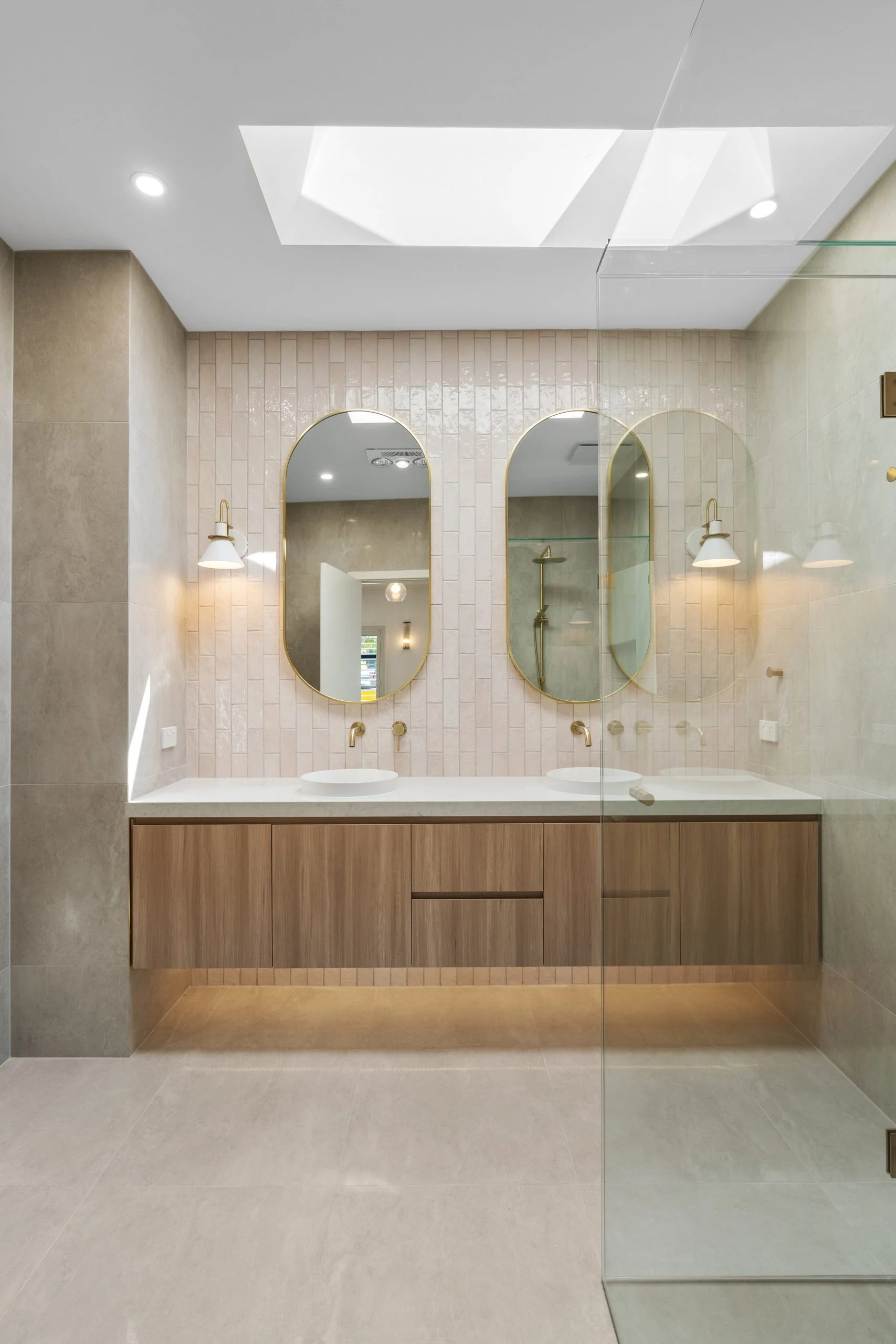
If you're living in Geelong, you probably know the feeling. One room in the house always seems to stay dull no matter how many lights you switch on. It might be a south-facing living area, a hallway in the middle of the floorplan, or a bathroom that never feels quite fresh enough. You can repaint it, add brighter globes, even change the furniture, and it still feels flat.
That usually means the problem isn't décor. It's the type of light.
Good lighting options in Geelong homes aren't just about more brightness. They're about getting the right light into the right place, at the right time of day, without making the room feel harsh, stuffy or artificial. That matters even more in local homes, where you often see a mix of older weatherboards, renovated brick homes and newer coastal builds with big open living zones.
Geelong has already shown a strong move toward modern lighting. The City of Greater Geelong replaced over 22,000 old street lights with energy-efficient LEDs, cutting $2.2 million in annual operational costs, which says a lot about how seriously the region is treating efficient, better-performing lighting in everyday spaces, not just public ones, according to Powercor's summary of the rollout. Inside the home, the same principle applies. Better light changes how a room works and how it feels to live in.
If you're also rethinking walls, ceilings and room flow, this guide to open floor plan design ideas from CJMC Build is worth a look because lighting and layout always affect each other.
Table of Contents
Brightening Your Geelong Home A New Way
A lot of homeowners start in the wrong place. They look at a fitting catalogue first, when the smarter move is to ask why the room feels gloomy in the first place. If the ceiling light is doing all the work, the room usually ends up with bright patches, dark corners and that tired, closed-in feeling.

In Geelong homes, the answer often comes down to two paths. The first is bringing daylight in from above through a properly chosen skylight. The second is using a ceiling light that gives a skylight-like effect where a roof opening isn't possible. Both can work. The trick is matching the solution to the house, not forcing the house to suit the product.
What works better than adding more downlights
More downlights don't always fix a dark room. They can make it worse if the light is sharp, badly placed or aimed straight into your eyes when you're sitting down. That's common in open-plan spaces with raked ceilings, polished floors or long narrow hallways.
A room feels comfortable when the light is spread well, not just when it's bright.
For most homes, the best result comes from treating light like a building material. Daylight gives softness and depth. Artificial light fills the gaps and handles night-time tasks. When you combine them properly, the house feels calmer and more valuable without needing a major rebuild.
The local shift is already happening
The wider Geelong market has already moved toward modern lighting standards. Public projects across the region show a clear preference for efficient, better-controlled systems rather than older, high-wattage fittings. That matters because homeowner expectations tend to follow what people see working around them in streets, shopping strips and civic spaces.
That's why any useful guide to lighting options in Geelong needs to go beyond globes and pendants. The key question is how to make dark spaces feel natural, liveable and easy to maintain.
The Power of Natural Light with Vivid Skylights
Natural light does something electric light struggles to copy. It fills the room from above, softens edges, lifts colours and makes the whole ceiling feel taller. In practical terms, that means less dependence on switched lighting during the day and a room that feels more open the moment you walk in.

Why daylight changes a room properly
If a room has one small window on the side, the light enters from one direction. You get shadows, contrast and dead spots. A skylight changes that because the light drops in from overhead and spreads more evenly across the floor, walls and furniture.
That matters in kitchens, living rooms and stairwells, but it matters just as much in everyday problem areas like walk-in robes, laundries and internal bathrooms. The improvement isn't only visual. People use the room differently when it feels brighter and less boxed in.
For a closer look at why overhead daylight changes comfort inside the home, the guide on benefits of natural light in the home is a practical place to start.
Fixed skylights for simple consistent light
A double-glazed fixed skylight suits homeowners who want daylight without adding another moving part to the roof. These work well in living rooms, kitchens, voids and hallways where the main job is to pull natural light deep into the home.
The practical appeal is straightforward:
Less fuss: once installed, a fixed unit doesn't need daily operation.
Clean roofline: frameless top glazing gives a neater finish and helps avoid the look of a bulky box sitting on the roof.
Useful in big spaces: if the room needs broad daytime light rather than ventilation, fixed usually makes more sense than operable.
Vivid Skylights supplies double glazed fixed skylights as well as operable models, with delivery available across Australia. For homeowners comparing lighting options in Geelong, that gives you a natural-light route that isn't limited to metro-only supply.
Operable skylights for light plus airflow
An operable skylight solves a different problem. It doesn't just brighten the room. It lets heat, steam and stale air escape. In a bathroom, that can mean less lingering moisture after a shower. In a kitchen, it helps clear trapped warmth that hangs near the ceiling. In an upstairs room, it can make the space feel less stuffy in the late afternoon.
You can usually split operable choices into two camps:
Electric opening skylights for easy push-button control.
Solar powered opening skylights where you want powered operation without running the same sort of wiring setup.
Some homeowners also want add-ons such as rain-sensing openers, block-out blinds and flyscreens. Those are worth considering when the skylight sits over a bedroom, media room or bathroom where comfort changes over the course of the day.
Practical rule: Choose fixed when your problem is darkness. Choose operable when your problem is darkness plus trapped air.
Introducing AuraGlow The Smart LED Skylight Alternative
Not every home can take a traditional skylight. Some rooms sit under another storey. Some roofs are crowded with framing, services or awkward geometry. Sometimes the ceiling is in the right spot, but the roof above it isn't. In those cases, forcing a standard skylight into the design can become expensive or messy.
That's where a skylight-style LED solution starts to make sense.

When a real skylight isn't practical
The common dead zones are easy to recognise:
Internal hallways: no outside wall, no natural window light.
Ground-floor rooms under upper levels: nothing but structure above.
Walk-in robes and small studies: too enclosed for daylight from the side to do much.
Apartments or tight renovations: limited ability to alter the roof.
In those spots, standard ceiling lights often feel flat because they look like what they are. A downlight is still a downlight, even if it's bright. It doesn't create the visual lift that people usually want when they say they want a room to feel more open.
What makes AuraGlow different
The AuraGlow LED skylight range is designed for those problem spaces. Instead of acting like a basic ceiling fitting, it projects light in a way that gives the impression of a skylight overhead. The bigger difference is that it changes colour through the day to create the feel of an evolving sky rather than a single static light tone.
That's why it suits rooms where mood matters as much as brightness. A hallway can feel less tunnel-like. A home office can feel less boxed in. A robe or internal bathroom can look more intentional instead of “lit”.
If you want to see how that system works in practice, the AuraGlow range overview shows the concept clearly.
AuraGlow isn't a patch for a failed plan. In the right room, it's the right plan from the start.
The useful way to think about it is simple. A real skylight brings the sky in. AuraGlow recreates the visual effect when the roof above won't allow it. That makes it one of the more interesting lighting options in Geelong for renovations where daylight access is limited by structure rather than design ambition.
How to Choose the Right Lighting for Each Room
The easiest way to choose badly is to shop by product name alone. Fixed skylight, opening skylight, LED panel. Those labels matter, but the room matters more. A bathroom has different needs from a kitchen. A hallway has different needs from a raked-ceiling living room.
Start with the room not the fitting
Ask four plain questions before you choose anything:
Is the room dark during the day? If yes, daylight from above may solve the core issue better than stronger artificial lighting.
Does the room trap moisture or heat? Bathrooms, laundries and kitchens often need ventilation as much as light.
Can the roof above take a skylight? Structure decides a lot.
Do you want a natural-light look or just functional brightness? They aren't the same thing.
If you're also planning to automate your home lighting systems, it helps to think about skylights and electric lighting together rather than treating them as separate projects. That usually leads to a calmer result.
For homeowners sorting through sizes, room placement and roof compatibility, this guide to choosing the right skylight is a helpful reference.
Lighting Options at a Glance
| Feature | Vivid Fixed Skylight | Vivid Operable Skylight | AuraGlow LED Skylight |
|---|---|---|---|
| Light quality | Natural daylight from above | Natural daylight from above | Artificial light designed to mimic skylight effect |
| Ventilation | No | Yes | No |
| Best use | Living rooms, kitchens, hallways, voids | Bathrooms, kitchens, upper rooms, spaces needing airflow | Internal hallways, robes, lower-floor rooms, spaces without roof access |
| Installation complexity | Moderate, depends on roof and ceiling | Higher than fixed because it includes opening hardware | Often simpler where roof penetration isn’t possible |
| Daytime feel | Most natural | Most natural with added airflow | Strong visual effect where a real skylight can’t go |
| Upfront cost | Usually lower than operable | Usually higher than fixed | Depends on size and application |
Room by room practical picks
A bathroom usually benefits most from an operable skylight. Steam has somewhere to go, and you get privacy without relying on frosted windows. If the bathroom sits under another level, an AuraGlow-style fitting can still make the space feel lighter and less closed in.
A main living area often suits a larger fixed skylight. In such spaces, overhead daylight creates the biggest visual payoff. The room looks taller, timber floors read better, and the light feels less patchy across the day.
For a hallway or walk-in robe, a traditional skylight can be brilliant if the roof allows it. If not, a skylight-look LED usually makes more sense than loading the ceiling with small downlights.
A kitchen depends on the layout. If the room already has decent cross-ventilation, fixed can be enough. If heat builds up near the ceiling, operable starts earning its keep.
If you're unsure, don't ask which product is best. Ask what the room is failing at now.
One technical point people often miss is glare and beam control. In homes with sloped ceilings, low-glare fittings and directional trims matter. A product benchmark sold by Lighting Options, the Unios EQ Comfort, advertises UGR <16 and 805 lumens at 10W, which is useful because sloped interiors can feel uncomfortable long before they feel underlit, as shown on the Unios EQ Comfort product page. That's one reason lighting options in Geelong need to be judged on comfort, not just output.
For standard downlight applications in mixed-use residential spaces, another local benchmark is the Unios Apex Downlight range sold by Lighting Options, which spans 8W to 25W, 673 lm to 2374 lm at 3000K, with IP65 protection and 15–90° adjustability, according to the Apex Downlight specifications. In plain terms, that flexibility helps when ceiling heights and room uses vary from one part of the house to another.
Installation in Geelong Weather and Council Advice
A skylight can look perfect in the brochure and still be the wrong choice for a Geelong roof. I see that with coastal homes in Barwon Heads and Ocean Grove, and with older places closer to central Geelong. The product matters, but the install matters more.
What to check before cutting into the roof
Start with the house itself. Roof pitch, roof material, ceiling cavity, rafter spacing and access all affect what can be installed cleanly and what will cost more in labour. A tiled roof and a metal roof need different flashing details, and that is where shortcuts usually show up first once winter rain arrives.
Council controls can matter too. Heritage overlays, streetscape rules and visible roof alterations may affect placement or what can be seen from the street. That does not rule out a skylight. It means the unit needs to be chosen with the exterior in mind, especially on character homes where a low-profile finish is less likely to create planning friction.
For local homeowners weighing fixed skylights, operable models, or a smart LED alternative such as AuraGlow, the practical starting point is a supplier who understands local roofs and local conditions. The guide to Geelong skylight supply and installation is useful for that reason.
Why coastal conditions change the decision
Greater Geelong has a wide spread of conditions. A home near the bay deals with salt air and wind-driven rain. A sheltered suburban block inland has a different set of pressures. That changes the specification.
In exposed areas, I put more weight on flashing quality, corrosion resistance, glazing performance and how well the unit sheds water under pressure. Decorative trim matters less once a southerly starts pushing rain sideways. Good installation works like a good raincoat. If the joins are wrong, the material itself will not save you.
This also affects the choice between standard fittings and more advanced options. Dynamic LED systems such as AuraGlow avoid roof penetration entirely, which can be attractive where the ceiling is hard to access or the owner wants daylight-style illumination without touching an awkward roof. Premium operable skylights still earn their place in kitchens, bathrooms and upper-storey rooms where ventilation is part of the brief, especially in modern coastal homes that trap heat under insulated roofs.
One local benchmark worth checking is ingress protection. The EQ Comfort lists IP44, which suits interior areas where occasional moisture is expected, according to the broader Lighting Options range and product information. That is different from a fitting expected to cope with harsher exposure. In practical terms, the wrong rating can age quickly once moisture and salt are in the mix.
Geelong's wider shift toward LED infrastructure also points in the same direction. The city's smart street-lighting upgrade was designed around long-term efficiency and controllability, as outlined in Ironbark Sustainability's article on the project. For homeowners, the lesson is simple. Choose a lighting solution that suits the room, and install it for the weather it will face.
Why Choose Vivid Skylights for Your Project
When homeowners narrow the shortlist, they usually want three things. A product that won't become a leak headache, a buying process that feels manageable, and the option to get the same system even if they aren't based in Melbourne.
That's where the practical appeal is fairly clear. Vivid Skylights offers a 10-year leak-free warranty, finance options for households that want to spread the cost, and nationwide delivery across Australia. Those things don't make the decision for you, but they do remove some common friction points that stop people from acting.
The product range is also broad enough to cover the usual real-world split. Some rooms only need double-glazed fixed daylight from above. Others need opening units with electric or solar-powered operation. A few need a non-traditional answer, which is where the LED skylight-style approach comes in.
For a direct overview of the company and product categories, the Vivid Skylights company page lays out the basics clearly.
Your Next Steps to a Brighter Home
You notice it on an ordinary afternoon. The kitchen is bright enough, but the hallway still needs the switch on. The bathroom feels heavy after a shower. A back room gets light, but it is the wrong kind. Harsh, flat, or gone too early.
That is usually the point where a clearer plan starts.
Walk through the house between late morning and early afternoon and look for rooms that still feel dull or uncomfortable. Check where the light falls, how long it lasts, whether glare hits benches or screens, and whether moisture hangs around longer than it should. In Geelong homes, especially near the coast, that mix matters. Salt air, shifting weather, and low winter light all change what works in practice.
Then sort the job by need, not by product name.
Write down the problem rooms. Hallways, bathrooms, laundries, stairwells, robes, and deeper living zones usually top the list.
Match the room to the specific issue. A dark passage may suit a fixed skylight or AuraGlow. A bathroom often needs daylight plus ventilation, which points to an operable skylight.
Check the ceiling and roof space. Some homes have easy roof access and enough pitch for a traditional unit. Others have tight truss layouts or awkward ceiling cavities, where an LED skylight alternative makes more sense.
That last step saves people money. I have seen homeowners buy for appearance first, then realise the product does not suit the roof above it or the room below it.
If you want a practical start, get a rough price online, then speak with someone who can assess the room properly. Good advice should cover the ceiling type, roof access, orientation, airflow, and how the space is used day to day. That is how you end up with more usable light, better comfort, and a result that adds value instead of becoming a compromise.
If you are comparing options for a Geelong home, Vivid Skylights is a useful place to start. You can review fixed skylights, premium electric and solar operable models, and the AuraGlow range for spaces where a conventional skylight is not the right fit.