

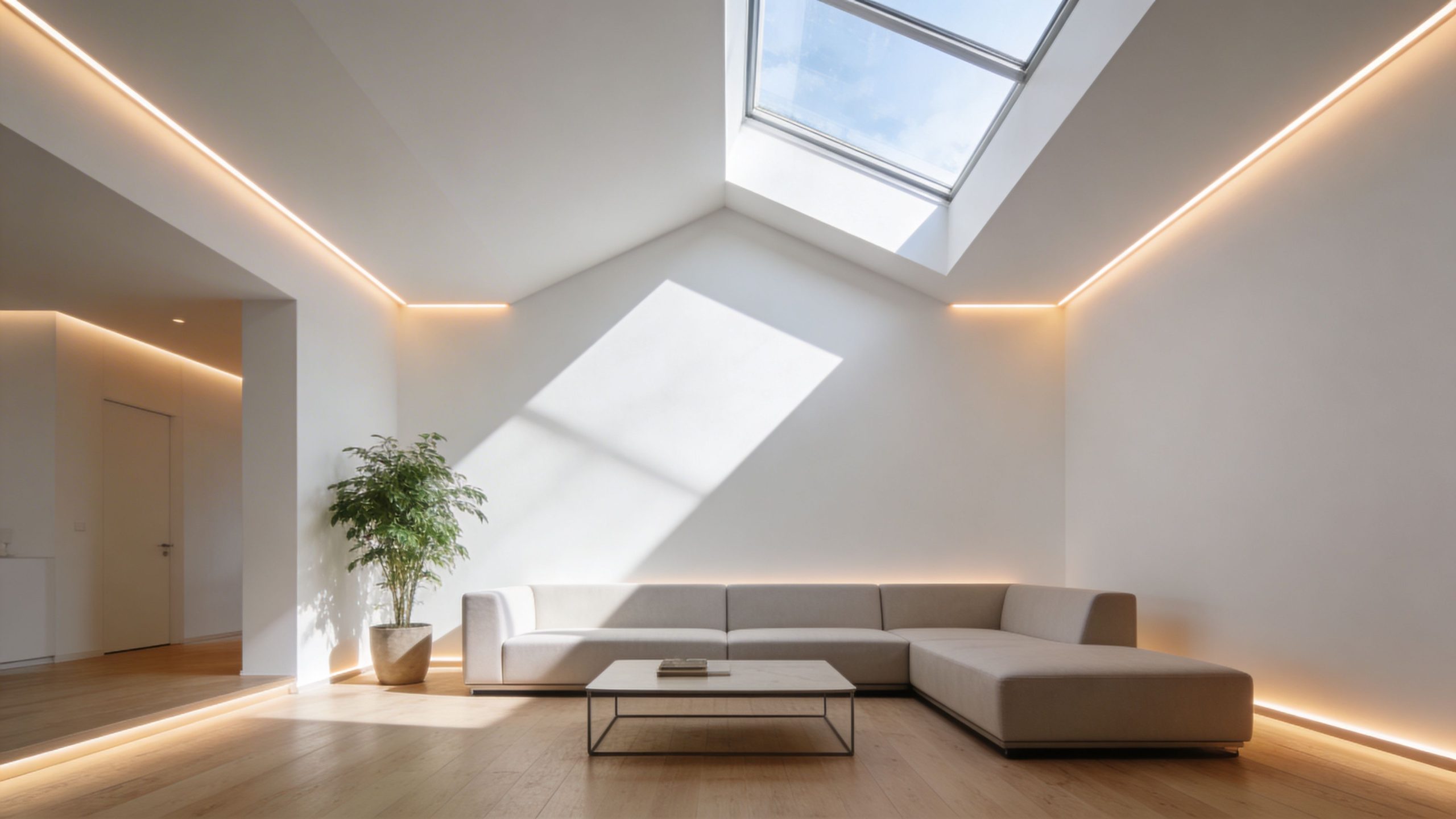
A lot of people start with the same complaint. One room in the house always feels flat, gloomy, or oddly disconnected from the rest of the space. The usual fix is to add another lamp, swap a bulb, or install brighter downlights.
That approach works sometimes. Often, it just gives you a brighter version of the same problem.
Good lighting options start with a different question. Instead of asking which fitting to add, ask where the light should come from first. In most homes, the most comfortable rooms during the day aren’t the ones with the most fixtures. They’re the ones with the best daylight, then the right artificial lighting layered around it for evenings, tasks, and mood.
Table of Contents
Beyond the Bulb Rethinking Your Home's Lighting
A dark hallway, a windowless bathroom, or a living room that needs every switch turned on by mid-afternoon usually signals a planning issue, not a bulb issue. More fittings can help, but they rarely make a room feel naturally comfortable.

The better approach is natural-light-first. That means treating daylight as the foundation, then using artificial light to support it where needed. It’s a practical shift, not a design trend.
In Australian homes, residential lighting accounts for approximately 11% of household electricity consumption, and transitioning to natural daylight solutions like skylights can reduce this by up to 30 to 50%, with daytime lighting energy use cut by 35% on average in homes with modern double-glazed units (lighting technology timeline).
Start with the room, not the fitting
When I assess lighting options, I look at three things before I think about lamps or LEDs:
Where the room is darkest: Corners, internal zones, and long ceiling spans usually tell you where daylight is missing.
When the room fails: Some rooms are fine in the morning but poor after lunch. Others are dim all day because the roofline or neighbouring buildings block usable light.
How the room is used: A kitchen, ensuite, stairwell, and walk-in robe all need different lighting behaviour.
Practical rule: If a room needs full artificial lighting in the middle of the day, the first fix should be daylight access, not simply a stronger globe.
Why old lighting habits fall short
Many homes still rely on a single overhead light as the default solution. It turns the room on, but it doesn’t shape the room. Shadows stay in the wrong places. Surfaces can feel harsh. The space still doesn’t feel settled.
That’s why renovation planning often benefits from broader inspiration. If you’re weighing general fixture choices as well as daylighting, these top lighting ideas offer a useful design perspective for residential spaces.
For homeowners trying to create a more cohesive plan, it also helps to look at lighting as part of the architecture, not just the electrical layout. This guide to https://vividskylights.com.au/architectural-lighting-design/ is a useful reference point when you’re thinking about light direction, room function, and ceiling design together.
Natural Daylight vs Artificial Light Explained
Natural light and artificial light don’t do the same job, even when a room looks bright enough on paper. They behave differently across surfaces, change differently through the day, and affect how a space feels.
Artificial lighting is still essential. You need it at night, for focused tasks, and for atmosphere. But if you reverse the order and make electric lighting the primary daytime source, rooms often feel flatter than they should.

The three jobs artificial light does well
Artificial lighting works best when it has a clear role:
Ambient light: General background illumination from ceiling fittings, pendants, or recessed lights.
Task light: More focused light over benches, vanities, desks, or reading chairs.
Accent light: Light used to highlight texture, joinery, art, or architectural features.
Problems start when one type tries to do all three jobs. A bank of downlights can brighten a room, but it won’t automatically make it feel balanced.
Natural vs. Artificial Light at a Glance
| Feature | Natural Light (e.g., Skylights) | Artificial Light (e.g., LEDs) |
|---|---|---|
| Feel in a room | Changes through the day and gives spaces a more open feel | Consistent and controllable, but can feel static if overused |
| Best role | Primary daytime illumination | Night use, task lighting, and accent lighting |
| Coverage | Can spread broadly from above and reach deeper into rooms | Depends on fixture placement and beam spread |
| Energy impact | Reduces reliance on switched lighting during the day | Uses electricity whenever it’s on |
| Control | Driven by placement, glazing, blinds, and room orientation | Easy dimming, switching, zoning, and colour control |
| Ideal use | Main living areas, hallways, bathrooms, kitchens, internal rooms | Bedrooms at night, vanities, benches, study zones, feature lighting |
What daylight does that fittings can’t
Daylight has a softness and variability that electric lighting usually imitates rather than matches. It reveals wall colour better, gives more natural contrast, and helps a room feel connected to the time of day.
That doesn’t mean every room should avoid artificial lighting. It means the smartest lighting options use daylight for broad daytime coverage, then layer in fittings for control and function.
If heat and glare are part of the conversation, window treatments matter too. Homeowners comparing daylight management tools may find these notes on solar screens for windows useful alongside ceiling-based daylight solutions.
Good lighting design doesn’t force you to choose between natural and artificial light. It decides which one should lead in each room.
For a closer look at how ceiling daylight and electric lighting can work together rather than compete, this practical guide to https://vividskylights.com.au/skylight-artificial/ is worth reviewing.
Why Skylights are the Premier Natural Lighting Solution
Windows are useful, but they have limits. They rely on wall space, they compete with furniture layouts, and they often leave the centre of the room underlit. That’s why some homes have bright perimeters and dull interiors.
Skylights solve a different problem. They bring light from above, which changes how the entire room reads.

A well-placed skylight can make a hallway feel wider, a bathroom feel less enclosed, and an open-plan living area feel more even from one end to the other. The effect isn’t just brightness. It’s balance.
Why top-down light changes the room
Light from above reaches parts of a room that side windows often miss. It also creates a more even wash across floors, walls, and joinery. In practical terms, that means fewer gloomy centres and fewer situations where you need artificial light on a clear day.
Skylights can help a home achieve daylight autonomy of 60 to 80%, reducing reliance on electric lighting by up to 75% during daylight hours while complying with Australia’s NCC energy efficiency standards. That assigned fact appears in the project brief and supports why overhead daylighting performs so well in residential settings.
Where skylights outperform ordinary fixture upgrades
Some lighting options improve a room. Skylights can change the way the room is used.
Internal bathrooms: They feel cleaner and more open with daylight from above.
Hallways and corridors: These are often impossible to fix properly with wall windows.
Kitchens: Overhead daylight softens the contrast between benchtops, overhead cabinets, and circulation zones.
Living rooms with deep floorplans: The middle of the room stops feeling disconnected from the windows.
A short visual example helps here:
They also make sense as a long-term upgrade
A skylight isn’t only a lighting decision. It’s also a design and property decision. Buyers notice rooms that feel naturally bright. Renovators notice when a formerly dead zone becomes usable without switching on the lights.
That’s why skylights tend to outperform simple fixture swaps when the goal is transformation rather than patching over a dark spot. If you want the practical side of that value proposition, https://vividskylights.com.au/benefits-of-skylights/ covers the core advantages clearly.
The biggest difference with skylights isn’t that they add more light. It’s that they put light in the part of the room where ordinary windows often can’t.
Finding Your Perfect Skylight with Vivid Skylights
Choosing between skylight types comes down to what problem you’re solving. Some rooms only need more daylight. Others need daylight plus ventilation. Some projects are straightforward tiled-roof retrofits. Others need tighter control over glare, privacy, and airflow.
Fixed skylights for pure daylight
Fixed units suit rooms where ventilation isn’t the priority. Think hallways, stair voids, living zones, and spaces that already have enough operable windows.
They’re usually the cleanest choice when you want:
A brighter room without extra controls
A simpler installation scope
A strong architectural look from inside and outside
Double glazing matters here. It helps moderate thermal performance while still bringing in useful light.
Operable skylights for light plus airflow
In bathrooms, kitchens, and upper-storey spaces, opening skylights often make more sense than fixed ones. They don’t just brighten the room. They give trapped warm air a path out.
Electric opening skylights integrate IP65-rated motors with rain sensors that automate closure, helping reduce indoor overheating by 5 to 8°C in summer via passive ventilation and cutting cooling energy loads by up to 30% (lighting technology history).
That combination is especially useful in rooms where moisture, heat, or stale air build up quickly.
Solar-powered models when wiring is awkward
Some homes are ideal for operable skylights but less convenient for hardwired electrical work. Solar-powered units suit that scenario well. You still get opening and closing functionality, but with less dependence on traditional wiring access.
For many homeowners, that makes the project easier to plan during a renovation rather than a full electrical overhaul.
Features that are worth paying attention to
Not every skylight is built the same. The details affect long-term performance to a degree often underestimated.
Look closely at:
Glazing: Double glazing is the baseline I’d want for thermal efficiency in a quality residential product.
Top profile: Frameless top glazing helps water shed cleanly and reduces the chance of pooling.
Glass finish: Self-cleaning glass can lower maintenance, which matters on roof installations.
Accessories: Block-out blinds and fly screens aren’t afterthoughts. In the right room, they’re part of the specification.
Flashing kits: Included roof-compatible flashing makes planning far easier for installers and capable DIY renovators.
If you’re comparing formats, the Vivid Skylights range includes fixed, electric operable, and solar-powered operable models, along with nationwide delivery across Australia. Their range also includes double-glazed units, tiled-roof flashing kits, and accessory options that suit both new projects and retrofits.
Brighten Any Room with the AuraGlow LED Skylight
Some rooms can’t take a traditional skylight. There might be another storey above, a slab ceiling, apartment constraints, services in the cavity, or a roofline that makes installation impractical.
That’s where the idea usually stalls. Homeowners assume they’re back to a standard ceiling light and nothing more.
AuraGlow changes that conversation. Instead of trying to force a roof opening where one won’t work, it creates the visual effect of a skylight within the room itself. The result feels far closer to a ceiling window than to an ordinary LED panel.
Where it makes the most sense
AuraGlow suits the spaces that are often hardest to brighten well:
Ground-floor bathrooms with no direct roof access
Apartments where roof penetrations aren’t possible
Hallways and robes buried in the middle of the floorplan
Multi-storey homes where the desired room sits below another room
In those situations, a conventional fitting often solves visibility but not atmosphere. AuraGlow is aimed at the atmosphere problem.
Why it feels different from a normal ceiling light
The key detail is that it’s designed to project light more like a skylight than a flat overhead fixture. It also changes colour through the day to create the illusion of the shifting sky. That matters because static light can make a room feel artificial even when it’s technically bright enough.
A difficult room doesn’t always need more wattage. Sometimes it needs a light source that feels believable in the architecture.
That makes AuraGlow a useful option when you want the look of daylight and a more refined ceiling feature, but a traditional roof-mounted unit isn’t on the table. If you want to see how that approach works in practice, https://vividskylights.com.au/skylight-led-lighting/ shows the concept in more detail.
Your Skylight Installation and Design Checklist
A skylight can look effortless once it’s in. Getting there takes a few practical decisions early. The best results usually come from treating placement, room use, and artificial lighting as one combined plan.
Check the room’s real need
Start by identifying what the room lacks most.
Is it short on light all day? A fixed skylight may be enough.
Does it also trap heat or moisture? An operable unit is often the smarter call.
Is privacy important? Ceiling daylight can be far better than adding another wall window.
Will the room need darkness at times? Plan for block-out blinds from the start, not later.
Place the skylight where the room actually uses light
The middle of the ceiling isn’t always the right spot. In kitchens, the useful zone may be over circulation rather than directly above the island. In bathrooms, avoid positions that create glare at the mirror. In living areas, think about where people sit and where screens are located.
A few rules of thumb help:
Avoid screen glare: Don’t place strong daylight directly where it will reflect onto televisions or monitors.
Think about spread, not just centreline: One well-positioned unit can work better than a poorly placed larger one.
Use daylight to support task areas: Benches, vanities, and walkways should benefit first.
Remember ceiling shafts: Deep shafts can affect how light lands in the room.
Plan the artificial lighting around the skylight
This is the step many people skip. Once daylight becomes the lead source, the electric lighting should become more selective.
That usually means:
keeping ambient fittings softer,
using task lighting only where needed,
and letting accent lighting do the visual finishing in the evening.
You don’t want your new skylight fighting a grid of overly bright downlights.
On site note: The best skylight projects I see aren’t the ones with the most fittings. They’re the ones where every electric light left in the room has a clear reason to be there.
Be realistic about installation
Roof type, ceiling access, shaft depth, and weatherproof detailing all matter. DIY-capable products can simplify the process, especially when flashing kits are included for tiled roofs, but plenty of homeowners still prefer professional installation for peace of mind.
Before you commit, review the practical steps here: https://vividskylights.com.au/installation-of-skylight/
If you’re pricing options, it also helps to compare the skylight itself, the accessories you’ll want from day one, and whether the room would benefit more from fixed, electric, solar, or LED-simulated daylight.
Your Lighting Questions Answered
Are skylights suitable for every roof?
Not every roof is equally straightforward, but many homes can accommodate a skylight with the right product and flashing detail. Roof pitch, structure, roofing material, and ceiling configuration all influence what’s practical.
The key is matching the unit to the roof condition rather than assuming one format suits every house.
Will a skylight make the room too hot in summer?
A poor-quality skylight can create that problem. A well-specified double-glazed unit is a different story. Glazing choice, installation quality, and whether the skylight opens all affect comfort.
If summer heat is already an issue in that room, an operable model with automated weather response usually makes more sense than a fixed one.
Do skylights leak?
Leaks are usually an installation or detailing problem, not an unavoidable skylight problem. The product profile, flashing system, and roof integration matter more than marketing language.
That’s why I’d always pay attention to frame design, glazing profile, and whether the flashing kit is designed for the roof type you have.
Are they hard to maintain?
Most modern units are fairly low maintenance if they’re properly installed and the glazing is designed for roof exposure. What you’ll typically monitor is general cleanliness, seal condition, and whether operable components are functioning smoothly.
If easy upkeep matters, details like self-cleaning glass and accessible controls are worth prioritising.
What if I can’t install a traditional skylight?
That doesn’t rule out a skylight-style solution. Rooms under another storey, apartments, and enclosed internal areas can still benefit from ceiling-mounted lighting that mimics the appearance and rhythm of daylight.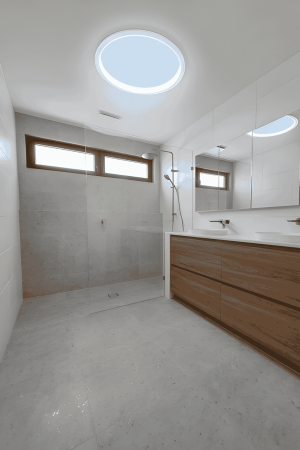
That’s exactly where a simulated skylight format can be more useful than a standard decorative fitting.
Should I replace all my existing lights once I add a skylight?
Usually, no. The better move is to reduce and refine. Keep the fittings that support night use, tasks, and ambience. Remove or rethink any that only existed to compensate for a dark room during the day.
That’s how lighting options start working together instead of competing.
If you’re weighing fixed, electric opening, solar-powered, or LED skylight-style options, Vivid Skylights offers product information, installation guidance, and Australia-wide delivery to help you match the right daylight solution to the room you want to improve.