

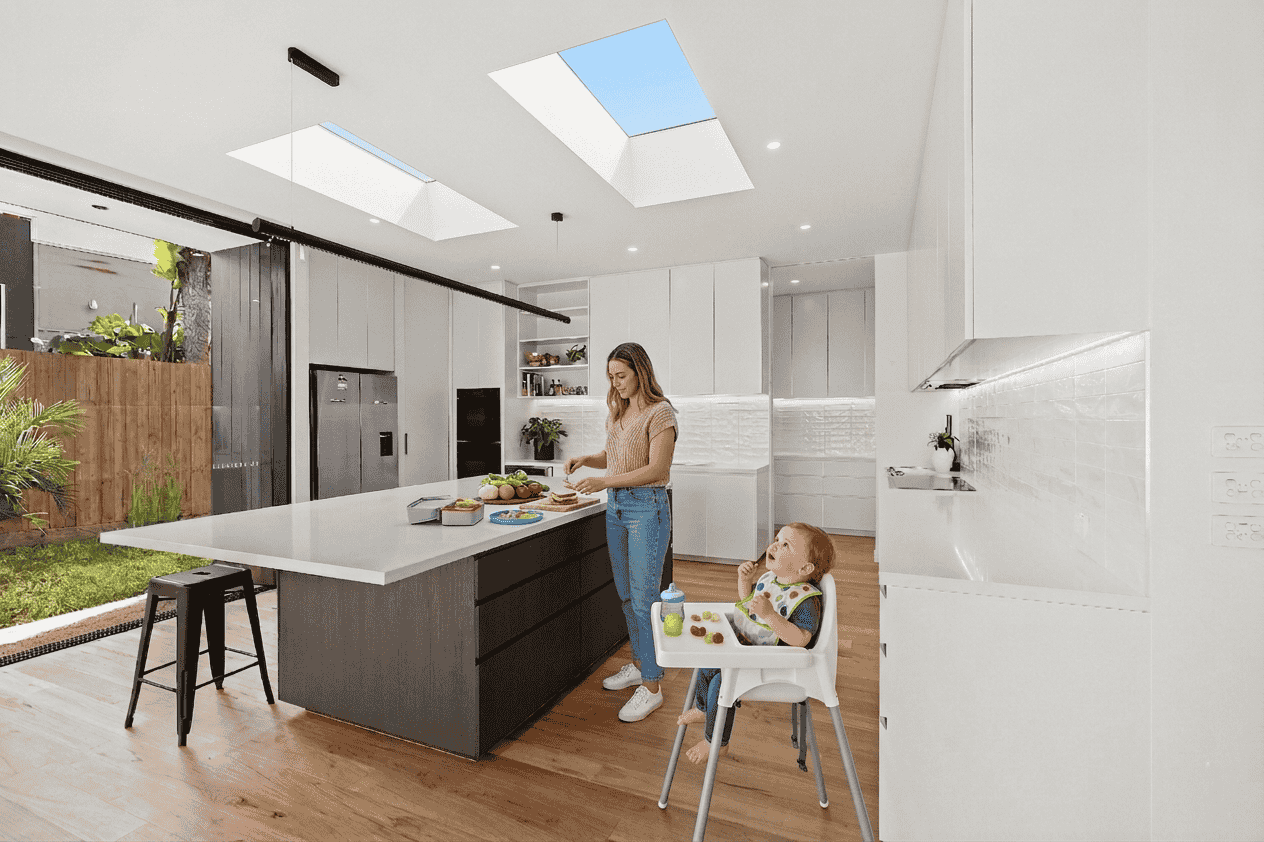
Yes, skylights can add value to a house, and Australia's renovation-led housing market gives that upgrade real relevance, with more than 11 million private dwellings counted in the 2021 Census. The return, though, isn't automatic. It depends on the quality, type, placement, and installation standard of the skylight.
If you're getting a home ready for sale, or weighing up a renovation with one eye on resale, you've probably noticed a pattern during inspections. Dark homes feel smaller than they are. Bright homes feel finished, calm, and easier to imagine living in. That difference matters.
A well-placed skylight can change the way a buyer reads a room in the first few seconds. A gloomy hallway starts feeling architectural. A closed-in bathroom feels fresher. A kitchen that needed every downlight switched on at noon suddenly feels premium. That's where the true value sits. Not in a universal resale percentage, because there isn't one, but in how natural light lifts presentation, liveability, and buyer confidence.
There's also a practical side to the appeal. Australian guidance around passive solar design supports daylighting features that can reduce daytime lighting demand, which helps explain why these upgrades hold their appeal in energy-conscious markets and established homes alike. If you want the strongest outcome, quality installation isn't optional. Buyers will pay attention to finish, glazing, roof integration, and whether the skylight looks like a considered upgrade or a future problem.
Table of Contents
The Bright Answer to a Million-Dollar Question
A buyer walks through two similar homes on a Saturday. One feels flat, even though the kitchen is new and the paint is fresh. The other has light falling into the centre of the plan from above, and people slow down the moment they step inside. That reaction matters, because buyers rarely separate layout, light, and finish quality in their heads. They judge the whole home at once.

So, do skylights add value to a house? Yes, if they are treated as an architectural upgrade rather than a cheap add-on. The value comes from solving a weak spot in the home, improving how rooms feel day to day, and giving the property a polished, higher-end impression at inspection time.
In Australian homes, that usually means bringing daylight into the parts of the floor plan that wall windows cannot fix well. Internal bathrooms, long hallways, south-facing kitchens, and boxed-in living areas are common examples. A well-placed skylight can make those spaces feel cleaner, more open, and more expensive, which is why quality products such as Vivid Skylights' double-glazed units tend to outperform basic acrylic domes in both comfort and resale appeal.
There is a catch. Buyers notice poor skylights too.
If a unit looks undersized, throws harsh glare, overheats the room, or raises doubts about leaks, the feature stops adding confidence and starts creating friction. That is why product quality and installation standard are tied directly to return. Homeowners comparing options should understand the benefits of natural light in the home before choosing on price alone.
What buyers notice straight away
A skylight does its best work when it changes the way the home is experienced, not when it merely ticks a feature box.
Brighter problem areas: halls, stairwells, laundries, and bathrooms feel usable instead of leftover
Better presentation of finishes: benchtops, tiles, flooring, and paint colours read more clearly in natural light
A stronger sense of design intent: the home feels updated in a way buyers can feel immediately, even if they cannot name the reason
Practical rule: Skylights add the most value when they fix a part of the house that already felt compromised.
That is also why premium specification matters so much in this category. In my experience, a double-glazed skylight with clean detailing and proper flashing works like a built-in upgrade to the architecture. It creates the kind of wow factor that helps a home stand out in a competitive Australian market, while lower-grade products can look like an afterthought. If you want to discover how to improve property value, this is the lens to use. Choose features that buyers feel instantly and trust on inspection.
How the Wow Factor Translates to Real Dollars
A skylight's biggest financial benefit usually comes from perception first and valuation second. Buyers don't stand in a hallway and calculate lumens. They react to the room. If it feels brighter, larger, and more resolved, the whole house can feel better maintained and more desirable.

That's why the strongest value-add is often indirect resale uplift through daylight quality, not a fixed premium. This Australasian-focused overview notes that natural light is treated as a core amenity affecting buyer preference and perceived quality, especially in homes with dark corridors, bathrooms, laundries, and rooms that lack enough window area.
Why emotion matters at inspections
The “wow factor” isn't fluff. It's shorthand for a buyer making positive assumptions.
When a room is washed with natural light from above, people often assume the space is larger, newer, and more expensive than it really is. That matters during open homes, because offers are influenced by feeling as much as logic. A skylight can do for a room what good styling does for furniture placement. It helps buyers see the best version of the property.
A dark room asks a buyer to overlook a problem. A bright room asks them to picture themselves living there.
If you want a broader list of renovation ideas that shape buyer perception, this guide from Pinnacle Property Media can help you discover how to improve property value in ways that support presentation as well as function.
Where the uplift tends to be strongest
Not every room benefits equally. In real homes, the strongest response usually comes from spaces that are structurally hard to brighten any other way.
Internal bathrooms: These often go from enclosed to fresh with overhead daylight.
Hallways and corridors: A skylight can turn a pass-through zone into a design feature.
Laundries and utility rooms: Good light makes practical spaces feel less neglected.
Kitchens: Task areas feel sharper and more premium under natural light.
What doesn't create wow factor
A poor skylight can cancel out the benefit quickly.
Awkward placement: Light falls in the wrong spot and creates glare instead of comfort.
Cheap visual finish: Bulky frames or poor shaft detailing can make the addition look retrofitted.
Maintenance anxiety: If buyers suspect leak risk, the emotional upside disappears.
The key point is simple. The premium doesn't come from having a hole in the roof. It comes from making the house feel better than the competing properties a buyer saw that morning.
Calculating Your Skylight Return on Investment
A homeowner usually asks for one number. In practice, skylight ROI is closer to a renovation balance sheet. You weigh upfront cost against resale appeal, day-to-day comfort, and the quality signals buyers pick up the moment they walk in.
That matters in Australia, where light-filled interiors sell a feeling as much as a floor plan. A well-placed skylight can make an ordinary hallway, kitchen, or bathroom feel custom designed. That architectural lift is where much of the value sits, especially if the product looks premium and performs well in summer and winter.
What goes into the cost side
The actual spend covers more than the unit in the roof. It includes everything needed to make the result look intentional from inside and stay weather-tight above the ceiling.
The skylight product
Fixed and operable models sit at different price points. Frame quality, glazing, and finish also affect long-term value.Installation labour
Roof pitch, access, shaft depth, ceiling finish, and internal trim all change the complexity.Supporting components
Flashings, blinds, electrical connection for powered units, and plastering or painting often add more than homeowners expect.Approval and technical checks
Some jobs are simple. Others need extra review because of roof structure, placement, or scope.
Homeowners who price the project properly from the start usually make better decisions. This guide to skylight cost and installation is a useful starting point because it covers the full job, not just the unit price.
What goes on the return side
The return rarely lands in a single line item. It shows up in how the home lives now and how it competes later.
Stronger buyer response: Bright spaces feel larger, cleaner, and more expensive.
Better presentation: Natural light improves photography, inspections, and first impressions.
Lower daytime lighting use: You get practical benefit before the property ever hits the market.
Higher perceived finish level: A quality skylight can read as an architectural upgrade, not a simple add-on.
The comparison is closer to a kitchen update than a cosmetic paint job. Owners do not judge it only by dollars recovered at sale. They also judge it by whether the home feels better to live in and whether buyers see it as more memorable than similar listings.
For readers who like structured ROI thinking, even though it's for a different category and market, Solar Energy Management LLC's Florida guide is a useful reminder that good investment decisions come from breaking inputs and outcomes into parts, not relying on a catchy percentage.
The mistake that distorts the maths
Cheap skylights often look better on a quote than they do in a finished home. If the glazing is poor, the frame looks bulky, or the installation feels retrofitted, the value case weakens fast. Buyers notice that stuff.
This is why product quality and installation quality have to be treated as requirements, not upgrades. In the Australian market, premium double-glazed units such as those offered by Vivid Skylights tend to support the strongest result because they combine the visual impact buyers want with the thermal performance homeowners need. That combination helps protect the return.
A skylight should make the room feel designed, not altered. That is the difference between a roof opening that adds cost and one that adds value.
Factors That Maximise Your Renovation ROI
The difference between a value-adding skylight and a regrettable one usually comes down to decisions made before the roof is cut. Product choice matters. Placement matters more. Installation quality matters most.
Australian guidance has made this clearer over time. The value case is increasingly tied to double glazing, solar-control performance, and roof type, because roof openings can materially affect heating and cooling loads. That's the core point made in this discussion of how skylights affect home value under current efficiency expectations.
Choose performance before appearance
A skylight has to do two jobs at once. It must look good from inside and behave properly in the roof.
If you only focus on how much light enters the room, you can miss the factors that influence comfort and buyer confidence later. Double glazing, sensible solar control, and a product suited to the roof profile all support a better result.
For homeowners comparing specifications, double glazed skylights are worth prioritising because they align with the way buyers now think about efficiency, comfort, and year-round use.
Put light where the home feels weakest
The best skylight locations are often the least glamorous rooms on the plan. That's because value grows fastest where the existing layout underperforms.
A bright family room with large glazing may not need another source of light from above. A dim hallway almost certainly does. Same with a bathroom tucked into the middle of the house, or a laundry that always feels like an afterthought.
Treat installation quality as part of the product
A premium skylight installed poorly isn't premium anymore. Buyers won't separate the unit from the workmanship. They'll judge the whole package.
Look for clean interior finishing, tidy roof integration, glazing that suits the climate, and flashing that belongs with the roof type. Those details create confidence. Messy plaster, awkward shaft proportions, or visible compromise around the opening create doubt.
On site reality: People forgive many cosmetic flaws during an inspection. They rarely forgive anything that looks like a water risk.
Skylight Value Maximiser Checklist
| Factor | Low Value Impact | High Value Impact (The Vivid Skylights Standard) |
|---|---|---|
| Glazing | Basic specification with weak thermal performance | Double glazed unit selected for comfort and resale appeal |
| Placement | Added where it looks impressive on plan but solves little | Installed where the home is darkest and buyer benefit is obvious |
| Roof compatibility | Generic fit that ignores roof type | Unit and flashing matched to roof profile and pitch |
| Interior finish | Shaft looks tacked on or poorly detailed | Clean, integrated finish that feels architectural |
| Ventilation | Fixed light only where airflow is needed | Operable option used in kitchens or bathrooms where ventilation adds value |
| Buyer confidence | Installation raises questions | Installation looks deliberate, neat, and low risk |
A skylight should feel like it always belonged in the house. When it does, the renovation reads as quality. When it doesn't, buyers mentally subtract for future hassle.
Choosing the Right Product for Maximum Value
The right skylight isn't the one with the longest feature list. It's the one that suits the room, the roof, and the reason you're installing it.

Different product types solve different problems, and homeowners who match the product to the space usually get the best result. If you're comparing formats, this guide to types of skylights is a practical place to start.
Fixed units for pure daylight
Fixed skylights are often the cleanest answer when the goal is simple. Bring strong natural light into a dark area and do it with minimal visual fuss.
They suit hallways, living zones, stair voids, and kitchens where ventilation isn't the main concern. In resale terms, they work well because they brighten the home without adding complexity the buyer needs to think about.
Operable units for light plus airflow
In kitchens, bathrooms, and upper-level rooms, ventilation can turn a good upgrade into a better one. Operable skylights add daylight and a practical escape path for warm air and moisture, which can make the room feel more considered and more luxurious.
That's also where electric and solar-powered options can feel like a genuine architectural improvement rather than just a roof accessory.
For homeowners reviewing improvements that buyers tend to notice, David Beshay's guide to property value is useful because it reinforces a broader truth. Features that improve daily comfort often strengthen resale interest more effectively than purely cosmetic additions.
A short product walkthrough helps make the distinctions clearer:
LED alternatives when a roof opening isn't possible
Some homes can't take a traditional skylight in the desired spot. That doesn't always mean giving up on the effect of overhead light.
An LED skylight-style solution can work in apartments, lower floors, enclosed rooms, and locations where roof access or structure rules out a conventional installation. The value here isn't the same as true daylight from above, but it can still transform a difficult room and improve the way the interior feels.
The common thread across all three categories is fit. A buyer doesn't reward complexity for its own sake. They respond to a room that works better than it did before.
How to Market Your Light-Filled Home for Sale
Once the skylight is in, the final step is making sure buyers notice it for the right reasons. Good upgrades still need good presentation.
Start with the obvious. Clean the glass, open any blinds, and make sure the room beneath the skylight is staged to benefit from the light. Dining tables, freestanding baths, stone benches, and simple hallway art all tend to perform well under top light because they help the feature read as intentional.
What to tell your agent
Agents should describe the skylight as part of the home's architecture, not as an afterthought. The listing should call out the better light quality, the premium feel of key rooms, and any practical benefits such as ventilation or energy-conscious glazing.
A useful companion piece before listing is this guide on how to add value to your home, because it helps position skylights within the wider story of smart pre-sale improvements.
Inspection-day checklist
Clean every visible surface: Smudged glass or dusty reveals make the feature feel neglected.
Time inspections well: Natural light needs to be seen. If possible, lean into the part of day when the room shows best.
Remove visual clutter below: Let the light pattern read clearly on walls, floors, and benches.
Mention quality details: Buyers feel more comfortable when they hear that the installation was done properly and selected with performance in mind.
Buyers rarely ask for “a skylight” in the abstract. They ask for bright kitchens, better bathrooms, and homes that feel good the moment they walk in.
That's the frame to use in photography, copy, and conversation.
Your Skylight Questions Answered
Do skylights always increase resale value?
No. They increase value when they improve the home in a way buyers can feel immediately and trust long term. A well-placed, well-finished skylight can strengthen saleability. A clumsy or low-quality installation can do the opposite.
Are modern skylights still seen as leak risks?
Older assumptions still linger, but buyers respond to what they see. If the skylight looks integrated, neatly flashed, and professionally finished, concern drops sharply. Most of the fear comes from poor installation, not from the idea of a skylight itself.
Is a fixed or operable skylight better for ROI?
Neither is automatically better. A fixed unit often makes sense where the problem is lack of daylight. An operable unit earns its keep in bathrooms, kitchens, and rooms where airflow improves comfort. Match the product to the room, not to a trend.
Do energy performance details really matter?
Yes. They matter for comfort now and for buyer perception later. People are more alert to overheating, winter heat loss, and overall efficiency than they used to be. Good glazing and a product suited to the roof help protect the value of the upgrade.
What if a traditional skylight can't be installed?
You still have options. In homes where roof access, structure, or location rules out a conventional opening, skylight-style lighting solutions can still improve ambience and make enclosed rooms feel less boxed in.
Should I install a skylight before selling?
If the home has one or two obviously dark spaces that weaken the overall impression, it can be a smart pre-sale improvement. If the house already has strong natural light throughout, your money may work harder elsewhere.
What's the simplest rule to follow?
Choose quality, solve a genuine lighting problem, and don't cut corners on installation. That's the combination that gives skylights their best chance of adding real value.
If you're weighing up whether skylights are worth it for your home, Vivid Skylights offers double glazed fixed and operable skylights, including electric and solar-powered opening models, with Australia-wide delivery. They also offer the AuraGlow LED skylight range for spaces where a traditional skylight can't be installed, giving homeowners a practical way to create the feel of overhead daylight even in difficult rooms.