

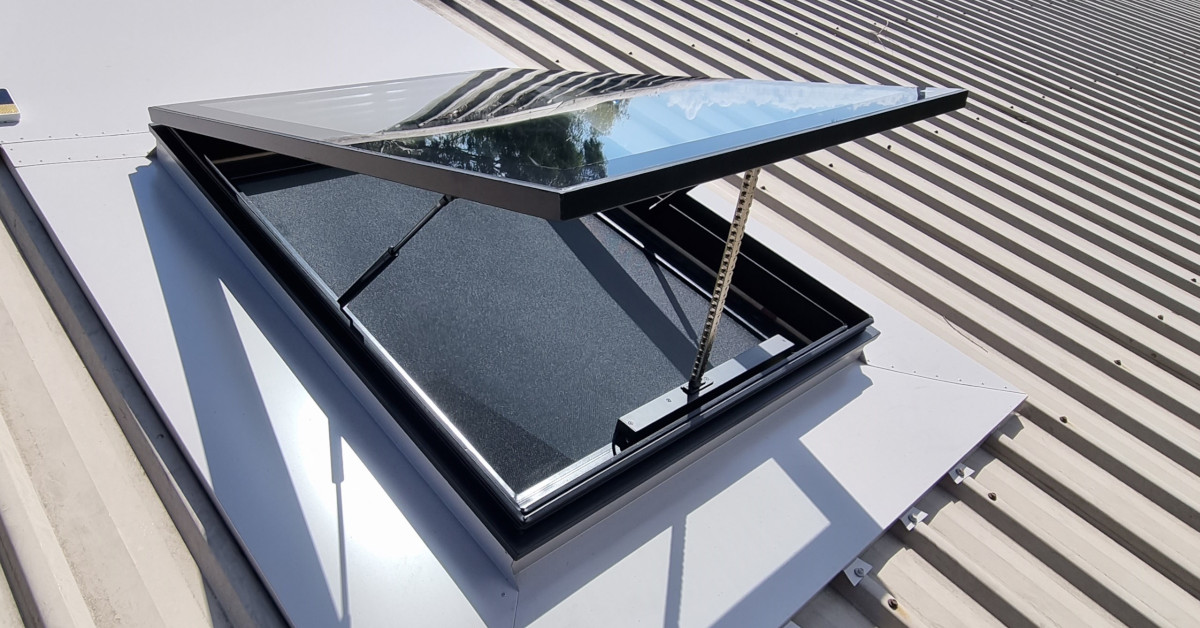
A lot of Australian homes have one room that never feels quite right. It might be the kitchen that’s bright at the bench but gloomy in the middle, the bathroom that always feels damp, or the upstairs landing where lights go on even in the middle of the day. In Brisbane, there’s often another issue as well. Heat builds up fast, and the air inside can start to feel stale long before the afternoon storm rolls through.
That’s where a solar powered skylight starts to make sense. It doesn’t just add light. It uses the sun to help power an opening skylight, so you can bring in daylight, release trapped hot air, and do it without relying on household wiring. For homeowners trying to lower power use and make their home feel fresher, that combination is hard to ignore.
Modern daylighting in Australia has deeper roots than many people realise. In 1986, an Australian inventor patented the first tubular daylighting device, a milestone that helped reshape how homes bring sunlight indoors. That innovation later helped pave the way for skylight designs that can reduce daytime electricity use by an estimated 20 to 30% in Melbourne homes, according to energy modelling referenced in Solatube’s daylighting history. If you want a broader look at the everyday value of overhead daylight, this guide to the benefits of skylights is a useful starting point.

Table of Contents
Welcome to a Brighter Home
A good skylight changes how a room feels within minutes. Dark corners soften. Ceiling shadows disappear. Rooms that once felt boxed in suddenly feel open and breathable.
That matters in real homes, not just in display homes. A family room with one small window can feel flat all day, even when the weather outside is beautiful. A solar powered skylight solves two problems at once by pulling daylight in from above and, if it’s an opening model, giving warm air somewhere to escape.
Why overhead light feels different
Light from a wall window travels across the room. Light from a skylight drops into it. That’s why even a modest skylight can make a room feel more balanced.
A well-placed skylight often improves the parts of a room that normal windows miss, such as the centre of the space, hallways, stair voids and internal bathrooms.
For many homeowners, the first surprise isn’t the brightness. It’s the feeling of calm. Natural light tends to make rooms look cleaner, colours look truer, and ceilings feel higher.
A practical upgrade, not just a design feature
A solar powered skylight also suits the way many Australian homeowners renovate. People want better comfort without turning every upgrade into a major electrical project. They want products that work with daily life, not ones that add fuss.
That’s part of why this category has become so appealing. It gives you daylight, optional ventilation, and smart operation in one roof opening. If you’ve been putting up with a room that’s dim, stuffy or both, this is one of the few upgrades that changes the space every single day.
How a Solar Powered Skylight Actually Works
The easiest way to understand a solar powered skylight is to compare it to a garden solar light, just with a much smarter job to do. It collects energy during the day, stores it, and uses that stored energy to run the opening system when you need it.
The idea became practical because solar cell technology improved dramatically in the 1980s. In 1985, the University of New South Wales broke through the 20% efficiency barrier for silicon solar cells under 1-sun conditions, a milestone noted in the US Department of Energy solar timeline. That leap is one reason compact rooftop panels can now reliably power skylight motors and sensors, even in variable conditions. If you want to see examples of this style of product, Vivid’s solar skylight range shows how the setup is typically packaged.
The simple version
A solar powered skylight usually has four core parts:
A small solar panel that sits on or near the skylight and captures sunlight
A battery that stores that energy for later use
A motor that opens and closes the skylight
Sensors and controls that automate the process
You don’t need to think about those parts every day. You press a control, or the sensor reacts to weather, and the skylight responds.
What each part does
The solar panel is the charger. Even when the sky is mixed or cloudy, it still gathers available light and sends that energy into the system.
The battery is what makes the setup useful in real life. It stores power so the skylight can operate when you want airflow, not only when the sun is directly overhead.
The motor does the physical work of opening and closing the sash. In a well-designed unit, that motion is smooth and quiet.
The sensor system is the part many homeowners appreciate most once they start using it. Rain sensors can close the skylight automatically if the weather changes while you’re out or asleep.
Practical rule: If you want ventilation in a room that gets hot or steamy, choose a solar powered skylight with automated weather sensing. It removes a lot of the worry from day-to-day use.
There’s another reason people like this setup. Because the unit powers itself, installation is often simpler than a wired opening skylight. That can make the project less disruptive, especially in finished homes where nobody wants extra cabling chased through plaster.
The Real Benefits for Your Australian Home
The value of a solar powered skylight shows up in ordinary moments. You use the light less often. The room feels less closed in. Hot air that used to sit at ceiling level finally has a way out.
In Brisbane, that matters more than many people expect. Sunshine is abundant, and homes can heat up quickly through the day. If warm air gets trapped in upper rooms, hallways or bathrooms, your air conditioning has to work harder to compensate.

Why Brisbane homes suit this type of skylight
A solar powered opening skylight makes especially good sense in a warm, sunny climate because the same sun that brightens your home also powers the opening mechanism. In practical terms, that means you can vent stale air without adding to your electricity use for the skylight operation itself.
There’s also a strong logic to using roof-level ventilation in humid weather. Warm air rises. If you give that air an escape point at the highest part of the room, you can improve airflow naturally.
For homeowners thinking about bills, climate-specific performance matters. The broad challenge with skylight advice is that many articles promise savings without explaining how those savings change by location. The US Department of Energy notes that a well-placed 2m² solar skylight can potentially reduce summer cooling demand by 12 to 18% in a Melbourne home in its guidance on skylights and home energy use. Brisbane conditions are different, but the same principle applies. Placement, room type and climate all affect the result.
Comfort, bills and everyday liveability
A solar powered skylight can help in several ways at once:
Lower daytime lighting use by bringing natural light into rooms that normally need artificial lighting
Support passive cooling by letting hot air escape from the highest part of the room
Improve moisture control in bathrooms, laundries and kitchens where steam lingers
Make interiors feel larger and calmer because overhead daylight spreads differently from side windows
That combination is why many homeowners see it as more than a luxury feature. It’s a comfort upgrade with practical payoffs.
In Brisbane, the biggest win is often ventilation. Light is the first thing people notice, but fresher air is what changes how the room lives.
Another overlooked benefit is timing. You get the value every day. Unlike some upgrades that only matter during extreme weather, a skylight affects the room in the morning, in the middle of the day and in the evening when trapped heat is still hanging around.
If your goal is to reduce power use, the smartest approach is usually simple. Put daylight where lights are switched on most often, and put ventilation where heat builds up fastest.
Solar vs Electric vs Fixed Skylights
Not every room needs the same skylight. Some spaces need light only. Others need light plus airflow. That’s why it helps to compare the three main categories side by side before you decide.
A fixed skylight is the simplest option. An electric operable skylight gives you powered opening through household electricity. A solar powered skylight gives you powered opening without hardwiring.
Here’s the quick comparison.
Skylight Comparison at a Glance
| Feature | Fixed Skylight | Electric Operable Skylight | Solar Powered Skylight |
|---|---|---|---|
| Main purpose | Daylight only | Daylight plus ventilation | Daylight plus ventilation |
| Opens for airflow | No | Yes | Yes |
| Needs household wiring | No | Yes | No |
| Installation complexity | Usually simpler | Usually more involved because of wiring | Often simpler than wired operable models |
| Running cost | No operating power use | Uses household electricity for operation | Uses solar power for operation |
| Best rooms | Hallways, living rooms, spaces that already ventilate well | Kitchens, bathrooms, high ceilings, hard-to-reach rooms | Kitchens, bathrooms, upper-storey rooms, hot spaces |
| Works during a power outage | Light still enters | Opening function depends on the electrical setup | Solar charging and stored power support operation |
| Typical buyer | Homeowner focused on light and budget | Homeowner wanting convenience and wired integration | Homeowner wanting ventilation with less wiring |
The decision usually comes down to one question. Do you need the skylight to open?
If the answer is no, a fixed unit is often the neatest and most economical choice. If the answer is yes, then the choice is between electric and solar.
A solar powered skylight tends to appeal to homeowners who want the convenience of an opening unit without involving an electrician for the operating system. An electric model can still suit homes where wired control is preferred or already planned as part of a larger renovation.
For a broader room-by-room comparison, this guide on choosing the right skylight is worth reading before you lock in the specification.
Planning Your Installation and Placement
A skylight can be a brilliant addition in one room and a missed opportunity in another. Placement matters just as much as product choice. The right spot gives you useful daylight and ventilation. The wrong spot can create glare, uneven light or airflow that doesn’t effectively help.
That’s why planning should start inside the room, not on the roof. Stand where you use the space most. Look for the darkest zone, the hottest zone, and the area where air tends to feel stale.

Choosing the right room and position
Good candidates usually include bathrooms, kitchens, hallways, stairwells and living areas with limited wall windows. In Brisbane homes, upper-storey rooms and spaces under warm rooflines often benefit most from an operable unit because they trap heat.
A few practical placement tips help:
Centre the light where the room feels darkest. This usually gives a more even result than pushing the unit too close to one wall.
Think about how the room is used. Over a kitchen prep area, a skylight can brighten task zones. Over a stair void, it can improve the entire circulation area.
Use ventilation strategically. If the room gets steamy or hot, place the opening skylight where rising air can escape effectively.
A skylight is most useful when it solves a specific problem. Lack of light, trapped heat, poor airflow, or all three.
Roof type, pitch and practical checks
Roof compatibility is one of the biggest concerns for DIY renovators. That concern is valid. Product pitch limits, roof covering type and the age of the roof structure all affect the installation approach.
Guidance in the Australian market often notes that many products work on a 14 to 85 degree pitch range, while many Australian homes sit around 25 to 35 degrees. The more important point is to confirm that your roof framing, roof covering and installation method suit the chosen unit, especially in older timber-frame homes. That issue is highlighted in this overview of VELUX solar skylight pitch compatibility.
Terracotta tiles and metal sheeting don’t behave the same way during installation. Flashing details, cut lines and weather sealing differ. So does the level of difficulty for a DIY installer.
If you’re still weighing up whether to do it yourself or bring in a pro, Vivid Skylights offers installation guidance for skylights along with options for DIY-friendly supply and professional fitting estimates. For many homeowners, that flexibility is useful because some projects are straightforward while others involve trickier roof access or older framing.
A Buyer's Checklist for Choosing Your Skylight
When homeowners compare skylights, they often focus first on size. Size matters, but it shouldn’t be the only filter. The quality of the glass, frame and weather protection will shape how the skylight performs long after installation day.
A better buying process is to treat the skylight like part of the roof and part of the room. It needs to handle sun, rain and debris outside, while improving comfort and usability inside.
What to look for in the unit itself
Start with the build details that affect daily performance.
Double glazing: This helps with thermal comfort and makes the skylight feel more appropriate for year-round living, not just light entry.
Self-cleaning glass: High-quality skylights can include a silicon dioxide coating and frameless top glazing that help prevent water pooling, an important feature in wet conditions. That combination is highlighted in VELUX VSS product information.
Powder-coated aluminium frames: Robust black powder-coated aluminium is useful in Australian conditions, especially in coastal areas where durability matters.
Rain sensing operation: For an opening skylight, automatic closure during rain removes a common worry.
A meaningful leak-free warranty: A strong warranty tells you the manufacturer has put thought into flashing, glazing and weather protection.
Here’s a simple test. Ask yourself whether the product still sounds good after the first storm, the first hot week and the first year of use. If the answer is yes, you’re looking at the right features.
When a traditional skylight is not possible
Certain homes cannot accommodate a conventional skylight in the desired spot. This often occurs in lower-floor rooms, apartments, spaces below another storey, or layouts where roof access above the ceiling is unavailable.
That’s where alternatives matter. Vivid Skylights also offers fixed and operable double-glazed skylights, in electric and solar powered formats, plus the AuraGlow LED skylight range for spaces where a traditional skylight can’t be installed. AuraGlow is designed to project light in a way that resembles a skylight and shifts colour through the day to mimic the changing sky, which makes it a practical design option for difficult locations.
A good buyer’s checklist doesn’t force one product into every room. It matches the room to the right solution.
Long-Term Maintenance and Troubleshooting
Modern skylights are far lower maintenance than many people expect. If the unit has self-cleaning glass and good exterior detailing, there usually isn’t much to do beyond occasional checks.
Inside the home, clean the glass the same way you’d clean any other interior glazing, using gentle methods and avoiding anything abrasive. Outside, the main thing to watch isn’t the glass itself. It’s the area around the skylight. Leaves, debris and roof grime should never be allowed to sit around the flashing for long periods.
A few habits help keep things simple:
Check the flashing area periodically. Look for blocked drainage paths, leaf build-up or anything unusual after heavy weather.
Notice changes early. If operation becomes inconsistent, check the control, sensor response and any obvious obstructions before assuming there’s a major fault.
Keep expectations realistic. These systems are designed to be convenient, but like any roof product, they benefit from occasional visual inspection.
Most skylight problems are easier to deal with when caught early. A small seal or flashing issue is much simpler than waiting until water staining appears on the ceiling.
If you’re dealing with an older unit, existing moisture marks, or you suspect the issue is the roof opening rather than the glass, this guide on skylight leak repair can help you understand what to look for next.
If you’re comparing options for a brighter, cooler home, Vivid Skylights supplies double-glazed fixed, electric opening and solar powered skylights with Australia-wide delivery, along with AuraGlow LED skylight options for spaces where a traditional skylight isn’t possible.