

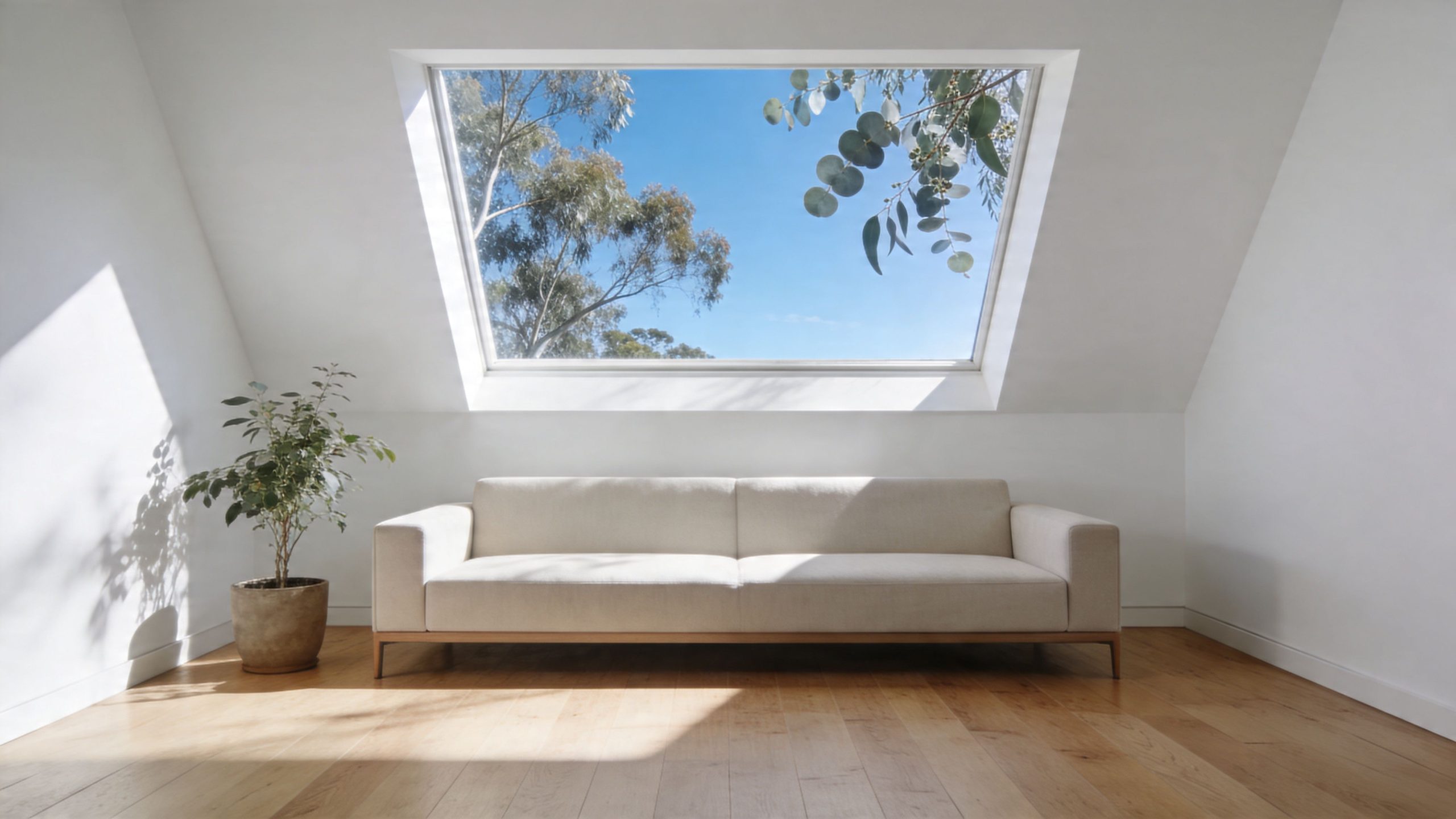
You’re probably in the same spot as a lot of Perth homeowners. The front of the house gets plenty of sun, the backyard is bright, but the middle of the home feels flat and dim. Hallways need lights on in the middle of the day. The bathroom feels boxed in. The kitchen works, but it doesn’t feel alive.
That’s exactly why skylights keep coming up in WA renovations and new builds. In a city with strong daylight, dark internal rooms are wasted potential. A well-chosen skylight doesn’t just brighten a room. It changes how the space feels, how often you flick on a switch, and in the right room, how heat and moisture move through the house.
If you’re searching for skylights perth western australia, the smart approach is to think beyond whatever a local showroom happens to have in stock. Better results usually come from choosing the right skylight for your room, roof and climate, then having it delivered directly so you’re not forced into a compromise.
Table of Contents
Why Skylights are a Brilliant Choice for Perth Homes
You walk into the middle of the house at 2 pm and still need to flick on a light. In Perth, that’s a design problem. We get strong daylight for much of the year, yet many homes waste it because the darkest rooms sit away from external walls.
A skylight fixes that at the source. It brings daylight in from the roof, where fences, neighbouring homes, deep eaves and awkward floorplans have far less chance of blocking it.

Light where Perth homes usually need it most
The biggest wins usually come from the rooms buyers and builders often overlook. Internal bathrooms. Hallways. Kitchens with shadowed prep areas. Laundries that feel shut in.
A skylight works like cutting a hatch into a dark room. You are not paying for more fittings and bigger power bills. You are bringing in usable daylight from above.
That matters in Perth because bright, functional interiors are not just about looks. They change how a room gets used every day. A hallway feels safer. A bathroom feels cleaner. A kitchen becomes easier to work in.
If you want a broader view of the different skylight styles available for Australian homes, start there before you compare brands or sizes.
They can improve comfort, not just brightness
Good skylights do more than brighten a room. In the right location, they help hot, stale air escape as well.
Heat rises. Moisture hangs around near the ceiling. Give both somewhere to go and the room feels better, much like cracking the top vent in a hot garage. That is why opening skylights earn their keep in bathrooms, kitchens and upper-storey rooms.
Here’s the practical rule I give Perth homeowners. If a room gets steamy, stuffy or traps heat, choose an operable skylight over a fixed one.
SkylightsWA notes that energy-efficient skylights can cut daytime lighting use, and ventilating models can also reduce cooling demand in rooms that trap heat and moisture, especially when natural light replaces artificial lighting and warm air has a clear path out through the roof.
Modern skylights make far more sense in Perth than older models did
A lot of bad skylight opinions come from old acrylic domes, poor flashing, cheap glazing and lazy installation. That is not the standard you should judge today’s products by.
Modern double-glazed units are in a different class. They control glare better, insulate better and suit Perth homes far better than the old “hot box in the roof” reputation suggests. A common mistake is assuming the small range held by a local reseller is all you can buy.
It isn’t.
Perth homeowners now have a better option. You can order premium, double-glazed skylights delivered directly to your home, which gives you access to better sizes, cleaner designs and more energy-efficient models than the limited stock many local suppliers keep on hand. It is like shopping for a kitchen by only accepting whatever one store has in the warehouse that week. You get a far better result when you choose from the full range.
My advice is simple. If your Perth home has a dark internal zone, a well-chosen skylight is one of the smartest upgrades you can make. It improves the room every single day, not just when you are trying to impress guests.
Choosing Your Skylight Type From Anywhere in Australia
Choosing a skylight is like choosing a car. If all you need is reliable transport, a basic model does the job. If you want comfort, more control and better performance in real conditions, the features matter.
The same applies here. Don’t pick a skylight by what’s easiest for a reseller to supply. Pick it by what the room needs. Homeowners looking for skylights perth western australia now have a better option than settling for narrow local stock. Premium units can be delivered directly across Perth and nationwide, which opens up far more useful choices.

Fixed skylights for pure daylight
Fixed skylights are the straightforward option. No opening function. No ventilation role. Just clean, dependable overhead light.
They suit rooms where airflow isn’t the issue and brightness is. Living rooms, hallways, stairwells, studies and open-plan areas are typical examples. If your goal is to make a room feel larger, calmer and less dependent on artificial lighting, fixed units are often the best-value answer.
Operable skylights for airflow and moisture control
Operable skylights do two jobs. They bring in daylight and allow ventilation. That makes them especially useful in kitchens, bathrooms and rooms that trap summer heat.
You’ve generally got two premium directions here. Electric opening skylights suit homeowners who want motorised control and convenience. Solar powered opening skylights suit people who want that same convenience with a different power approach.
If a room has steam, cooking heat, or that heavy stale feeling late in the day, this is the category to look at first.
AuraGlow LED skylights for impossible spaces
Sometimes a traditional skylight just isn’t practical. The roof layout won’t allow it. The room sits under another storey. The ceiling path is blocked. Or the installation would become too invasive for the budget.
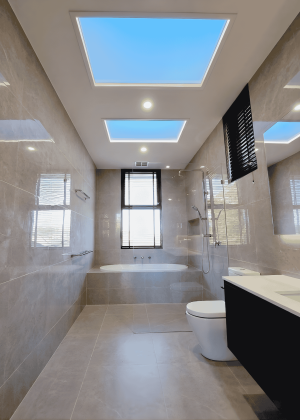
That’s where an LED skylight alternative earns its place. AuraGlow is designed for spaces where a conventional skylight can’t be installed, while still giving a ceiling light effect that feels much closer to a skylight than an ordinary fitting. The colour shifts through the day to create the impression of a changing sky, which is a smart design move in rooms that would otherwise feel closed in.
Not every “dark room” problem can be solved with glazing through the roof; sometimes the right answer is illusion done well.
A bad skylight choice is usually the result of asking, “What’s available?” instead of “What problem am I fixing?”
Perth buyers should also pay attention to another category that’s gaining traction in difficult rooms. BlueSky WA’s overview of shaftless solar-powered skylights notes an emerging trend in Perth for shaftless solar-powered skylights in windowless rooms, and says these systems can cut daytime electricity usage by up to 25 per cent in cooling-dominated climates.
Skylight Type Comparison for Perth Homes
| Feature | Vivid Fixed Skylight | Vivid Operable Skylight (Solar/Electric) | Vivid AuraGlow LED Skylight |
|---|---|---|---|
| Main job | Bring in steady natural daylight | Bring in daylight and release heat or moisture | Create a skylight-style ceiling glow where roof glazing isn't practical |
| Best rooms | Living rooms, hallways, stairwells, studies | Bathrooms, kitchens, upper rooms, humid spaces | Ground-floor rooms, enclosed rooms, multi-storey problem areas |
| Ventilation | No | Yes | No roof ventilation function |
| Complexity | Usually simpler | Higher because opening hardware is involved | Useful where traditional installation isn't viable |
| Feel | Clean and architectural | Functional and premium | Decorative, clever, highly practical |
| Good fit for Perth homes | Excellent for brightening dark cores | Excellent where comfort matters as much as light | Excellent when structure blocks a standard skylight |
If you want a deeper look at categories before choosing, this guide to different skylight types available in Australia is worth reviewing.
Designing Your Perfect Daylight Plan for a Perth Home
Most skylight mistakes happen before anyone cuts the roof. The product might be fine, but the layout is wrong. One skylight is centred nicely in the ceiling, yet the room still feels uneven. Or the shaft is too deep, the surfaces too dark, and the result is underwhelming.
Good daylighting is a plan, not a guess.

Start with the room, not the product
Ask four practical questions first.
Where do you need light
Not “which room is dark”. Be more specific. Is it the kitchen island, the shower zone, the middle of the hallway, or the dining table?
Do you want mood or task lighting
A soft wash across a living room is different from focused daylight over a prep bench.
How deep is the shaft
Longer shafts reduce performance. That matters more than many homeowners realise.
What are the room surfaces like
Dark timber, heavy finishes and low-reflectivity walls absorb light. Pale surfaces bounce it around.
A skylight should be positioned like a cook places salt in a recipe. Put it in the wrong spot and the whole thing tastes off, even if the ingredient itself is good.
Spacing and sizing rules that actually help
In larger open-plan rooms, one oversized unit isn’t always the answer. Two well-placed skylights often deliver a more even result than a single feature skylight dumped in the middle.
A Perth-specific passive design rule of thumb says the distance between skylights should be about 1.5 times the height from floor to roofing for more even distribution. The same guidance recommends skylight area ratios of 1 to 2 per cent for high-performing tubular models, and notes they can admit over 3 times more light than vertical windows of the same size, as referenced in Calidad’s skylight information.
That spacing idea matters because Perth homes often lean heavily on open-plan living. If the light is concentrated in one bright puddle with dark corners around it, the room won’t feel balanced.
Design note: Uniform light usually beats dramatic light in everyday family spaces.
Later in the planning stage, it helps to review examples of architectural lighting design for skylight placement, especially if you’re trying to light a large combined kitchen, dining and living zone.
Here’s a useful visual on placement and roof integration before you lock anything in:
Why Perth sizing is different
Generic online advice falls short. Perth and the wider southern part of Australia don’t behave like sunnier northern locations regarding skylight sizing tables. Lower sun angles affect how light enters and travels.
That’s why base sizing recommendations need adjustment in Perth, and why a skylight that isn’t sized correctly for local solar geometry could underperform by 20 to 40 per cent, according to Master Builders WA guidance on skylight sizing. The same guidance notes that eleven standard sizes are designed to work with common 600mm and 900mm roof truss spacing, which simplifies structural integration.
Here’s the takeaway. Don’t buy by rough guesswork. Don’t buy by a pretty render. Buy by room use, shaft depth, reflectivity, spacing and roof structure. If those factors are right, the skylight will feel natural. If they’re wrong, even an expensive unit can disappoint.
Key Technical Choices for the WA Climate
If design decides where the light goes, technical specification decides whether you’ll still like the skylight years from now.
Perth’s climate is unforgiving on mediocre products. Strong sun, dusty periods, sudden rain and long hot stretches expose cheap glazing and weak roof detailing fast. Consequently, homeowners either buy once or buy twice.
Double glazing is the baseline
Single glazing belongs in the past for most Perth residential applications. If you want a premium result, double glazing is the starting point, not the upgrade.
Why? Because a skylight is exposed directly to the roof environment. Better glazing helps manage comfort, reduces harshness, and gives the product a more solid, architectural feel. In practical terms, it’s the difference between a cheap tin shed door and a well-sealed car door. Both close. Only one feels engineered.
For homeowners comparing options, these double glazed skylight features and benefits are the kind of details worth checking before purchase.
Roof design details matter more than brochures
People obsess over glass and forget the roof interface. That’s backwards. Plenty of skylights look good in a showroom. A critical test is how they handle water, roof pitch and long-term weather exposure.
Key technical details to prioritise include:
Frameless top glazing that helps prevent water pooling on low-pitch roofs
Well-designed flashing kits suited to Australian roofing conditions
Quality aluminium frames that hold up over time
Operable hardware that feels sturdy, not flimsy
Rain-sensing functionality if you want less manual fuss on opening models
The thermal numbers matter too, but only if they come with sound roof design. A product with solid glazing and poor water management is like a good engine in a car with bad brakes. You won’t enjoy owning it.
Good skylights aren’t just brighter. They’re calmer. Less glare, less temperature swing, less worry every time it rains.
If you’re comparing premium options, look for a full package. Double glazing, thoughtful roof detailing, clean integration and accessories that make the unit easier to live with. That’s what separates a serious skylight from a decorative roof hole.
Navigating Installation and Approvals in Perth
A skylight can be excellent on paper and still become a problem if installation is sloppy. This is the part homeowners often underestimate. The product matters, but the install determines whether it performs properly, stays watertight and keeps its warranty.
DIY or professional install
Some homeowners are capable with tools. Some roofing contractors are comfortable fitting quality skylights. But confidence isn’t the same as compliance.
Use this checklist before deciding:
Choose DIY only if you understand roof structure, flashing, weatherproofing and internal finishing
Choose a professional installer if the roof is steep, access is awkward, wiring is involved, or the home has compliance sensitivities
Insist on clear scope so you know who handles cutting, flashing, plaster repair and final sealing
Check site safety before any work starts, especially for roof access and working at height
If you’re arranging your own installer, it helps to read practical local guidance on skylight installation in Perth so you know what to ask before anyone gets on the roof.
If trades are working at height on your property, this overview of WHS legislation Western Australia is a useful reference for understanding the broader safety framework.
Compliance is not optional
This is the hard line. Standards compliance and correct installation are not optional. They affect warranty, liability, insurance and approvals.
According to the Vivid Skylights specification guide, Vivid Skylights comply with AS4285 for installation and AS1288 for glazing safety, and hold a BAL 29 rating. The same guide states that using non-compliant products or installation methods can void manufacturer warranties and create liability issues for homeowners and builders, especially for insurance and council approval in bushfire-prone WA areas.
That BAL point matters if you’re in parts of Perth or regional WA where bushfire requirements apply. Don’t treat it as paperwork. Treat it like seatbelts. You hope it never matters, but if it does, it matters a lot.
Ask your installer one blunt question: “Will this exact product and method keep the warranty, satisfy the applicable standard, and suit my property’s BAL requirements?”
Council approval depends on the property and scope of works, so always check with your local authority or building professional. A simple replacement or straightforward install may be more straightforward than a larger structural alteration, but guessing is a poor strategy.
Estimating Your Perth Skylight Project Costs
The wrong cost question is often encountered: “How much is a skylight?” The better question is, “What am I paying for in this room, on this roof, with this level of finish?”
That’s how you avoid comparing apples with wheelbarrows.
What you’re actually paying for
Your total project cost usually includes a few moving parts:
The skylight unit itself. Fixed, operable, electric, solar, glazing level and accessories all affect this.
Installation labour. Roof access, roof material and complexity change the labour side quickly.
Interior finishing. Shaft work, plastering and painting can be a real part of the budget.
Structural adjustments. Sometimes the chosen size fits neatly. Sometimes framing changes are needed.
Optional extras. Blinds, fly screens and motorised features can improve usability.
That’s why the cheapest unit price rarely tells the truth about the project cost. It’s like buying a kitchen tap without asking whether the plumber has to move pipes in the wall.
Why buying direct can be the better move
Perth has a mature skylight market. Specialists have served the area since the early 1990s, and local supplier feedback reflects strong homeowner satisfaction, including an average customer rating of 4.88 out of 5, as noted in this overview of the established Perth skylight market. That tells you demand is real and homeowners see the value.
But maturity in the market doesn’t always mean broad local choice. Sometimes it means you get shown whatever a local supplier prefers to stock. Buying direct and arranging delivery gives you access to a wider range of premium fixed and operable double-glazed options, rather than being boxed into a limited shortlist.
If you want a clearer budget before speaking to an installer, use a skylight cost guide and pricing estimator to map out likely costs by product type and features.
My advice is simple. Budget for the outcome, not the sticker. If the result is a brighter house, better comfort and a more valuable-feeling interior, the right skylight usually earns its keep better than plenty of cosmetic renovation spend.
Frequently Asked Questions for Perth Homeowners
Will a skylight make my room hotter in summer
A poor skylight choice can. A well-specified modern unit suited to the WA climate shouldn’t be treated like old acrylic domes from decades ago. Glazing quality, placement and whether the unit opens all matter.
Do skylights need much maintenance
Not much, if the product is well made and installed properly. Homeowners should still keep an eye on seals, surrounding roof condition and any debris build-up. Operable units also deserve occasional checks to make sure opening mechanisms are working smoothly.
Is one skylight enough for a large open-plan room
Sometimes yes, often no. Large rooms usually need a daylight plan, not a single centrepiece. Even light spread matters more than a dramatic bright patch in one part of the ceiling.
Do I always need council approval in Perth
Not always, but you should never assume. Approval requirements depend on the property, location and scope of works. If structural changes, bushfire requirements or other compliance issues are involved, get advice before work starts.
What if a traditional skylight can’t be installed
You still have options. Some homes suit shaftless solar-powered units. Others are better served by an LED skylight-style solution that creates a daylight effect where roof glazing isn’t possible. The worst move is forcing the wrong product into the wrong structure.
How do I choose between fixed and opening models
Use the room. If the room only needs light, fixed is often the smart pick. If it traps heat or moisture, opening models are usually worth it.
If you want premium fixed, electric opening or solar powered skylights delivered to Perth or anywhere else in Australia, Vivid Skylights is worth a close look. They specialise in double-glazed skylights, offer nationwide delivery, and also provide the AuraGlow LED skylight range for spaces where traditional skylights can’t be installed.