

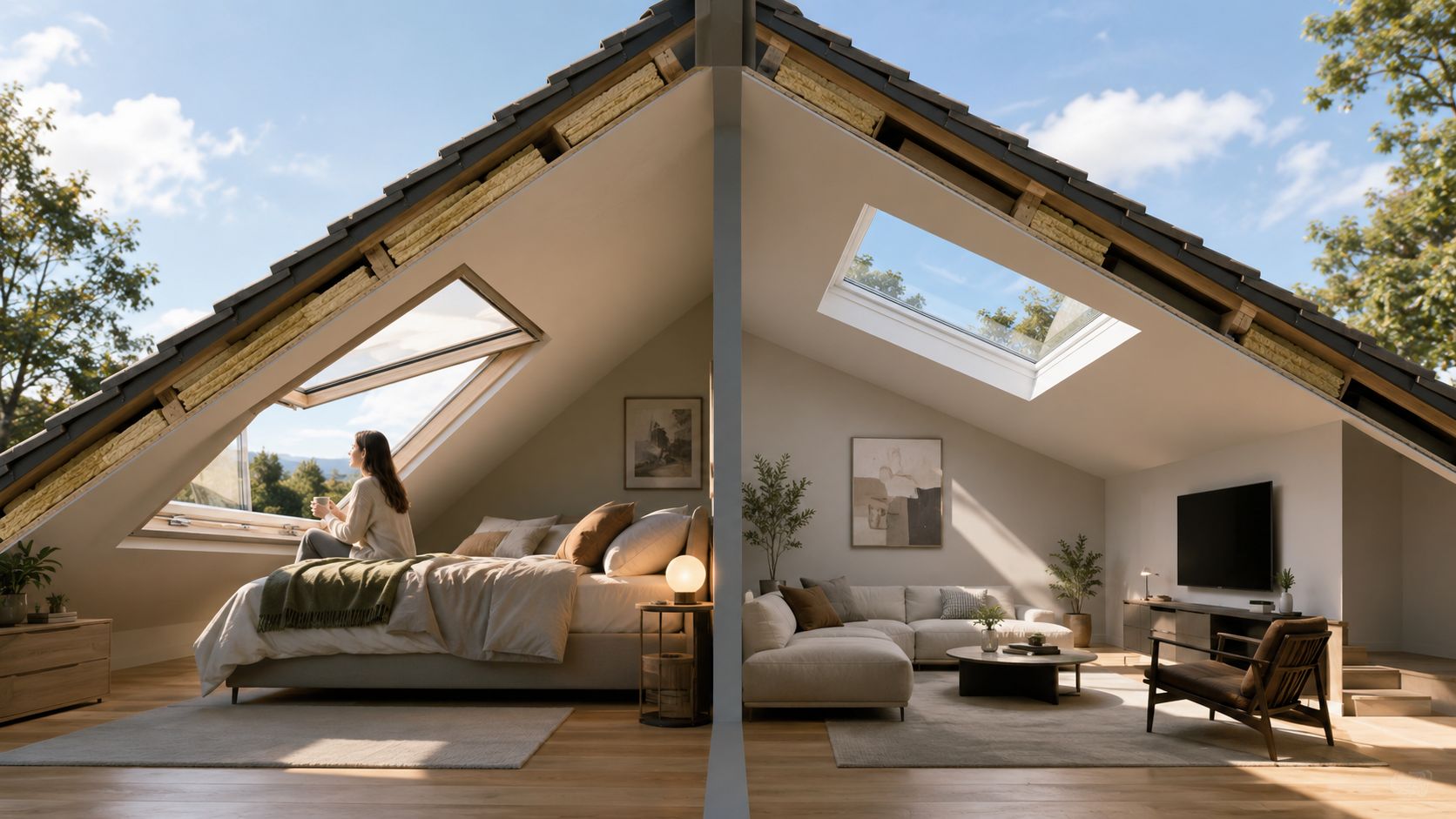
You're probably here because you've started a renovation, looked up overhead glazing, and immediately hit the usual mess of mixed terminology. One supplier says roof window. Another says skylight. A third acts like they're the same thing. They're not.
The difference between roof window and skylight matters most when you're choosing for an Australian home, because this isn't just a style decision. It affects compliance, installation method, ventilation, maintenance access, and how the room will feel in summer and winter.
A lot of consumer articles flatten the whole issue into a lazy shortcut: roof windows open, skylights don't. That's incomplete. Vented skylights exist. The core question is how the product is meant to be used, where it will sit in the roof, and whether someone is expected to reach and operate it. Guidance on skylights, rooflights and roof windows makes that point clearly, and it's exactly why the labels alone don't help much.
If you're comparing options for a loft, hallway, kitchen, bathroom, or dark central living zone, start with the roof and the room. Not the marketing name. If you want to see one category often discussed in Australia, browse sky windows and related overhead glazing options.

Table of Contents
Starting Your Project The Great Roof Window vs Skylight Debate
Individuals often begin incorrectly. They compare photos, shapes, and prices before they've worked out whether they need an accessible roof opening or an overhead daylight unit.
That's why so many projects go off track. Someone wants more light in a dark room, sees a roof window online, then discovers their roof pitch or room layout makes a skylight the smarter choice. Someone else wants fresh air and an outside view in a converted attic, chooses a generic skylight, then realises it doesn't suit the way the room will be used.
The first question to ask
Ask this before anything else:
Will you need to reach it?
Do you need it mainly for light, or for light plus regular ventilation and access?
What sort of roof are you installing into?
Those three answers do more to narrow your options than a dozen product brochures.
Practical rule: If the room below is a true living space and you expect to open, clean, or use the unit like a window, you're usually in roof window territory. If the goal is to bring daylight into a room from overhead, you're usually looking at a skylight.
Why Australians need to be stricter about the distinction
In Australia, the naming matters because the installation has to satisfy weatherproofing and structural expectations under the NCC. That means roof penetrations aren't just decorative upgrades. They need the right flashing, the right fit for the roof pitch, and the right product for the intended use.
A sloppy comparison leads to a sloppy specification. And a sloppy specification is how people end up with heat problems, condensation issues, awkward cleaning access, or a product that doesn't suit the roof.
So if you're trying to understand the difference between roof window and skylight, stop thinking in labels and start thinking in function. That clears up most of the confusion immediately.
The Core Distinction Location Access and Purpose
The cleanest way to separate these products is this: a roof window is designed to be used by the occupant, while a skylight is usually designed to deliver daylight from above.
That sounds simple, but it has big consequences.
Roof window means in reach and usable
In Australia, the most useful distinction is based on location and access. Guidance tied to the local code context explains that the NCC treats a roof window as an in-reach, operable roof-opening product, while a skylight is more often a fixed or limited-vent roof glazing unit intended primarily for daylight rather than occupant access. It also notes they aren't interchangeable in code terms, because a roof window must be sized and positioned for safe opening and cleaning from inside, especially in habitable spaces. You can read that overview in this explanation of what separates skylights and roof windows in Australian practice.
If you're creating a loft bedroom, attic office, or upper-storey retreat with a sloping ceiling, that distinction matters immediately. A roof window behaves more like a conventional window placed in the roof plane. You can reach it. Open it. Use it as part of the room.
Skylight means overhead daylight first
A skylight usually sits higher overhead and is selected to solve a different problem. It brings sunlight into places that feel closed in, gloomy, or cut off from external walls.
That makes skylights ideal in spaces like:
Central hallways where wall windows aren't possible
Bathrooms needing daylight without sacrificing privacy
Living areas that need brighter overhead light
Stairwells where natural light improves safety and atmosphere
Some skylights open and some don't. That's why the phrase operable skylight vs roof window can confuse people. An operable skylight still isn't automatically a roof window. The deciding factor is whether it's designed as an in-reach roof opening for occupant use, or an overhead glazing product primarily there for daylight and optional ventilation.
If you want a plain-English primer on overhead glazing types, this guide on what a skylight is is a good starting point.
A roof window is part of how you use the room. A skylight is part of how the room feels.
That's the core distinction. Once you get that, the rest of the decision gets much easier.
Comparing Key Features Design Ventilation and Light
The easiest way to compare these products is side by side, because the differences show up fast once you stop treating all roof glazing as one category.
A quick comparison table
| Feature | Roof window | Skylight |
|---|---|---|
| Primary role | Window-like use in a habitable roof space | Overhead daylight for the room below |
| Access | In reach | Usually out of reach |
| Operation | Designed to be opened and used regularly | Can be fixed or venting |
| Best roof type | Pitched roof | Flat, low-slope, or pitched roof depending on model |
| View | More direct outward connection | Mostly sky view and top light |
| Best use case | Attics, lofts, sloped-ceiling rooms | Hallways, kitchens, bathrooms, living zones |

Design and day to day use
A roof window usually looks integrated into the slope of the roof because that's exactly what it is. In a converted attic or loft-style room, it becomes part of the architecture at eye level or near eye level. You notice the view, the opening action, and the feeling that the room has a real connection to outside.
A skylight works differently. It's less about “looking out” and more about “bringing light in”. That overhead quality changes a room in a very specific way. Kitchens feel more open. Bathrooms feel less boxed in. Hallways stop feeling like tunnels.
That's why attic light solutions aren't always the same as solutions for the middle of a single-storey floorplan. In an attic room, people usually want light, air, and usability. In a central hallway, they mostly want clean daylight.
Ventilation and daylight
Ventilation is where people get tripped up. A roof window is built around the idea that someone will operate it. A skylight may be fixed, manually vented, or motorised. So if your shortlist includes a ventilation skylight, compare the actual opening system, not just the category name.
For humid rooms and warm upper levels, operable overhead glazing is often worth it. Kitchens, bathrooms, and upstairs spaces benefit from releasing trapped warm air. But if ventilation isn't part of the brief, a fixed skylight is usually the cleaner and simpler answer.
Daylight performance is one area where roof glazing can be dramatic. Research used in the roof-window field reports that roof windows can provide up to twice as much light as same-sized vertical windows and around three times more light than dormers. The same body of research also cites about a 40% increase in daylight provision and roughly 100 kWh/year in lighting-energy savings after adding roof windows, according to daylight research on roof windows and skylights.
More overhead glass usually means more light. Better overhead glass means that light is useful, comfortable, and easier to live with.
So if your main goal is daylight, both categories can work. If your goal is daylight plus regular hands-on use, the answer gets narrower very quickly.
Installation Requirements and Roof Suitability
The argument usually gets settled. Not by taste, but by roof geometry.
Why pitch changes everything
A key technical distinction is installation geometry. A roof window is generally installed in-plane with a pitched roof, while a skylight can be curb-mounted or out-of-plane. That difference gives skylights broader pitch compatibility and makes them the more flexible option for flat or low-slope roofs. One reference also notes that roof windows typically require at least a 15° pitch, which you can see in this summary on skylight versus roof window installation geometry.
That's not a minor detail. It affects flashing design, drainage, water management, and whether the product is even suitable for your roof without forcing a compromised install.
What homeowners should check before choosing
Before you decide, check these practical points:
Roof pitch: A low-slope roof usually pushes you toward skylight options rather than a true roof window.
Ceiling type: A cathedral ceiling creates a different installation path from a flat ceiling with roof space above.
Frame access: If the opening needs to sit within reach, that changes placement and likely product type.
Water path: Flashing detail matters more than the brochure photo.
Retrofit difficulty: Existing rafters, trusses, and internal finishes can make one option cleaner than the other.
If you're weighing feasibility before calling a builder, this practical article on how to fit a roof window helps explain what installers need to assess.
Here's my blunt advice. Don't fall in love with a roof window if your roof really wants a skylight. And don't default to a skylight if you're building a habitable attic room that needs a proper in-reach opening. The roof will tell you which category makes sense.
Energy Performance in the Australian Climate
In Australia, overhead glazing lives or dies on thermal performance. Extra daylight is great. Extra heat gain in summer isn't.
Light is only half the story
Australian conditions make the choice more demanding than many overseas articles suggest. Guidance focused on this issue points out that the key differentiators often include heat, glare, bushfire exposure, and condensation, not just daylight and fresh air. It also notes that roof glazing can materially affect daytime cooling loads and indoor comfort, which is why insulation, operability, and weather resilience matter so much in local decisions. That summary is covered in this article on roof window versus skylight performance considerations.
That's exactly right. A cheap or poorly specified overhead unit can turn a room into a hot spot, create winter discomfort, or leave you fighting moisture issues.

What good specification looks like
For Australian homes, I'd focus on these priorities:
Double glazing: Better control of heat gain and heat loss than basic glazing.
Low-E glass: Sensible for improving thermal behaviour.
Correct orientation: The same skylight behaves differently depending on where it faces.
Operability where needed: Useful for releasing warm air in stuffy rooms.
Proper flashing and weather detailing: Essential for resilience in wind and rain.
Condensation awareness: Especially important in bathrooms, laundries, and tightly sealed homes.
If you're comparing products, start with double glazed skylight options because thermal performance should be one of the first filters, not an afterthought.
There's also a broader household energy angle here. If you're already looking at reducing daytime power use through better daylighting and roof upgrades, it makes sense to read a local guide on solar panels cost in Melbourne from Cover Club. It helps frame overhead glazing as part of the bigger energy conversation, not a standalone feature.
Good roof glazing doesn't just brighten a room. It needs to stay comfortable on a hot afternoon and dry through a cold morning.
That's the standard to hold.
Making the Right Choice for Your Space
Most homeowners don't need more theory. They need a decision.
Here it is. Choose by room use first, then confirm the roof can support that choice.
Best fit by room type
For a converted attic bedroom or loft office
Choose a roof window if the unit needs to be within reach and used like a real window. You want opening access, a stronger visual connection outside, and a product suited to an occupied roof space.
For a dark hallway or internal corridor
Choose a fixed skylight. You want daylight, not a maintenance headache. This is one of the clearest skylight wins.
For a kitchen
Choose an operable skylight if overhead ventilation will help clear heat and cooking moisture, especially when wall window options are limited.
For a bathroom
Choose based on ceiling height. If it's high overhead, a venting skylight usually makes more sense. If it's a reachable sloped-ceiling bathroom in a loft-style space, a roof window may suit better.
For open-plan living rooms
Use skylights when your main goal is broad, even daylight from above. If the ceiling follows the roofline and access is practical, a roof window can add ventilation too, but don't force it where a skylight does the job better.
When a traditional skylight is not possible
Some rooms cannot take a conventional roof opening. That can happen on lower floors, under awkward roof framing, or in spaces where the ceiling location doesn't line up with a workable roof position.
That's where a product like the AuraGlow LED skylight range makes sense. It's not trying to be a real roof opening. It solves a different problem by creating a skylight-style visual effect where a traditional unit can't be installed. For difficult interiors, that's a smart design move rather than a compromise.
Use this quick checklist if you're stuck:
Need to reach and use it regularly? Pick a roof window.
Need overhead light in an inaccessible ceiling? Pick a skylight.
Need fresh air in a high ceiling room? Look at an operable skylight.
No practical roof opening possible? Consider an artificial skylight-style lighting solution such as AuraGlow.
If you want the shortest possible answer to the difference between roof window and skylight, it's this: choose the product that matches how the room will be used, not the one with the nicer marketing photo.
Costs Warranties and Australian Regulations
Price matters, but it's the wrong first filter. Start with suitability, then look at cost.
What actually drives cost
The total spend usually depends on a handful of factors:
Product type: Fixed skylights are usually simpler than operable units.
Glazing specification: Better thermal performance generally costs more upfront.
Roof complexity: Tile, metal, pitch, and flashing detail all affect labour.
Structural work: Some openings are straightforward. Others need more framing changes.
Interior finishing: Shaft work, plaster repairs, and paint can add to the total.
Access to site: Two-storey work and difficult roof access often increase installation complexity.
If you want a realistic planning reference, this guide on skylight cost and installation is a practical place to start.
Why warranty and compliance matter more than the cheapest quote
A skylight or roof window isn't just a glass unit. It's a roof penetration. That means poor installation can cost far more than the difference between two quotes.
I'd take a strong warranty, clear flashing details, and a product designed for Australian delivery and support over a bargain option every time. That's especially true if you're outside a major metro area and need reliable logistics. Nationwide delivery can make a real difference when you're coordinating builders and schedules across Australia.
You also need to check the compliance side before purchase is locked in. Talk to your builder, roofer, certifier, or designer about:
Roof pitch suitability
Flashing compatibility
Habitable room requirements
Cleaning and opening access
Energy performance expectations
Local council or approval requirements if relevant
The smartest buying decision is rarely the cheapest one on day one. It's the one that fits the roof, suits the room, performs properly in Australian conditions, and comes with support after installation.
If you want a skylight solution that's built for Australian homes, Vivid Skylights is well worth a look. They supply double glazed fixed and operable skylights, including electric and solar powered opening models, and they deliver nationwide across Australia. For spaces where a traditional skylight can't be installed, their AuraGlow LED skylight range offers a clever alternative that mimics the feel of natural overhead light with changing colour through the day.