

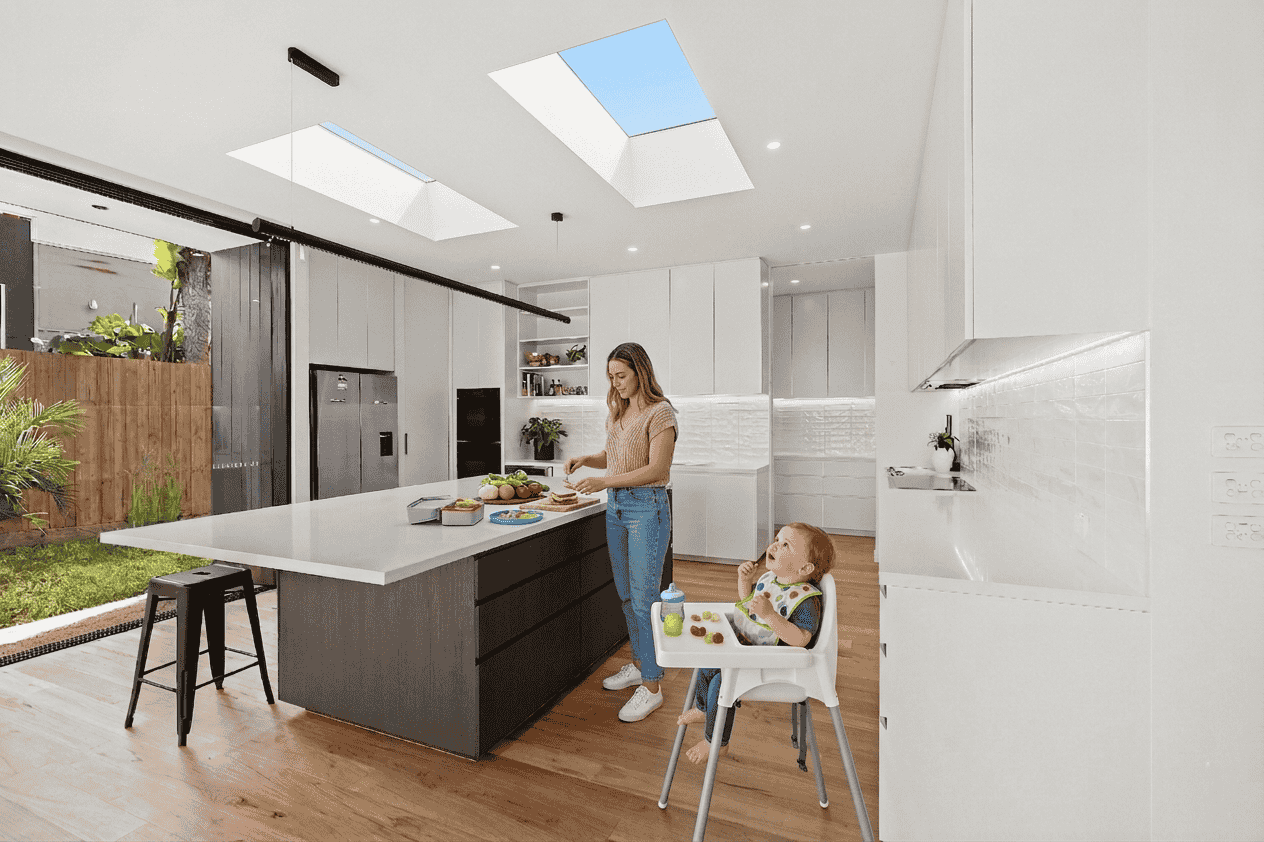
A lot of Perth homes feel darker than they should. The sun is there, the days are bright, but the middle of the house still needs lights on by late morning. That usually happens in hallways, kitchens pushed into the centre of the plan, bathrooms with privacy constraints, and older homes where window placement never matched the way people live now.
That’s why perth skylights make such practical sense here. They’re not a decorative extra when used properly. They’re a direct fix for rooms that feel closed in, flat, or constantly dependent on artificial lighting. Perth has always had a strong relationship with the sky. The Perth Observatory was established in 1896 and for nearly seven decades maintained the Standard Time for all of Western Australia. That local history says something important. Looking upward has always mattered here.
For homeowners weighing up a renovation, the best results usually come from treating skylights as part of the home’s overall daylight strategy, much like property maintenance with clean windows supports how light moves through a space. If you’re considering whether roof glazing is worth it, the practical case starts with the benefits of natural light in the home, then moves quickly into placement, glazing, ventilation, and roof design.
Table of Contents
Transforming Perth Homes with Natural Light
The most common change after a skylight goes in isn’t technical. It’s emotional. A room that used to feel like a thoroughfare starts feeling like part of the home. Kitchens look cleaner. Bathrooms feel less boxed in. Hallways stop reading as dead space.
That matters in Perth because many homes have great outdoor light but poor internal light distribution. A bright backyard and a dark centre don’t balance each other out. Roof glazing fixes that by bringing daylight to where side windows can’t.
Why skylights suit Perth living
Perth homes often have large living zones, deep floor plans, and roof areas that can work hard for daylight if they’re used well. The right skylight doesn’t just brighten a room. It changes how the room is used. People spend more time in spaces that feel open, balanced, and naturally lit.
Practical rule: If a room needs artificial lighting through most of the day even in clear weather, it’s a good candidate for a skylight.
There’s also a strong architectural logic to skylights here. Local buildings have long used top lighting to deal with harsh sun angles, privacy needs, and internal layouts. In residential work, that same principle still holds. Good overhead daylight is often the cleanest solution where adding another wall window would compromise privacy, furniture layout, or façade design.
What works in real homes
The strongest results usually come from targeting problem rooms first:
Internal kitchens: These gain the most from direct overhead daylight over benches or islands.
Bathrooms: Skylights add light without sacrificing privacy.
Hallways and stairs: Even one unit can stop these spaces feeling narrow and gloomy.
Open-plan living zones: Larger units can spread daylight deep into the room when ceiling shafts are designed properly.
Not every room needs the same answer. Some need simple, fixed daylight. Others need ventilation as much as light. That’s where choosing the right skylight type matters.
Understanding Your Skylight Options From Fixed to Operable
The first decision isn’t brand. It’s function. Homeowners usually start by asking for “a skylight”, but that can mean very different products depending on the room, the roof, and whether airflow matters.

A good buying decision comes from matching the unit to the room’s actual job. If the space is dark but otherwise comfortable, fixed may be enough. If heat and steam build up, operable is often the smarter choice. If there’s no practical path for a roof opening and shaft, an alternative approach is better than forcing a poor install.
For a broad overview of categories, the different types of skylights are worth comparing before you lock in sizing.
Fixed skylights for reliable daylight
Fixed skylights are sealed units designed purely for light. They suit living rooms, hallways, stairwells, and kitchens where ventilation already exists through windows, doors, or other systems. Their strength is simplicity. Fewer moving parts usually means a cleaner look and a straightforward specification.
In Perth homes, fixed skylights work best when the homeowner wants consistent daylight without adding another opening element to the roof. They’re also the easiest option to integrate into minimalist interiors because they don’t draw attention to controls, motors, or opening hardware.
Operable skylights for light plus airflow
Operable skylights solve two problems at once. They bring in daylight and release trapped heat, steam, and stale air. In bathrooms, laundries, and kitchens, that combination often gives the best practical outcome.
There are two common powered options in the market:
Electric operable skylights: Good where hardwired control makes sense and the project already involves electrical work.
Solar powered operable skylights: A strong option when you want the convenience of opening and closing without relying on a traditional wired setup.
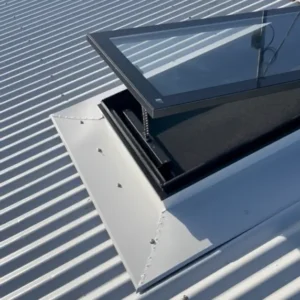
Some homeowners focus only on light output and miss the ventilation side. That’s a mistake in rooms that hold moisture or collect hot air under the ceiling line. An opening skylight can improve comfort in a way a fixed unit can’t.
An operable unit is rarely wasted in a bathroom. Steam has to go somewhere, and it’s better out through the roof than lingering in the room.
When a traditional skylight will not work
Some ceiling spaces don’t allow for a standard skylight. The roof structure may be awkward, the ceiling cavity may be too constrained, or the room may sit in a position where a proper shaft isn’t feasible without major building work.
That’s where a non-traditional option earns its place. An AuraGlow LED skylight-style fitting can create the visual effect of overhead daylight where a real roof penetration isn’t practical. The newer category in this space has moved well beyond flat panel lighting. Better systems are designed to mimic the feel of a skylight and shift colour across the day so the light feels more like the sky than a standard fitting.
For rooms such as internal corridors, apartments, lower-floor spaces, or renovation areas with structural limitations, this can be the most sensible compromise. It won’t replace genuine daylight, but it can transform a space that would otherwise stay dim and artificial.
Vivid Skylights at a Glance
| Skylight Type | Best For | Key Feature | Vivid Skylights Product |
|---|---|---|---|
| Fixed skylights | Living areas, hallways, kitchens | Permanent daylight through a sealed unit | Double glazed fixed skylights |
| Operable skylights | Bathrooms, laundries, kitchens, bedrooms | Daylight plus ventilation | Electric opening skylights and solar powered opening skylights |
| LED skylight alternative | Areas where roof installation isn’t feasible | Simulated skylight effect with changing light tone | AuraGlow LED skylight range |
The right choice is usually obvious once you stop thinking in product categories and start thinking in room behaviour. Dark and dry is one problem. Dark and humid is another. Structurally impossible is a different one again.
The Tangible Benefits of Installing Skylights in Perth
The value of perth skylights shows up in ordinary daily use. You notice it when lights stay off longer, when a room feels less enclosed, and when spaces in the middle of the plan stop feeling like compromises.

Perth’s climate makes daylighting especially worthwhile. According to this overview of skylight history and daylighting, Perth averages 8.8 sunshine hours daily, and homes with skylights can gain 30% more natural light, potentially cutting daytime energy use by 15-20%. Those aren’t abstract gains. They affect kitchens, hallways, family rooms, and bathrooms where lights often stay on because side windows don’t reach far enough.
What better daylight changes day to day
Natural top light does a different job from wall light. It spreads differently, reaches deeper into a room, and tends to make finishes look more accurate. White cabinetry looks cleaner. Timber floors show more warmth. Bathrooms feel larger because the light is coming from above, not fighting through frosted glass.
In practical terms, homeowners usually notice benefits like these first:
Lower dependence on daytime lighting: Especially in the centre of the home.
Better room usability: A dark hallway or work zone becomes easier to live with.
A calmer feel indoors: Overhead daylight often softens the room more evenly than a harsh downlight layout.
Why brighter rooms usually feel more valuable
Property value is shaped by many factors, but light consistently affects how a home presents. Bright rooms photograph better, inspect better, and feel more maintained. Even before a valuer or buyer starts analysing details, they respond to how the home feels.
That’s one reason skylights often punch above their size. They don’t add floor area, but they can make existing space read as more generous and more resolved. In renovation work, that’s often one of the best returns available because it improves the quality of space you already have.
A quick visual overview helps if you’re comparing the effect across room types:
Better light changes how people judge a room. They may not mention the skylight first, but they respond to the result immediately.
There’s also a wellbeing side that homeowners mention often, even if they didn’t prioritise it at the start. Brighter interiors feel less flat during the day. Morning routines feel easier in naturally lit bathrooms and kitchens. Internal rooms stop feeling cut off from the weather and time of day.
Sizing and Placing Skylights for Maximum Impact
A common Perth renovation problem looks like this. The kitchen gets a new layout, the finishes improve, and the room still feels dull at midday because the skylight was sized from the roof plan instead of the way the space is used. Good results start inside the room.
A practical starting point is the 5% rule. In many homes, skylight glazing around five per cent of floor area gives a sensible baseline, then the size is adjusted for ceiling height, shaft depth, surface colours, and the roof aspect. It is only a guide, but it stops the two mistakes I see most often in Perth homes. Choosing a unit that is too small to change the room, or choosing a large unit without enough thought about summer comfort.
If you’re weighing up standard sizes before finalising layout, common skylight dimensions for residential applications help narrow the field quickly.
Start with the room’s job
A hallway, ensuite, kitchen, and open-plan living area do not need the same daylight pattern. The target is not maximum brightness. It is useful, even light in the places where people spend time.
Small internal spaces usually respond well to a compact, well-centred skylight. Bathrooms, laundries, and passages often need enough top light to remove the need for artificial lighting through most of the day. Open-plan rooms usually need more spread than punch. In those spaces, two smaller skylights placed over active zones often perform better than one oversized unit in the middle.
That matters in Perth homes with long living areas and low-pitch roofs. The roof may offer plenty of area, but the room below still decides where the light should land.
Placement rules that hold up in real homes
Placement changes the result as much as size. A skylight over a kitchen island earns its keep every day. The same unit shifted a metre too far can leave the benchtop in shadow and throw light into circulation space that did not need it.
Use these rules as a starting point:
Place skylights over working areas. Kitchens, study nooks, stair landings, and main walkways benefit most from overhead daylight.
Check what interrupts the light path. Bulkheads, deep rafters, tall cabinetry, and robe tops can cut down the effect below.
Design the shaft with the opening. A deep or narrow shaft reduces output. A wider, well-finished shaft delivers more usable light into the room.
Treat bedrooms differently. Early light can be welcome, but privacy, glare, and blind options should be resolved before the unit is specified.
Site note: The best skylight position is usually determined by the room layout first, then checked against framing and roof constraints.
Orientation also affects comfort. North-facing roof planes can give strong, useful daylight. West-facing sections can be harder to live with if the product choice does not control heat well. In Perth, that trade-off matters more than many homeowners expect. A skylight that looks generous on paper can become too bright or too warm in late afternoon if the glazing and placement are wrong.
Common sizing mistakes
These are the errors that usually cost homeowners performance:
Choosing by roof symmetry
A skylight can look perfectly centred from outside and still miss the part of the room that needs light.Ignoring shaft depth
Deep ceiling cavities and long shafts reduce light delivery. This is common in homes where the roof form and ceiling line are doing different things.Oversizing without considering aspect
Large openings on sun-exposed roof planes can increase glare and heat unless the product is matched to the room and orientation.Using one skylight where two would spread light better
In larger kitchens and living zones, even distribution usually feels better than one intense pool of light.
Done well, the skylight feels built into the house rather than added later. That is usually the difference between a unit that brightens only a ceiling and one that improves how the whole room works.
Navigating Perth-Specific Installation Challenges
A skylight can perform beautifully in Perth for years, or it can become the part of the roof that causes callbacks. The difference usually comes down to three local factors. Roof pitch, weather exposure, and compliance.
Perth homes often combine low-pitch roof forms, strong summer sun, and winter rain that finds weak flashing fast. Outer suburban sites can add bushfire rules on top. That mix is why a generic skylight specification often falls short here.
For local project advice, Perth skylight installation guidance is a useful starting point because the product, flashing method, and roof type need to be matched from the outset.
Low-pitch roofs and waterproofing
Low-pitch roofs are common across Perth, especially on newer suburban homes and many renovated brick-and-tile properties. They look straightforward, but they leave less margin for error. Water drains more slowly, wind-driven rain can sit around flashings longer, and any weakness in the upstand or apron detail shows up sooner.
In practice, the installer needs to assess more than the opening size. Roof angle, roof covering, surrounding sheet or tile profile, and the skylight’s own frame design all affect whether water clears cleanly or lingers around the unit. Vivid Skylights are well suited to this because the low-profile glass top sheds water better than older dome-style products that can create awkward junctions on flatter roofs.
The details that usually prevent trouble are consistent: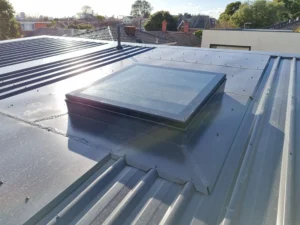
Raised installation where pitch is marginal: Extra height improves drainage.
Flashing selected for the actual roof material: Tile, corrugated metal, and deck roofs each need different treatment.
A glazing profile that avoids standing water: Flat pooling points create risk over time.
Careful integration with sarking and roof underlay: Secondary weather protection matters in winter storms.
A tube of sealant is not a waterproofing strategy. Good geometry and correct flashing are.
Heat, glare, and product specification
Perth exposes poor skylight products quickly. If the glazing is weak or the frame is poorly insulated, the room can gain too much heat, lose comfort in winter, and become harder to manage through the day.
That is why product selection in Perth is less about chasing the cheapest unit and more about long-term performance. Double glazed skylights are usually the better fit for main living zones, bedrooms, and home offices because they control heat more effectively, reduce outside noise, and feel more stable across the seasons. In low-pitch applications, the quality of the frame and flashing system matters just as much as the glass.
Operable units can also make sense here, but only in the right rooms. They are excellent for venting hot air from bathrooms, kitchens, and upper-storey spaces. They also introduce more installation complexity, so the gain in airflow has to justify the extra cost and detailing.
Bushfire compliance and council realities
Homeowners in Perth’s outer suburbs often run into this issue late, usually after they have already picked a product. That is the wrong order. If the property sits in a bushfire-prone area, the skylight has to meet the relevant BAL and product compliance requirements before anyone cuts the roof.
The practical checks are simple:
Confirm whether the site is bushfire-prone before selecting the unit
Check the full skylight assembly, not just the glazing
Make sure the frame, seals, and installation method suit the compliance level
Confirm documentation with your builder, certifier, or council if approval is required
Vivid Skylights are a strong fit for these projects because their glass, frame quality, and product range suit performance-led specifications better than lightweight budget units that are chosen on price alone.
Council requirements also vary across Perth depending on the suburb, the type of home, and how visible the roof change will be from the street. Heritage controls, grouped developments, and larger roof alterations can all trigger extra review. None of that makes skylights a poor option. It means the approval path, product choice, and installation method should be sorted before work begins.
Installation Process and Expected Costs in Perth
Once the design is settled, most homeowners narrow the decision to two things. Who’s installing it, and what is the final budget likely to be?
There isn’t one universal cost because the price moves with roof type, ceiling complexity, shaft work, access, product size, whether the unit is fixed or operable, and whether blinds or screens are included. That’s why ballpark pricing without project details often misleads more than it helps.
A better starting point is a project-specific estimate through a skylight cost and installation guide that factors in both product and install path.
DIY versus professional installation
Some skylights are suitable for capable DIY renovators, especially where roof access is straightforward and the homeowner is already comfortable with carpentry, flashing, and finishing work. The simpler the roof and ceiling arrangement, the more realistic DIY becomes.
Professional installation is usually the smarter route when any of these apply:
Low-pitch roofs: Waterproofing margins are tighter.
Tiled roofs with more complex flashing needs: Detailing matters.
Operable units: Controls, rain sensors, and finishing work add complexity.
Bushfire-prone sites: Compliance shouldn’t be guessed.
The main trade-off is simple. DIY can reduce labour cost, but a poor flashing detail or bad shaft finish can erase that saving quickly. Professional installation costs more upfront, but it usually reduces risk where roof geometry and compliance are less forgiving.
What changes the final price
The biggest cost drivers are usually not the skylight itself. They’re the conditions around it.
Expect the quote to move based on:
Roof material and pitch
A straightforward roof takes less labour than one needing special flashing treatment.Ceiling shaft construction
Deep or angled shafts involve more framing and plaster work.Electrical needs
Electric opening units, blinds, and related controls can add work depending on the setup.Access difficulty
Tight sites and awkward roof access often increase labour.
Financing can also matter for homeowners doing a broader renovation. If daylighting is part of a staged upgrade, the ability to spread cost may make it easier to choose the better product the first time instead of compromising and revisiting it later.
Your Perth Skylight Questions Answered
A few questions come up on nearly every perth skylights job. Most of them are sensible concerns, and most are easier to answer once you separate old skylight assumptions from modern product design.
Do skylights make a room too hot
They can if the glazing is poor, the sizing is wrong, or the placement ignores Perth sun exposure. They don’t have to. Heat problems usually come from choosing the cheapest unit or oversizing without any thought to solar control.
The right answer is a combination of correct placement, correct glazing, and correct room selection. Bedrooms and living areas need a more disciplined spec than a short hallway.
Are opening skylights worth it
Yes, when the room needs ventilation. No, if you’re paying for opening capability that will rarely be used.
Bathrooms, laundries, and kitchens are the strongest candidates because warm air and moisture naturally rise. In those rooms, opening skylights often feel like a practical upgrade rather than a luxury addition.
What if a normal skylight cannot be installed
That doesn’t end the conversation. Some rooms won’t allow a traditional roof opening and shaft without disproportionate building work. In those cases, an LED skylight-style alternative can deliver the visual effect of overhead light where a standard install isn’t realistic.
That option is especially useful for internal rooms, lower levels, or spaces with structural limits in the roof cavity.
How much upkeep do they need
Less than many people assume, but not none. A skylight still sits in the roof and should be treated as part of the building envelope. Check surrounding roof condition, keep an eye on seals and flashings, and make sure any opening functions remain clean and unobstructed.
For homeowners already thinking about long-term care, this guide to proper window upkeep is a useful companion because the same maintenance mindset applies. Clean surfaces, routine inspection, and early attention to small issues usually prevent bigger ones later.
A well-installed skylight should fade into the background. You enjoy the light, not the maintenance drama.
The best skylight projects in Perth are the ones that solve a real problem. A dark kitchen. A bathroom with no privacy-friendly window option. A hallway that always feels closed off. Once the product type, placement, glazing, and installation detail all line up, the result is hard to beat.
If you’re ready to improve daylight, ventilation, and liveability in your home, Vivid Skylights offers double glazed fixed and operable skylights, including electric and solar powered opening models, with Australia-wide delivery. For spaces where a traditional roof installation isn’t possible, their AuraGlow LED skylight range gives you a stylish alternative that mimics the look of changing daylight across the day.