

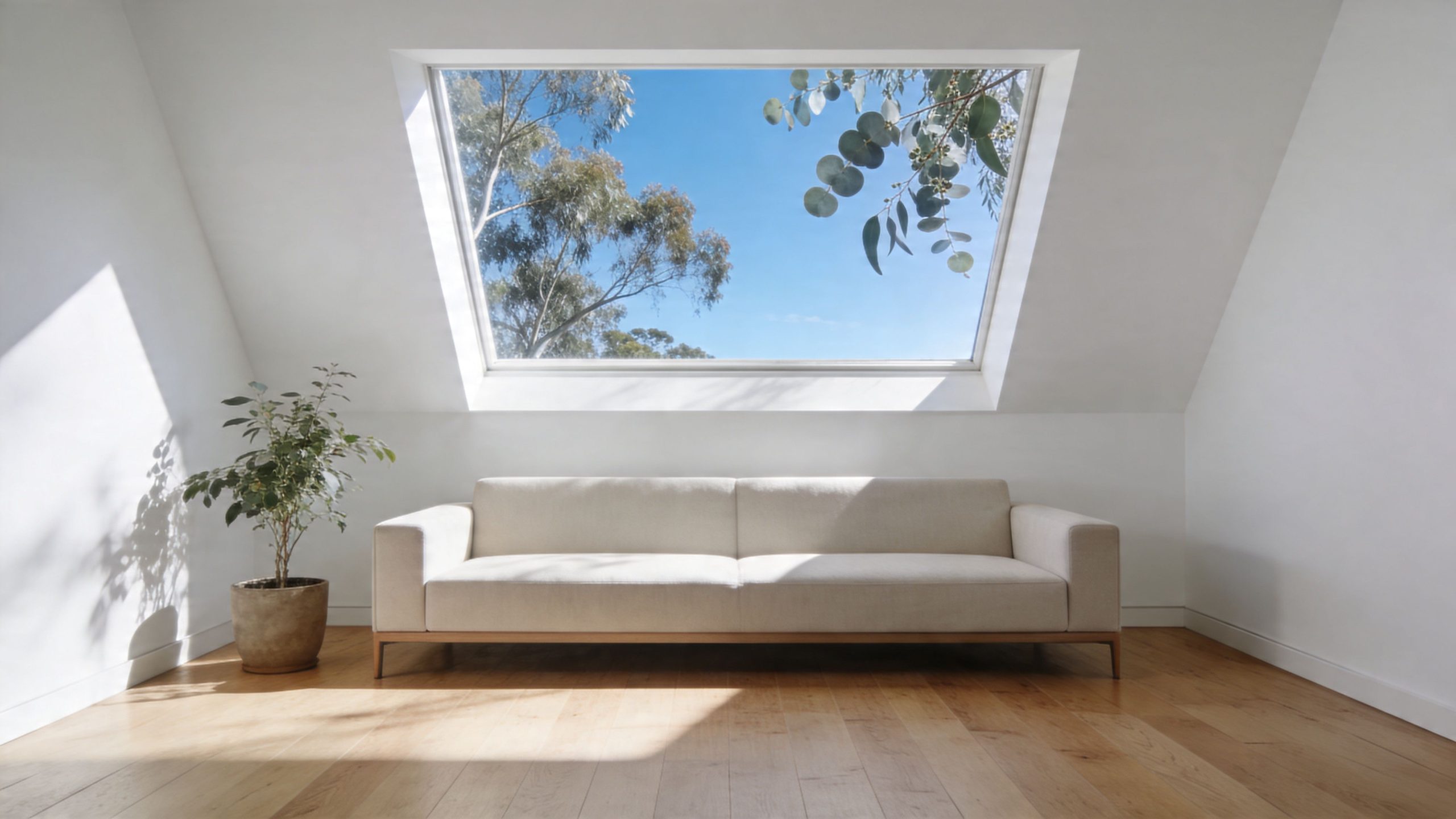
A lot of Perth homes have one frustrating blind spot. The hallway that needs a light switched on at noon. The bathroom that feels closed in. The kitchen corner that never quite looks clean because the light is flat and dull. You can have a beautiful home, plenty of outdoor sun, and still end up with indoor spaces that feel darker than they should.
That’s why skylights in perth keep coming up in renovation plans and new builds. They don’t just add light. They change how a room feels, how often you turn on lights during the day, and how usable certain parts of the home become. For many homeowners, the shift is most noticeable in the spaces they had almost stopped noticing.
This guide is written for Perth homeowners who want the practical version, not the brochure version. If you’re comparing options, trying to understand heat and glare, or wondering whether your roof even suits a skylight, you’ll find clear answers here. If you want visual ideas before making any decisions, the Vivid Skylights gallery is a useful place to see how different rooms can be transformed.
Table of Contents
Bringing Perth’s Sunshine Indoors
You walk from a bright Perth kitchen into the middle of the house and the mood changes straight away. The hallway feels dull at noon. The ensuite needs the light on during the day. The home office works, but it never feels pleasant to spend time in. That usually happens because those rooms sit too far from the outside walls, so wall windows cannot feed enough daylight into them.
A skylight solves that problem by bringing light in from the roof, where the room has direct access to the sky. It works a bit like opening a path for daylight at the highest point, so the light can spread down into areas that side windows miss. In many Perth homes, that single change can make an internal space feel calmer, more useful, and more connected to the rest of the house.
Perth makes skylights especially appealing, but also more demanding. We get strong sunshine, harsh UV, long hot spells, and in some areas, bushfire considerations that affect what can go on the roof. A skylight that performs well in a mild climate may need different glazing, seals, or compliance checks here. Modern products from established suppliers such as Vivid Skylights are designed for these real conditions, not just for the look of extra daylight.
Adding more sun is not the sole goal. The goal is to add usable daylight without creating a hot spot under the glass in January.
That is why the best skylight plans start with the room’s job. A hallway needs even light so it feels safe and open. A bathroom often needs privacy as much as brightness. A kitchen benefits from clear task lighting over benches and islands. A study needs daylight that feels comfortable through a long afternoon, not glare bouncing off a screen.
If you want to see how that looks in real homes, the Perth and Australia-wide skylight project gallery gives you a practical sense of what works in hallways, bathrooms, kitchens, and other darker parts of the floorplan.
Good results come from matching the skylight to the house, the roof, and the Perth climate. Size, glazing, placement, summer heat control, and fire safety all matter. Get those choices right and a skylight stops being a decorative extra. It becomes a practical upgrade that changes how the home feels every day.
How Natural Light Transforms Perth Homes
You notice it most around midday. Outside, Perth is bright and clear. Inside, the hallway still needs a switch, the bathroom feels closed in, and the kitchen bench has shadows right where you prep food. That mismatch is usually a daylight access problem. The room is not getting enough light from the sky.
A skylight changes the direction of the light, and that changes how the room feels. Wall windows bring light in from the side. A skylight brings it from above, which usually spreads it more evenly across the space. In practical terms, that means fewer dark corners, softer shadow lines, and a room that feels more open without needing a larger footprint.
That overhead daylight matters in Perth homes because many floorplans have internal rooms, long corridors, and living areas that sit deep within the house. Even on a bright day, those parts of the home can feel flat. A well-placed skylight can make them feel active again.
Here’s where homeowners usually notice the difference first:
Hallways and passageways: Better daytime visibility and a less enclosed feel.
Kitchens: Clearer light over benchtops, sinks, and islands where you work.
Bathrooms: Daylight with privacy, especially where a side window would overlook a neighbour.
Studies and spare rooms: A more comfortable sense of connection to the time of day.
There is also a comfort angle. In Perth, extra light only helps if it is controlled properly. Too much direct summer sun can create glare, heat build-up, and fading on finishes. That is why modern skylights are not just pieces of glass in the roof. The better systems use glazing, seals, and optional blinds that help filter harsh sun while still bringing in useful daylight.
Operable models can add another benefit in the right room. Warm air rises, so an opening skylight can work like a release valve near the ceiling. In bathrooms, kitchens, and upper-storey spaces, that can help the room feel less stuffy when used alongside the home’s existing airflow.
For Perth households, the everyday value usually comes down to three practical gains:
Less need for artificial lighting during the day
If you regularly turn lights on in the morning or leave them on until late afternoon, the room may be a good skylight candidate.Better use of the rooms you already have
A dim space often becomes a pass-through room. Add balanced daylight and it starts to feel worth using.Improved comfort when the product suits the room
Glazing choice, placement, and ventilation options all affect whether the space feels pleasant in summer rather than overly bright or hot.
A simple rule helps here. If a room feels gloomy on a clear Perth day, adding another lamp will not solve the underlying issue. Better access to daylight usually will.
If you want a closer look at the day-to-day effect, the benefits of natural light in the home are worth reading before you decide what type of skylight will suit your space.
Choosing Your Skylight Fixed Operable or LED Innovation
Most homeowners don’t need dozens of options. They need the right category. When you strip the choice back to how the room is used, skylights in perth usually fall into three buckets. Fixed for pure daylight, operable for light plus ventilation, and LED skylight alternatives for spaces where a roof opening isn’t practical.

The classic fixed skylight
A fixed skylight does one job extremely well. It brings in natural daylight without opening for airflow. That makes it a strong choice when your main goal is to brighten a room and keep the roof detail simple.
Fixed units suit spaces like:
Hallways and corridors: These areas often need light more than ventilation.
Living rooms with adequate existing airflow: If the room already has good cross-ventilation, a fixed skylight can focus purely on illumination.
Stairwells and voids: Overhead light can make vertical spaces feel far more open.
Many homeowners like fixed skylights because they’re straightforward. Fewer moving parts often means a simpler decision. If your room doesn’t trap heat or moisture, fixed can be the cleanest answer.
The operable skylight
An operable skylight adds a second function. It opens to release hot air, steam, and stale air that gathers near the ceiling. In Perth, that can be a meaningful difference in rooms that heat up quickly or hold moisture.
Solar powered
Solar powered operable skylights appeal to homeowners who want convenience without relying on a hardwired power connection in the same way as an electric unit. They’re a good fit when the room benefits from regular ventilation and you want a neat opening option.
They’re often considered for:
bathrooms
laundries
upper-storey bedrooms
kitchens where warm air builds during cooking
Electric
Electric operable skylights suit homeowners who want powered opening and a more integrated setup. They’re commonly chosen where frequent use matters and where the overall renovation already includes electrical work.
A lot of confusion comes from assuming operable always means “better”. It doesn’t. It means better for rooms that need ventilation. If the room’s main problem is darkness, fixed may still be the smarter choice.
In a bathroom, an opening skylight can solve two problems at once. Daylight during the day, and an escape path for steam after a shower.
The innovative alternative
Sometimes a traditional skylight can’t be installed. The roof space may be crowded. The room may sit beneath another level. You may be in an apartment, or the structure might make a shaft difficult or uneconomical.
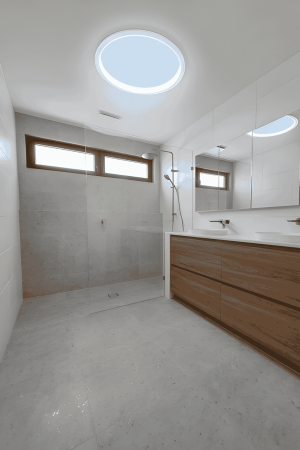
That’s where an LED skylight-style solution comes into its own. Products in this category create the visual effect of daylight from above without a conventional roof penetration. They’re especially useful in internal rooms where people want the mood of a skylight but don’t have the physical conditions for one.
A good example is an LED system designed to mimic the changing look of natural daylight across the day, giving a ceiling feature that feels more like an illuminated sky panel than a standard artificial light. That can be a strong design move in:
internal bathrooms
wardrobes
hallways on lower floors
commercial-style residential spaces
apartments where roof access is limited
This isn’t the same as true natural daylight. It solves a different problem. If you can’t install a real skylight, it gives you a more architectural and atmospheric alternative than a flat ceiling light.
A quick side by side guide
| Vivid Skylights: Which Type is Right for You? | Best For | Key Feature | Power Needed |
|---|---|---|---|
| Fixed skylight | Dark rooms that mainly need daylight | Constant natural light | No |
| Operable skylight | Rooms that need daylight and airflow | Opens for ventilation | Solar or electric |
| LED simulated skylight | Spaces where traditional installation isn’t possible | Daylight-style ceiling effect | Yes |
If you’re still narrowing your options, reviewing the different types of skylights can help match the product category to your room rather than to a trend.
Sizing Glazing and Safety for Perth’s Climate
A skylight that works beautifully in Melbourne or Hobart can feel completely wrong in Perth. Our light is stronger, our summers run hotter, and homes near the fringe can have bushfire requirements that change what is suitable. So the goal is not just to get more daylight. The goal is to get useful light without turning the room into a heat trap.
Start with size, not the product brochure
Many Perth homeowners first ask, "What is the biggest skylight I can fit here?" A better question is, "How much daylight does this room need?" Skylight sizing works a lot like choosing a window for a west-facing room. Too small and the space still feels dim. Too large and you can end up with glare, harsh patches of sun on the floor, and more heat than you wanted.
Passive solar design guidance from YourHome suggests roof glazing should be used carefully in warm climates because it can admit a lot of summer heat if area and shading are not well controlled. In practice, that means a modest, well-placed skylight often performs better than an oversized unit dropped into the middle of the ceiling.
Room shape matters too. A long kitchen, for example, may need two smaller skylights spaced sensibly rather than one large opening. A deep ceiling shaft can also narrow and soften the spread of light by the time it reaches the room below, a bit like a torch beam losing width as it passes through a tube. If you are comparing actual product sizes, this skylight dimensions guide is a practical way to match room proportions to available units.
Glazing does the heavy lifting in Perth
Glazing is where comfort is won or lost.
Perth’s summer sun brings visible light, infrared heat, and strong UV. A basic skylight can let in all three. A better one filters that mix so you keep the daylight and reduce the parts that make rooms hotter and furnishings fade.
The terms can sound technical, but the ideas are straightforward:
U-value measures how easily heat passes through the skylight. Lower figures mean better insulation.
SHGC, or Solar Heat Gain Coefficient, measures how much solar heat comes through the glass. Lower figures usually suit Perth’s hotter conditions better.
Low-E glass has a microscopically thin coating that helps control heat transfer while still allowing daylight in.
Laminated or toughened glass improves safety and can also help with durability and noise control.
If you have ever stood under an older single-glazed skylight in late January, you already know why this matters. The room can feel bright but uncomfortable. Double glazing with the right coatings works more like a filter than a simple clear opening in the roof.
For independent background on window energy labels, the Australian Fenestration Rating Council explains how WERS ratings, U-values, and SHGC are used to compare thermal performance across glazed products. Those figures give you a more useful basis for comparison than broad claims such as "energy efficient."
In Perth, ask for the glazing specification first. The frame style matters, but the glass package often has the biggest effect on comfort.
This short video gives a useful visual sense of how skylights integrate with the roof and ceiling.
Safety is about more than tough glass
Safety has a few layers in WA. One is everyday building safety. Another is weather performance. A third, for some suburbs and hills locations, is bushfire exposure.
The National Construction Code references AS 1288 and AS 2047 for glazing and window performance, which is why reputable skylight suppliers specify where a product can be used and what glass configuration it requires. For homeowners, the practical takeaway is simple. Do not choose on looks alone. Confirm the skylight is suitable for your roof pitch, glazing location, and installation method.
Bushfire-prone areas need extra care. The WA planning and building framework uses BAL assessments to determine what construction measures apply in bushfire areas, and the relevant product selection is tied to AS 3959. If your home is in the hills, on the urban fringe, or near heavy vegetation, ask your installer or certifier to confirm the required BAL before you lock in a model.
A few checks are worth doing early:
Roof pitch: Not all skylights suit low-slope or near-flat roofs.
Flashing system: Good flashing matters in winter storms and sudden downpours.
Glass type: Overhead glazing often needs specific safety glass configurations.
Bushfire classification: BAL requirements can affect frame, screen, and glazing choices.
Orientation: North and west-facing roof positions usually need more attention to heat control in Perth.
A well-chosen skylight should feel calm and predictable. Bright in winter mornings. Controlled in summer afternoons. Safe overhead, properly flashed, and suitable for the conditions your home faces.
The Installation Journey Costs and Council Checks
Once you know the type of skylight you want, the next questions are usually practical. How hard is it to install? Do you need council approval? What does the full cost include? The easiest way to make sense of it is to treat the project as a sequence, not one big leap.
How the process usually unfolds
Most skylight installations start with the room, not the roof. Identify the space you want to improve, then check what sits above it. A simple roof void with clear access is very different from a ceiling packed with services or a room under a second storey.
A typical planning path looks like this:
Choose the target room
Pick the area where natural light will change daily use, not just appearance.Assess the roof conditions
Roof pitch, framing, and access influence what style is realistic.Check whether approvals apply
Some projects are straightforward. Others may need confirmation from your local council or certifier, especially if structural work or planning overlays are involved.Confirm product and shaft layout
The shape and depth of the ceiling shaft affect how the light spreads into the room.
If you’re unsure whether approvals are needed, ask before ordering. That’s faster than trying to fix a compliance issue after the opening has been cut.
DIY or professional installation
Many homeowners considering skylights in perth are capable renovators. Some units are designed to simplify installation, especially when they include flashing kits suited to tiled roofs. That can make the job more manageable for experienced DIYers.
Still, not every roof is a good DIY candidate. If your roof is steep, the ceiling shaft is complex, or the property sits in a location with extra compliance requirements, professional installation often makes more sense. It reduces the risk of water ingress, poor flashing, and misalignment between roof opening and ceiling finish.
The decision usually comes down to these factors:
DIY makes sense when: roof access is safe, the layout is straightforward, and you’re comfortable coordinating waterproofing and finishing trades.
Professional fitting makes sense when: the roof is complex, you need electrical integration for an operable unit, or you want one point of responsibility for the whole job.
For low-pitch roofs common in Perth, tunnel skylights can be especially useful. Modern tunnel skylights with diameters up to 535mm can deliver 20 to 30% more actual light than traditional domes in these conditions (low-pitch roof tunnel skylight performance). That makes them worth considering when a standard unit isn’t the best fit for the roof cavity.
Budgeting without guesswork
The full cost of a skylight project usually has two parts. The unit itself and the installation work. People often compare product prices and forget that shaft finishing, electrical work for operable models, roof access difficulty, and internal patching can all shape the final number.
A sensible budgeting approach is to separate the project into line items:
Skylight unit: fixed, operable, or alternative LED option
Roof work: cutting, framing adjustments if needed, flashing
Internal finishing: plastering, painting, shaft trim-out
Electrical component: relevant for powered units or lighting alternatives
Approval or certification costs: only where required
If you want a clearer starting point before speaking with a tradesperson, the Perth skylight installation page is a practical place to review installation considerations and estimate how involved your project may be.
Warranty Maintenance and Finding a Reliable Supplier
A skylight isn’t a decorative accessory you swap out every few years. It’s part of the roof. That changes how you should judge value. The right question isn’t just “Will it look good?” It’s “Will it still perform properly after years of heat, dust, and weather?”
Think in decades not seasons
A well-made skylight is typically a 20 to 30 year investment before replacement might be considered due to ageing or newer technology (long-term skylight lifespan guidance). That’s why warranty terms matter so much. A short or vague warranty can leave you carrying the risk on one of the most exposed parts of the home.
Perth conditions also make maintenance worth thinking about early. Dust, coastal air in some suburbs, and strong sun all affect how often glass and seals should be checked. Modern features such as self-cleaning glass can reduce upkeep, but they don’t remove the need for occasional inspection.
A sensible maintenance routine is simple:
Inspect after major weather: Check for obvious debris, seal issues, or staining on the ceiling below.
Clean accessible surfaces as recommended: Even self-cleaning glass benefits from periodic attention.
Watch for changes indoors: Condensation, peeling paint, or discolouration can point to a ventilation or sealing issue.
Review ageing units carefully: Older skylights may still function, but performance standards have improved.
A skylight should feel low-maintenance, not forgotten. Occasional checks are part of protecting the roof opening over the long term.
Questions worth asking before you buy
A reliable supplier should be able to answer direct questions without vague language. If the answers feel slippery, that’s usually a warning sign.
Ask these before committing:
Are the skylights double glazed as standard?
In Perth, that’s one of the clearest indicators of thermal intent.What warranty is provided on leaks and product performance?
You want specifics, not broad reassurance.Can the supplier deliver to Perth and support after purchase?
Logistics matter if you’re coordinating a build or renovation schedule.Are flashing kits available for my roof type?
A good unit still depends on the right roof interface.What support is available for installers or experienced DIY customers?
Clear documentation and responsive help reduce mistakes.
If a supplier can answer these cleanly, you’re usually dealing with a business that understands the product beyond the showroom pitch.
Your Perth Skylight Checklist and Next Steps
By the time most homeowners finish comparing skylights in perth, they’re not stuck on whether skylights work. They’re stuck on which option matches their room, roof, and comfort expectations. A short checklist helps turn a broad idea into a confident decision.
A practical buying checklist
1. Start with the room and the problem
Is the issue a dark hallway, a steamy bathroom, an enclosed kitchen, or a lower-floor room with no roof access for a traditional install? The room tells you what kind of skylight makes sense.
2. Match the product type to the job
Fixed suits rooms that only need daylight. Operable suits spaces that trap heat or moisture. LED skylight alternatives suit spaces where a conventional skylight can’t be installed.
3. Check Perth-ready performance
Focus on glazing quality, heat control, UV protection, and roof suitability. Don’t choose on appearance alone.
4. Confirm installation reality
Look at roof pitch, shaft depth, access, and whether you’re using a professional installer or managing an experienced DIY job.
5. Treat warranty as part of the product
A skylight is a roof opening. After-sales support and clear warranty terms matter just as much as the frame and glass.
Good skylight decisions are usually simple. The right room, the right type, and the right specification beat the biggest unit every time.
What to do next
If you’re still deciding, gather a few basics before you request pricing. Take note of the room dimensions, ceiling type, roof style, and whether ventilation is important. A few photos from inside and outside the house can also make product advice much more accurate.
From there, compare options with a practical filter. Which one solves the room properly? Which one suits Perth’s climate? Which one fits your installation path without adding avoidable complexity?
That approach keeps the project grounded. It also makes it much easier to talk with a supplier, builder, or installer and get advice that fits your home.
If you’re ready to explore premium fixed, electric opening, solar powered, and AuraGlow LED skylight options for your home, Vivid Skylights offers double-glazed skylights with Australia-wide delivery, practical estimating tools, and support for both professional installers and confident DIY renovators.