

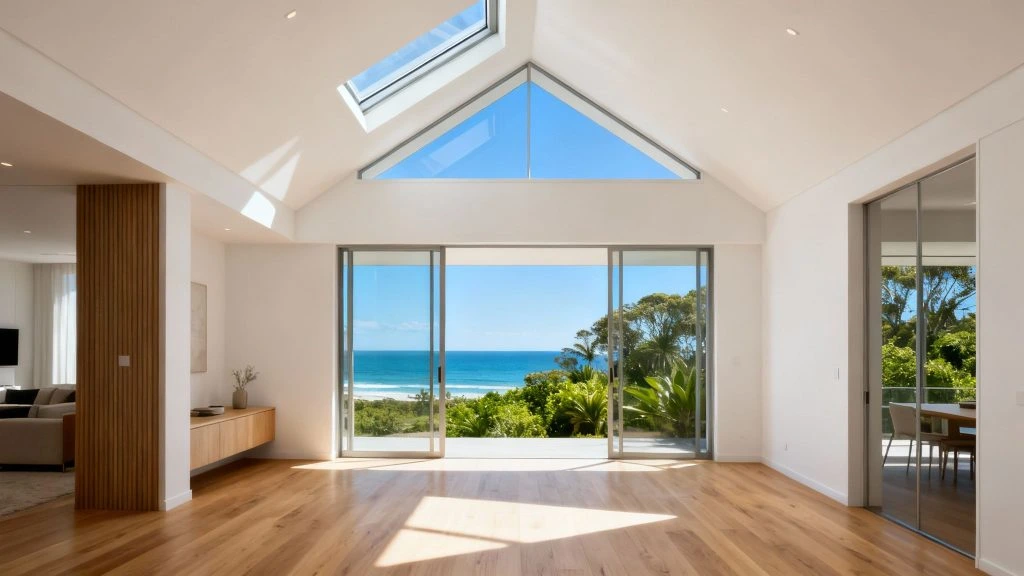
Imagine your home bathed in beautiful, free sunlight all year round. For homeowners looking into skylights on the Sunshine Coast, our region’s famous sunshine isn’t just a lifestyle perk—it’s a massive, practical asset just waiting to be tapped. Here, installing a skylight is one of the smartest, most sustainable investments you can make.
Why the Sunshine Coast Is Perfect for Skylights
From the green hills of Maleny down to the sparkling shores of Noosa, brilliant daylight is one of our greatest natural resources. Bringing that light into your home isn’t just about making things look nice; it’s a strategic move to create a healthier, more energy-efficient place to live. A well-placed skylight does more than just light up a dark corner—it completely changes the feel of a space.
The most immediate benefit is how much less you’ll rely on artificial lighting. By letting natural sunlight flood your rooms during the day, you can keep the light switches off for hours on end, which translates into real savings on your power bills. This is especially true in a place celebrated for its bright, clear days.
Tapping into an Abundant Natural Resource
The Sunshine Coast provides the perfect environment to get the absolute most out of skylights. The sheer volume of sunlight means your home can capture free, renewable energy day after day. This isn’t just a small improvement; studies across Australia show it can have a significant financial impact.
Our climate is known for its generous sunshine, with peak sun hours ranging from 5.5 hours in winter to an impressive 8.5 hours in spring. With minimal cloud cover for most of the year, a quality skylight can cut your daytime electricity use by as much as 15-20%. You can learn more about how skylights suit the Sunshine Coast climate and contribute to those savings.
But beyond the practical savings, the psychological impact of natural light is huge. Sunlight is proven to boost mood, improve focus, and create a genuine sense of wellbeing.
A home filled with natural light just feels bigger, more open, and more inviting. It transforms static rooms into dynamic spaces that shift with the time of day and the seasons, connecting you more closely with the world right outside your window.
Creating Brighter and Healthier Living Spaces
Skylights offer brilliant solutions for common design challenges in many Sunshine Coast homes. Think of that south-facing living room that never quite gets enough light, the internal bathroom with no window, or the long hallway that always needs a light on.
Here’s how they can transform your home:
- Enhance Architectural Appeal: Skylights add a touch of modern elegance, creating a visual focal point and adding real character to any room.
- Improve Air Quality: Opening skylights, particularly solar or electric models, are fantastic for ventilation. They let you easily release steam, cooking odours, and stale air.
- Increase Property Value: A bright, airy home is incredibly desirable. Installing high-quality skylights is an investment that adds tangible value and serious appeal for future buyers.
Ultimately, choosing to install skylights on the Sunshine Coast is a decision that works in perfect harmony with our local environment. You’re not just adding a feature; you’re investing in a brighter, healthier, and more sustainable way of life.
Choosing the Right Skylight for Your Home
Picking the right skylight isn’t as simple as just putting a window in your roof. It’s about matching the skylight’s function to the room’s purpose. The perfect choice for a stuffy bathroom won’t be the same as what you’d want for a dark hallway, and getting it right is key to making sure your investment really pays off for your Sunshine Coast home.
Think of it like choosing the right light bulb. You wouldn’t install a harsh spotlight in a bedroom you want to relax in, just as you wouldn’t use a dim lamp in a kitchen where you need to see what you’re doing. A skylight should align perfectly with how you use the space below it.
Fixed Skylights: The Window to the Sky
A fixed skylight is the simplest and most popular choice. Its one job? To pour as much natural light into a room as possible. It’s essentially a sealed window unit for your roof, making it perfect for areas where you crave brightness but don’t need extra ventilation.
Imagine that long, windowless hallway or a living room in the middle of the house that always feels a bit gloomy, even on a sunny day. A fixed skylight acts like a permanent ‘window to the sky’, flooding these areas with beautiful, consistent daylight. With no moving parts, they are a fantastic, cost-effective fix for a dark space.
Opening Skylights: The Fresh Air Portal
Now, what if a skylight could do more than just let in light—what if it could also let your house breathe? That’s exactly what an opening skylight does. It’s a ‘fresh air portal’ for your roof, delivering both light and ventilation where you need it most. These are an absolute game-changer for rooms prone to moisture, stale air, or lingering odours.
On the Sunshine Coast, with our humidity, they are especially brilliant in a few key spots:
- Kitchens: Quickly vent cooking smells, smoke, and steam, keeping the heart of your home feeling fresh and clear.
- Bathrooms: Expel that damp, steamy air after a shower to help stop mould and mildew in its tracks.
- Laundries: Let out the humid air from the dryer and get some proper airflow into what’s often a small, enclosed space.
This simple flowchart shows just how much sense a skylight makes for anyone looking to improve their home here on the coast.
As you can see, for those of us living in this beautiful, sun-drenched region, a skylight is a pretty logical and beneficial upgrade.
Electric and Solar Powered Skylights
Opening skylights come in two main flavours: electric and solar-powered. Both offer incredible convenience, especially for those high, out-of-reach ceilings where a manual winder just isn’t practical.
An electric opening skylight wires directly into your home’s power. A simple press of a remote or a wall switch is all it takes to open or close it. The best part? Most come with a built-in rain sensor that automatically shuts the skylight at the first hint of a classic Queensland downpour, giving you total peace of mind.
A solar-powered opening skylight gives you that same automated convenience but without needing an electrician. It has a small, integrated solar panel that charges an internal battery, so it runs completely off-grid. This not only makes installation a breeze but also means it keeps working even if the power goes out. Just like its electric cousin, it almost always includes a rain sensor for worry-free ventilation.
The choice between electric and solar often comes down to installation simplicity versus a hardwired connection. Solar is perfect for retrofitting into existing homes, while electric can be easily integrated into new builds or major renovations.
To make things a bit clearer, here’s a quick comparison to help you decide what’s best for your home.
Skylight Type Comparison for Sunshine Coast Homes
This table breaks down the three main options, helping you match the right skylight to the right room.
| Skylight Type | Key Feature | Best For | Main Benefit |
|---|---|---|---|
| Fixed Skylight | Purely for illumination | Hallways, stairwells, living areas, dark rooms | Maximum light for the lowest cost |
| Electric Opening | Mains-powered ventilation | Kitchens, bathrooms, high-ceiling rooms | Convenient, reliable ventilation and light |
| Solar-Powered Opening | Self-sufficient ventilation | Hard-to-wire areas, eco-conscious homes | Easy installation and off-grid operation |
Getting your head around these differences is the first big step. Once you analyse what each room needs—whether it’s just light, fresh air, or both—you can confidently pick a skylight that not only looks great but performs a truly valuable function.
For a deeper dive into these options, you can learn more about the different types of skylights and their specific features. This will help you find the perfect match for your Sunshine Coast property.
What to Consider for the Queensland Climate
Sunshine is a gift, but the intense Queensland climate—from scorching summer heat to sudden, heavy downpours—demands smart choices when selecting skylights Sunshine Coast QLD. Your skylight isn’t just a window to the sky; it’s a high-performance part of your roof that has to manage heat, light, and water like a pro.
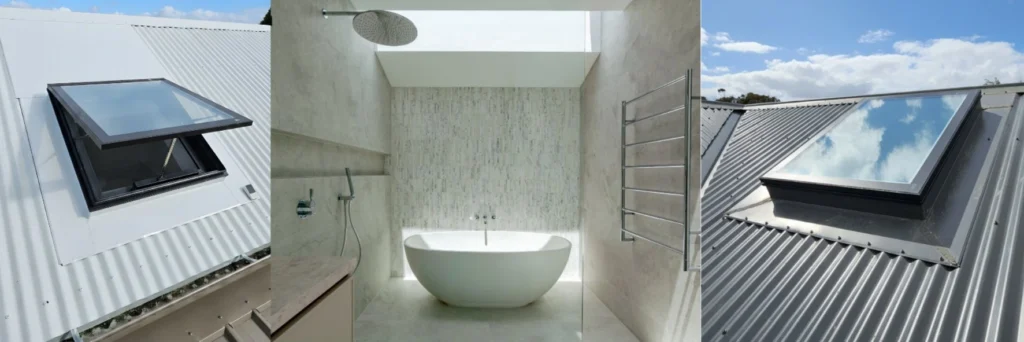
Getting the material and glazing choices right is absolutely non-negotiable. It’s the difference between a bright, comfortable room and a hot, glary space that feels more like a greenhouse. A durable, climate-appropriate skylight is an investment that pays off for years without any worry.
Beating the Heat with Smart Glazing
The single most critical feature for any skylight in our part of the world is its ability to let in beautiful light without the punishing heat. Let’s be clear: standard single-pane glass just won’t cut it here. You need glazing that works hard to keep your home comfortable year-round.
This is where double glazing becomes your best friend. Think of it like a thermal flask for your roof. Two panes of glass are separated by a sealed gap, creating an insulating barrier that dramatically slows down heat transfer. This keeps the brutal summer heat out and your precious air-conditioned cool air in.
To really dial it up, look for skylights with a Low-E (Low Emissivity) coating. This is a microscopic, transparent layer that reflects heat. It’s engineered to block the sun’s heat-carrying infrared rays while letting all that lovely visible light stream through, giving you a bright room without the burn.
A well-designed skylight acts as a filter, not an amplifier. Its job is to welcome the beautiful Sunshine Coast light while politely telling the harsh heat to stay outside, maintaining a comfortable and energy-efficient home.
With Queensland’s powerful sun, it’s also vital that your skylight’s glazing has top-notch UV blocking properties. This protects your furniture and floors from fading and, more importantly, keeps your family safe from harmful rays. For some context on how these protections work, info on UV blocking window film explains the basic principles well. To get a deeper understanding of how modern technology makes a world of difference, check out our guide on skylight energy efficiency.
The Unsung Hero: Waterproofing with Flashing Kits
A skylight is only as good as its seal. Living in a region known for dramatic summer storms and high rainfall, waterproofing has to be a top priority. This is where flashing kits play the starring role. A flashing kit is a set of custom-engineered metal pieces that create a watertight barrier between the skylight frame and your roofing material.
It’s definitely not a one-size-fits-all situation. The right flashing depends entirely on your roof type:
- Tiled Roofs: These kits come with flexible, contoured pieces that mould perfectly over the profile of your roof tiles, channelling water safely away.
- Corrugated Metal Roofs: Flashing for metal roofs is precisely shaped to match the specific corrugated profile, creating a tight, reliable seal against every ridge and valley.
Without the correct flashing kit, installed by someone who knows what they’re doing, your roof is just asking for a leak. That’s why Vivid Skylights includes the appropriate flashing kit with every single unit, taking all the guesswork out of achieving a professional, leak-free finish.
Resisting Coastal Corrosion
Living anywhere on the Sunshine Coast means dealing with salty air, which is notoriously corrosive to many building materials. The frames of your skylights need to be tough enough to handle this constant exposure without rusting or breaking down.
This is exactly why materials like powder-coated aluminium have become the industry standard for high-quality skylights. The powder-coating provides a tough, protective layer that resists the corrosive effects of salt spray, ensuring the skylight’s structure and good looks are preserved for years. A quality skylight is designed from the ground up to last in marine environments, protecting your investment and adding real value to your home.
Navigating Council Rules and Installation
The thought of wrestling with council regulations can be enough to make anyone put a home improvement project in the ‘too hard’ basket. But when it comes to installing skylights on the Sunshine Coast, the process is usually far more straightforward than you’d expect.
For most standard skylight jobs—where you’re simply fitting a unit between your existing roof trusses without touching the home’s core structure—you generally won’t need a building permit from the Sunshine Coast Council.
Of course, if your plans are a bit more ambitious, like cutting into structural beams to accommodate a massive skylight or a cluster of them, you’ll likely need to get approval. This is just to ensure everything remains safe and structurally sound. If you’re ever in doubt, a quick check of the council’s latest guidelines or a chat with your installer is the best way to go.
Understanding Building Standards
Beyond the local council, all building work in Australia has to meet the standards set out in the National Construction Code (NCC). Don’t worry, you don’t need to memorise the rulebook, but your installer certainly should.
The NCC lays down the minimum requirements for safety, health, and performance in buildings. For skylights, this boils down to a few key things:
- Structural Integrity: Making sure the skylight and the way it’s installed doesn’t compromise your roof’s strength.
- Energy Efficiency: Meeting thermal performance standards to stop your home from turning into a greenhouse in summer.
- Waterproofing: Using the right techniques and materials to create a leak-proof seal that can handle a classic Queensland downpour.
A professional installer knows these standards inside and out. That’s the real value you get when hiring an expert—not just a beautiful finish, but the peace of mind that your skylight is compliant, safe, and built to last.
DIY vs Professional Installation
One of the biggest forks in the road is deciding whether to tackle the installation yourself or bring in a professional. There’s no single right answer; it really depends on your skills, comfort level, and the job’s complexity.
For the handy homeowner with the right experience, a DIY installation can be a seriously rewarding project that saves a bit of cash. Many modern skylights, like those from Vivid Skylights, are designed with the DIYer in mind. They arrive as a complete package, including the specific flashing kit needed for your roof type—which is the absolute key to a watertight finish.
If you’re leaning towards the DIY route, you need to be confident working at heights, have a decent grasp of how roofs are put together, and have the right tools for the job. And above all else, safety has to be your top priority.
Finding the Right Professional Installer
For most people, hiring a pro is the smartest move. It takes all the stress off your shoulders and guarantees the job is done correctly the first time, protecting your home from the nightmare of a leaky roof. A good installer provides quality workmanship that they’ll stand behind with a guarantee.
When you’re searching for an installer for your skylights on the Sunshine Coast, don’t hold back on the questions. A true professional will be more than happy to give you clear, straight answers.
Here are a few essential things to ask:
- Are you fully licensed and insured?
- Can you show me some photos of similar jobs you’ve done?
- Do you provide a warranty on your installation work?
- What steps do you take to guarantee the installation will be 100% waterproof?
Choosing the right person for the job means your skylight will perform beautifully for decades, letting you enjoy all that glorious sunshine without a single worry.
Strategic Placement for Maximum Natural Light
Deciding where to put your skylight is just as important as which type you choose. It’s a bit of an art, but there’s a science to it as well. Get it right, and you don’t just light up a room; you transform it into a beautifully illuminated space.
Good placement is all about getting the most out of the natural light while avoiding common headaches like unwanted glare or turning your living room into a sauna. It’s what makes a skylight a truly functional part of your home.
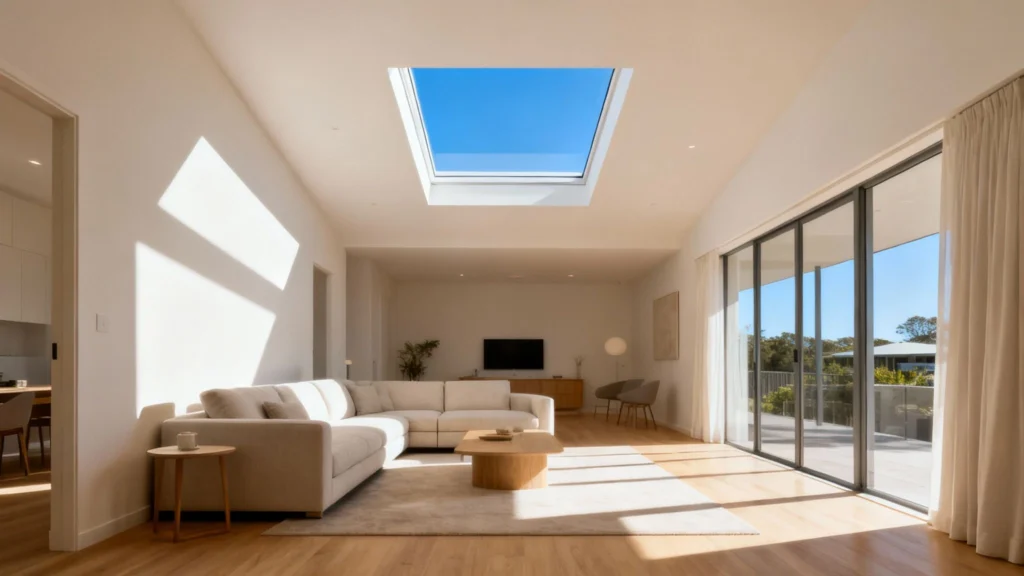
You need to think like a lighting designer, mapping out how the sun moves across your property during the day and through the seasons. The aim isn’t just to add more light, but to add the right kind of light.
Understanding Roof Orientation and Sunlight
Here on the Sunshine Coast—and everywhere else in the Southern Hemisphere—your roof’s orientation is the biggest factor in the quality of light you’ll get. Each direction serves up something different.
- North-Facing: This is the absolute gold standard for skylight placement in Australia. A north-facing skylight delivers soft, consistent, and indirect sunlight all day long. It’s the perfect ambient light for living areas, kitchens, and home offices where you need bright, useful light without harsh shadows or intense heat.
- South-Facing: A south-facing roof will give you a cool, low-level light. It’s a reliable source of illumination but won’t be as bright or intense as other options. This makes it a decent choice for bedrooms or art studios where softer light is a plus.
- East-Facing: If you love waking up to the sun, this is your go-to. An east-facing skylight captures that strong, direct morning light. It’s fantastic for getting you out of bed or brightening up the kitchen for breakfast, but just be ready for some serious glare early in the day.
- West-Facing: Be careful with this one. A west-facing skylight cops the full force of that powerful, hot afternoon sun. This can lead to massive heat gain and glare, so high-performance glazing with Low-E coatings is an absolute must to keep the space comfortable.
The trick is to harness the sun’s path to your advantage. For most rooms on the Sunshine Coast, a north-facing installation strikes the perfect balance between beautiful, bright light and thermal comfort, creating a welcoming vibe from dawn till dusk.
A Simple Rule for Sizing Your Skylight
Once you’ve picked the spot, how big should you go? Too small, and it’s a wasted effort. Too big, and you risk overwhelming the room with light and heat.
A great rule of thumb is to aim for the total glass area of your skylights to be around 5% of the room’s total floor space. So, for a 20-square-metre living room, you’d be looking for about 1 square metre of skylight glass.
This simple guideline helps make sure you get a bright, naturally lit space without going overboard. You can always tweak it based on the room’s needs, of course. A dark, internal bathroom might benefit from a higher ratio—maybe up to 7-8%—to really open it up.
Using an online tool like Vivid Skylights’ Skylight Pricing Estimator is a great way to play around with different sizes and see how they affect the cost.
Understanding Costs and Finding a Supplier
Alright, let’s talk numbers. When you’re planning for skylights on the Sunshine Coast, it helps to think of the investment in two parts: the skylight unit itself, and the professional installation. The total cost isn’t just a price tag—it’s about the value you get back for years to come.
The price of a skylight obviously changes depending on the model and its features. A simple fixed skylight is your most budget-friendly starting point, while a solar-powered opening model with a block-out blind and rain sensor will naturally sit at the premium end. It’s that classic trade-off between features and budget.
But the real value isn’t just in the upfront cost. It’s about investing in a quality product that will perform without a hitch for decades, trim your power bills, and add genuine value to your home without causing any headaches down the line.
Breaking Down the Investment
To get a clear picture of what to expect, you need to look at the total project cost. The supply of the unit is one piece of the puzzle, and the installation labour is the other.
- Skylight Unit Cost: This is driven by the size, type (fixed, electric, solar), and any extras like blinds or special glazing. A good supplier will have transparent pricing for every option.
- Installation Cost: This is shaped by your roof type—tiles are often a bit more work than metal—as well as the pitch of your roof and how easy it is to access the site.
It’s tempting to hunt for the cheapest unit you can find, but this is often a false economy. A poor-quality skylight might fail in a few years, spring a leak in a storm, or turn your room into a sauna, costing you far more in repairs and regret. To get a better feel for these variables, you can explore our detailed breakdown of skylight installation costs.
What to Look for in a Supplier
Choosing the right supplier is just as critical as choosing the right skylight. You need a partner who provides a complete, high-quality solution built for the unique demands of the Queensland climate, not just a product in a box.
Look for a supplier that puts quality materials first. Double-glazing is non-negotiable for keeping the heat out, and a tough powder-coated aluminium frame is crucial for standing up to that salty coastal air. These are the details that ensure your skylight works well and looks great for years.
A great supplier doesn’t just sell you a skylight; they provide a comprehensive system. This includes the correct, custom-designed flashing kit for your specific roof type with every unit, taking the guesswork out of achieving a perfect, watertight seal.
The Power of a Strong Warranty
A solid warranty is your ultimate peace of mind. It’s a direct signal from the manufacturer that they genuinely stand behind their product’s quality and durability. Don’t settle for anything less than a comprehensive warranty that covers the stuff that really matters.
For example, Vivid Skylights offers a 10-year leak-free warranty on all our units. This isn’t just a promise; it’s a guarantee that your investment is protected against the most common and costly potential issue. This kind of robust backing means you can enjoy years of beautiful natural light without ever worrying about a single drop of rain. It turns a simple purchase into a secure, long-term investment in your home.
Common Questions from Sunshine Coast Homeowners
As you get closer to choosing the right skylight, a few practical questions always pop up. It’s completely normal. To help you feel confident in your decision, here are some straight answers to the things we hear most from homeowners on the Coast.
How Do Skylights Handle Our Heavy Rain and Storms?
This is always the number one concern, and for good reason—our summer downpours are no joke. A quality, properly installed skylight is built to be completely waterproof. The real hero here is the custom-designed flashing kit, which creates an overlapping, watertight seal between the skylight’s frame and your specific roof material.
When it’s fitted correctly by a professional, every drop of rain is channelled away, keeping your home perfectly dry. For extra peace of mind, our electric and solar-powered models even come with rain sensors that automatically shut the skylight the moment they detect moisture.
What Sort of Maintenance is Needed in a Coastal Area?
Living this close to the ocean means dealing with that fine layer of salt spray that seems to get on everything. Luckily, modern skylights are designed to be incredibly low-maintenance.
- Self-Cleaning Glass: Many skylights now have a special coating that uses the power of the sun and rain to break down and wash away salt and dirt.
- Durable Frames: The powder-coated aluminium frames are tough and highly resistant to corrosion from the salty air, so they just need a quick wipe-down now and then.
Honestly, the rain does most of the cleaning for you. A manual clean once or twice a year with a soft cloth and some mild detergent is usually all it takes to keep them looking brand new.
Think of it this way: a quality skylight is a “set and forget” feature. It’s built to withstand the coastal environment with very little effort required from you, letting you simply enjoy the light.
Will a Skylight Actually Increase My Home’s Value?
Without a doubt. Natural light is one of the top features buyers look for. A home that feels bright, open, and airy just feels bigger, more inviting, and healthier.
Putting in stylish, high-performance skylights is a savvy investment. It doesn’t just make your home a better place to live day-to-day; it also adds real, tangible value and serious kerb appeal when it’s time to sell. It’s an upgrade that pays for itself in both lifestyle and property value.
Ready to transform your home with beautiful, natural light? Vivid Skylights delivers premium, double-glazed skylights Australia-wide, complete with the right flashing kit for your roof. Explore our range and get a fast, accurate price with our online tool.
Discover your options at https://vividskylights.com.au.