

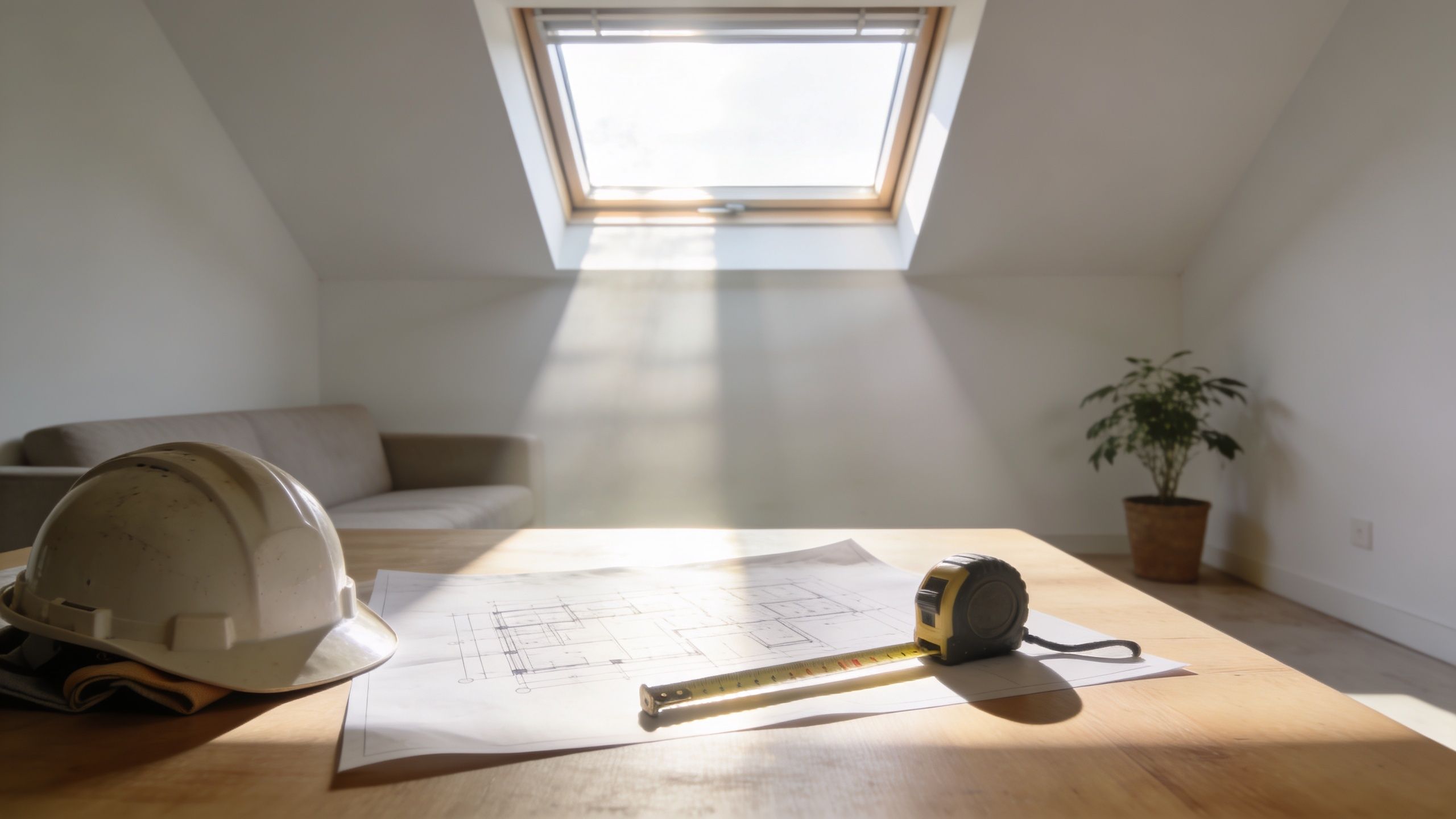
In Australia, professional skylight cost and installation typically runs from $3,000 to $7,300 AUD for a fully installed system, while lower-cost projects can start from around $1,600 AUD depending on the unit and installation scope. If you’re comparing options in 2026, standard fixed models usually sit at the lower end, while electric opening skylights with rain sensors land at the premium end.
That wide spread is exactly why homeowners get stuck. One person is pricing a simple fixed skylight over a straightforward roof line. Another is trying to bring light into a darker, harder-to-reach room with an operable unit, internal finishing, and more roof work. The products may both be called skylights, but the job scope can be completely different.
For Australian homes, the smart way to approach skylight cost and installation is to treat it as two decisions, not one. First, choose the right skylight for the room and the way you live. Second, choose an installation method that protects the roof, the ceiling finish, and the long-term performance of the unit.
That’s where practical trade-offs matter. A cheaper unit can become an expensive mistake if it’s wrong for the roof or poorly installed. A better-specified skylight often costs more upfront, but it usually gives you better insulation, cleaner sightlines, less maintenance, and fewer leak risks over time. If you’re planning a project in Melbourne or Brisbane, local roof conditions, access, and finishing details will shape the final number just as much as the product itself.
Table of Contents
What Really Determines Your Skylight Cost
A homeowner in Melbourne might price one fixed skylight online, then get a much higher installed quote once site details are added. The gap usually comes down to one thing. The product price is only part of the job. Roof access, ceiling type, flashing detail, and internal finishing often decide where the final number lands.
The two parts of the price
Skylight pricing usually has two components. The unit itself and the work required to install it properly in your roof and ceiling. Quotes become hard to compare when one includes plastering, trim, and painting prep, while another only allows for cutting in the skylight and flashing it externally.
Current market guides show a wide spread between basic unit pricing and full installed pricing. Analysts at Bill Ragan Roofing place fully installed skylights across a broad range, with fixed models lower and electric vented models higher. That lines up with what we see in practice in Australia, especially once you move from simple single-storey installs to homes with flat ceilings, difficult access, or larger double-glazed units.
For Australian homes, the biggest product-side cost drivers are usually:
Skylight type: Fixed units are the usual entry point. Manual opening models and electric vented skylights cost more because the hardware, controls, and installation are more involved.
Size: Bigger skylights deliver more daylight, but they are heavier to handle and can trigger extra framing or shaft work.
Glazing: Double glazing costs more upfront, but it makes sense in many Australian climates because it helps with comfort, condensation control, and energy performance.
Frame and finish: Material choice changes both appearance and price. Many modern Australian units use double-glazed panels with black powder-coated aluminium frames for a clean, durable finish.
Accessories: Blinds, flyscreens, rain sensors, and upgrade flashing kits all add to the final figure.
For a practical Australian breakdown by product type and room, the Vivid Skylights cost guide is a useful starting point.
What pushes the quote up or down
Site conditions often matter more than the catalogue price.
A tiled roof and a corrugated metal roof need different flashing details. A flat ceiling usually needs a plastered light shaft. A steep roof slows the job and changes safety requirements. A tight two-storey site can add time before the installer even opens the roof.
The main installation-side variables are:
Roof material and pitch: These affect flashing choice, waterproofing detail, and time on the roof.
Access to the work area: Easy single-storey access is faster and cheaper than restricted access or upper-level work.
Ceiling construction: Cathedral ceilings are usually simpler internally. Flat ceilings often need a shaft, stopping angles, and more finishing work.
Structural layout: If the skylight fits neatly between rafters or trusses, the job is simpler. If framing changes are required, costs rise.
Location in the room: Centred placement often looks best, but the ideal visual position is not always the easiest or cheapest structural position.
This is why an online estimate gets more accurate when you enter your suburb and project details. In Melbourne and Brisbane, labour rates, roof styles, and access conditions can differ enough to change the installed price meaningfully.
A better question is: what will this skylight cost in this house, on this roof, in this city? That is the number that matters.
DIY vs Professional Skylight Installation
A Saturday DIY skylight job can look straightforward at 9 am. By Sunday afternoon, the opening is cut, the flashing is half-fitted, the ceiling below is exposed, and rain is forecast. That is the moment many homeowners realise a skylight install is less about fitting a window and more about controlling water, structure, and finishing detail in the right order.

Where DIY can work and where it usually fails
DIY can suit a simple outbuilding, a replacement in an accessible roof, or a homeowner with real carpentry and roofing experience. A standard house is a different proposition. Once the skylight sits over finished plaster, insulation, electrical runs, and a room you use every day, the margin for error gets tight.
The failures I see are rarely dramatic on day one. More often, the problems show up months later. A stain forms at one corner. Condensation builds because the shaft was poorly detailed. Wind-driven rain gets under a flashing edge that looked fine in dry weather.
The weak point is usually not the skylight unit. It is the connection between the roofing material, underlay, flashing system, fixings, and the internal shaft or trim.
A fair comparison looks like this:
| Option | Upside | Trade-off | Best for |
|---|---|---|---|
| DIY installation | Lower upfront spend | Greater leak risk, more time on site, mistakes are yours to fix | Experienced tradespeople working on simple roof conditions |
| Professional installation | Better weatherproofing, cleaner internal finish, clearer warranty path | Higher initial outlay | Occupied homes, renovations, and higher-value rooms |
If you want a realistic view of what is involved before deciding, this DIY skylight installation guide sets out the practical steps and limits clearly.
A skylight is one of the few home upgrades where a small installation error can stay hidden until the first heavy weather event.
Why many homeowners still choose a professional
Professional labour costs more because the job includes more than cutting a hole and dropping in a unit. It covers site setup, safe roof access, accurate set-out, structural trimming where needed, correct flashing integration, weather sealing, and making the skylight sit square so it performs properly over time. If the model is operable, there is also more adjustment and testing.
That matters more in Australian conditions than many homeowners expect. In Melbourne, cold weather and persistent rain expose condensation and waterproofing mistakes quickly. In Brisbane, heavy downpours and heat put pressure on flashing details, seals, and roof junctions. The same skylight can need a different installation approach depending on the roof profile, pitch, and suburb.
This is also where product choice affects the risk profile. Modern double-glazed units from Vivid Skylights are built for energy performance and comfort, but even a high-quality skylight will not compensate for poor installation.
For homeowners comparing costs, the better question is not whether DIY is cheaper on day one. It is whether the saving outweighs the risk of repairing plaster, repainting ceilings, or reopening the roof later.
A similar principle applies to other weather-exposed trades. Water management details matter just as much in roof drainage, which is why experienced contractors such as Flagstaff gutter repair and installation services focus heavily on correct fit and runoff control, not just the visible finish.
Here is the practical call:
Choose DIY if you already work confidently with roofing and carpentry, the roof is simple, and you are prepared to carry the risk.
Choose professional installation if the skylight is going into your main home, over a finished room, or into a roof where one leak will cost more than the labour you saved.
For most Melbourne and Brisbane homes, professional installation is the safer financial decision.
The Professional Installation Process Explained
A proper skylight install follows a sequence. Good installers don’t improvise the critical parts.
What happens on site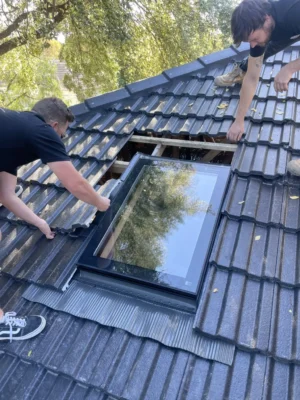
The first step is confirming placement from both inside and outside. The room might want the skylight in one spot for symmetry, but the roof framing, rafters, services, and roof covering may suggest another. The best outcome balances daylight, structure, and finish.
Once the position is locked in, the team protects the room below and prepares roof access. The ceiling opening and roof opening must line up cleanly. If the house has a flat ceiling under a pitched roof, the shaft shape matters almost as much as the skylight itself because it affects how the light spreads into the room.
A typical professional sequence looks like this:
Site assessment and measuring
The installer confirms roof type, pitch, ceiling depth, and access.Marking and cutting
The opening is laid out carefully so the skylight sits square and the structure remains sound.Framing and support work
Any necessary trimming or adjustment is done before the skylight goes in.Flashing and waterproofing
This is the critical weatherproofing stage.Internal finishing
The shaft, plasterboard, and trim are completed so the skylight looks intentional, not patched in.
For a closer look at how a fitted job is handled, the professional skylight installation page outlines the service process used for residential projects.
What a good installer is protecting you from
Most homeowners focus on the visible finish. Tradespeople focus on water path. That’s the right instinct. Water doesn’t care if the unit looks straight from inside. It follows the easiest route under laps, around corners, and into weak detailing.
That’s also why roof drainage should be considered with the skylight, not after it. On projects where existing drainage is poor, homeowners sometimes also need broader roof water management, and resources like Flagstaff gutter repair and installation services show the same basic principle at work. Keep water moving away from vulnerable junctions.
On-site reality: The neatest skylight jobs are usually the ones where the installer spent the most time planning before cutting anything.
Professional installation is available in Melbourne and Brisbane, which matters because the team can assess local roof conditions directly rather than relying on guesswork from photos alone.
Choosing Your Perfect Vivid Skylight
A good skylight choice starts with the room you are trying to improve. A dark hallway needs broad, even daylight. A bathroom may need daylight and moisture relief. A high raked ceiling can benefit from extra light, but access and opening height often decide whether a fixed or operable unit makes sense.
For Australian homes, I usually tell homeowners to start with glazing performance, then work back to size and function. Double glazing is the sensible baseline for Melbourne and Brisbane because it gives you better comfort in both summer and winter, reduces the harshness of overhead heat gain, and makes the skylight feel like part of the house rather than a hot spot in the ceiling.
Fixed skylights for pure daylight
Fixed skylights suit rooms where the main job is bringing in light. They work well over living spaces, kitchens, corridors, stairwells, and voids where extra ventilation is not the priority.
Premium double-glazed units in the Australian market commonly use black powder-coated aluminium frames, low-maintenance glazing options, and drainage-focused designs that reduce standing water on the unit. In practice, those details matter more than brochure language. Self-cleaning glass is helpful if the skylight sits high on a difficult-to-access roof. Better thermal performance matters every day, especially in bedrooms and living areas where people notice radiant heat and winter chill.
Size matters too. One oversized unit can create glare on a benchtop or TV wall, while two smaller units often spread light more evenly across an open-plan room. Shaft depth, ceiling height, and roof orientation all affect the result, so the same skylight can perform very differently from one house to the next. If you are comparing options, this guide to choosing the right skylight for each room is a useful place to narrow the field.
Operable skylights for light plus ventilation
Operable skylights earn their keep in bathrooms, laundries, kitchens, and upper-level rooms where warm air collects. In those spaces, ventilation is often the reason the skylight gets used every day.
The trade-off is straightforward. Operable units cost more than fixed models, and the added function needs to justify that spend. For a bathroom with poor airflow, it usually does. For a hallway, it usually does not.
Electric opening skylights are often the better choice for high ceilings or hard-to-reach locations. Solar-powered versions can also make sense where wiring access is awkward or where you want to avoid extra electrical work during the install.
A short product walkthrough helps make those differences easier to visualise:
“Pick the skylight based on the room’s problem first. Darkness, trapped heat, lack of privacy, or no roof access all point to different solutions.”
AuraGlow LED skylights for difficult spaces
Some rooms cannot accommodate a conventional skylight. There might be another storey above, a roof frame that leaves no clean path, or services and mechanical runs that make a roof penetration impractical.
In those cases, AuraGlow LED skylights give you the visual effect of overhead daylight without opening the roof. They suit internal bathrooms, hallways, wardrobes, and ground-floor rooms with no direct roof access. The result is not the same as a true skylight, but it is often a better solution than forcing a conventional unit into a space that is wrong for it.
Nationwide delivery across Australia matters here because the right product is not always a roof-mounted skylight. Homeowners in Melbourne, Brisbane, and regional areas often need different answers based on house type, ceiling construction, and access constraints. The best choice is the one that fits the room, the roof, and the budget without creating avoidable installation problems later.
The True ROI Energy Savings Home Value and Wellbeing
A skylight pays back in more than one way. Some of that return is visible on power bills. Some shows up when a home feels larger, brighter, and easier to live in. Some only becomes obvious when buyers walk through the property later.
Where the financial return comes from
Solar-powered skylights have seen a 35% surge in demand, and they can reduce daytime lighting electricity use by 25% to 40%. For a Melbourne household, that equates to $300 to $600 in annual savings, with a payback period of 4 to 6 years, according to this solar skylight cost and savings overview.
That same source notes a potential 2% to 5% boost in home value. Not every buyer will calculate that formally, but natural light consistently changes how a room is perceived. Brighter interiors read as more open, more usable, and more premium.
The return usually comes from a mix of factors:
Less daytime artificial lighting: This is the most obvious and immediate gain.
Ventilation in the right rooms: Operable units can help purge hot or stale air.
A better quality renovation outcome: Skylights often make existing space work harder, which can be more appealing than adding floor area.
Stronger buyer response: Well-lit homes tend to present better in photos and inspections.
If you want to think about value at resale as well as liveability, the guide on whether skylights increase home value is worth reading.
The value homeowners notice every day
Financial considerations are important, but homeowners rarely install a skylight for the sake of a budget. They choose to add one because a room feels flat, shut in, or gloomy.
Natural light changes how surfaces read, how ceilings feel, and how people use the room. A dark hallway becomes part of the home instead of a transition space. A kitchen feels more active during the day. A bathroom can feel calmer and less boxed in.
Better daylight doesn’t just brighten a room. It changes how long people want to spend in it.
That’s the part many budgets miss. A good skylight doesn’t just lower reliance on artificial lighting. It improves the experience of the space every single day.
How to Get an Accurate Skylight Quote Instantly
A homeowner in Melbourne might price a skylight for a dark kitchen and get one figure. A homeowner in Brisbane can choose the same unit and end up with a different installed cost because roof access, roofing material, shaft depth, and weatherproofing details change the labour.
That is why guide prices only go so far. An accurate quote needs the product choice, the room, and the roof conditions assessed together.
What to have ready before you estimate
You do not need plans or a site measure to get started. You do need enough detail to stop the estimate drifting into guesswork.
Have these points ready:
Your location: Melbourne, Brisbane, or another Australian delivery location.
Room type: Kitchen, bathroom, living room, hallway, stairwell, or bedroom.
Roof type: Tile, metal, pitched, or low-pitch.
Skylight preference: Fixed, electric opening, solar opening, or an alternative such as AuraGlow LED where a conventional skylight is not suitable.
Approximate size goal: A modest light source or a larger feature that changes the feel of the room.

Location matters in practical ways. In Melbourne, I often see estimates shift because of steeper roof forms, tighter roof access, or more involved internal shaft work in older homes. In Brisbane, the quote may change for different reasons, including roof construction, ceiling cavity conditions, and the way the unit needs to be detailed for the home.
How to use an online estimator properly
Start with the problem in the room.
If the space is dark but otherwise comfortable, a fixed double-glazed skylight is usually the cleanest place to begin. If heat, steam, or stale air are part of the problem, an opening model is often the better comparison. If a standard roof penetration is difficult or not possible, an LED alternative may be the more realistic path.
That approach gives you a better estimate because you are comparing suitable options, not chasing the lowest product price.
Vivid Skylights offers an online estimator that lets homeowners compare likely costs by product type, size, and location across Australia, including Melbourne and Brisbane. Used properly, it helps turn a broad budget range into a more realistic expectation before you start booking installers or site visits.
Your Brighter Home Awaits With Vivid Skylights
Most skylight decisions come down to three things. What type of light you want, what your roof can accommodate, and how much installation complexity the room creates. Once those are clear, the price makes a lot more sense.
For many homes, a fixed double-glazed skylight provides the cleanest answer. For rooms that trap heat or moisture, an operable electric or solar model is often worth the step up. For spaces where a traditional unit cannot be installed, AuraGlow LED skylights offer a different path that still changes how the room feels.
Good outcomes depend on more than product choice. They depend on proper placement, the right flashing method, tidy internal finishing, and realistic quoting from the start. That’s why homeowners planning projects in Melbourne and Brisbane usually benefit from treating skylight cost and installation as a full building task, not a simple product purchase.
There’s also a practical advantage in choosing a system that can be delivered nationwide across Australia. Builders, renovators, and homeowners don’t all live near a showroom, but they still need access to the right size, specification, and installation pathway for their project.
The right skylight doesn’t just add light. It can make an existing room feel more open, more comfortable, and more usable without changing the footprint of the house.
If you’re ready to price your project properly, explore product options, or arrange expert skylight installation in Melbourne or Brisbane, visit Vivid Skylights.