

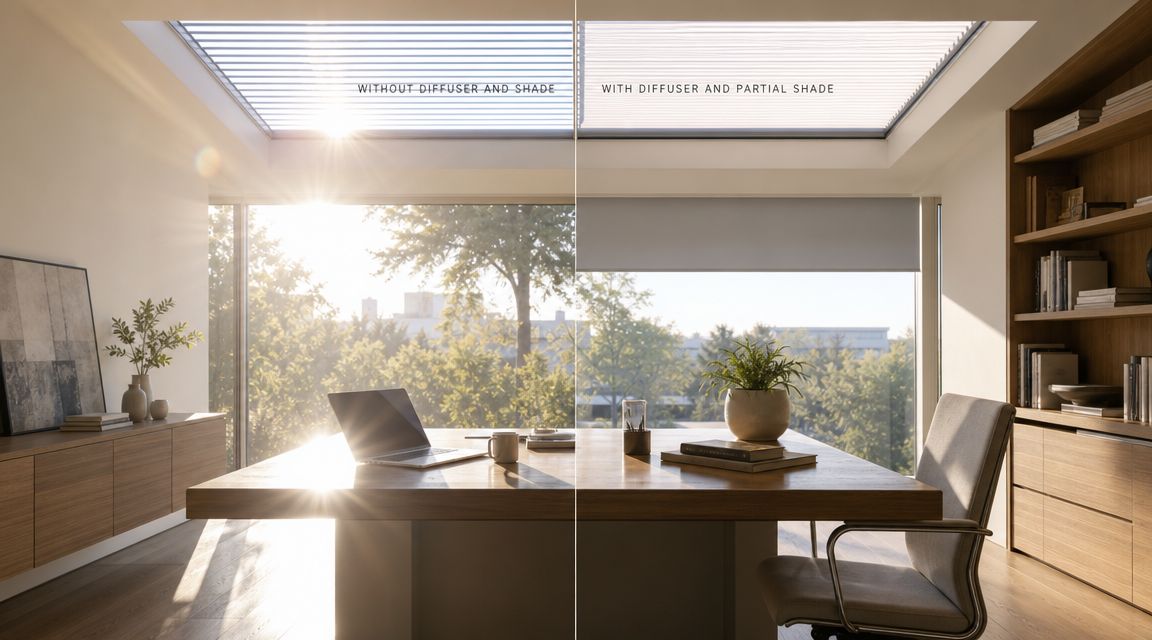
A skylight can make a room feel bigger, calmer and more expensive in the best possible way. Then midday hits, the television turns into a mirror, the laptop becomes hard to read, and you start noticing a bright patch creeping across the timber floor and onto the arm of the sofa.
That's the part many homeowners don't get warned about early enough. In Australian homes, daylight is rarely the problem. The problem is too much direct sun at the wrong time, especially in rooms that double as living spaces, work zones and family hubs. That's why skylight glare reduction matters. Done properly, it doesn't mean giving up natural light. It means keeping the good part of skylighting and removing the part that makes a room harder to live in.
Table of Contents
Enjoying the Light Without the Damaging Glare
It's common to love a skylight in the morning and resent it by early afternoon. The kitchen looks fantastic until the benchtop starts reflecting hard light. The upstairs retreat feels open until the TV image washes out. The home office finally gets daylight, but the screen glare makes you shuffle your chair every hour.
That's become more common because modern homes ask one room to do several jobs. As noted in this guide to reducing heat and glare from skylights, the challenge of managing daylight is increasingly relevant in Australian homes because device use is widespread and many rooms now double as work or entertainment spaces.
Good skylight design doesn't make a room darker. It makes the light more usable.
The other complaint usually arrives more slowly. A rug loses its depth of colour. A fabric lounge lightens unevenly. Timber flooring develops a sun-struck patch. Homeowners often assume that's just normal ageing, but uncontrolled overhead sun can speed up the wear you notice day to day.
If your skylight is already installed, a fitted blind or shade is often the quickest first move. A practical starting point is looking at skylight blinds and shades for overhead light control so you can decide whether you need something adjustable or a stronger block-out option. If you're also weighing external treatments on vertical glazing nearby, this explanation of how solar screens cut energy bills is useful because it shows the broader logic behind managing solar gain rather than merely blocking light.
Understanding Why Skylights Cause Glare and Fading
A skylight doesn't create glare by accident. It creates glare because it sits where sunlight is strongest. Light from above is more intense, more direct and harder to ignore than light entering from the side.

Direct sun is very different from soft daylight
The daylight most homeowners want is diffuse daylight. It spreads through the room, lifts shadowy corners and makes finishes look natural. The daylight that causes trouble is direct beam sunlight. That's what creates bright hotspots on floors, shiny reflections on stone tops and harsh contrast on screens.
Fading is a related issue, but it isn't exactly the same thing. Visible light causes the glare you see and feel straight away. Solar radiation also affects heat build-up, and long exposure can be hard on furnishings and finishes over time. That's why discussions about skylight UV protection, tint and laminated glass belong in the same conversation.
Size and placement matter more than most people think
A lot of glare problems begin at the planning stage. The U.S. Department of Energy notes in its skylight design guidance that, as a rule of thumb, skylight area should not exceed 5% of floor area in rooms with many windows and 15% in rooms with few windows. That's a useful benchmark because oversized roof glazing tends to create stronger contrast and more direct solar exposure.
A few practical warning signs show up early:
The room already has plenty of side glazing. Adding a large roof opening can push it from bright to visually harsh.
The skylight sits over a task zone. Desks, dining tables, televisions and kitchen prep areas are where glare becomes obvious first.
Interior surfaces are dark. Dark ceilings and walls don't bounce light evenly, so the room gets bright patches instead of balanced daylight.
Practical rule: skylight glare reduction starts with controlling the opening itself. Blinds and films help, but they work better when the original size, location and glass choice are sensible.
If you're choosing a new unit, understanding what Low-E glass does in a skylight helps because glare control is rarely about one feature alone. Glass performance, room reflectance, shaft design and the way the space is used all work together.
Comparing the Most Effective Glare Reduction Strategies
There isn't one universal fix. The right choice depends on whether you're trying to stop screen glare, protect furnishings, soften a harsh shaft of sunlight, or lower summer discomfort in the room below.

What each option does well
Glazing upgrades are the cleanest long-term answer when you're specifying a new skylight or replacing an old one. Tinted, laminated and comfort-focused glass options reduce the harshness at the source. They don't dangle into the room, they don't need daily adjustment, and they preserve the architectural look. The trade-off is that they need to be chosen carefully up front.
Blinds and shades give you control. That matters in multipurpose rooms where morning light is welcome but midday sun isn't. They're especially practical over televisions, desks and dining zones because you can respond to time of day rather than committing to one permanent light level. Product references cited in this skylight shade performance overview report that solar-control films can reject about 73% of solar energy, while specialised blackout blinds can improve a skylight's energy efficiency by up to 45%.
Films and tints are often the retrofit answer when the skylight itself is staying. They're less visible than a blind and can calm down a space without changing the ceiling line. The downside is that some films reduce daylight more than homeowners expect, which can make a room feel flat on overcast days.
External shading is often thermally effective because it tackles sun before it enters the glazing. But it isn't always suitable for every roof form, every skylight type or every homeowner who wants a clean exterior finish.
If your real complaint changes by the hour, an adjustable product usually works better than a permanent darkening treatment.
Skylight Glare Solution Comparison
| Solution | Effectiveness | UV Protection | Best For |
|---|---|---|---|
| Tinted or laminated glass skylights | Strong long-term control at the source | Depends on glass specification | New builds, major renovations, homeowners who want a clean finish |
| Interior skylight blinds or shades | Strong and adjustable, especially for direct beam light | Varies by fabric and system | Home offices, media rooms, bedrooms, rooms with changing light needs |
| Solar-control film | Useful retrofit option for reducing glare and solar load | Depends on film selected | Existing skylights where replacing the unit isn’t practical |
| External shading systems | Strong at stopping heat and light before entry | Depends on system design | Hot roof exposures where thermal load is the main problem |
A good rule is to match the solution to the problem you have.
For screen glare: use an adjustable option first, especially if the room still needs daylight at other times.
For fading concerns: focus on glass specification or a film that addresses solar transmission without making the interior gloomy.
For broad summer discomfort: don't separate glare from overheating. They're usually part of the same issue.
For integrated ceiling design: a built-in skylight shade option for compatible systems is often neater than an aftermarket workaround.
The Ultimate Solution Specifying a Vivid Skylight
The easiest glare problem to solve is the one you prevent before installation. If you're still at the selection stage, the smartest move is to treat skylight glare reduction as part of the specification, not as a problem to patch later.

What to specify before the plaster goes in
Australian conditions are demanding. Intense sun, long warm periods and bright skies mean the glass selection does a lot of the heavy lifting. Guidance referenced in this discussion of double glazing and solar heat gain in Australian conditions makes the point clearly. In Australia, summer overheating and glare are closely linked, and high-performance double glazing is essential for managing solar heat gain and thermal comfort.
That's where a comfort glass skylight approach makes sense. Instead of adding control later, you start with glazing that's chosen for the room's use, roof exposure and comfort goals. In practical terms, that usually means discussing:
Whether the room is screen-heavy. A kitchen-family room with a television needs a different daylight balance from a stairwell.
Whether fading is a concern. Timber floors, artwork and upholstered furniture deserve attention early.
Whether the skylight will open. Operable units help release built-up warm air, which changes how the room feels in summer.
Why integrated performance is easier to live with
For homeowners comparing products, one option is the Vivid Skylights range of fixed and operable units, which includes double glazed fixed skylights as well as electric and solar powered operable models with Australia-wide delivery. That matters because the best result often comes from combining daylight control with thermal performance and ventilation rather than treating glare as a standalone issue.
A well-specified unit usually ages better visually too. You don't end up relying on a dark film that changes the feel of the room, or a blind that stays closed all summer because the original glass was too harsh. The room feels balanced from the start.
Homeowners rarely regret choosing more controllable daylight. They do regret skylights that look impressive on install day but create daily compromises afterwards.
If a builder or designer is involved, ask them direct questions. What glass is being specified. Is the unit fixed or operable. How will that room be used at noon in January. Those answers tell you more than a generic promise of “lots of natural light”.
How to Retrofit Your Existing Skylight for Less Glare
If the skylight is already in place, the job changes from specification to correction. You're no longer choosing the opening. You're tuning the light.
Start with the room, not the product
Stand in the room when glare is worst. Don't assess it early in the morning if the problem shows up after lunch. Note what bothers you most. Is it eye strain, screen reflection, heat on the seating area, or worry about flooring and fabric fading?
Then check the room itself.
Look at the surfaces. Dark paint and low-reflectance finishes make bright shafts feel harsher.
Look at the task zones. If the beam lands on a desk or television, you need control at specific times of day.
Look at how often you want full daylight. Some rooms can tolerate a permanent reduction. Others can't.
Retrofit options that usually work
The first retrofit many people consider is solar-control film. The DOE notes in its guide to window, door and skylight energy performance ratings that solar-control films can reduce solar energy transmission by 50–80%, but success depends on choosing the right visible transmittance for the room. This is a key pitfall with film. If you buy only for heat rejection, you can end up with a space that feels dull instead of comfortable.
A second route is a blind or diffuser. This is often the better answer where the room needs flexibility. You can soften or block the harsh period and still keep useful daylight at other times. If the existing diffuser is tired, yellowed or no longer doing the job, replacing it can help rebalance the light, especially with a purpose-made replacement skylight diffuser.
If you're researching film installation, these Quote My Wall installation tips are worth a read for general handling and prep. Skylights are less forgiving than vertical glass because overhead application shows bubbles, dust and misalignment more clearly.
A few retrofit mistakes come up again and again:
Choosing the darkest option first. Darker isn't automatically better if the room still needs daytime function.
Ignoring access. Hard-to-reach skylights often need motorised or low-maintenance solutions.
Treating glare as only a glass issue. Sometimes moving a desk, changing a screen position or brightening room finishes gives a better result than heavily tinting the skylight.
Glare Free Innovation Vivid Skylight Alternatives
Not every room needs a standard fixed unit, and not every glare problem is solved by making glass darker.
Operable skylights change the comfort equation because they help purge built-up warm air that collects at ceiling level. In practical terms, that means the room can feel less stuffy during hot bright periods, especially when glare and heat arrive together. Electric and solar powered opening models suit spaces where ventilation matters as much as daylight.
When a roof opening isn't the right answer
Some spaces can't take a conventional skylight because of roof structure, room location or installation limits. That's where the AuraGlow LED skylight range becomes a useful alternative. It gives the visual effect of a skylight and shifts colour through the day to mimic the changing sky, without the harsh direct beam issues that make some overhead glazing hard to live with.
For a closer look at how that kind of lighting effect works in a finished interior, this video is useful:
The broader point is simple. Good overhead lighting should improve daily life, not force workarounds around your couch, flooring, television or desk setup.
If you're planning a new skylight or trying to calm down one you already have, Vivid Skylights offers fixed, electric opening and solar powered opening skylights, plus compatible shading options and the AuraGlow LED range for spaces where a traditional skylight won't suit. A well-chosen skylight should bring in light you enjoy living with, not light you spend the day trying to escape.