

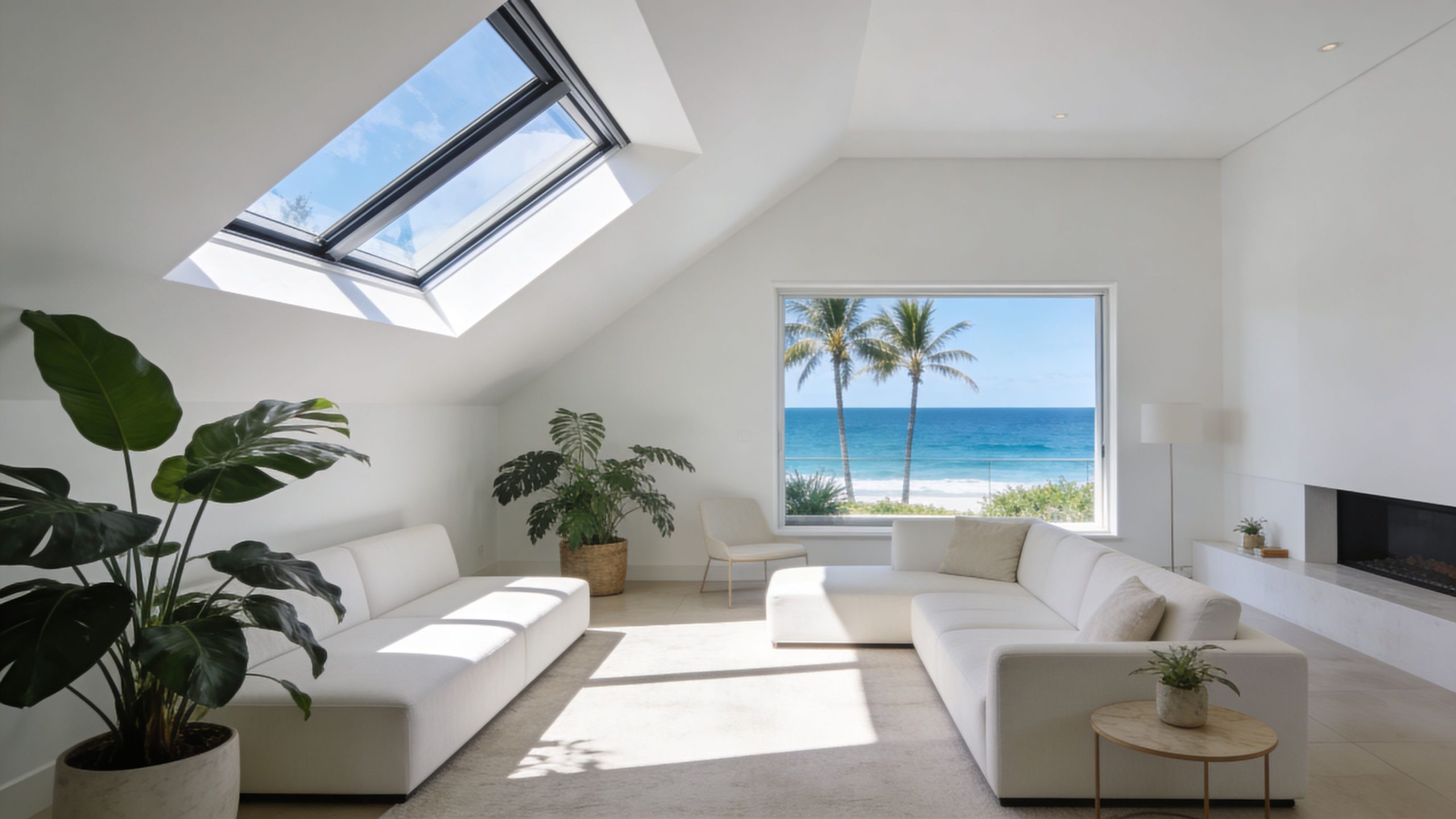
A lot of Gold Coast homes have the same problem. The weather outside is brilliant, the living room at the back is dim, the hallway needs lights on during the day, and the bathroom feels closed in unless the exhaust fan runs nonstop.
That’s why homeowners keep searching for skylights gold coast qld. Done properly, a skylight doesn’t just brighten a room. It changes how a home feels to live in. It can make an older beach house feel more open, help a renovated duplex breathe better, and turn an internal corridor from dead space into part of the home.
The catch is that Gold Coast conditions punish poor products and poor installation. Strong sun, humid air, heavy downpours, salt exposure near the coast, and roof styles that vary from tiled post-war homes to modern low-pitch builds all change what will work and what won’t. A cheap dome that looks fine in a brochure can become a heat and leak headache. A well-specified double-glazed unit with the right flashing usually performs very differently.
Table of Contents
Why Skylights Are a Bright Idea for Gold Coast Homes

You walk into a typical Gold Coast home at 2 pm and one part of the house still needs the lights on. It is usually the middle of the floorplan. Rear living zones under deep rooflines, internal bathrooms, stair voids, hallways, and walk-in robes are the usual problem spots, especially in older brick homes and renovated beachside properties where wall windows cannot pull enough daylight into the centre.
That shortfall matters in this climate. Gold Coast homeowners want bright rooms, but they also want control over heat, glare, and moisture. Old perspex domes often let in too much summer heat and too little comfort. A modern double-glazed skylight handles those trade-offs far better, which is why premium products from Vivid Skylights suit the local market so well, especially their fixed and operable double-glazed units and AuraGlow LED option for rooms where a conventional skylight is not practical.
Natural light that suits local living
Natural light does more than make a room look better. It cuts the need for artificial lighting during the day, which matters while households look for ways to trim running costs alongside bigger energy upgrades such as selecting the right solar panels for 2026.
The practical benefit is simple. If a room regularly needs the switch flicked on during daylight hours, overhead daylight usually solves the problem more effectively than adding more lamps.
Homeowners comparing products can see the day-to-day payoff in these benefits of skylights for everyday living. Kitchens, family rooms, and circulation areas tend to show the biggest improvement because they are used constantly. The room feels clearer, finishes read more accurately, and the house relies less on artificial light in the middle of the day.
Ventilation matters as much as brightness
On the Gold Coast, I would not judge a skylight on light alone. Ventilation often makes the bigger difference over summer.
Humidity builds up fast here. Bathrooms stay damp. Upper storeys trap heat. Coastal homes also deal with salt-laden air and periods of still, sticky weather. An operable skylight placed at the high point of a room gives hot air somewhere to go, which can make upstairs bedrooms, voids, and bathrooms feel less stuffy without running mechanical cooling as hard.
That is where product choice matters. Double glazing helps with heat control and comfort. Operable models add airflow when the room needs purging. AuraGlow LED fills a different gap. It suits internal spaces where roof access, framing, or shaft design makes a standard skylight difficult, but the room still needs the feel of overhead light.
There is also a resale and presentation angle. Top-down daylight tends to make coastal interiors feel cleaner and more open. White walls look less flat. Timber and stone finishes show their true colour. In a region known for bright, indoor-outdoor living and decades of apartment and renovation work, that is not a styling gimmick. It is a practical improvement buyers and owners notice straight away.
Choosing Your Skylight A Vivid Skylights Guide
Not every room needs the same kind of skylight. Some spaces only need daylight. Others need airflow, privacy control, or a solution where a traditional shaft won’t work. That’s where choosing by room function is smarter than choosing by appearance alone.

A useful starting point is the different types of skylights used in residential projects. Once you sort products by fixed, operable, and non-traditional light solutions, the shortlist gets much easier.
Fixed skylights for pure daylight
A fixed double-glazed skylight is the straightforward option. It’s there to bring in daylight and nothing else. No opening sash. No ventilation hardware. No need to think about how often you’ll use it.
That makes fixed units a good fit for living rooms, stairwells, galleries, and circulation areas where extra light is the main goal. They also suit rooms where another source of ventilation already exists, such as a bathroom with a good operable window or a kitchen with strong crossflow.
What works well:
Centred placement over key zones so the light lands where people use the room
Double glazing in bright roof exposures where old single-skin products would struggle
Simple room shapes where the shaft can be kept clean and direct
What usually doesn’t:
Treating a fixed skylight as a ventilation solution in a damp bathroom
Oversizing the unit in a west-exposed roof area where controlling heat and glare matters
Ignoring blind options in bedrooms or media rooms
Operable skylights for airflow and control
Operable models earn their keep in Gold Coast conditions. If a room gets humid, holds cooking heat, or feels stale even with windows open, a venting skylight is worth a hard look.
Electric opening skylights are practical in higher ceilings, raked ceilings, and spots where manual access would be awkward. Solar-powered operable units make sense where homeowners want the convenience of remote operation without adding more wiring complexity during a retrofit.
This is also the one place in the article where it’s useful to name a specific supplier range. Vivid Skylights offers double-glazed fixed units plus electric and solar powered operable skylights, with nationwide delivery in Australia. For Gold Coast homeowners, that means the same product family can cover a bright hallway, a venting bathroom, and a larger open-plan renovation without mixing completely different systems.
A good operable skylight should solve two problems at once. It should brighten the room and give warm, damp air somewhere to go.
AuraGlow LED for spaces without roof access
Some rooms can’t take a conventional skylight. Apartment interiors, ground-floor corridors under upper rooms, rooms under concrete slabs, and certain renovation layouts don’t allow a light shaft from roof to ceiling.
That’s where AuraGlow LED skylights fit. They’re designed to create the visual effect of a skylight where a standard roof opening isn’t practical. The appeal isn’t just brightness. It’s the way the light presents as a ceiling feature rather than a flat artificial fitting, with colour changes across the day that mimic the feel of an evolving sky.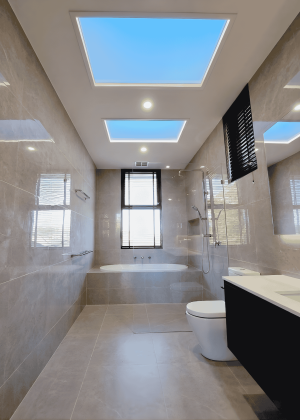
These are especially useful in:
Internal hallways with no external wall access
Ground-floor rooms below upper storeys
Design-led renovations where a clean ceiling aesthetic matters
Commercial or hospitality settings looking for the feel of natural overhead light
Here’s the quick comparison that helps most homeowners narrow things down:
| Skylight Type | Best For | Key Features | Ventilation |
|---|---|---|---|
| Fixed | Living rooms, hallways, stairwells | Double-glazed daylighting, simple design, clean ceiling finish | No |
| Operable | Bathrooms, kitchens, upper-storey rooms | Opening function, electric or solar-powered options, better moisture and heat relief | Yes |
| AuraGlow LED | Internal rooms where roof access isn’t possible | Skylight-style ceiling light effect, colour-changing daylight illusion | No |
Sizing Placement and Gold Coast Roof Compatibility
The right skylight size is less about chasing the biggest opening and more about matching the room, roof, and ceiling depth. Oversized units can make a room uncomfortable. Undersized units can leave you wondering why you bothered.
Get the size right first
A useful rule of thumb is to size the skylight in proportion to the room and then adjust for ceiling height, shaft depth, and how reflective the interior finishes are. A small white bathroom can handle a different balance than a large open-plan room with darker flooring and cabinetry.
Deep shafts reduce the amount of useful daylight reaching the room below. So does poor placement over a circulation edge instead of the centre of activity. In practical terms, two smaller skylights often distribute light more evenly than one large opening shoved to one side.
What to assess before ordering:
Room use. A kitchen island needs different light distribution than a hallway.
Ceiling type. Flat ceilings with roof space above need shaft design. Raked ceilings usually create a more direct result.
Interior finishes. Pale walls and ceilings bounce more light than dark joinery and stone.
Placement changes the result
Orientation matters in the Southern Hemisphere. The same skylight can feel soft and balanced in one roof plane and much harsher in another.
A placement decision should account for:
Time of day the room is used most
Whether glare is a problem on benches, screens, or dining tables
How much summer heat the roof plane already carries
Whether ventilation is needed at the highest point of the room
If your renovation also includes rooftop solar, roof planning matters even more. Homeowners trying to balance panel layout, shading, and skylight positions may find this guide on selecting the right solar panels for 2026 useful as a broader roof-planning reference.
Site note: Good skylight placement starts inside the home, not on the roof. Stand in the room first and work out where light needs to land.
Roof type and pitch affect the install
Gold Coast housing stock is mixed. Terracotta tile, concrete tile, and metal roofs all show up regularly, often within the same suburb. Low-pitch contemporary roofs need a different flashing approach from steeper tiled roofs on older homes.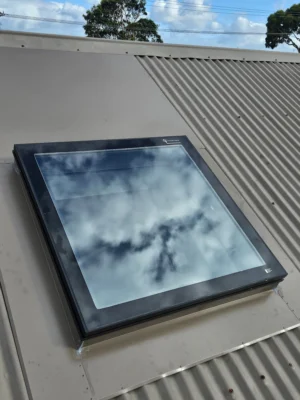
That’s why homeowners should check roof compatibility early, especially if they’re comparing products online. Flashing design, minimum roof pitch, and how the unit interfaces with tiles or metal sheets matter more than brochure styling.
For planning, a roof pitch calculator for skylight selection helps narrow down what’s suitable before installation is booked. That’s particularly useful on Gold Coast retrofits where low-pitch roof sections and extensions can complicate what looks simple from ground level.
Navigating Costs Permits and Regulations in QLD
A common Gold Coast scenario goes like this. A homeowner budgets for the skylight unit, then gets surprised by the rest of the job. The actual cost usually includes the skylight itself, flashing suited to the roof, internal ceiling work, access challenges, and electrical work if the unit is operable or paired with lighting.
What drives skylight cost
Product choice sets the baseline. A fixed skylight is usually the lower-cost option because the install is simpler and there are fewer components to weather-seal. An operable skylight costs more to supply and fit, but it can solve a real problem in Gold Coast homes that trap heat high in raked ceilings or upper-storey voids. Double glazing also adds to upfront price, but in our climate it often earns its keep through better comfort, less glare, and more stable indoor temperatures.
The roof and ceiling build can change the quote fast. A simple single-storey metal roof with clear access is one kind of job. A tiled roof over a stair void, with shaft work, plaster repairs, and painting, is another. Retrofits often cost more than expected for that reason.
Vivid Skylights sits at the premium end of the market, and that is usually reflected in the specification rather than just the branding. Their range gives Gold Coast buyers clear options for fixed, double-glazed, and operable units, plus AuraGlow LED models for rooms where natural light is limited or roof access makes a traditional skylight less practical. For a realistic breakdown of product and labour allowances, start with this guide to skylight cost and installation.
Budget timing matters too. Skylights are often added during a kitchen upgrade, extension, or roof replacement, so the question is not only total cost. It is whether the project can absorb the spend without creating pressure elsewhere.
When approvals and compliance come into play
Approval requirements depend on the scope of work. A straightforward replacement or small installation may be relatively simple, but structural changes to roof framing, work tied into a larger renovation, or homes affected by planning overlays can trigger extra checks. If there is any doubt, confirm it with your installer, certifier, or local council before the opening is cut.
Weather exposure should shape the buying decision from day one. Gold Coast homes deal with heavy rain, wind-driven storms, salt air near the coast, and a long humid season. That is why the flashing system matters as much as the glass. A well-made double-glazed or operable unit is only as reliable as the way it is integrated into the roof.
Cheaper products often disappoint. The skylight may look fine in a brochure, but if flashing details are vague, pitch requirements are restrictive, or the warranty relies on perfect site conditions, the risk sits with the homeowner. On the Gold Coast, I would rather see a properly matched flashing kit and clear installation requirements than a lower sticker price.
A few checks are worth making before you sign off:
Ask who is responsible for flashing details for your exact roof material and pitch
Confirm whether the model is rated for your roof type and local weather exposure
Check if structural alterations need approval or certification before work starts
Review warranty terms carefully so you understand what is covered by the product and what depends on installation
Compare fixed, operable, and AuraGlow LED options against the room’s purpose rather than buying on price alone
That approach usually leads to a better long-term result. Gold Coast homeowners are not just buying daylight. They are buying a roof opening that has to stay dry, handle the climate, and still suit the house years from now.
Installation on the Gold Coast DIY or Professional
Some skylight projects are realistic for a capable DIY homeowner. Others are better left to licensed trades from the start. The right call depends on roof access, your experience level, and how comfortable you are making a weatherproof penetration in a live roof.
When DIY makes sense
DIY can work well on simpler jobs. Think single-storey access, straightforward roof geometry, and a homeowner who already handles carpentry or roofing work confidently. It also helps when the skylight system comes with matching flashing and clear installation guidance rather than leaving the weatherproofing to guesswork.
A realistic DIY checklist includes:
Roof confidence. You’re comfortable moving and working safely at height.
Framing knowledge. You understand how to alter openings without compromising structure.
Finishing ability. You can line a shaft, plaster neatly, and leave a clean internal result.
Weather discipline. You won’t start a roof opening with rain threatening.
For product-specific preparation, it helps to review a dedicated skylight installation guide and process overview before deciding whether you’ll do the work yourself or bring in a professional.
When a professional is the safer option
A professional installer usually makes sense when the roof is steep, tiled, hard to access, or tied into a more complex renovation. The same goes for electric opening skylights, large custom units, and jobs where waterproofing risk is too high to learn on the fly.
What to look for in an installer:
Relevant licensing and insurance for the work involved
Experience with your roof type, not just skylights in general
A clear scope covering roof work, internal finishing, and cleanup
Confidence discussing flashing details, not just the glass unit itself
If an installer talks mostly about how the skylight looks and barely mentions flashing, roof pitch, or ceiling work, keep looking.
The Gold Coast has plenty of good trades, but homeowners still need to vet them properly. A tidy install isn’t only about the day the glass goes in. It’s about how the roof performs through summer storms, coastal exposure, and the normal movement of the building over time.
Your Gold Coast Skylight Buyer Checklist
You see this a lot on the Gold Coast. A house has good bones, plenty of roof area, and one or two rooms that still feel shut in by midday. Older brick-and-tile homes, beachside walk-ups, and renovation-era properties often have dark internal zones that suit a skylight upgrade, but only if the product matches the room, the roof, and the coastal conditions.
This checklist helps you buy with fewer surprises.
Maintenance and warranty essentials
Coastal homes work harder than inland homes. Salt in the air, summer humidity, leaf litter, and roof grime all affect how a skylight looks and performs over time. A unit that seems fine in a showroom can become a nuisance if it is hard to clean, uses materials that do not cope well near the water, or comes with warranty terms that leave too much open to interpretation.
Check these points before you commit:
External cleaning requirements. Ask how often the glass is likely to need cleaning in your suburb, especially if you are close to the beach or under trees.
Frame and hardware materials. Corrosion resistance matters. So does the quality of seals, fixings, and finishes.
Servicing for moving parts. Operable skylights, blinds, and motors need clear maintenance guidance, not vague promises.
Warranty wording. Read the leak, glass, motor, and installation conditions in full. A short headline warranty means little if the exclusions do all the work.
Double glazing is often worth paying for on the Gold Coast. It helps with heat control, condensation management, and day-to-day comfort, especially in upstairs rooms and west-facing parts of the home.
Questions worth asking before you buy
Good suppliers answer direct questions without dancing around the details. Ask these before you choose a model:
Is the skylight double glazed? Ask what glass specification is supplied, not what is available as an upgrade.
What flashing system is included? A purpose-made flashing kit is easier to trust than a site-made workaround.
Does it suit my roof type and pitch? Tile, metal, low-pitch roofs, and raked ceilings all need different handling.
Are operable models available? On the Gold Coast, opening skylights can make a real difference in humid bathrooms, kitchens, and upper-level rooms.
Are electric or solar-powered options available? That matters if the skylight will be out of reach.
If a roof window will not work, what is the alternative? Some rooms are better suited to a skylight-style ceiling light such as Vivid Skylights’ AuraGlow LED, especially where a full roof penetration is impractical.
One more practical check. Ask about delivery lead times early. Vivid Skylights supplies fixed, operable, and AuraGlow LED units with Australia-wide delivery, which helps if your builder is scheduling around other trades or you are coordinating a project across more than one property.
Final supplier and installer checks
Before paying a deposit, confirm the exact product and the exact scope. Homeowners get into trouble when the quote sounds clear but leaves out the parts that cost money later.
Run through this final list:
Confirm the model number and size. Do not rely on a general description such as “large opening skylight.”
Check what is included. Flashings, blinds, insect screens, rain sensors, controls, and shafts should be listed clearly if they form part of the job.
Ask who finishes the inside. Plastering, trim work, and painting are often treated separately.
Verify lead times. Custom sizes and motorised units can take longer.
Request written installation and warranty documents. Keep them before work starts, not after a problem appears.
Buy for the room, the roof, and the climate. Not for the showroom photo.
That approach usually leads to a better result on the Gold Coast. A fixed double-glazed unit may be right for a hallway. An operable model may suit a steamy bathroom or top-floor living area. In tight internal spaces where a traditional skylight creates more disruption than value, an AuraGlow LED option can be the cleaner answer.
Let the Gold Coast Sunshine In with Vivid Skylights
A good skylight suits the Gold Coast because it solves a local problem. It brings daylight into rooms that standard windows can’t reach, helps humid spaces feel fresher, and can make an older home feel more current without a major structural rebuild.
The key is choosing with the climate and the roof in mind. Double glazing, proper flashing, roof compatibility, and sensible placement matter more than glossy marketing. The same goes for product range. Some homes need a fixed unit. Others need an operable skylight with electric or solar-powered opening. Some rooms need a different answer entirely, which is where an LED skylight-style solution can make sense.
If you’re still comparing broader design options, this overview of energy-efficient skylight options is a useful extra reference point alongside your local planning and installation checks.
For homeowners who want one supplier that covers fixed, operable, and AuraGlow LED options, while also offering Australia-wide delivery, Vivid Skylights is worth a look. The practical advantage is range consistency. You can match the solution to the room instead of trying to make one skylight type do every job in the house.
If you’re ready to brighten a dark room, improve airflow, or find a skylight-style solution for a space where a traditional unit won’t fit, explore Vivid Skylights for product details, gallery inspiration, and delivery options across Australia.