

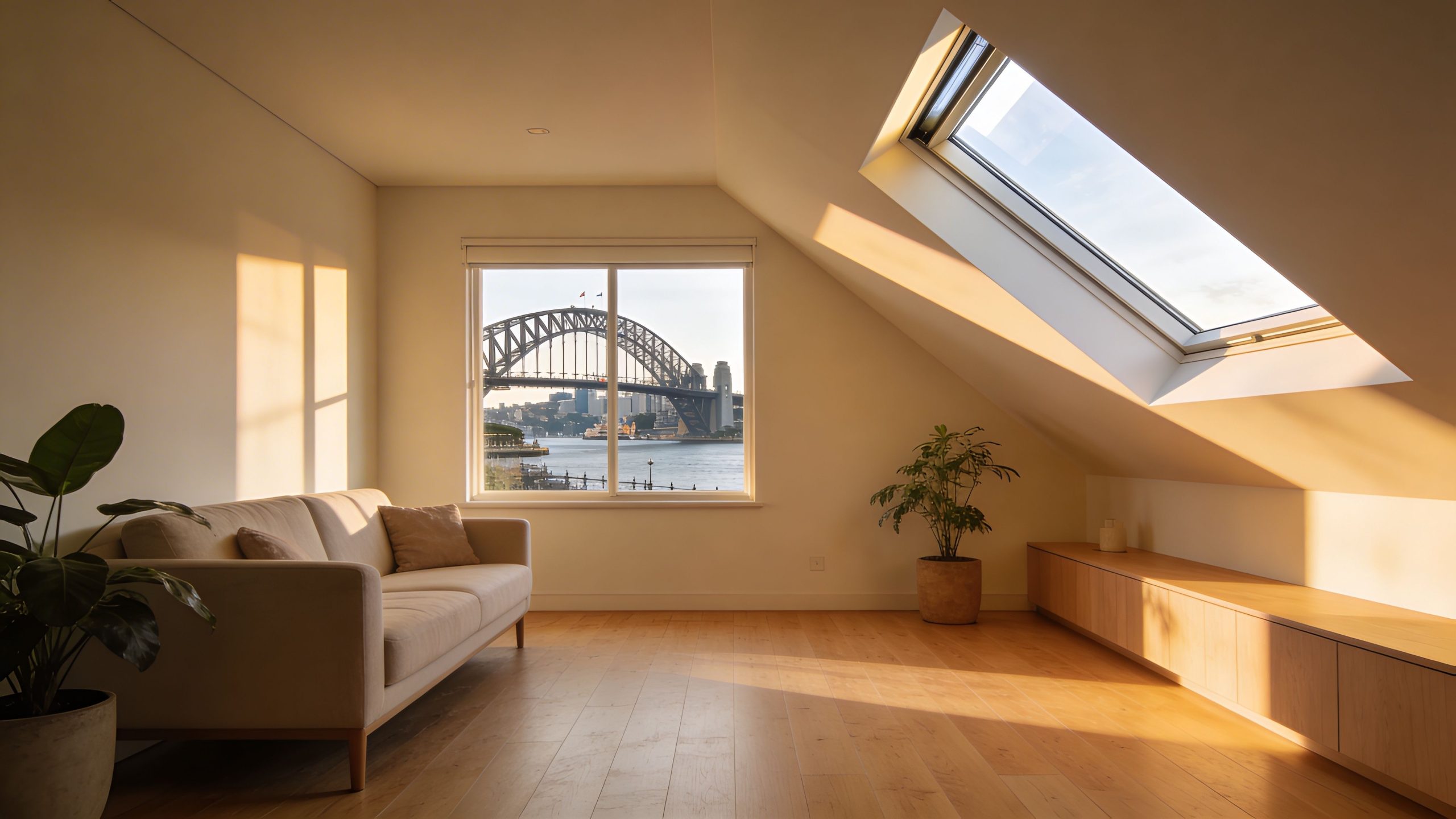
A lot of Sydney homes have one room that never feels quite right.
It might be the centre hallway in a terrace, the bathroom with the light switched on all day, or the kitchen that still feels dim even at noon. You repaint, change globes, add mirrors, and move furniture around. The room improves a little, but it still lacks the one thing that changes how a space feels most. Natural light from above.
That is why skylights in sydney keep coming up in renovation plans. They solve a very specific problem that side windows often cannot fix, especially in narrow homes, homes with adjoining walls, and layouts with internal rooms. A well-chosen skylight can make a room feel calmer, clearer, and more usable from the moment the sun comes up.
Bringing Natural Light into Your Sydney Home
In Sydney, this problem shows up in all kinds of houses. Federation homes often have deep floorplans. Apartments can have bathrooms and laundries tucked far from exterior walls. Newer renovations sometimes create beautiful open-plan spaces but leave a gloomy corridor connecting them.
A skylight changes that experience because it brings daylight into the part of the home that windows often miss. Instead of borrowing light from the edge of the building, you bring it in from the roof.
For many homeowners, that is the moment the renovation starts to make sense. The room does not just become brighter. It becomes easier to cook in, easier to get ready in, easier to enjoy. If you are weighing up whether the change is worth it, this guide on the https://vividskylights.com.au/benefits-of-skylights/ is a useful starting point.
Skylights are no longer a niche feature reserved for architect-designed homes. Modern units are available in fixed and operable formats, with better glazing, cleaner detailing, and more practical options for tiled and low-pitch roofs.
Sydney homeowners also need more than a generic overview. They need advice that reflects local conditions. Council rules can shape what is possible. Strata by-laws can slow a straightforward idea. Storms, coastal air, and bushfire exposure can all affect what type of skylight makes sense. Those are the decision points that matter.
Tip: If a room feels dark in the middle of the day even with lights off and doors open, it is often a strong candidate for roof glazing rather than more wall lighting.
Understanding Your Skylight Options
The easiest way to understand skylights is to think about what job you want the unit to do.
Some homeowners want light only. Others want light plus ventilation. Some need a compact solution for a tight roof space. Others are designing a larger architectural feature for a living room or stair void.

Fixed skylights
A fixed skylight is the simplest option. It is a sealed roof window designed to bring in daylight without opening.
This suits spaces where ventilation is not the main issue. Think hallways, stairwells, living rooms with existing cross-breeze, or kitchens that already have good extraction. Because the unit stays sealed, many homeowners like fixed skylights for their straightforward performance and clean look.
Fixed units are often the easiest category to compare because the key variables are glazing quality, frame construction, flashing, and size.
Operable skylights
An operable skylight does two jobs. It lights the room and lets warm air escape.
That matters in Sydney homes where heat can build up under the ceiling line, especially in upstairs bedrooms, loft-style spaces, and bathrooms after showers. Opening a roof window can help create a natural upward draw of air. Many people call this a thermal chimney effect because hot air rises and exits from the highest point.
Operable models usually come in two broad control styles:
Electric opening skylights
These open at the press of a switch or remote. They suit rooms with high ceilings or hard-to-reach rooflines.Solar powered opening skylights
These provide the convenience of powered operation with simpler wiring requirements. They appeal to homeowners who want ventilation but would prefer to avoid extra electrical work where possible.
Tubular and custom options
Not every roof opening needs a large rectangular unit.
A tubular skylight can work well in compact or awkward spaces such as pantries, robes, ensuites, and internal passages. A custom or architectural skylight suits projects where the rooflight is also a design statement, not just a daylight source.
The right format depends on roof structure, ceiling type, and the room below. That is why it helps to review the practical range of https://vividskylights.com.au/types-of-skylights/ before choosing based on looks alone.
Double glazing in plain language
Many readers get stuck on the term double glazing because it sounds technical.
In simple terms, it means two panes of glass are used instead of one, with a sealed gap between them. That extra layer helps manage heat transfer and improves comfort. In Sydney, that matters because a skylight needs to handle bright summer sun as well as cooler winter conditions.
A simple comparison
| Vivid Skylights Model Comparison | ||||
|---|---|---|---|---|
| Skylight Type | Best For | Ventilation | Installation Note | Control |
| Fixed skylight | Hallways, living spaces, stairwells | No | Sealed unit, focused on daylight | None |
| Electric opening skylight | Bathrooms, kitchens, upper-storey rooms | Yes | Needs planned power access | Wall switch or remote |
| Solar powered opening skylight | Rooms needing airflow with less wiring complexity | Yes | Helpful where electrical access is less convenient | Solar powered control |
| Tubular skylight | Small internal spaces | No | Compact footprint for tight areas | None |
How to narrow the choice
If you feel unsure, use these filters first:
Choose fixed if your priority is daylight and a permanently sealed unit.
Choose electric opening if the skylight will sit high and you want easy control every day.
Choose solar powered opening if you want ventilation and a cleaner path to installation without relying as heavily on new wiring.
Choose tubular if roof space or room size limits what a larger unit can do.
Before locking anything in, it is worth reading these general considerations before installing a skylight because roof pitch, room function, and waterproofing details shape the result more than most homeowners expect.
Key takeaway: Start with the room’s problem. If the problem is darkness, fixed may be enough. If the problem is darkness plus trapped heat or steam, operable usually deserves a closer look.
The Vivid Skylights Advantage for Sydney Homes
You notice the difference on an ordinary Sydney afternoon. The room is bright, but it does not feel glaring. A storm rolls through, and you are not wondering whether the roof opening was detailed properly. In a coastal suburb, a few years pass, and the frame still looks the way it should.
That is the standard a skylight should meet in Sydney.
The city puts significant pressure on roof glazing. Summer sun can be intense, winter mornings can feel cool, rain can arrive fast, and some homes also deal with salt in the air. For that reason, the right skylight is less about showroom appeal and more about how the unit is built, sealed, and specified for the house around it.
Thermal performance that matters in real rooms
Good thermal performance works like insulation in a winter jacket. The glass still lets in light, but it slows unwanted heat movement.
High performance double-glazing units can achieve U-values as low as 0.55 W/m²K with a Solar Heat Gain Coefficient around 0.31, which helps manage summer heat and support BASIX thermal comfort outcomes in Sydney homes (technical sheet).
For a homeowner, those figures matter because they show up in comfort. A skylight should support the room, not turn it into a hot spot in January or a cooler patch in July. If you are planning a renovation or extension, it also helps to check the building permit requirements for skylights in Sydney early, because product choice and approval requirements often affect each other.
Construction details that prevent expensive mistakes
A skylight is a roof penetration first and a design feature second. That order matters.
The small details usually decide whether the result feels reliable after five or ten years. A frameless top glazing profile helps water run off cleanly instead of sitting where debris and moisture can collect. In Sydney’s sudden downpours, that kind of shape is practical, not cosmetic.
Frame material matters too. Powder-coated aluminium suits many Sydney homes because it stands up well to moisture and coastal conditions. Supplied flashing kits for tiled roofs also reduce guesswork on site, which is helpful when the roof system needs to shed water cleanly during heavy weather.
For homeowners comparing products, Vivid Skylights offers double glazed fixed, electric opening, and solar powered opening units with nationwide delivery across Australia. The details worth checking are the self-cleaning glass, black powder-coated aluminium frames, and flashing kits supplied for tiled roofs.
Why Sydney homeowners tend to notice quality later
The value of a well-made skylight often becomes apparent over time.
You see it during a humid week when the room still feels balanced. You see it after a storm when there are no signs of water tracking around the opening. You see it during a council or strata review, where clear specifications and tidy roof integration make the proposal easier to assess, especially on homes in heritage-sensitive areas or apartment buildings with stricter by-laws. You also see it in weather resilience, because Sydney homeowners now need to think more carefully about severe storms, wind-driven rain, and in some outer areas, bushfire exposure.
That is why product quality is about reducing avoidable problems.
Tip: Ask each supplier to explain three things in plain language: how the glazing manages heat, how the frame handles Sydney conditions, and how the flashing deals with heavy rain on your roof type.
Navigating Sydney’s Unique Building and Climate Challenges
You choose a skylight to brighten a dark room. Then questions start. Will council accept the change on a heritage street? Does your strata scheme treat the roof as common property? Is the unit suited to a summer storm, wind-driven rain, or a home on the bushfire-prone edge of Greater Sydney?
Those details shape the project as much as the skylight itself.
Heritage areas and council approval
Many older Sydney homes need more daylight because their floorplans are deep and side windows are limited. Those same homes often sit in heritage conservation areas, where roof changes receive closer scrutiny.
A skylight can still be possible, but the approval path usually depends on visibility, roof form, and the character of the street. If the roof plane faces the public domain, council may look closely at placement, size, and whether the unit sits low and neatly within the roofline. In practical terms, a discreet skylight on a rear roof slope is often easier to approve than a prominent unit on the front.
Strata adds another layer. In many apartment and townhouse projects, the roof is common property, so the question is not only “Can this be installed?” but also “Who has authority to approve it?” A by-law change, committee sign-off, or engineer’s advice may be required before work begins.
Start with this order:
Check local planning controls
Confirm whether your property is in a heritage conservation area or subject to special roof controls.Read your strata by-laws early
Look for references to roofing, waterproofing, external appearance, and common property alterations.Confirm approval and permit steps before design is finalised
This guide to Sydney skylight building permit requirements helps frame the right questions before installation starts.
A simple way to think about approvals is this. The skylight itself is only one part of the decision. Council or strata often cares just as much about how the roof will look, how water will be managed, and whether the change affects shared property or structural elements.
Low-pitch roofs and older homes
Older Sydney housing stock brings its own set of technical checks.
A low-pitch roof can work well with the right product and flashing, but it leaves less room for error. Water drains more slowly on a shallow roof than on a steep one, so details that look minor on paper become important on site. Flashing height, tile profile, and the way the unit sits into the roof all affect how well the opening sheds water during prolonged rain.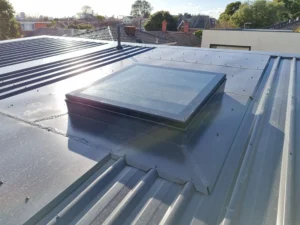
Older homes also need a careful inspection before any ceiling is cut. Roof cavities often reveal the story. Timber may have moved over time, earlier renovations may have altered framing, and insulation or wiring may limit placement options. It is a bit like planning a kitchen renovation in an old terrace. The finished surface matters, but the hidden structure decides what is realistic.
That is why a proper site check should look above the ceiling, not only at the room below.
Storms, hail, and heavy rain
Sydney’s weather pattern has shifted. Hot days can be followed by sudden storms, intense downpours, and strong wind gusts. For a skylight, that means weather resistance is not a side issue. It is part of the product brief.
The Bureau of Meteorology notes that short-duration heavy rainfall events have become more intense in many parts of Australia, which helps explain why roof penetrations need careful detailing in cities like Sydney (Bureau of Meteorology climate information). A skylight works like any other opening in the roof. If flashing, seals, or installation tolerances are poor, stormwater will test them quickly.
Ask direct questions before you commit:
Is the flashing kit designed for my exact roof type and pitch?
How is wind-driven rain directed away from the frame?
What glazing is specified for hail and severe weather exposure?
Has the installer checked the condition of the surrounding roof, not just the skylight opening?
Quality offers benefits that become apparent over time. A well-matched unit does not just look clean from inside. It reduces the chance of leaks, call-backs, plaster damage, and heat loss after rough weather.
Bushfire-prone edges of Sydney
Some parts of Greater Sydney need another filter again. Homes near bushland or on the outer fringe may need to consider bushfire attack level requirements before selecting an operable or fixed unit.
In these settings, product selection should be tied to the site’s bushfire classification, roof build-up, and any screening or glazing requirements that apply. A fixed skylight can sometimes be the simpler option because there are fewer moving parts and fewer gaps that need to be controlled, but the right answer depends on the property, not a rule of thumb.
Raise bushfire exposure at the first conversation with your installer or builder. It is much easier to choose correctly at the start than to change products after approvals or engineering have begun.
This short video gives a useful visual sense of roof installation considerations.
A practical way to avoid delays
Sydney skylight projects run more smoothly when three checks happen early. Approval, roof condition, and weather suitability.
If one is missed, the project can stall or become more expensive. If all three are handled early, the skylight is far more likely to deliver what homeowners want. Better daylight, stronger weather performance, and a cleaner path from quote to installation.
Key takeaway: In Sydney, a skylight should be chosen for light quality and checked for compliance, roof compatibility, and exposure to storms or bushfire conditions before work begins.
Designing with Light Benefits Sizing and Placement
You walk into a Sydney kitchen at 2 pm and still switch on the lights. The room is not gloomy, but the centre bench feels flat and the back of the space never quite wakes up. A well-sized skylight can change that experience far more effectively than many homeowners expect.
A skylight should improve how a room functions, not merely make it brighter. The goal is useful daylight in the places you live, cook, read, shower, and move through each day.
Why roof light feels different
Light from above reaches deeper into a room than light from a wall window. In practical terms, that means a skylight can brighten the middle of the home, where side windows often struggle.
Skylights can also reduce the need for electric lighting during the day, especially in internal rooms, hallways, and open-plan areas. The exact result depends on roof orientation, shaft depth, ceiling height, glazing choice, and how reflective the room’s finishes are. White walls and pale benchtops spread daylight further. Dark floors, dark joinery, and deep shafts absorb more of it.
Start with how the room is used
A skylight over a kitchen island does a different job from one over a stair landing.
Bathrooms usually benefit from even, central light that makes the whole room feel cleaner and more open. Living rooms often need softer spread across seating areas, not one intense pool of brightness. In a hallway, the aim is usually guidance and lift. In a study, the aim is controlled daylight that helps without creating screen glare.
This is why sizing starts with function. Style matters, but daily use should drive the plan.
Placement rules that work in real homes
A few simple principles help avoid expensive guesswork:
Small dark rooms often suit one well-positioned skylight near the centre of the ceiling.
Long open-plan spaces usually light more evenly with two smaller units rather than one large opening.
Kitchens benefit when daylight lands over prep zones, islands, or sinks.
Bathrooms need placement that respects privacy, steam, and the likely position of framing and exhaust fans.
TV rooms and media walls need careful positioning so direct sun does not strike screens or seating.
The shaft matters too. A deep shaft works like a funnel. It narrows and redirects light, so the same skylight can perform very differently depending on ceiling construction.
Orientation matters more in Sydney
Sydney light is strong, and summer sun can be unforgiving. A skylight that feels excellent in July can feel too intense in January if orientation and glazing were not chosen carefully.
East-facing skylights bring softer morning light. North-facing roof light can be very effective, but it needs the right glazing and sizing to control heat gain. West-facing placements often need the most caution because late afternoon sun can be harsher, especially in warmer months. South-facing options can deliver gentler, more even daylight where glare control matters.
Roof planning also needs a whole-roof view. Skylights share space with vents, air-conditioning equipment, and future solar panels. The City of Sydney has noted that many CBD rooftops remain underused for solar generation, which is a useful reminder for homeowners as well. Roof area is limited, so it makes sense to plan skylights and future rooftop services together rather than treating each one as a separate decision.
Avoid the two sizing mistakes that show up most often
The first mistake is choosing a skylight that is too small for the room or placing it where the light misses the main activity zone. The room ends up brighter near the opening but still needs artificial lighting through much of the day.
The second mistake is going too large. That can create glare, stronger summer heat, and a room that feels visually top-heavy rather than comfortable.
For many Sydney homes, comfort comes from balance. Enough daylight to reduce reliance on electric lights, but not so much direct sun that blinds need to stay closed.
Older homes, strata homes, and weather-exposed homes need extra care
Design decisions are not only about appearance. In heritage areas, on terraces, or in strata properties, placement may be shaped by visibility from the street, roof form, or by-laws about external changes. On storm-exposed or bushfire-prone sites, sizing and product choice also need to work with the roof’s weather demands, not against them.
That is one reason many homeowners ask for placement advice early, before finalising ceiling layouts or joinery. A room can be designed around daylight very successfully, but only if the skylight is treated as part of the room plan from the start. If you want help working through sizing, layout, and roof constraints, a professional skylight installation assessment in Sydney can clarify what will work before the build becomes more complicated.
Tip: Mark your furniture, benchtops, and daily task zones on a floor plan first. Then place the skylight to support those activities, not just to create a bright patch on the floor.
Your Installation Pathway DIY or Professional
A Sydney homeowner often reaches this point with a clear idea of where the light should go, then hits the harder question. Who should cut the roof?
That choice affects more than convenience. It affects waterproofing, approvals, warranty clarity, ceiling finish quality, and how well the skylight stands up to Sydney weather over time. A neat-looking unit can still become a problem if the roof opening, flashing, or internal shaft is handled poorly.
When DIY is realistic
DIY usually suits a narrow set of projects. You need real roofing or carpentry experience, safe roof access, and a straightforward roof build. A fixed skylight on a newer roof with clear access is one thing. An older terrace with brittle tiles, hidden framing changes, or a finished ceiling below is another.
The easiest way to judge this is to separate the visible job from the hidden one. Installing the skylight frame is the visible part. Making the roof opening weather-tight, matching the flashing to the roof profile, protecting the underlay, and repairing the ceiling neatly are the parts that decide whether the result lasts.
That is why confident renovators still pause here.
Why professional installation is the safer path for many Sydney homes
Professional installation becomes the sensible option as soon as the job includes structural uncertainty, compliance questions, or difficult weather exposure.
That often applies when:
the roof is steep, high, or awkward to access
the home is older and the framing may not be predictable
the property is in a heritage area or subject to strata by-laws
the skylight opens and needs electrical connection
the site is exposed to heavy rain, wind-driven storms, or ember risk
you want one installer responsible for the roof opening, flashing, and internal fit-off
Sydney adds layers that are easy to underestimate. In some suburbs, the technical installation is only half the job. The other half is handling what the building allows. Heritage controls can affect what is visible from the street. Strata schemes may require approval even when the skylight serves only your lot, because the roof itself is commonly managed property. A professional who works with these conditions regularly can spot issues before materials are ordered and openings are cut.
What the price usually reflects
Homeowners are often surprised that skylight installation costs vary so widely in Sydney. The unit itself is only one part of the spend.
Labour often reflects the difficulty of the roof access, the roof material, the ceiling finish below, and whether extra trades are needed. A simple installation on an accessible roof will sit at the lower end of the range. Costs rise when the installer needs to modify framing, build a plaster shaft, coordinate electrical work, or work carefully around older roofing materials. Heritage and strata projects can also add time before the first tool even touches the roof.
Flashing decides whether the installation succeeds
The flashing kit is not a box-ticking extra. It is the water-control system for the opening.
A skylight interrupts the roof surface. Flashing restores the roof’s ability to shed water around that interruption. On a metal roof, the detail must suit the roof profile and pitch. On a tiled roof, the installer needs to work with the tile pattern, drainage path, and fit around fragile materials without creating gaps. In storm season, that precision matters. Water rarely enters through the glass. It enters where the roof and skylight were joined carelessly.
A good comparison is a window in a wall. The frame matters, but the junction matters more.
Questions worth asking before you approve the job
Quotes can look similar on paper while covering very different scopes of work. Ask clear questions early:
Who confirms the roof structure before the opening is cut?
Is the flashing system matched to my exact roof type and pitch?
Who completes the plastering, trim, and paint-ready finish inside?
What workmanship warranty applies to the installation itself?
Who handles approval requirements if heritage rules or strata consent apply?
How is the installation detailed for severe rain, wind exposure, or bushfire-prone conditions if those apply to my site?
Those questions help you compare skill, not just price.
If you want to see what is typically involved before requesting quotes, this guide to professional skylight installation in Sydney is a useful starting point.
A practical way to decide
Choose DIY only if you are comfortable working at roof level, understand waterproofing details, and can judge structural and compliance risks before cutting. General renovation confidence is not enough on its own.
For many Sydney households, professional installation is the lower-risk decision because the expensive mistakes are rarely immediate. They show up later as leaks during a storm, staining around the ceiling, drafts in winter, or disputes about who is responsible for fixing the problem.
Key takeaway: A skylight installation is a roof alteration first and a lighting upgrade second. Treat it with the same care you would give any opening in the building envelope.
Maintaining Your Skylight for Decades of Daylight
A Sydney homeowner often notices skylight problems the same way they notice roof problems. During a summer storm, after a week of wind-driven rain, or on a winter morning when a patch of ceiling suddenly looks different. Good maintenance helps you catch those signs early, while the fix is still small and manageable.
The encouraging part is that skylight care is usually straightforward. A well-installed unit should give you years of reliable daylight with a simple routine, not constant work. The goal is to protect the two parts that matter most. The glazing that brings in light, and the roof connection that keeps water out.
What to check each year
An annual check is a sensible habit in Sydney because weather exposure can be hard on any roof opening. Sudden downpours, leaf litter, salt-laden air in coastal suburbs, and stronger storm events all place extra pressure on seals, drainage paths, and moving parts.
Start indoors. Look at the ceiling and shaft around the skylight in clear daylight. Staining, bubbling paint, peeling trim, or a new pattern of condensation can point to a small issue before it becomes a ceiling repair.
Then check how the skylight performs. If it opens, test the handle, motor, remote, or switch. It should move smoothly and close firmly. If it has blinds, make sure they run evenly and sit properly when shut.
Outside, the main concern is water flow. Leaves, twigs, and dirt should not sit around the frame or flashing because they can hold moisture where water is meant to drain away. After major rain or wind, it is worth checking for debris build-up and any obvious change to the surrounding roof area.
Cleaning matters too, but technique matters more than force. Harsh chemicals, abrasive pads, and pressure cleaning can damage finishes, seals, or glazing surfaces. For a practical step-by-step method, see this guide on cleaning skylights properly.
If you are unsure how often to schedule cleaning, tree cover, dust, and roof pitch usually matter more than the calendar alone. This article on how often you should clean your skylights gives a useful general benchmark.
Why small checks make a big difference
Skylights rarely fail all at once. The more common pattern is slower and easier to miss. A drain path gets blocked. A seal ages. Wind-driven rain finds a weak point that was harmless in mild weather but not during a Sydney storm.
That is why maintenance protects more than the glass itself. It helps preserve insulation performance, interior finishes, paintwork, and the timber or plaster around the opening. In a bushfire-prone area or a highly exposed coastal position, regular checks also make sense because harsher conditions can shorten the life of neglected components.
If your home is in a strata building or a heritage area, keep records of any professional maintenance or repairs. That can make approval discussions and responsibility questions much clearer later.
A skylight should keep doing one simple job well. Bringing clean daylight into the room without asking for constant attention. A short inspection each year is usually enough to keep it that way.
Frequently Asked Questions About Sydney Skylights
Can skylights work on low-pitch roofs in Sydney
Yes, but the product and flashing detail need to suit the roof. Low-pitch roofs leave less room for error, so matching the skylight system to the roof form is important.
Do I need council or strata approval
Sometimes, yes. Heritage overlays, visible roof alterations, and common-property roofs can all trigger approval requirements. This is one of the first things to check, not the last.
Are block-out blinds worth adding
They can be a practical addition in bedrooms, media spaces, and west-facing rooms where glare or heat control matters. The decision usually comes down to how the room is used rather than whether blinds are “necessary” in every case.
Can operable skylights help bathrooms and kitchens
They can. These are two of the most common rooms where homeowners value ventilation as much as daylight. Releasing steam or warm air from the highest point in the room can make the space more comfortable to use.
Does Vivid Skylights only supply locally
No. Delivery is available nationwide in Australia, which is useful if your designer, builder, or installer is outside Melbourne.
How often should skylights be cleaned
That depends on tree cover, roof pitch, surrounding dust, and weather exposure. For a general maintenance benchmark, this article on how often you should clean your skylights is a helpful outside reference. In practice, Sydney homeowners should combine routine cleaning with post-storm visual checks.
Will a skylight make my home feel more valuable
Many owners feel that way because daylight changes how rooms present and function. The effect is often strongest in internal bathrooms, kitchens, stairwells, and dark circulation spaces where the improvement is obvious every day.
If you are comparing skylights in sydney and want a practical next step, visit Vivid Skylights to review fixed, electric opening, and solar powered models, check installation information, and explore options for delivery anywhere in Australia.