


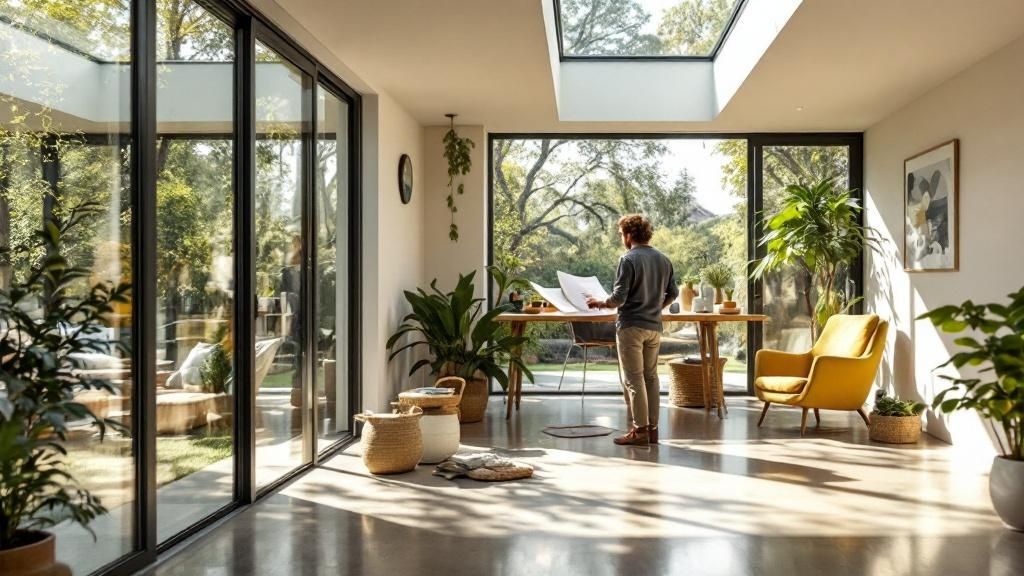
 Think of your beautiful Brisbane home. It’s set in a city known for its glorious sunny days and vibrant lifestyle, yet some of your rooms feel… well, a bit dim and disconnected from it all. This is where Brisbane skylights come in. They’re more than just windows for your roof; they are cleverly designed architectural features that can completely transform the atmosphere of your home by flooding it with brilliant, natural daylight.
Why Natural Light Is a Must-Have for Any Brisbane Home
Living in Queensland is all about embracing the sunshine, but often our homes don’t quite get the memo. Interior spaces like hallways, bathrooms, or even large open-plan areas can end up feeling dark and gloomy, making them seem smaller and less welcoming. Installing a skylight is an absolute game-changer. It acts like a direct pipeline for daylight, pouring sunshine right into the heart of your home where it’s needed most.
The effect is immediate and goes far beyond just lighting up a room. It’s been shown time and again that natural light can lift your mood, help you focus, and create a far more calming, inviting environment. It’s really about connecting your indoor living spaces with the bright, energetic lifestyle Brisbane is famous for, making every corner of your home feel alive and spacious.
Built Tough for Our Subtropical Climate
A big question we hear from homeowners is whether a skylight can actually handle Brisbane’s unique weather. We get it. From the intense summer sun and sticky humidity to those sudden, torrential downpours, our climate is demanding. The good news is that modern Brisbane skylights are specifically engineered to perform perfectly in these exact conditions. They aren’t just simple panes of glass; they are complete, high-performance systems designed for our part of the world.
Some of the key features that make all the difference include:
- Double Glazing: This is a must. It creates an insulating barrier that stops the sun’s blistering heat from getting into your home while still letting all that beautiful light through.
- UV Protection: High-quality coatings block up to 99% of damaging UV rays. This protects not just your family but also stops your furniture, floors, and artwork from fading over time.
- Professional Flashing: This is the secret to a leak-proof skylight. Custom-designed flashing kits create a completely watertight seal around the unit, meaning you can have total peace of mind, even during the wildest storm season.
When you choose the right product, you’re not just popping a window in your roof. You’re making a smart investment in a durable, energy-efficient solution that boosts your home’s comfort and resilience for years to come. You can learn more about the extensive benefits of skylights in our detailed guide.
We’ve designed this guide to be your go-to resource, walking you through everything from picking the perfect model to navigating local council rules. If you want to really get a feel for how much natural light can change a space, playing around with AI-powered home design tools can help you visualise the transformation before you even start.
Ready? Let’s get some light into your home.
Choosing the Right Skylight for Your Home
Picking the right skylight isn’t like just choosing a window; it’s more like selecting the perfect tool for a specific job. Each type is engineered to solve a different lighting or ventilation puzzle, so getting to know the core differences is the first step toward transforming your Brisbane home.
Think of it this way: you wouldn’t grab a hammer to turn a screw. In the same vein, the skylight that floods a spacious living room with glorious light might be completely wrong for a stuffy bathroom or a dark hallway. Let’s break down the main contenders to help you find the perfect match for your space.
Fixed Skylights: The Picture Window for Your Roof
The most straightforward and popular option is the fixed skylight. Just as the name implies, it doesn’t open. Its one and only job is to pour as much beautiful, natural light as possible into the room below.
It’s best to think of it as a picture window for your roof. This makes it an ideal choice for areas where you want to maximise daylight without needing extra airflow—places like living rooms, dining areas, stairwells, or even a home office. For a Brisbane home, a well-placed fixed skylight can make a central living area feel dramatically larger and more connected to the outdoors.
Ventilating Skylights: Fresh Air from Above
Next up are ventilating skylights, often called opening skylights. These are the real workhorses, delivering both brilliant light and the massive bonus of fresh air. They operate just like a regular window, opening either manually with a simple crank handle or electronically via a remote or wall switch.
These are an absolute game-changer for any room that battles heat and humidity—a common struggle in Brisbane.
- Kitchens: Quickly vent steam and cooking odours right out of the house.
- Bathrooms: The ultimate weapon against moisture buildup and mould.
- Laundries: Helps dry the air and keep the space from feeling damp and stuffy.
By letting warm, stale air rise and escape naturally, a ventilating skylight creates a chimney effect, promoting airflow that can cut down on your air-con usage on milder days. Many modern electric versions even come with rain sensors that automatically shut the unit at the first drop of rain—an essential feature for Brisbane’s famously unpredictable storms.
Tubular Skylights: The Clever Light Tunnel
But what about those awkward, windowless spots where a traditional skylight just won’t fit? I’m talking about enclosed hallways, walk-in robes, or tiny powder rooms. This is where the ingenious tubular skylight comes into its own.
Instead of a large glass panel on the roof, a tubular skylight uses a small, discreet dome to capture sunlight. This light is then funnelled down a highly reflective tube to a diffuser fitted flush with your ceiling, which spreads soft, natural light evenly through the room. It’s like having a miniature sunbeam pipeline, expertly delivering daylight into the darkest corners of your home.
This clever design minimises heat gain during Brisbane’s hot summers while still slashing your electricity bills. You can explore the different types of skylights to see just how adaptable these systems are.
The right skylight has a direct impact on your mood, your home’s entire vibe, and your energy savings.
Comparing Skylight Types for Brisbane Homes
Feeling a bit overwhelmed? Not a problem. Use this quick comparison to find the best skylight for your specific room, budget, and what you want to achieve.
| Skylight Type | Best For | Key Brisbane Benefit | Typical Cost Range |
|---|---|---|---|
| Fixed | Living rooms, hallways, kitchens where ventilation isn’t the priority. | Maximum light for a spacious, open feel. | $$ |
| Ventilating | Bathrooms, laundries, kitchens, and bedrooms. | Fights humidity and heat by letting hot air escape. | $$$ |
| Tubular | Small, dark spaces like closets, pantries, and powder rooms. | Brings light into tight spots with minimal heat gain. | $ |
This table should give you a solid starting point for figuring out what will work best in your home and for your wallet.
Essential Features for Brisbane Homes
No matter which type you lean towards, there are a couple of features that are non-negotiable for handling our local climate. Always look for skylights with double-glazing to insulate against the summer heat. It also pays to consider options like integrated motorised blinds, which give you total control over light and temperature on those intensely sunny days. These thoughtful additions are what turn a new skylight from a simple feature into a source of year-round comfort.
Understanding the Installation Process
Once you’ve picked out the perfect skylight, the next big step is actually getting it into your roof. This part can feel a bit intimidating, but installing modern Brisbane skylights is a well-oiled machine these days. The whole process has been refined to be efficient, secure, and a perfect match for our local weather.
Let’s pull back the curtain on how a skylight is installed, whether your roof is classic terracotta tile or sleek Colorbond steel. Quality skylight kits come with everything needed to create a completely sealed, leak-proof fit on just about any roof pitch.
But the real magic isn’t just cutting a hole in the roof—it’s creating an impenetrable weather seal. This is where professional-grade flashing and expert waterproofing techniques become non-negotiable, especially when you think about Brisbane’s legendary storm season.
Working with Brisbane Roof Types
Brisbane homes are a mixed bag of roofing materials, and a seasoned installer knows the unique quirks of each. The two most common roof types here require slightly different game plans to get that perfect, watertight seal.
- Tiled Roofs: For concrete or terracotta tiles, the process involves carefully lifting a section of tiles, securing the skylight frame to the roof battens, and then meticulously weaving in the custom flashing kit. Each piece of flashing is designed to sit over and under the surrounding tiles, cleverly channelling water away from the opening.
- Colorbond (Metal) Roofs: With a metal roof, the job starts with a precision cut into the steel sheeting. The flashing is then fastened directly to the roof and sealed with specialised, high-grade silicone and fasteners. This creates a durable, weatherproof barrier that can expand and contract with the metal as the temperature changes.
No matter the material, the end goal is identical: to make the skylight feel like an integral part of your roof structure, not just something plonked on top. That’s how you know it will stand up to years of sun, wind, and torrential rain.
DIY vs Professional Installation
One of the biggest calls you’ll have to make is whether to tackle the installation yourself or bring in a professional. While going the DIY route might look like a way to save a few dollars, it carries some serious risks if you’re not an old hand at this kind of work.
DIY Installation:
This path is really only for those with genuine, proven roofing and carpentry skills. You need to be completely comfortable working at heights, understand how a roof is structured, and know how to achieve a flawless weatherproof seal. Even a tiny mistake can lead to slow, costly leaks and water damage down the line.
Professional Installation:
Hiring a certified installer buys you total peace of mind. These pros turn up with the right tools, the proper safety gear, and—most importantly—the experience to get the job done right the first time. They know the specific challenges posed by Brisbane roofs and will guarantee their work against leaks.
Choosing a professional is an investment in a perfect result. Their expertise ensures your skylight doesn’t just look amazing but performs exactly as it should, protecting your home from the elements for years to come.
The local industry is packed with skilled installers, which says a lot about the demand for quality work. In fact, Brisbane’s skylight sector is dominated by expert teams who carry out over 2,400 installations per year. Certified Installation Consultants are rigorously trained and typically boast an average of 10+ years tenure. These pros can often have a standard installation wrapped up in just a couple of hours—with no mess, no leaks, and no fuss. You can discover more about these professional standards and see what to expect from a top-tier installation service.
What to Look for in an Installer
If you decide to go with a pro, don’t just pick the first name that pops up in a search. A quality installation is every bit as important as a quality product. Here’s a quick checklist to help you choose the right team for your Brisbane skylights project.
- Certification and Licensing: Make sure they are fully licensed with the QBCC (Queensland Building and Construction Commission) and are certified installers for the brand of skylight you’ve chosen.
- Insurance: They absolutely must have comprehensive public liability insurance. This covers you in the unlikely event of an accident or damage.
- Experience: Look for a company with a solid track record of installing skylights specifically in the Brisbane area. Ask to see a portfolio of their work on roofs just like yours.
- Warranty: A reputable installer will always offer a warranty on their workmanship, which is separate from the manufacturer’s product warranty. This is your guarantee against any installation-related problems, like leaks.
- Clear Quoting: You should get a detailed, itemised quote that breaks down all the costs—the skylight itself, the flashing kit, labour, and any other bits and pieces.
By taking a little extra time to vet your installer, you’re protecting your investment and ensuring your new skylight brings all the light and comfort you were hoping for, without any of the worry.
Navigating Council Rules and Smart Placement
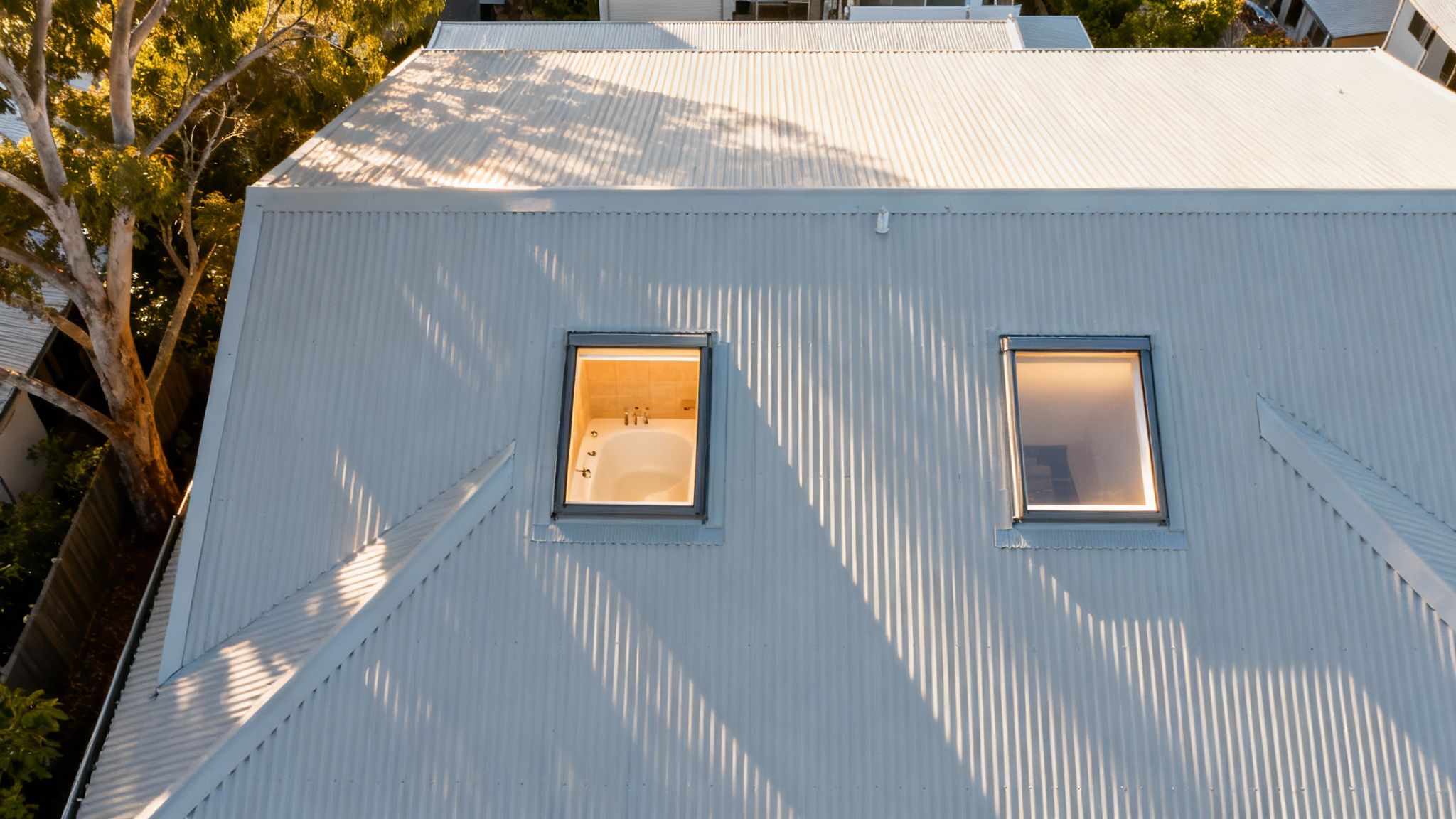
Let’s be honest, the thought of dealing with council regulations can put a brake on any exciting home project. But when it comes to installing Brisbane skylights, you’ll be happy to know the process is usually far more straightforward than you’d expect.
The great news is that for most standard residential skylight jobs, you don’t need to lodge a formal development application with the Brisbane City Council. This cuts out a huge chunk of paperwork and lets you get on with the fun part – planning where all that beautiful new light will go.
That doesn’t mean it’s a complete free-for-all, though. Your installation must still meet the standards of the Building Code of Australia (BCA). Think of the BCA as the national rulebook for construction, ensuring your new skylight is safe, structurally sound, and doesn’t hurt your home’s energy efficiency. Ticking off these compliance boxes is a crucial step, and a good home renovation checklist can help make sure nothing gets missed.
Strategic Placement for the Best Light
Once you’ve got the rules sorted, it’s time for the creative part: placement. Where you put your skylight is just as critical as which one you buy. Get it right, and you’ll transform a room. Get it wrong, and you could end up with harsh glare or unwanted heat.
Here in the Southern Hemisphere, the sun travels a specific path across our sky, and understanding this is the key to a brilliant skylight installation in Brisbane.
- North-Facing Skylights: This is almost always the top choice for our climate. North-facing skylights catch beautiful, consistent, and indirect sunlight all day long. You get all the brightness without the intense heat of the direct afternoon sun, creating a perfectly balanced ambient glow.
- South-Facing Skylights: These will get much less direct sun, especially in winter. This makes them perfect for spaces where you want gentle, cool light. Think of a home office where you need to avoid screen glare, or an artist’s studio that needs soft, diffused light.
The goal of a skylight isn’t just to add light; it’s to add the right kind of light. By understanding how orientation affects daylight, you can tailor the atmosphere of each room to perfection.
Getting the Size and Quantity Just Right
So, how many skylights do you need? And how big should they be? It’s a common worry. Go too small, and the room still feels dim. Go too big, and you can create a space that feels overexposed and uncomfortably bright.
Thankfully, there’s a simple rule of thumb architects and designers have used for years: the 10% window-to-floor ratio.
This guideline suggests that for a room to feel naturally and comfortably lit, the total glass area of your windows and skylights should be about 10% of the room’s total floor area.
Let’s break it down. Say your living room is 5 metres by 6 metres, giving you a floor area of 30 square metres. To hit that magic 10%, you’d want a total glass area of around 3 square metres. If your existing windows already provide 2 square metres of glass, adding a 1-square-metre skylight would bring the room into that perfect, balanced zone.
It’s a straightforward formula that takes the guesswork out of the equation, ensuring your investment pays off with a beautifully lit space that feels just right.
Breaking Down the Costs and Savings

Alright, let’s talk numbers. When it comes to any home improvement, the bottom line is always front and centre. We think it’s best to view installing Brisbane skylights not just as an expense, but as a smart, long-term investment in your property’s value, your daily comfort, and your power bills.
Understanding the full financial picture—from the initial outlay to the ongoing returns—is the key to making a decision that benefits both your lifestyle and your wallet. Let’s get transparent about what you can expect to pay and, more importantly, what you can expect to gain.
Typical Skylight Costs in Brisbane
The cost of a skylight project in Brisbane can vary quite a bit, and it really comes down to a few key variables. The final price tag is shaped by the type of skylight you choose, its size, how complex the installation is, and any special features you might add, like motorised blinds or rain sensors.
To give you a realistic idea, here’s a general breakdown of what you might be looking at:
- Small Tubular Skylights: These are the most budget-friendly option, often landing between $700 and $1,500 fully installed. They’re perfect for funnelling light into smaller, contained spaces like hallways or bathrooms.
- Standard Fixed Skylights: For a medium-sized fixed unit, you can expect costs to fall somewhere between $1,500 and $3,000. This is a hugely popular choice for living areas and kitchens where you want maximum light without ventilation.
- Ventilating or Electric Skylights: As the premium option, these models can range from $3,000 to $5,000+ once installed, especially if you add bells and whistles like remote controls and solar power.
These prices generally cover both the skylight unit itself and the professional installation. For a deeper dive, you can explore guides on skylight installation costs to help you budget more accurately.
The Real Return on Investment: Energy Savings
Now for the exciting part—the savings. A skylight starts paying you back from the moment it’s installed. By flooding your home with beautiful, natural daylight, it dramatically cuts down your need to flick on a light switch during the day.
This is especially true here in sunny Brisbane. Well-placed skylights can slash daytime energy use by 30-50%. You’re essentially harnessing our most abundant resource—sunshine—to light up your home for free.
Think of it this way: every hour you use natural light instead of an electric bulb is a direct saving on your power bill. Over the years, these savings really stack up, turning your skylight into an asset that actively cuts your household running costs.
Boosting Your Property Value
Beyond the savings on your energy bill, installing high-quality Brisbane skylights adds real, tangible value to your property. Natural light is one of the most sought-after features for homebuyers, making a home feel larger, more modern, and far more inviting.
A bright, airy home simply has more appeal. Real estate experts agree that features promoting natural light can increase a property’s market value and help it sell faster. It’s an upgrade that improves your life now and pays dividends if you decide to sell down the track.
Warranties and Finance Options
To protect your investment, always go with a skylight brand that offers a solid warranty. A quality manufacturer will stand by its product with a guarantee against defects and, most critically, a leak-free promise. At Vivid Skylights, we provide a 10-year leak-free warranty on our units, giving you complete peace of mind.
On top of that, many installers and suppliers offer financing options to make the upfront cost more manageable. This allows you to enjoy all the benefits of a brighter home right away while spreading the cost over time, making it an accessible upgrade for more Brisbane homeowners.
Common Questions About Brisbane Skylights
Even after digging into all the options, it’s totally normal to have a few lingering questions before you commit to a project like adding skylights to your Brisbane home. It’s a big decision, and you want to be certain you’re making the right call for our unique climate.
To make sure you feel 100% confident, we’ve put together the questions we hear most often from local homeowners. These are the practical, nuts-and-bolts queries that pop up just before you’re ready to take the next step.
Will a Skylight Make My Home Hotter in Summer?
This is the big one, the number one concern for anyone living in Brisbane, and for good reason. The thought of adding more glass to your roof during one of our sweltering summers seems like a recipe for a sauna.
But the short answer is a definite no—a modern, high-quality skylight won’t turn your home into a greenhouse. The technology has come a long way.
Today’s skylights are engineered specifically to beat the heat. Here’s how:
- Double-Glazing: This is non-negotiable for Brisbane. Two panes of glass with an insulating air gap between them act as a powerful thermal barrier, stopping heat in its tracks before it can get into your home.
- Low-E Coatings: An invisible, microscopic metal coating is applied to the glass. This clever layer reflects the sun’s infrared heat (the kind that makes you feel hot) while letting all the beautiful visible light pour in. You get the brightness without the burn.
- Integrated Blinds: For the ultimate in climate control, you can add motorised block-out blinds. Close them during the peak heat of a summer afternoon for an extra layer of shade and insulation.
Even better, a ventilating skylight can actively cool your home. Hot air naturally rises, and by opening the skylight, you give it a direct escape route. This creates a natural chimney effect, pulling cooler air in from below and slashing your reliance on the air con.
Are Skylights Likely to Leak During Storms?
Brisbane’s storm season is serious business. When the rain is coming down sideways, the last thing you want to worry about is a drip coming from your brand new skylight. The fear of leaks is completely understandable, but it’s a problem that has been solved by quality products and professional installation.
A properly installed, premium skylight simply will not leak. The real hero isn’t the glass itself, but the flashing kit. This is a meticulously designed set of metal components that forms a completely weatherproof, impenetrable seal between the skylight’s frame and your specific roof material, whether that’s classic tiles or Colorbond steel.
Think of the flashing as a custom-fitted raincoat for your skylight. It’s engineered to expertly channel every single drop of water away from the opening and safely down your roof, keeping the whole system watertight.
This is exactly why getting it installed by a professional is so important. A certified installer knows precisely how to integrate the flashing with your roof’s profile for a perfect seal. Reputable brands are so confident in their flashing systems that they offer long-term, leak-free warranties, giving you total peace of mind that your home will stay bone-dry.
How Much Maintenance Do Skylights Require?
Here’s some fantastic news for any busy homeowner: modern skylights are designed to be incredibly low-maintenance. For the most part, they are a ‘set and forget’ addition to your home that asks for very little from you.
One of the best innovations is self-cleaning glass. Many top-tier models now feature a special coating on the exterior pane. This coating uses the sun’s UV rays to break down organic dirt and grime. Then, when it rains, the water sheets off evenly instead of forming droplets, washing all the loosened dirt away. Your skylight stays sparkling clean without you ever having to get up on the roof.
As for the inside, a quick wipe with a soft cloth and your usual glass cleaner every so often is all it takes. The frames are typically made from durable materials like powder-coated aluminium, built to withstand the elements without needing any special care. You get to enjoy all that glorious natural light without adding another chore to your weekend to-do list.
Can I Install a Skylight on a Flat or Low-Pitch Roof?
Yes, absolutely! It’s a common myth that skylights are only for homes with steeply pitched roofs. While that might have been the case years ago, today’s products have smart solutions for almost any roof, including the flat and low-pitch designs common on modern Brisbane homes and extensions.
The secret is a purpose-built mount called a kerb or an upstand. The installer constructs a raised, box-like frame on your flat roof, and the skylight is then mounted securely on top of it.
This simple but highly effective method does two crucial things:
- It Creates a Pitch: The kerb raises the skylight to a slight angle (usually 5-15 degrees). This is just enough to ensure rainwater drains away properly, preventing any water from pooling on the glass.
- It Guarantees a Watertight Seal: The upstand provides a solid, raised surface to attach the flashing to, creating that perfect, leak-proof seal you need, even on a completely flat surface.
So, you definitely don’t have to miss out on the magic of natural light just because your roof isn’t a traditional A-frame. There’s a safe, reliable, and fully weatherproof solution ready for your home.
Ready to transform your home with brilliant, natural light? At Vivid Skylights, we offer a range of high-performance, double-glazed skylights designed for the Australian climate. Explore our options and get a fast, free estimate with our online tool today. Find your perfect solution at https://vividskylights.com.au.