

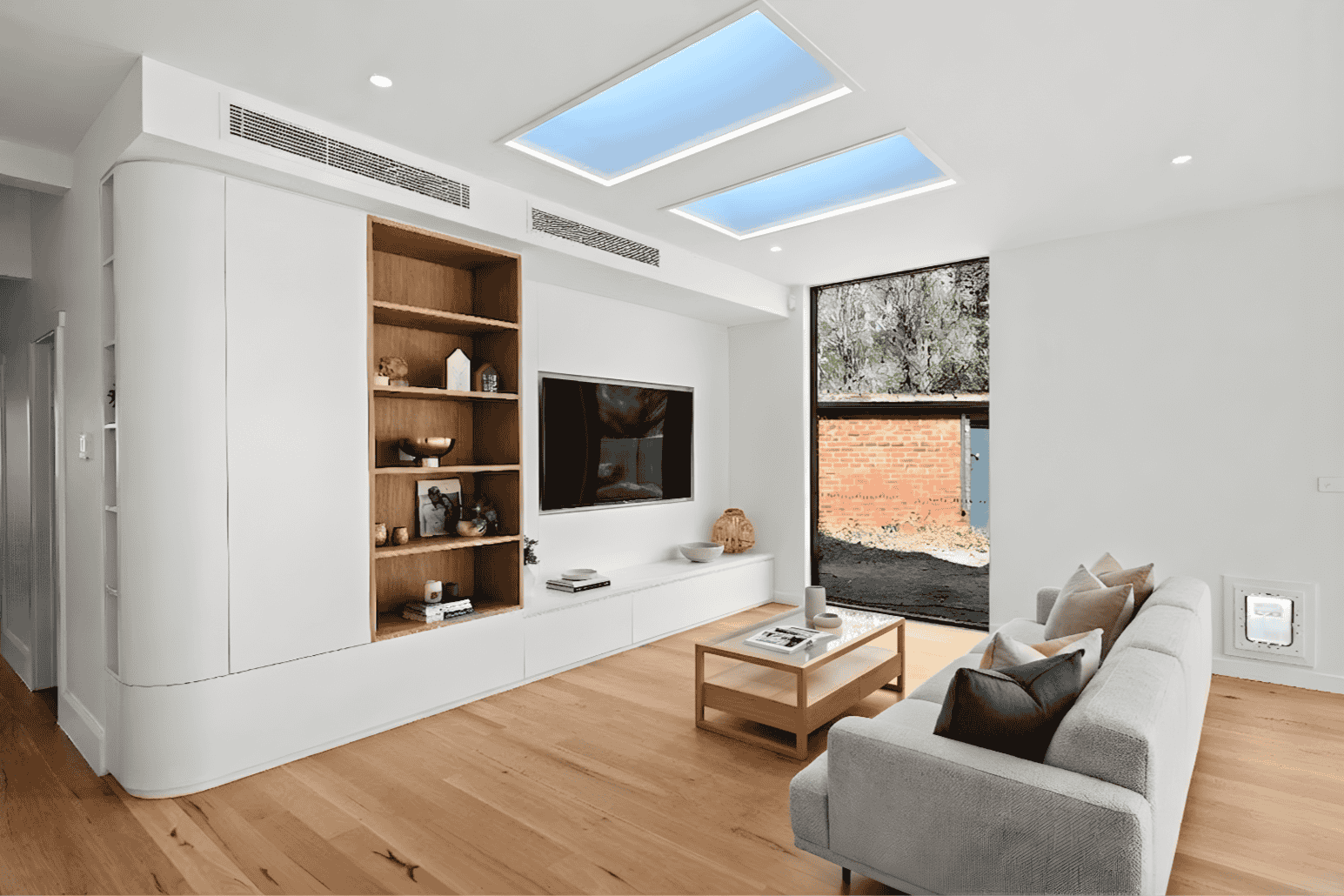
You’re usually searching for auraglow because a room in your home just doesn’t work the way it should. It might be a hallway in the middle of the floorplan, a bathroom with no roof access, or a ground-floor room under another storey where a conventional skylight shaft isn’t possible. The space feels closed in, and adding another standard ceiling light won’t fix the problem because brightness alone isn’t the same as daylight.
There’s also a common point of confusion worth clearing up straight away. AuraGlow is also a known teeth-whitening brand. One reference notes that “While ‘AuraGlow’ is a well-known name in the at-home teeth whitening market since its founding in 2014, this guide focuses on a different innovation: the AuraGlow LED Skylight range from Vivid Skylights, designed to bring simulated natural light into your home” via this industry listing. That’s the auraglow this article is about.
For homes where a real roof skylight can’t be installed, an LED skylight can fill the gap between ordinary artificial lighting and the feeling of daylight overhead. The aim isn’t just to light the room. It’s to change how the room feels when you walk into it.
Table of Contents
What is AuraGlow and Why Does Your Home Need It
A dark internal room usually has one of two problems. Either there’s no direct path to the roof, or there is a path but the structural work would be too invasive, too expensive, or too disruptive for the project. That’s where auraglow makes sense.
Instead of cutting through the roof and building a light shaft, AuraGlow creates the visual effect of a skylight within the room itself. It’s designed for places where conventional skylights can’t go, but the room still needs overhead light that feels more natural than a flat fitting.
A standard downlight spreads illumination. A pendant adds style. Neither creates the impression that the ceiling has opened to the sky. That difference matters in enclosed rooms because people respond to the direction and softness of light, not just the amount of it.
Where it makes the biggest difference
AuraGlow suits spaces such as:
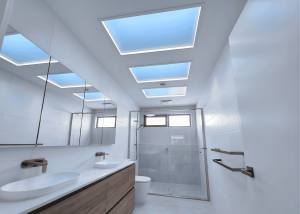
Internal bathrooms: Rooms that need a brighter, cleaner feel without major building work.
Hallways and corridors: Areas that often feel like transitional tunnels unless light is pulled down from above.
Ground-floor rooms under upper levels: Common in two-storey homes where a real skylight is not feasible.
Apartment or retrofit projects: Useful when roof access, body corporate limits, or structure block a conventional option.
Practical rule: If the room needs the feeling of overhead daylight but can’t physically connect to the roof, you’re no longer choosing between skylight types. You’re choosing between simulated sky light and ordinary artificial light.
That’s why homeowners looking at the AuraGlow artificial skylight range usually aren’t comparing it to a table lamp or a feature fitting. They’re comparing it to the experience they wanted from a real skylight but couldn’t install.
Bringing the Sky Inside with AuraGlow Technology
The easiest way to understand auraglow is to think of it as a programmable window to the sky. Not a literal window, of course, and not a flat LED panel trying to look decorative. It’s a lighting system designed to recreate the way daylight feels when it comes from above.
That distinction is important. Many ceiling lights can make a room brighter. Very few make the ceiling feel visually lifted.
More than a bright panel
A normal LED panel tends to do one thing well. It gives broad, even illumination. That can work in an office or utility room, but in a home it often reads as clinical. The light is present, yet the room still feels sealed up.
AuraGlow takes a different approach. It projects light in a way that suggests an opening overhead, and it shifts colour through the day so the room doesn’t feel frozen in one artificial setting. Morning light and afternoon light don’t land the same way in a real home, so a convincing skylight alternative shouldn’t behave like one fixed white rectangle.
Light that mimics the rhythm of the day usually feels calmer than light that stays identical from breakfast to bedtime.
That’s where the experience changes. You stop noticing the fitting as a light source and start reading it more like part of the architecture.
Why the changing colour matters
Natural daylight is never static. Early light is warmer. Midday light is cooler and crisper. Late light softens again. AuraGlow uses dynamic LED technology to echo that shift, which helps a room feel more connected to normal daily patterns.
For homeowners, the practical gain is simple:
The room feels more alive because the light changes rather than sitting at one fixed tone.
The ceiling becomes a feature instead of a blank surface with a fitting attached.
Windowless spaces feel less enclosed because the eye reads the light as coming from above in a more natural way.
If you’ve ever stood in a hallway with a single oyster light and thought, “It’s bright enough, but it still feels dead,” that’s the problem this type of system solves.
The LED skylight lighting options are most effective when the goal is atmosphere as much as illumination. In practical terms, they’re useful in homes where architecture limits your choices but you still want the psychological lift that comes from overhead daylight.
What it does not replace
AuraGlow doesn’t open to the sky, and it doesn’t provide ventilation. It also won’t give you a literal view of clouds. If you want airflow, weather connection, or direct natural sun, a real skylight is the better fit.
If your problem is spatial rather than structural, though, simulated skylight technology often solves it more cleanly than trying to force a traditional roof unit into a house that isn’t built for one.
Exploring the Key Features of the AuraGlow Range
Product features only matter if they improve the room or make the installation easier to live with. AuraGlow’s specification matters because it affects how convincing the light feels, how easily the unit integrates into the ceiling, and how much control you have over it day to day.

Dynamic circadian lighting
One of the most useful parts of the system is the way it shifts colour temperature through the day. AuraGlow is specified to move from warm 1800K dawn tones to bright 8000K midday light, which gives it a much wider expressive range than a standard fixed-colour fitting.
In plain terms, that means the light can feel soft and gentle in the morning, cleaner and more energising through the middle of the day, then more relaxed later on. In rooms without windows, that change matters because a fixed cool white often feels harsh, while a fixed warm white can feel dim or sleepy when you need clarity.
This is one reason many people describe simulated skylights as more architectural than decorative. The light participates in the room rather than being switched on.
Smart controls that fit daily life
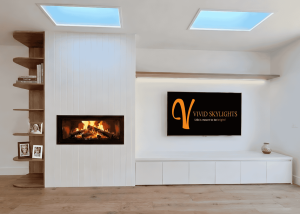
Control is often the difference between a clever product and one that becomes annoying after the novelty wears off. AuraGlow can be operated through a 2.4G mobile app, plus Amazon Alexa and Google Assistant voice commands.
That gives you a few practical options:
App control: Useful when you want to fine-tune brightness or mood without adding extra wall clutter.
Voice control: Handy in kitchens, bathrooms, or busy family spaces where your hands are full.
Routine-based use: Good for people who want the room to feel different across the day without constantly adjusting settings.
The point isn’t gadget appeal. It’s convenience. A skylight-style light should be easy to live with, not another system that needs explaining every time someone visits.
Build quality and output
AuraGlow is built with aerospace-grade aluminium alloy and carries an IP66 rating. For homeowners, that means the product is designed for durability and resistance, not just appearance. Build quality matters with ceiling fixtures because once they’re installed, nobody wants callbacks for sagging components, poor finishes, or premature wear.
The system is also rated for up to 12000 lumens, which tells you it’s intended to do more than provide soft accent light. It can meaningfully brighten a room, especially where natural light is otherwise absent.
Installer’s view: High output isn’t automatically better. In a compact room, placement and dimming matter more than sheer brightness. The right result is a believable skylight effect, not glare.
That’s one reason room size and ceiling type should guide the final choice rather than selecting purely on maximum specification. The LED skylight product range makes more sense when matched to the room, not just bought by headline output.
Efficiency and service life
AuraGlow is specified at 100 lm/W luminous efficacy with a 50,000-hour lifespan. Those figures matter in two ways. First, the unit is designed to convert power into usable light efficiently. Second, it’s built for long service, which reduces the hassle of frequent replacement.
For a homeowner, the practical trade-off is straightforward. A cheaper fitting can look acceptable on day one, but long-term satisfaction usually depends on stable output, reliable electronics, and not having to revisit the ceiling earlier than expected.
Installation options for difficult spaces
Auraglow offers particular utility in renovation work. The range can suit suspended ceilings or surface mounts, including pendant and recessed options.
That flexibility opens up locations that often defeat traditional skylights. You can work with the ceiling you have rather than rebuilding the house to suit the product.
Here’s a quick way to understand it:
| Situation | Why AuraGlow fits |
|---|---|
| Internal room with no roof path | No shaft required |
| Renovation with limited structural appetite | Lower disruption to existing finishes |
| Flat, modern interior | Clean integration with the ceiling plane |
| Multi-use room | Adjustable light feel across the day |
AuraGlow vs Traditional Skylights Which Is Right for You
The right choice depends less on product preference and more on what the building will physically allow. If you can install a real skylight in the right place, natural daylight still has qualities no electric fitting can fully replicate. If you can’t, forcing the issue usually leads to costly compromises.
Choose a traditional skylight when the roof can do the work
A conventional skylight is the stronger option when the room sits under the roof and the structure allows a clean installation. In that setting, you get actual daylight, real variation from weather and time of day, and, with operable models, potential airflow as well.
For many upper-floor living areas, kitchens, and raked-ceiling spaces, a fixed or operable skylight is the right architectural move. If ventilation matters, operable units make more sense than any simulated lighting product because they address both light and stale air.
A real skylight also changes the way you relate to the outside. You notice passing clouds, rain, and seasonal shifts. Some homeowners want exactly that connection.
Choose AuraGlow when structure gets in the way
AuraGlow is the better answer when the desired room can’t take a traditional skylight without major reconstruction. That often includes lower-storey rooms, apartments, internal corridors, converted spaces, and homes where the roof geometry is wrong for a practical shaft.
This is also where a lot of renovation budgets get protected. If creating roof access means redesigning framing, relocating services, or making extensive ceiling repairs, a simulated skylight often produces a much cleaner outcome.
For comfort control in nearby rooms, some homeowners also pair daylight improvements with glare or heat-management measures on existing glazing. In those cases, a practical reference like home window film installation can help you think through how natural and controlled light work together across the house.
Don’t choose by product category. Choose by the problem the room actually has.
A room that lacks ventilation needs a different solution from a room that lacks the feeling of daylight.
Here’s a closer look at the difference in effect and application:
A quick comparison
| Decision point | AuraGlow | Traditional skylight |
|---|---|---|
| Roof access needed | No | Yes |
| Structural alterations | Minimal compared with roof penetration | Required |
| Natural sunlight | Simulated | Real |
| Ventilation | No | Possible with operable units |
| Best locations | Internal rooms, lower floors, retrofit problem areas | Top-floor rooms, direct roof access zones |
| Control | App and voice-based settings | Natural daily cycle, optional motorised operation on some models |
Where the project allows a real roof unit, Vivid Skylights supplies double-glazed fixed and operable skylights, including electric and solar-powered opening options, with nationwide delivery across Australia. Where the project doesn’t allow that, AuraGlow is the more practical way to create a skylight effect indoors.
Installation Maintenance and Compatibility Guide
Homeowners usually ask the same three questions before committing. How hard is it to install, what does it need over time, and will it suit the ceiling I already have. Those are the right questions.
What installation usually looks like
AuraGlow’s biggest practical advantage is that it doesn’t require the roof to be opened. There’s no skylight shaft to frame, no external flashing, and no need to solve roof access where none exists. That makes it well suited to suspended ceilings, surface-mounted applications, recessed layouts, and pendant-style placements.
Traditional skylights are different. They involve roof work, weatherproofing, and coordination between the ceiling and roofline. That isn’t a drawback when the house suits them. It’s a different category of project.
For homeowners comparing the two, the test is simple:
If you can reach the sky cleanly, a real skylight stays in the conversation.
If the room is boxed in by structure, AuraGlow avoids work that may not be justified.
If you’re renovating around finished interiors, lower-disruption options often preserve more of the existing home.
For people planning roof-based daylighting, the skylight installation guide is a useful reference for understanding the practical side of the process.
Maintenance expectations
AuraGlow is close to a set-and-forget product. Because it’s a sealed lighting system rather than an opening in the roof, there’s no exterior glazing to access and no weather-exposed top surface to clean.
Traditional skylights need a different mindset. Exterior glass may need occasional cleaning depending on the site, roof pitch, and surrounding trees. Operable units also involve moving parts, which means proper installation and suitable product selection matter from the beginning.
Site note: The less accessible the ceiling or roof, the more valuable simple maintenance becomes over the life of the product.
AuraGlow also comes with a 2-year warranty. For traditional skylights from the publisher, customers are offered a 10-year leak-free warranty as part of that roof-based product category.
Delivery and project planning
Compatibility is one of the strongest reasons people choose auraglow. It can slot into projects where conventional skylights are ruled out early, and that helps designers, electricians, builders, and homeowners move faster on room planning.
For roof skylights, sizing, flashing, roof pitch, and opening style shape the decision. For LED skylights, the focus shifts to ceiling type, location within the room, control preferences, and the visual effect you want once the light is on.
Both categories are available with nationwide delivery in Australia, which matters if you’re planning a project outside Melbourne and want product consistency across sites.
The Future of Light Is Here
Auraglow fills a very specific gap in home lighting. It gives windowless or structurally restricted rooms a skylight-like presence without asking the house to do something it can’t. That makes it a practical design tool, not just a novelty fitting.
The primary value is in how it changes a room people would otherwise accept as dim, flat, or closed off. Dynamic colour, smart control, and flexible ceiling integration make it suitable for spaces where standard fittings solve brightness but not atmosphere.
Traditional skylights still hold their place. If your room has a clear path to the roof and you want authentic daylight or ventilation, a fixed or operable roof skylight remains the more direct architectural solution. If the room can’t physically take one, simulated skylight technology is often the smarter answer.
The useful way to think about both options is this. You’re not buying a product first. You’re solving a light problem in the right way for the structure you have.
For homeowners, renovators, and specifiers comparing options, the natural lighting product range is a practical starting point for working out whether your project needs real roof daylight, a simulated skylight, or a mix of both.
If you’re planning a darker room upgrade or weighing a real skylight against an LED alternative, explore Vivid Skylights to compare products, review inspiration for residential spaces, and discuss the right fit for your home anywhere in Australia.