

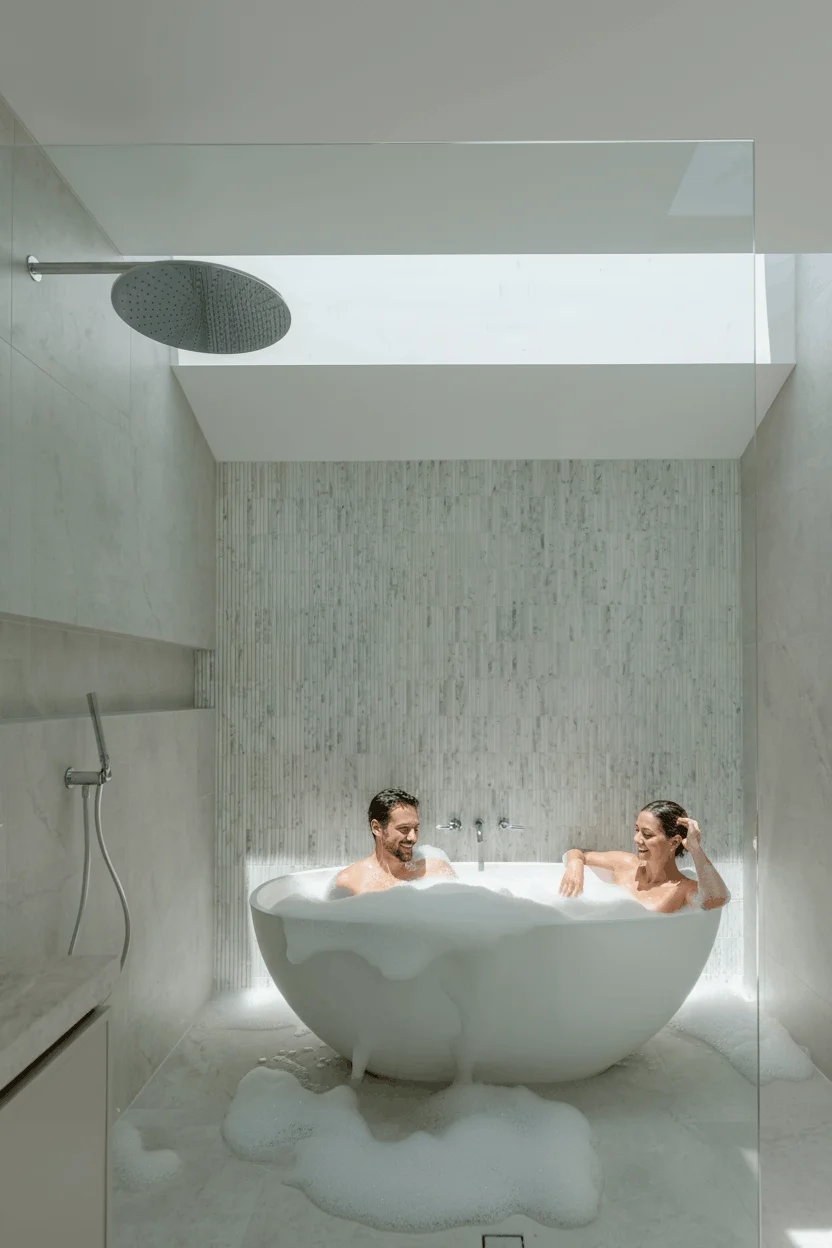
You know the Perth feeling. The sky outside is bright, the backyard is washed in sun, but the hallway, ensuite, kitchen corner or walk-in robe still needs a light switched on by mid-morning.
That mismatch is why so many homeowners start looking into skylights perth wa. Not because they want a flashy feature, but because they want parts of the home to feel usable, comfortable and open. A good skylight changes how a room works. It can make a narrow passage feel wider, a bathroom feel calmer, and a kitchen feel more inviting during the hours you live in it.
The key is choosing a skylight that suits Perth conditions. Light is easy to get here. Comfortable light is the primary goal.
Transform Your Home with Natural Light in Perth
A lot of Perth homes have one or two rooms that never quite catch up with the rest of the house. The living area might open beautifully to the garden, yet the centre of the floorplan stays dim. You walk from sun into shadow. That is often where a skylight makes the biggest difference.
Natural light does more than brighten surfaces. It changes how people use a room. A once-forgotten hallway becomes part of the home rather than a passage between better spaces. A laundry feels less enclosed. An internal bathroom can feel cleaner and more relaxed without sacrificing privacy.
Perth buyers have been thinking this way for a long time. The demand for natural lighting solutions in Perth is long-standing, with some specialists serving the market since 1993, and studies in comparable Australian markets show skylights can be linked with 12% value increases and properties selling 18% faster (ZoomInfo reference).
That matters if you plan to stay and enjoy the home. It also matters if resale is in the back of your mind.
Why dark rooms stay dark in sunny houses
The confusion usually comes from assuming wall windows should be enough. In many Perth homes, they are not.
Rooms in the middle of the floorplan, spaces under extended rooflines, and areas shaded by neighbouring structures can all miss out on useful daylight. Even homes with generous glazing can still have dead zones where artificial lighting does most of the work.
A skylight solves a different problem from a standard window. It brings light from above, where it can spread deeper into the room.
Tip: If a room feels gloomy even on a clear Perth day, the issue is often light direction rather than window size.
For homeowners comparing options, it helps to understand the broader benefits of skylights before getting into models, glazing and sizing. Once you understand what skylights do well, the later decisions become much easier.
Understanding Modern Skylight Types and Features
The biggest mistake first-time buyers make is treating all skylights as basically the same. They are not. The right unit depends on what problem you are trying to solve.
Some rooms need light only. Others need light plus airflow. Some roof spaces have easy access. Others need a more compact solution.

Fixed skylights
A fixed skylight does not open. It is the simplest option and often the cleanest architecturally.
These work well in places such as:
Hallways: where the goal is steady daylight
Stairwells: where extra ventilation may not be necessary
Living areas with existing airflow: where you already have doors or windows handling ventilation
Because there are fewer moving parts, fixed models are often the straightforward choice when you want to brighten a room.
Operable skylights
An operable skylight opens to release warm air and improve airflow. This matters in kitchens, bathrooms and upper-level spaces where heat and moisture can build up.
If you have ever stood in a bathroom after a shower and felt the air sit heavily in the room, you already understand the value of an opening unit. The same applies to kitchens where steam and heat collect near the ceiling.
Operable models usually fall into two practical groups.
Electric operable skylights
Electric units are powered and controlled at the touch of a button. They suit homeowners who want convenience and predictable operation.
They are a strong fit for:
higher ceilings
regularly used bathrooms
kitchens where the skylight opens often
homes where integrated accessories such as blinds are part of the plan
Solar powered operable skylights
Solar operable models appeal to buyers who want automated ventilation without relying on wired power at the opening point. They are especially attractive when access for electrical work is less convenient.
For many Perth homeowners, this option feels like the easiest blend of comfort and practicality.
Tubular skylights
A tubular skylight, sometimes called a sun tunnel, channels daylight through a reflective tube into smaller or more enclosed spaces.
These are often chosen for:
internal toilets
laundries
robes
passages where a full glazed shaft is not practical
If your roof layout is tight or the ceiling below is far from the roof surface, a tubular design can be a clever answer.
Why double glazing matters in Perth
If you only remember one feature, make it this one. Double glazing matters.
It functions as a better-insulated barrier in the roof. A skylight should let in light without turning the ceiling into a weak point. In Perth, that balance is critical.
Modern buyers should pay close attention to:
double-glazed glass
Low-E coatings
quality seals
durable aluminium framing
options such as self-cleaning glass, blinds and fly screens
A simple way to explore the categories is to compare the main types of skylights and match each one to the room, roof shape and ventilation need.
Vivid Skylights Fixed vs Operable Models at a Glance
| Feature | Fixed Skylight | Solar Operable | Electric Operable |
|---|---|---|---|
| Main purpose | Bring in daylight | Daylight plus passive airflow | Daylight plus convenient powered airflow |
| Opens for ventilation | No | Yes | Yes |
| Best suited to | Hallways, living spaces, stairwells | Bathrooms, kitchens, upper rooms | Frequently used wet areas and high ceilings |
| Power source | Not required | Solar powered operation | Electric powered operation |
| User convenience | Simple and low-touch | Automated feel without wired power at opening point | Easy day-to-day control |
| Heat management approach | Relies on glazing quality and placement | Glazing plus venting ability | Glazing plus venting ability |
| Typical buyer priority | Maximum light with simplicity | Efficiency and ventilation | Convenience and control |
Key takeaway: Choose the skylight type by room function first. Choose size and finish second.
Navigating Perth Climate and Building Regulations
Perth gives homeowners a lot of sunlight. It also gives them a lot of heat. That is the central design challenge.
A skylight should bring daylight into the home without making the room harder to cool. Older assumptions about skylights often come from older products. Modern units can perform very differently, but only if you choose the right glazing and installation approach.

Heat gain is the first Perth question
In Perth’s climate, where external summer temperatures average 32.5°C, unventilated roof cavities can reach 48.1°C. Skylights can also provide up to 30% more light than vertical windows, which helps reduce daytime electricity use and supports better NatHERS ratings (Vivid Skylights value guide).
Those two facts tell the story clearly. Daylight is useful. Roof heat is real.
That is why glazing specification matters more in Perth than many buyers expect. A skylight is not just an opening in the roof. It is part of the thermal envelope of the home.
What to look for in a hot climate
When reviewing products, focus on features that help separate light transmission from heat gain.
Prioritise:
Double-glazed units: better suited to controlling unwanted heat than basic single-glazed options
Low-E glass coatings: designed to improve thermal performance
Operable designs: useful where trapped warm air is a concern
Well-designed flashing and sealing: essential for weather performance and long-term reliability
A lot of confusion comes from assuming brighter automatically means hotter. That can happen with poor product selection. It is not an unavoidable outcome.
Operable units make more sense in certain rooms
Ventilation is not necessary everywhere. But in some parts of a Perth home, it is a smart safeguard.
Bathrooms, kitchens and upper-floor rooms often benefit from an opening skylight because hot air naturally rises. If your main concern is a stuffy room rather than just a dark one, an operable unit deserves serious attention.
Practical advice: If the room already struggles in late afternoon heat, do not choose on appearance alone. Make thermal performance part of the shortlist.
Bushfire compliance and BAL considerations
If your property sits in or near a bushfire-prone area, skylight selection needs a compliance lens as well as a comfort lens. Buyers often hear the term BAL rating and are unsure what to do with it.
A good starting point is to understand the BAL 29 requirements and then confirm what applies to your site, roof type and local approval pathway. That is especially important during renovations, extensions and rebuilds.
BAL compliance is not just a box-ticking exercise. It affects product suitability, glazing decisions and installation details.
Check the roof, not just the room
Many homeowners think first about where the light should fall. That is sensible, but roof condition matters just as much. Existing penetrations, flashing details, roof pitch and nearby services can all influence what is realistic.
If you are buying an older home, planning a major renovation, or want an independent view before cutting into the roof, a review from one of the best building inspectors Perth can help you identify structural and maintenance issues early.
That kind of check is often less about the skylight itself and more about avoiding surprises around the skylight.
Choosing the Right Skylight Size and Placement
Good skylight design is rarely about the biggest unit you can fit. It is about the right amount of light in the right place.
That is where many Perth homeowners hesitate. They can picture the result they want, but they are unsure how to translate that into dimensions and roof placement.
Start with a simple sizing rule
According to Master Builders WA guidance, a skylight-to-floor area ratio of 1 to 2% is often enough for effective daylighting, and sizing may need to increase by up to 50% for south-facing aspects or rooms with long, low-reflectivity light shafts (Master Builders WA sizing guidance).
That rule gives you a practical starting point. It is not the final answer, but it stops you guessing.
Here is how to think about it in plain terms:
Small internal rooms: often need less total glazed area, but placement becomes more critical
Large open-plan areas: may suit a larger unit or multiple units to spread light evenly
Long shafts: reduce light delivery, so the opening above may need to be larger
Dark shaft finishes: absorb more light than white or glossy finishes
Placement changes the feel of the room
Skylight placement affects more than brightness. It affects how the room feels at different times of day.
A unit placed over a circulation zone can pull light through the centre of the home. One placed over a kitchen island can create a stronger focal point. One near a shower can improve amenity without creating privacy issues.
Common placement goals include:
General room brightening: centre the skylight to spread light broadly
Task lighting: place it over benches, vanities or circulation points
Visual balance: align the skylight with architectural lines where possible
Roof orientation and room finishes matter
Two rooms of the same size can need different skylight sizes because their surfaces and orientation behave differently. A white bathroom with a short shaft will reflect light well. A room with timber lining and a deeper shaft will absorb more of it.
That is why sizing cannot be reduced to one number alone.
This short video shows the kind of practical thinking that helps before finalising placement:
A quick room-by-room way to decide
Ask these questions in order:
What is the room missing most? Light only, or light plus airflow?
How deep is the shaft? Deeper shafts usually need more help.
What colour are the surfaces? Lighter finishes reflect more daylight.
Where does the roof face? Some aspects need size adjustments.
Do you want a feature or a subtle effect? Not every skylight needs to be dramatic.
If you are comparing common product sizes rather than designing from scratch, a dimensions guide helps narrow options quickly. This overview of skylight dimensions is useful when you want to match room size to standard units rather than custom guessing.
Design tip: The best skylight feels intentional. If it looks like part of the architecture instead of a late add-on, the room usually works better.
Budgeting for Your Skylight Project in Perth
Many homeowners start by asking what a skylight costs. A better question is what the whole project involves.
The total budget usually includes the unit itself, delivery to Perth, installation, interior finishing and any optional extras that affect comfort or convenience. Thinking this way gives you a more honest number early.
What goes into the full cost
A skylight project often includes several moving parts:
The skylight unit: fixed or operable, with the glazing and frame specification you choose
Delivery: especially relevant when buying from a supplier outside WA
Installation labour: if you are using a roofer, carpenter or builder
Flashing and roof integration: a key detail in tiled and metal roofs
Internal finishing: shaft lining, plastering and painting where required
Accessories: blinds, fly screens or automation features
Homeowners often underestimate the finishing work rather than the skylight itself. A simple install on an accessible roof is one thing. A unit over a raked ceiling or a deep shaft is another.
Why standard sizes can help
If you are trying to keep spending under control, standard sizes are often easier to price, easier to plan around and simpler to install. They also reduce the uncertainty that can come with fully custom work.
That does not mean you should choose purely on price. It means you should choose the simplest unit that properly solves the problem in the room.
Think in terms of value, not only purchase price
A skylight is one of those rare upgrades that affects daily comfort and presentation at the same time. It changes how a home looks, but it also changes how often you rely on artificial lighting and how pleasant enclosed spaces feel during the day.
That is why many homeowners think of the purchase in three layers:
| Budget lens | What it means in practice |
|---|---|
| Upfront spend | Unit, delivery, install, finishing |
| Ongoing comfort | Better daytime light, improved room usability |
| Property appeal | A more modern, considered feel for buyers and valuers |
The most expensive choice is not always the best one. But the cheapest unit can become expensive if it performs poorly in heat, lacks the features the room needs, or creates extra work later.
Use tools that remove guesswork
A pricing estimator is one of the simplest ways to get clarity before you commit to calls, site visits or builder discussions. It helps you compare fixed versus operable options and think through extras while the project is still easy to adjust.
Finance can also matter for households that want the upgrade now but prefer to spread the cost. That can make a better-quality skylight more realistic than many buyers first assume.
Budget tip: Price the room outcome, not just the product. A bathroom that gains both daylight and airflow is a different result from a hallway that only needs light.
Choosing Your Installation Path DIY or Professional
Installation is where many buyers either gain confidence or stall out. The good news is that not every skylight project demands the same level of complexity.
Some homeowners are comfortable handling parts of the process themselves. Others would rather have a local trade manage the roof work and finishing. Both paths can be sensible.
When DIY makes sense
DIY suits homeowners who are already comfortable with measured building work, roof access and following product instructions carefully. It is often more realistic for straightforward installations on accessible roof sections.
For DIY installations, skylight designs with a Flexi Tube can reduce labour time compared with rigid shafts, which makes the process faster and more manageable for renovators (BlueSky Installations square skylights).
That principle matters beyond tubular products too. Simpler systems tend to reduce friction. If the skylight package includes flashing components designed for your roof type, that removes one of the most common points of uncertainty for first-timers.
A practical starting point is a guide that walks through a do it yourself skylight installation pathway, so you can assess whether the project matches your skills before ordering.
When professional installation is the better call
Professional installation is usually the safer path when:
The roof is steep or difficult to access
Electrical work is involved
The shaft is deep or architecturally visible
You are coordinating other renovation trades
Compliance or waterproofing details feel uncertain
In these cases, paying for experience can prevent mistakes that cost more later.
A side-by-side comparison
| Consideration | DIY path | Professional path |
|---|---|---|
| Best for | Confident renovators | Most homeowners and complex jobs |
| Control | High | Lower day-to-day involvement |
| Labour cost | Lower direct labour spend | Higher upfront labour spend |
| Time commitment | Your own time required | Faster if well scheduled |
| Risk of errors | Higher if details are missed | Lower with experienced trades |
| Ideal project type | Straightforward, accessible installs | Difficult roofs, visible finishes, operable systems |
How to choose
The best question is not “Could I install this?” It is “Could I install this well, safely and without stress?”
If you hesitate on any of those parts, it is worth speaking with a local roofer, carpenter or builder who has handled skylight work before. Ask them about flashing, ceiling finishing, waterproofing and any site-specific issues they spot from photos or plans.
Installer tip: A neat internal finish matters almost as much as the roof work. If the shaft lining and paintwork are poor, even a high-quality skylight can look unfinished.
Your Next Steps to a Brighter Perth Home
A good skylight decision usually comes down to four things.
First, decide whether you need light only or light plus ventilation. Second, choose a glazing and opening style that respects Perth heat rather than ignoring it. Third, size and place the unit so it suits the room, not just the roof. Fourth, be realistic about installation, whether that means DIY or using a trade.
Once those parts are clear, the purchase gets much easier.
If you are comparing suppliers, focus on the details that affect long-term satisfaction: double-glazed construction, operable options, roof compatibility, accessories such as blinds or fly screens, and delivery support to Perth and regional WA. National supply can be an advantage here because it opens up more product choice than relying only on local stock.
For homeowners who want a clean shortlist, fixed skylights suit rooms that need daylight. Solar and electric operable models suit spaces where heat, moisture or stale air are part of the problem. That is often the difference between a skylight that looks good and one that improves daily living.
The best next move is clear. Get a clear quote based on your room, roof and preferred opening type, then compare that against the result you want. That keeps the project practical instead of overwhelming.
Frequently Asked Questions About Perth Skylights
Do skylights make Perth homes hotter?
They can if you choose poorly. In Perth, where summer highs often exceed 31 to 32°C, an unventilated skylight can increase indoor temperatures by 5 to 10°C. Choosing double-glazed and operable units is important for reducing that heat gain, especially when WA household air conditioning costs average $300 per year (Doors Windows Perth guide).
The simple lesson is this. Do not judge skylights by old acrylic domes or outdated single-glazed products.
Are fixed skylights enough for a bathroom?
Sometimes, but not always. If the bathroom already has strong exhaust ventilation and the main problem is lack of daylight, a fixed unit may be enough. If steam lingers, an operable skylight is usually the more practical choice.
Will a skylight work on a low-pitch Perth roof?
Yes, many modern units are designed for pitched and low-pitch applications. The important part is matching the unit and flashing system to the roof type and having the installation handled correctly.
How much maintenance do skylights need?
Less than many buyers expect, especially with modern glass and frames. Still, maintenance is not zero. You should keep an eye on debris, check seals visually from time to time, and clean accessible surfaces as needed.
If you want a practical cleaning reference, this guide on how often skylights should be cleaned is a useful place to start.
Are solar powered opening skylights worth considering?
For many homes, yes. They are especially appealing when you want the convenience of an opening skylight without needing wired power at the opening location. They also suit homeowners who want regular ventilation in bathrooms, kitchens or upper rooms.
Can skylights be delivered to Perth if the supplier is interstate?
Yes. That is one of the advantages of working with a specialist supplier that delivers nationally. It broadens your options beyond what is physically stocked nearby and can make it easier to compare fixed, electric and solar operable models in one place.
Is a tubular skylight better than a standard skylight?
It depends on the room. Tubular products are excellent in compact internal spaces where a full skylight shaft is not practical. A standard glazed skylight is often better when you want a stronger architectural effect, a view of the sky, or ventilation.
If you are ready to compare fixed, solar powered and electric opening options, Vivid Skylights offers double-glazed skylights designed for Australian conditions, with nationwide delivery to Perth and across Australia. You can use their online pricing estimator to get clarity on sizes, features and budget, or contact the team for guidance on choosing the right unit for your home.