


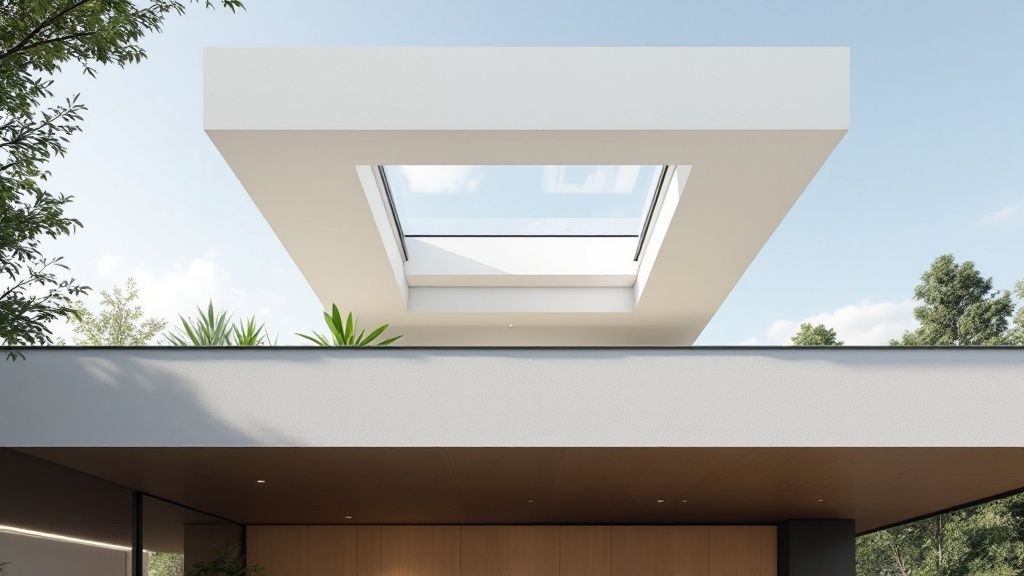
 Adding a skylight is one of the best ways to completely change the feel of a dark, stuffy room. By tapping into that brilliant Queensland sunshine, you can turn gloomy spaces into bright, inviting parts of your home. Forget old stereotypes—modern skylights are engineered to flood your home with natural light, without letting the heat in, and are built to withstand a Brisbane downpour, guaranteed.
Why Skylights Just Make Sense for Brisbane Homes
Living in Brisbane means we get more than our fair share of sunshine, but it also comes with intense summer heat and those sudden, torrential storms. This climate really puts home upgrades to the test. Skylights aren’t just windows you stick on your roof; they’re a clever architectural feature that enhances your home’s atmosphere and energy efficiency, making them a perfect fit for the Queensland lifestyle.
Many older Brisbane homes, especially Queenslanders and post-war cottages, have layouts that leave central areas like hallways, kitchens, and living rooms feeling dark and closed-in, even on a bright day. This is where a skylight makes a world of difference. It’s like opening a direct channel to the sky, instantly making the space feel bigger, brighter, and more connected to the outdoors.
Embrace the Light, Ditch the Heat
The first question I always get from Brisbane homeowners is, “Won’t it turn my room into a sauna?” It’s a fair concern, but thankfully, skylight technology has come a long way.
High-performance units, like the ones we’ve designed at Vivid Skylights, are built with our warm climate in mind:
- Double-Glazing: This is your first line of defence. Two panes of glass with an air gap between them act as a powerful insulator. It’s a simple but incredibly effective barrier that dramatically cuts down on heat transfer, keeping your room comfortable even when it’s scorching outside.
- Low-E Coatings: Think of this as a smart filter for sunlight. It’s a transparent, microscopic coating that reflects the heat-generating infrared and UV rays back outside while letting all the beautiful visible light pour in. You get the brightness without the burn.
Built Tough for Brisbane Storms
We all know what a Brisbane storm season can throw at our roofs. The last thing you want is a leak. A poorly installed skylight is a genuine nightmare, which is why modern designs are engineered from the ground up to be tough and weatherproof.
High-quality skylights are built with robust, powder-coated aluminium frames and come with custom-designed flashing kits. These kits are the key—they create a seamless, completely watertight seal with your specific roofing material, whether it’s Colorbond steel or classic tiles. This is how we can confidently offer a 10-year leak-free warranty and give you total peace of mind when the next big storm rolls through.
Choosing the Right Skylight for the Queensland Climate
Picking the right skylight for your Brisbane home is about more than just sticking a window on your roof. It’s a strategic choice that needs to work with our unique climate. We’re blessed with plenty of sunshine, but that also comes with intense heat and sticky humidity. The right skylight can turn a dark room into a bright, airy sanctuary; the wrong one can turn it into a sweltering greenhouse.
To get it right, it helps to think of the main skylight types not just by their names, but by the job they do for you. Each one is a specific tool for a specific challenge we face in Brisbane homes.
Fixed Skylights: The Picture Window for Your Ceiling
The most common and straightforward option is the fixed skylight. The best way to think of it is as a picture window for your ceiling. It has one job and one job only: to let in as much beautiful, natural light as possible. With no moving parts, it’s a simple and effective solution.
Fixed models are perfect for those spots where you’re craving light but don’t need extra airflow. They work wonders in gloomy hallways, centrally located living areas, or stairwells that feel cut off from the rest of the home. Because they’re completely sealed, they are an incredibly reliable and budget-friendly way to transform a space.
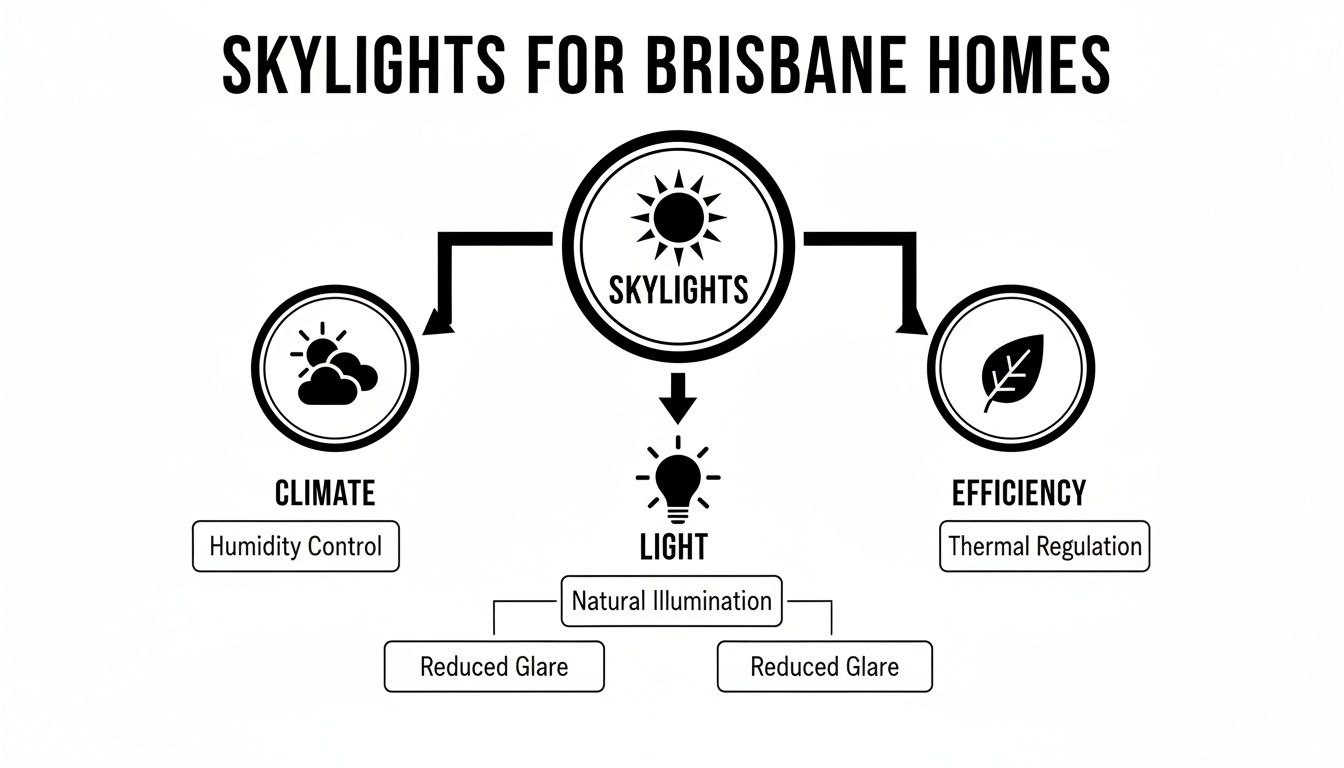
As you can see, balancing our local climate with the right skylight doesn’t just deliver amazing light; it boosts your home’s energy performance, too.
Opening Skylights: Let Your Home Breathe
Next up, we have opening skylights, also known as ventilating skylights. These are the real workhorses for the Queensland climate. They don’t just bring in light; they act like the lungs of your home, actively letting hot, stale air escape.
We all know hot air rises. An opening skylight gives it a perfect escape route, which is an absolute game-changer during our long, humid summers. They are the go-to choice for any room that battles moisture and heat.
- Bathrooms: Say goodbye to steam and humidity, drastically cutting down the risk of mould, especially during the wet season.
- Kitchens: Let cooking smells, heat, and smoke out, making the heart of your home so much more comfortable.
- Laundries: Help manage the humidity from dryers and air-dry clothes faster.
Many modern opening skylights come with clever features like rain sensors that automatically shut the window at the first sign of a classic Brisbane downpour. It’s set-and-forget convenience.
Tubular Skylights: The Clever Light Funnel
Finally, there are tubular skylights. The best way to picture these is as a sophisticated light funnel. A small dome on the roof captures sunlight and channels it down a super-reflective tube, delivering it precisely where it’s needed inside.
Their small footprint makes them a brilliant solution for tight spaces where a traditional skylight just won’t fit. You can bring daylight into corners of your home you never thought possible.
- Walk-in wardrobes
- Ensuites
- Small, dark hallways or pantries
While you don’t get that expansive view of the sky like you would with a fixed or opening model, their ability to illuminate enclosed areas is second to none. They’re a clever workaround for bringing targeted daylight deep into your floor plan.
To get a better feel for all these options, you can explore our detailed guide on the different types of skylights available.
To help you weigh the options at a glance, here’s a quick comparison tailored for Brisbane homeowners.
Skylight Types Compared for Brisbane Homes
This table breaks down which skylight type is best suited for different needs, budgets, and rooms in a typical Brisbane home.
| Skylight Type | Best For | Key Brisbane Benefit | Typical Cost Range (Installed) |
|---|---|---|---|
| Fixed Skylight | Maximising light in hallways, living rooms, and stairwells. | Cost-effective way to brighten core living areas. | $1,500 – $3,500 |
| Opening Skylight | Kitchens, bathrooms, laundries, and any room needing airflow. | Vents hot, humid air, reducing mould risk and cooling costs. | $2,500 – $5,000+ |
| Tubular Skylight | Small, enclosed spaces like wardrobes, pantries, or ensuites. | Brings natural light into areas where traditional skylights won’t fit. | $800 – $2,000 |
Choosing the right type is the first big step. But for a Brisbane home, you also need to look for features like high-performance double glazing to block summer heat, a solid Bushfire Attack Level (BAL) rating for peace of mind, and a frameless design that helps leaves and debris slide right off after a storm.
Understanding Brisbane Council Rules and Roof Requirements
Before you can start basking in that beautiful natural light, there are a few practicalities to sort out. Putting skylights in Brisbane isn’t just about picking a spot on the ceiling; you need a basic handle on your home’s structure and any local rules that might come into play.
The good news? For most standard skylight installations, you likely won’t need to get bogged down in formal applications with the Brisbane City Council. Straightforward jobs that don’t require major surgery on your roof frame are usually considered minor building work.
But, there are always exceptions. If your plans are a bit more ambitious or your home has a unique character, you’ll need to dig a little deeper into the regulations.
When to Check with Brisbane City Council
While most projects are hassle-free, some situations absolutely demand a chat with the council or a private certifier. It’s always better to be safe than sorry, especially if your property ticks one of these boxes:
- Heritage-Listed Properties: If you own a classic Queenslander or another home with a heritage overlay, there are strict rules about any changes to its appearance. You’ll almost certainly need approval to make sure the skylight respects the building’s original character.
- Major Structural Changes: Planning to fit a huge skylight that involves cutting into or altering major roof trusses or beams? That’s serious structural work. This kind of modification will need an engineer’s sign-off and council approval to go ahead.
- Unit or Townhouse Complexes: Living under a body corporate means you don’t actually own the roof above your head. You’ll have to get the green light from the body corporate committee before any work starts.
Navigating council requirements might sound like a headache, but for the vast majority of residential skylight projects in Brisbane, a qualified installer will know the local building codes inside and out. They can quickly confirm if your job is considered exempt development.
Matching Skylights to Your Brisbane Roof
Beyond the paperwork, the biggest factor is your roof itself. Brisbane homes have a massive range of roofing materials and designs, and each one has its own playbook for a successful, leak-free installation.
The two most common roof types you’ll see around town are tiled roofs (both terracotta and concrete) and metal roofs, especially Colorbond steel. The pitch, or steepness, of your roof also plays a huge part in the process.
Roof Material Matters
- Tiled Roofs: A familiar sight across Brisbane suburbs. Professional installers use specialised flashing kits designed to sit perfectly within the tile profile. They remove a few tiles, fit the flashing, and then cut and replace the tiles around the skylight for a completely watertight seal.
- Metal Roofs (Colorbond): For corrugated or standing-seam metal roofs, you need a different kind of flashing kit. These are moulded to match the exact profile of the metal sheeting, making sure every drop of rain is channelled safely away from the skylight opening.
The real secret to a weatherproof seal isn’t the skylight—it’s the flashing kit. Think of it as a custom-made raincoat for the join between your roof and the skylight. A top-quality kit, like the ones supplied with Vivid Skylights, is non-negotiable in our storm-prone climate. Knowing your roof type from the start helps you and your installer choose the right kit, guaranteeing a perfect fit and years of peace of mind.
Boosting Daylight and Energy Savings in Your Home
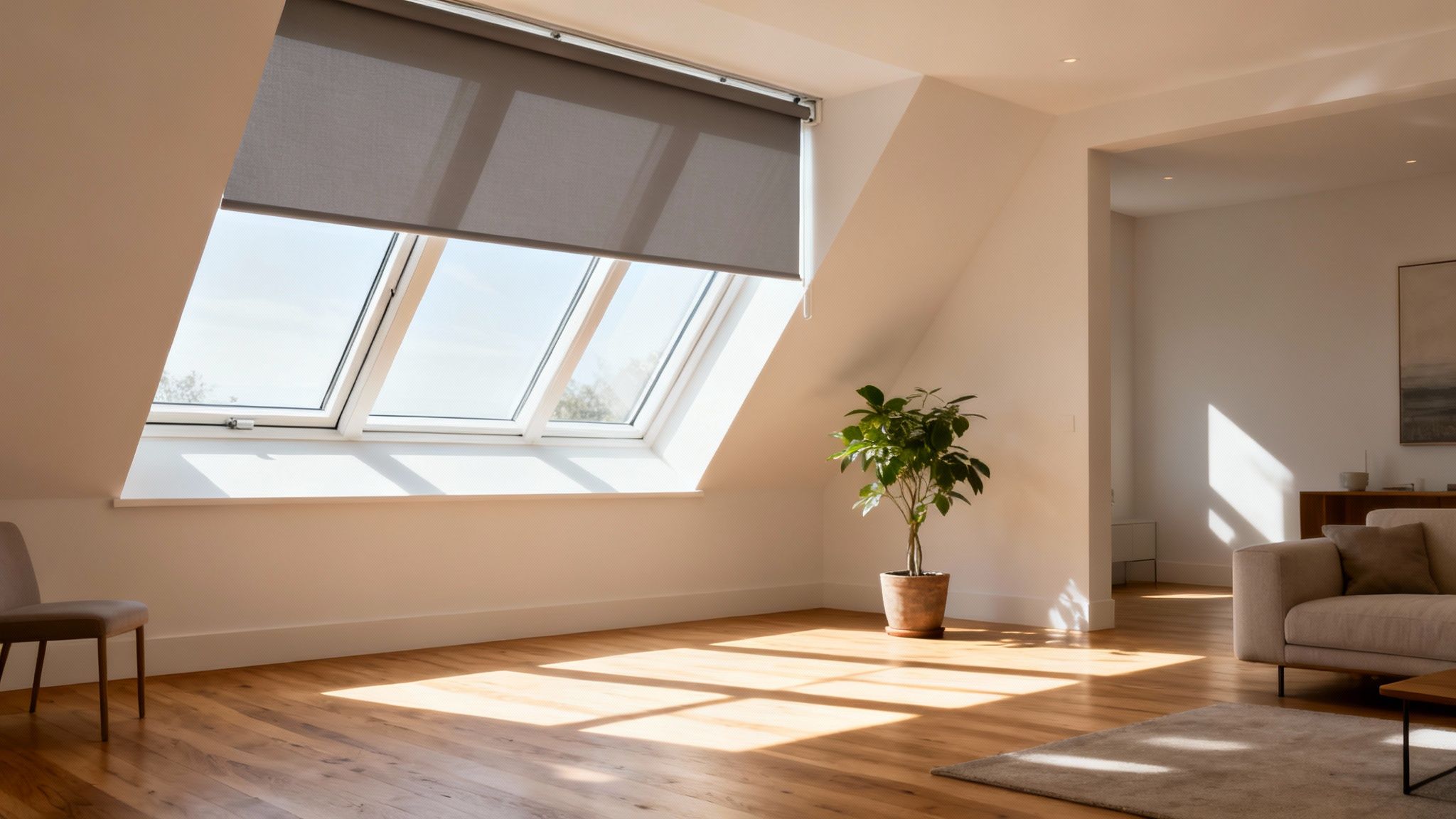
Skylights do more than just let in a bit of light; they’re genuinely powerful tools for improving your home’s energy efficiency and overall atmosphere. Here in Brisbane, where electricity costs can really bite, being able to leave the lights off all day isn’t just a nice-to-have—it’s a smart financial move. When you strategically invite natural light inside, you can seriously cut down your reliance on artificial lighting.
This whole concept is known as daylighting, and it’s about so much more than just cutting a hole in your roof. Proper daylighting means thinking carefully about placement and sizing to fill a space with soft, usable light, all without creating annoying glare or turning your living room into a sauna. For example, a south-facing skylight in Brisbane will give you lovely, consistent, indirect light. A north-facing one, on the other hand, will catch more direct sun, which is perfect for warming up a room in winter.
The goal is always to strike that perfect balance, transforming gloomy corners into vibrant, functional areas powered by the sun itself. It’s a change that not only trims your power bills but also makes your home feel more spacious and simply better to be in.
Unpacking the Technology Behind a Cooler Home
A huge concern for any Brisbane homeowner is heat gain. It’s a fair question: will a skylight turn your living room into a greenhouse during one of our notorious summer heatwaves? The short answer is no, not with today’s technology. Modern glazing is specifically designed to work with our climate, not against it.
Think of it as high-tech sunglasses for your house. Two key features make all the difference:
- Double-Glazing: This is non-negotiable for any quality skylight. It consists of two panes of glass separated by a sealed gap filled with air or gas. This gap acts as a fantastic thermal barrier, dramatically cutting down the heat transfer from your hot roof into the room below.
- Low-E (Low-Emissivity) Coatings: This is the real game-changer. It’s a transparent coating, microscopically thin, applied directly to the glass. It’s cleverly engineered to reflect the heat-causing infrared and UV rays back outside while letting all the beautiful visible light pour in. You get all the brightness without the blistering heat.
Working together, these technologies keep your home noticeably cooler in summer and even help trap warmth inside on those chilly winter mornings. Getting into the nitty-gritty of these features is important, and you can learn a lot more about how they boost your home’s thermal performance by reading our guide on skylight energy efficiency.
The energy efficiency gains from installing modern skylights in Brisbane are pretty substantial, with some homeowners saving hundreds of dollars every year. When you consider the city averages around 2,800 sunshine hours annually, it just makes sense to put that natural resource to work.
Gaining Complete Control Over Light and Privacy
Even with the best glazing in the world, there are times when you just need it to be dark. A skylight shouldn’t mean giving up control, especially in bedrooms, nurseries, or media rooms where managing light is absolutely essential. This is where integrated blinds become a must-have feature.
Modern solutions are far more sophisticated than a simple pull-down shade. Vivid Skylights, for instance, can be fitted with solar-powered, remote-controlled block-out blinds. With a simple press of a button, you can switch from a bright, sun-drenched room to complete darkness in a matter of seconds.
This gives you the ultimate flexibility—the best of both worlds, really:
- Total Darkness: Absolutely essential for a good night’s sleep or for creating that perfect cinema vibe for movie night.
- Light Filtering: By partially closing the blind, you can soften the harsh midday sun, cutting glare while still keeping the room bright and welcoming.
- Added Insulation: A closed blind provides another layer of insulation, further boosting thermal performance on the hottest of days.
This level of control ensures that a skylight enhances a room’s usability, adapting to whatever you need throughout the day and night. It makes them a practical, year-round addition to any part of your Brisbane home, without any compromises.
Deciding Between DIY and Professional Skylight Installation
So, you’ve picked out the perfect skylight to brighten up your home. Now comes the big question: do you roll up your sleeves and install it yourself, or call in a professional? This decision really boils down to your budget, your skills, and frankly, how much you value your peace of mind. Both paths have their merits, so let’s unpack what each one looks like for a Brisbane homeowner.
The DIY route can be pretty tempting, mostly because of the potential to save a fair bit on labour costs. If you’ve got serious roofing and carpentry experience under your belt, tackling the project yourself is definitely a viable option. Modern all-in-one kits, like the ones we offer at Vivid Skylights, are designed to be as straightforward as possible, complete with detailed instructions and the right flashing.
But let’s be clear, a DIY installation is not your average weekend project. It demands real confidence working at heights, absolute precision when cutting through your roofing and ceiling, and a solid understanding of how to create a completely weatherproof seal. One small mistake can quickly snowball into a massive headache, like a persistent leak that causes serious damage to your home’s structure.
The Case for a Professional Brisbane Installer
For the vast majority of homeowners, hiring a professional is the smarter, safer bet. An experienced installer brings specialised knowledge of Brisbane’s unique roofing styles, from the classic terracotta tiles on a Queenslander to modern Colorbond steel. They know exactly how our subtropical climate affects building materials and can guarantee a perfect, durable seal that’ll hold up against our infamous torrential downpours.
Beyond just the technical skill, professionals offer accountability. A reputable installer will provide a workmanship warranty, which is your safety net against any leaks caused by a faulty installation. That kind of assurance is priceless.
The residential skylight installation scene in Brisbane is booming, with strong growth of about 15% annually, thanks in large part to the city’s lively housing market. This gives homeowners more than 500 local contractors to choose from, with Certified Installers making sure every job is up to local building codes and actually adds value to your property.
What to Look for in a Professional
Once you’ve decided to go with an expert, the next step is finding the right one. A quality installation is every bit as important as a quality skylight.
Here’s what you should be looking for in a contractor:
- Licensing and Insurance: First things first, always check they hold the correct QBCC licence and have comprehensive public liability insurance. No exceptions.
- Local Experience: Ask to see their portfolio. Have they worked on homes like yours in the Brisbane area before?
- Clear Quoting: They should give you a detailed, written quote that breaks down all the costs—from the skylight itself to labour and any potential structural work.
- Product Knowledge: A great installer will know their stuff about the top brands and can recommend the best features for your specific needs, like the most suitable flashing kits for your roof type.
A professional installation gives you more than just a finished product; it delivers confidence. Knowing your investment is protected by expert workmanship and a solid warranty means you can actually enjoy your new skylight without worrying every time a storm cloud rolls in.
If the DIY approach isn’t for you, understanding how to find the best renovation contractor is key to getting a top-notch installation. Ultimately, choosing between DIY and hiring a pro comes down to being realistic about your own abilities. While saving on labour is appealing, the expertise and guarantees offered by a seasoned professional often represent far better long-term value. For a flawless result, have a look at our guide to expert skylight installation in Brisbane.
Let’s talk money. While installing a skylight is one of the most rewarding upgrades you can make to your home, it’s smart to have a clear picture of the financials first. Understanding the initial costs, the minimal upkeep required, and the fantastic long-term value helps you make a confident decision. Budgeting for skylights in Brisbane is about more than just a price tag; it’s about seeing the complete return on your investment.
The total cost is a combination of two things: the skylight unit itself and the professional installation. Naturally, factors like the size of the skylight, its type (whether it’s fixed or opens up), and any extra features will shape the final price.
Breaking Down the Initial Investment
The upfront cost can be split into a few key areas. The skylight unit is the main event, with prices changing based on the features you want. For example, an electric opening skylight that has its own rain sensor is going to cost more than a standard fixed model. Simple enough.
Beyond the unit itself, you should also factor these things into your budget:
- Professional Installation: This is a non-negotiable part of the budget. The fees cover the expertise needed to create a perfect, leak-proof seal on your specific Brisbane roof, whether it’s classic tiles or modern Colorbond.
- Optional Upgrades: Things like motorised, solar-powered block-out blinds add incredible functionality, especially for bedrooms or media rooms. While they add to the initial cost, they give you total control over the light.
- Structural Work: In some cases, particularly with larger skylights, minor tweaks to non-load-bearing roof timbers might be needed. This can add a little extra to the labour cost.
To help you get a handle on what to expect, here’s a look at some estimated costs for different skylights in the Brisbane market.
Estimated Costs for Skylights in Brisbane (Supplied & Installed)
This table gives a general overview of potential costs to help with budgeting your project. Remember, these are ballpark figures and a final quote will depend on your specific home and requirements.
| Skylight Type | Unit Cost (Approx.) | Installation Cost (Approx.) | Total Estimated Cost |
|---|---|---|---|
| Fixed Skylight | $700 – $1,800 | $1,200 – $2,700 | $1,90 – $4,500 |
| Opening Skylight (Solar/Electric) | $1,800 – $3,000 | $1,200 – $3,000 | $3,500 – $5,000+ |
| Tubular Skylight | $300 – $900 | $500 – $1,100 | $800 – $2,000 |
These figures should give you a solid starting point for planning your skylight installation and ensure there are no surprises along the way.
Simple Maintenance for Lasting Performance
One of the best things about modern skylights is just how little work they are. The days of worrying about constant cleaning or maintenance hassles are long gone. High-quality designs now have clever features that do most of the work for you.
A key feature in Vivid Skylights is the self-cleaning glass. A special coating on the outside uses the sun’s UV rays to break down organic dirt. When it rains, the water simply washes it all away, keeping your view crystal clear with almost zero effort.
This low-maintenance design is paired with tough, powder-coated aluminium frames built to handle Brisbane’s harsh sun and storm seasons without cracking or fading. Your only job is a quick visual check now and then, especially after a big storm, just to make sure no large leaves or debris are blocking water flow. That’s pretty much it.
The Long-Term Value Proposition
A quality skylight isn’t just an expense; it’s a valuable addition to your home that pays you back in several ways. The most immediate return you’ll see is the drop in your daytime electricity bill, which can lead to significant savings over the years.
On top of that, the peace of mind that comes with a solid warranty is priceless. A 10-year leak-free warranty means your investment is protected against the elements—a critical factor in our subtropical climate.
Finally, in the competitive Brisbane real estate market, a home filled with natural light has huge appeal. A well-placed skylight not only makes your daily life better but also boosts your property’s marketability and overall value, making it a wise and rewarding investment for the long haul.
Your Top Skylight Questions Answered for Brisbane
Even after digging into all the benefits and options, you probably still have a few questions rolling around. It’s completely normal. We’ve pulled together the most common queries we hear from Brisbane homeowners to give you the clear, straightforward answers you’re looking for.
Will My Room Get Hotter in Summer?
This is the big one, isn’t it? The short answer is no—so long as you choose a modern, high-performance skylight. Forget the old plastic bubbles of the past. Today’s units are engineered for thermal efficiency, using double-glazing and a special Low-E coating to reflect the harsh Aussie heat while letting all that beautiful visible light pour in. For Brisbane’s climate, these features are non-negotiable.
For total control, you can add an optional block-out blind to manage the light on those scorching days. Plus, ventilating models offer a secret weapon against the heat, letting you open them up to release the hot air that naturally collects at your ceiling.
Are Skylights Noisy During a Downpour?
We get some serious rain here in Brisbane, so this is a valid concern. The good news is that quality, modern skylights are designed to keep the peace. The double-glazed glass provides fantastic acoustic insulation, which really dampens the sound of heavy rain—a world of difference compared to old acrylic domes or even a standard metal roof.
Of course, a severe hailstorm is going to make a racket on any roof. But during a typical Brisbane downpour, the noise from a well-installed, double-glazed skylight is more like what you’d hear through a standard window, not an amplified drum solo overhead.
It’s a common myth that skylights are loud. The reality is, the acoustic performance of double-glazing often makes them quieter than the surrounding roof during a storm, so your peace and quiet isn’t disturbed.
How Long Does Installation Take?
You’ll be surprised how quickly it can happen. For a standard installation on a typical Brisbane roof, a seasoned professional can usually have the whole job wrapped up in about 4 to 6 hours. That covers cutting the openings, fitting the skylight and flashing kit, and finishing the internal shaft.
Naturally, more complex jobs—like those needing major structural work or if you’re installing several units at once—will take a bit longer.
Ready to turn a dark, forgotten room into your favourite spot in the house? The team at Vivid Skylights delivers high-performance units designed specifically for the Australian climate, so you get all the light without the heat. Explore our range and get a free estimate today.