

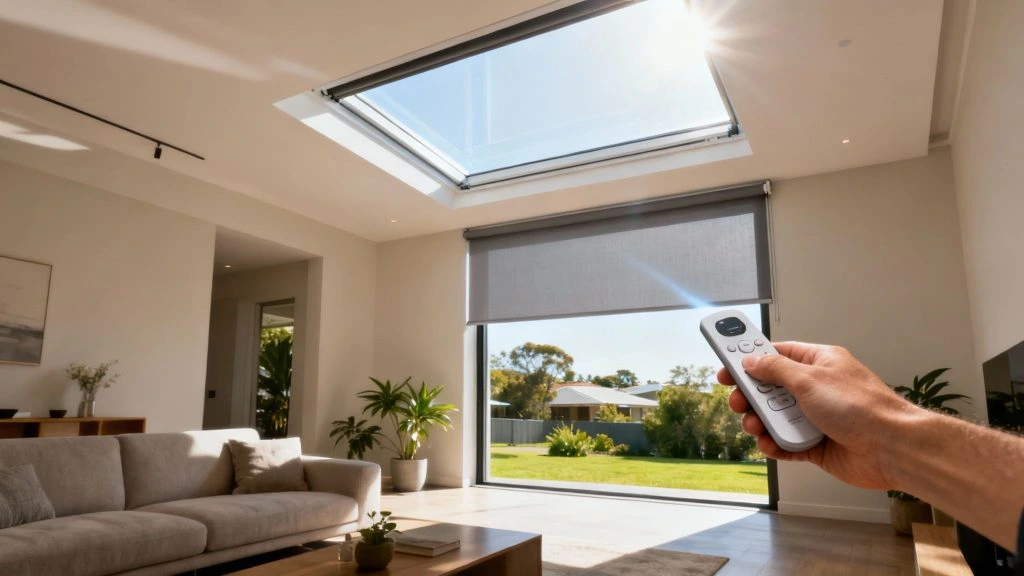
If you’re a Gold Coast homeowner looking to brighten up your place, a skylight is one of the smartest upgrades you can make. With all that incredible Queensland sunshine, these architectural gems can turn dark, forgotten corners into vibrant, light-filled spaces, completely changing the feel of your home and cutting down your reliance on the light switch.
Why Skylights and Gold Coast Homes Are a Perfect Match
Picture this: that dim hallway or gloomy living room, suddenly feeling open, airy, and connected to the beautiful day outside. On the Gold Coast, where sunny days are just a part of life, skylights aren’t a luxury—they’re a strategic move that fits the local lifestyle perfectly. Think of them as windows to the sky, designed to catch daylight and pour it right into the heart of your home.
It sounds simple, but the effect is huge. Natural light is a proven mood-booster, helping with focus and productivity, making your home a genuinely healthier and more pleasant place to be. By letting light flood in from above, skylights create a sense of spaciousness that can make even smaller rooms feel bigger and far more welcoming.
Embracing the Queensland Climate
The perks of installing a skylight go well beyond just making a room look good. They offer some really practical solutions for living comfortably in the Gold Coast’s subtropical climate.
- Slash Your Energy Bills: When your home is flooded with natural daylight, you can pretty much forget about flicking on electric lights during the day. That translates directly into real savings on your power bill.
- Brilliant Natural Ventilation: An opening skylight, especially a solar-powered one, is a game-changer. It lets hot, stale air rise and escape, creating a natural cooling flow. This is known as the ‘stack effect’, and it helps keep your home’s temperature comfortable while taking the pressure off your air-con during those warmer months.
- Stay Connected to the Outdoors: Skylights give you a constant visual link to the world outside, letting you enjoy the shifting light and weather from the comfort of your living room.
A well-placed skylight does more than just light up a room; it fundamentally changes how you experience your living space. It’s an investment in your home’s comfort, efficiency, and overall vibe.
A Quality Solution, Delivered Australia-Wide
When you’re ready to make the upgrade, getting a high-quality product is non-negotiable. Vivid Skylights offers a fantastic option, with premium double-glazed units built for performance and durability, even in our coastal environment. That double-glazing provides brilliant thermal insulation, helping to keep your home cooler in summer and warmer in winter.
And with Australia-wide delivery, getting your hands on top-tier skylights designed for our unique climate has never been easier. Whether you’re a keen DIYer or bringing in a professional installer, Vivid Skylights makes it simple to bring more natural light into your Gold Coast home with a product that’s truly built to last.
Choosing the Right Skylight for Your Queensland Home
Let’s be honest, not all skylights are created equal. The perfect choice for your Gold Coast property really comes down to your home’s unique layout and what you want to achieve. Getting it right means understanding the key differences between the main types available, so you strike the ideal balance of light, ventilation, and pure convenience.
Think of it like choosing a window. You wouldn’t put a tiny, fixed porthole where you need a large, breezy casement window that opens right up. It’s the same logic with skylights. The room below—whether it’s a dark hallway, a steamy kitchen, or a stuffy bedroom—is your best guide for picking the right tool for the job.
Let’s break down the most popular options to figure out which one is the best fit for your home.
The Three Main Skylight Varieties
Getting your head around the core function of each skylight type is the first step. Each one is designed for a different purpose and offers distinct perks for Gold Coast homeowners.
- Fixed Skylights: Think of these as a ‘picture window to the sky’. They are permanently sealed and designed for one simple, brilliant purpose: to let in the maximum amount of natural light. This makes them perfect for spots like hallways, walk-in robes, or living rooms where extra airflow isn’t the main goal.
- Electric Opening Skylights: For ‘push-button convenience,’ these are the answer. They open and close with a remote control, making them a game-changer for hard-to-reach places like vaulted ceilings. You get both light and airflow on demand. Many come with rain sensors that automatically close the unit at the first sign of a downpour—an absolute must-have for the Gold Coast’s sudden storms.
- Solar Powered Opening Skylights: This is the ‘smart lung’ for your home. It delivers all the convenience of an electric model but uses the sun’s power, so no wiring is needed. They are fantastic for actively managing your home’s climate, allowing hot, humid air to escape and giving your air-con a much-needed break.
This flowchart breaks down the core benefits that all skylights bring to the table.
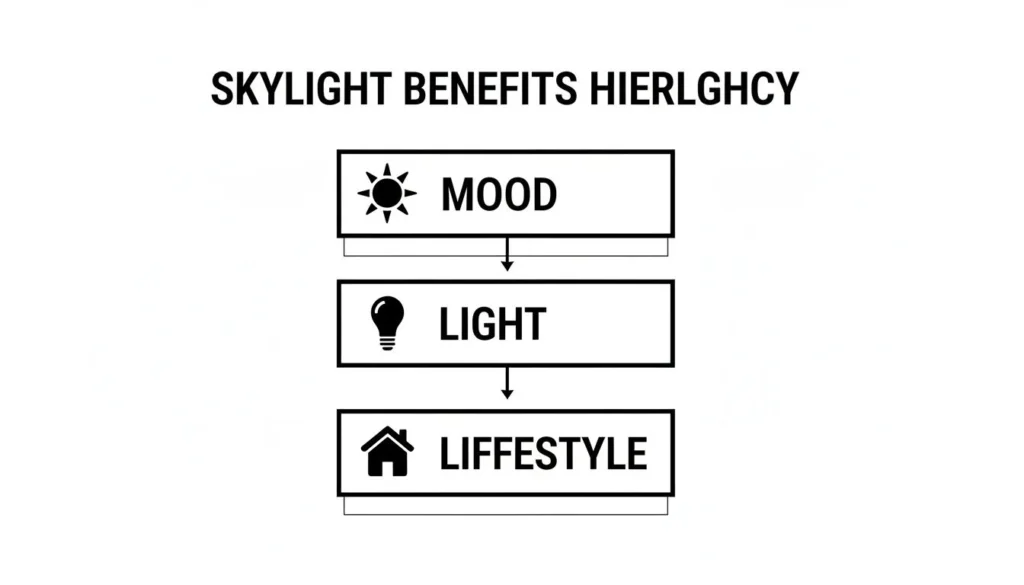
As you can see, it all starts with a better mood from more sunlight, which leads to better illumination and, ultimately, an improved lifestyle at home.
A Quick Guide to Skylight Types
Here’s a simple table to compare the main skylight types and find the best fit for your Gold Coast property.
| Skylight Type | Key Feature | Best For | Gold Coast Application |
|---|---|---|---|
| Fixed Skylight | Maximum light, no ventilation | Hallways, walk-in robes, living areas | Flooding dark, internal rooms with that beautiful Queensland sunshine. |
| Electric Opening Skylight | Remote-controlled ventilation | Vaulted ceilings, kitchens, bathrooms | Instantly airing out steam and cooking smells, especially with a rain sensor for storms. |
| Solar Powered Skylight | Eco-friendly, wire-free ventilation | Any room needing ventilation, eco-conscious renovations | Naturally cooling the home by letting hot air rise and escape, cutting down on A/C costs. |
Each type has its place, and the right one for you depends entirely on the room and your daily needs.
Features That Matter in the Gold Coast Climate
Beyond the basic type, a few key features are critical for making sure your skylight can handle Queensland’s subtropical environment. These aren’t just nice-to-haves; they are essential for comfort, longevity, and energy efficiency.
For a Gold Coast home, a skylight isn’t just about light; it’s a climate control tool. Choosing features like double-glazing and sturdy framing is vital for managing heat, humidity, and coastal weather conditions effectively.
Keep an eye out for these elements when you’re making your choice:
- Double-Glazing: Honestly, this is non-negotiable for Queensland. A double-glazed unit has two panes of glass with a sealed gap between them, acting as a powerful insulator. It dramatically cuts down on heat transfer, keeping your home cooler in summer and stopping warmth from escaping on those rare cool winter nights.
- Self-Cleaning Glass: The Gold Coast’s mix of sun, rain, and salty air can leave glass looking grimy in no time. Special self-cleaning coatings use sunlight to break down dirt, and when it rains, the water sheets off and washes the residue away. It’s a huge time-saver that keeps your view crystal clear.
- Robust Aluminium Frames: Salty coastal air is notoriously corrosive. Powder-coated aluminium frames offer top-notch resistance to rust and weather damage, ensuring your skylight stays structurally sound and looks sharp for years to come.
Trying to decide on the right model can feel a bit overwhelming, but it gets a lot easier when you focus on how you’ll use the space. You can explore a detailed comparison of the different types of skylights to find the perfect match for every room in your house. At the end of the day, the best skylight is the one that fits seamlessly into your life, making your home brighter, fresher, and more comfortable.
How Skylights Translate to Real Energy Savings
Sure, skylights look incredible, but they’re also one of the smartest financial decisions a Gold Coast homeowner can make. It’s an investment that works with our sunny climate, not against it, and the payoff comes in the form of lower energy bills and a more sustainable home. The secret is simple: daylighting.
By letting natural light pour in from above, skylights can make flicking on a light switch during the day a thing of the past. Think about how often you light up a dim hallway, kitchen, or bathroom out of habit. A skylight erases that need, immediately cutting down your power consumption and shrinking your home’s carbon footprint.
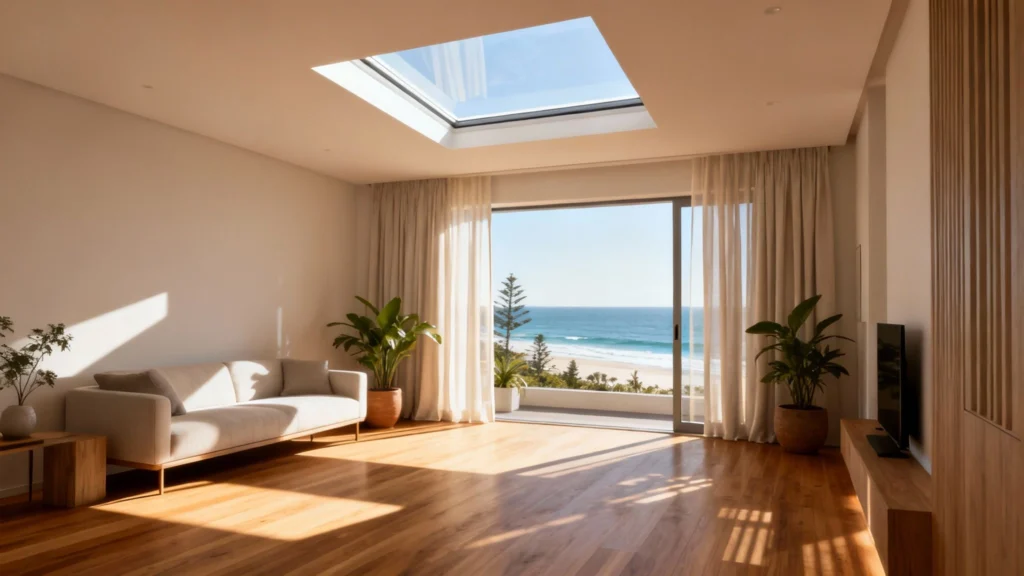
This isn’t just a tiny perk, either. It’s a significant, measurable saving that you’ll see on your power bill month after month. For many people, this is the number one reason they decide to go ahead with an installation.
The Double Benefit of Climate Control
On the Gold Coast, keeping your home comfortable is just as important as keeping it bright. Skylights give you a powerful, two-for-one advantage in creating a more energy-efficient space all year round.
- Summer Cooling: This is where ventilated skylights—especially solar-powered or electric models—really shine in our climate. They act like a chimney for your home, letting hot, stale air (which naturally rises) escape right through the roof. This ‘stack effect’ creates a natural cooling cycle, meaning you don’t have to lean on your power-hungry air conditioner nearly as much.
- Winter Warming: During those cooler months, a well-placed, north-facing skylight will catch the lower-angled winter sun. This creates passive solar gain, gently warming your home’s interior for free and taking the pressure off your heating system. Modern double-glazing is key here, as it works to trap that precious warmth inside.
This clever use of natural light and air makes your home more liveable while actively trimming your energy costs. You can dive deeper into how quality design maximises these benefits by reading about skylight energy efficiency.
A skylight transforms your roof into an active part of your home’s climate control system. It’s not just a window; it’s a strategic tool for harnessing natural energy for both lighting and temperature regulation.
Calculating the Return on Investment
For anyone living on the Gold Coast, our abundance of sunshine makes the financial case for skylights impossible to ignore. Ventilated models, in particular, deliver huge savings by slashing the need for artificial lighting and easing the load on air conditioners.
With the Gold Coast’s high number of annual sunshine hours, homeowners can often recoup their initial investment through energy savings within just 5-7 years.
This relatively short payback period makes skylights one of the most effective home upgrades for long-term value. While you’re at it, you can also explore other energy efficient home upgrades to see how you can stack up the savings.
At the end of the day, installing a skylight on the Gold Coast is far more than an aesthetic choice. It’s a practical, sustainable investment that pays for itself over time, making your home not just brighter, but a whole lot smarter.
Getting to Grips with Skylight Installation Costs on the Gold Coast
Alright, let’s talk brass tacks: the budget. Figuring out what a skylight project will actually cost is the first step for any homeowner, and it’s not just about the price of the skylight itself. The final figure is always a mix of two things: the product you choose and the hands-on work needed to get it in your roof.
The skylight unit is your starting point. A simple, fixed double-glazed skylight is naturally going to be easier on the wallet than a top-of-the-line, solar-powered opening model kitted out with rain sensors and a blockout blind. Size is a big factor, too. Larger units mean more materials and often more structural prep work, which you’ll see reflected in the price tag.
Key Factors That Influence the Installation Price
Once you’ve picked your skylight, the installation cost is the next piece of the puzzle. This is where the price can really vary from one Gold Coast home to the next. A straightforward job on a single-storey home with a low-pitch roof will cost a lot less than a complex installation on a steep, two-storey tiled roof.
Here are the main things that will shape the labour costs:
- Roof Pitch and Material: Is your roof steep? That makes it trickier and slower for installers to work on. Likewise, materials like terracotta tiles demand a lot more care and specialised know-how than a standard metal roof.
- Accessibility: If your roof is just plain hard to get to, it will add time and might even require special equipment, bumping up the cost.
- Structural Work: Sometimes, a roof truss or rafter is right where you want the skylight. Cutting and reinforcing it is a job for a qualified pro, and that will add to the final bill.
- Internal Finishes: The quote usually covers building the light shaft and finishing the plasterboard and paintwork inside. A longer, more complex shaft will naturally affect the price.
Professional Installation Versus DIY
The big question for many Gold Coast homeowners is whether to bring in a pro or give it a go themselves. A professional installer brings years of experience, all the right gear, and crucial insurance. They ensure the job is done right and, most importantly, is 100% watertight.
The real value of a professional installer isn’t just speed; it’s the peace of mind that comes from knowing your roof’s integrity is protected against leaks and structural issues—a must in Queensland’s stormy weather.
A DIY approach can definitely save you money on labour, but don’t underestimate it. It’s a serious undertaking that requires real confidence in roofing, cutting, framing, and waterproofing. For anyone keen to take on the project, choosing a product designed for easy fitting is key. Vivid Skylights, for example, includes the essential flashing kits with every unit, which simplifies one of the most critical steps. For a deeper look at the numbers, check out this detailed guide on skylight installation cost.
What to Realistically Budget on the Gold Coast
So, what should you expect to set aside? According to local service data, a standard light fitting job on the Gold Coast has a median rate of about $245. But a full skylight installation is a much bigger deal. For more complex jobs—like fitting a complete skylight system with flashing onto a tiled roof on a double-storey house—labour alone can range from $900 to over $2,400. The final price depends on any structural changes needed, as the work has to be perfect to ensure a waterproof seal and comply with local building codes. You can see real-world examples on local job platforms like Airtasker.
The best advice? Always get a few detailed quotes from reputable local installers. It’s the only way to understand the full scope of work for your specific home and make sure there are no nasty surprises down the track.
Right, before you even think about climbing a ladder, let’s talk about the less glamorous but absolutely essential side of things: council rules and what your roof can handle. Getting this groundwork done first ensures your new skylight is not just a beautiful addition, but a fully compliant and structurally sound one. Trust me, a bit of due diligence now saves a world of headaches later.
Sorting Out Council Rules
Navigating local regulations on the Gold Coast doesn’t have to be a nightmare. For most homeowners, putting in a skylight is considered minor building work. This often means you can skip the formal council approval process, especially if you’re not cutting into major roof trusses or making significant structural changes.
But—and this is a big but—it’s not a one-size-fits-all situation. The rules can shift depending on your property’s zoning, if you’re in a heritage area, or if you’re part of a body corporate. The golden rule is simple: always check with the Gold Coast City Council before you start. A quick phone call or a poke around their website will give you the final word and keep you out of trouble.
Getting to Know Your Roof Pitch
Beyond the paperwork, the physical reality of your roof plays a massive part in how well this project will go. The most critical factor? Your roof pitch. It’s just a fancy term for how steep your roof is. Think of a nearly flat roof on a modern home versus the steep angle of a classic A-frame house.
That angle is everything because it determines how rainwater sheds. Slapping a skylight designed for a steep roof onto a nearly flat one is practically an invitation for leaks. That’s why skylights and their flashing kits (the weatherproof seals) are built for specific pitch ranges.
- Low-Pitch Roofs (2°-15°): These need special flashing kits designed to stop water from pooling around the edges.
- Standard-Pitch Roofs (15°-60°): This is the sweet spot for most homes, and the majority of standard flashing kits are made for these angles.
Matching the right skylight and flashing to your roof’s pitch isn’t just a suggestion; it’s non-negotiable for a watertight installation that will last for years to come.
Sizing and Placement: Finding the Sweet Spot
Once you’ve got the technical stuff sorted, the real fun begins—deciding on the size and location for your new window to the sky. This is where you get to blend function with style to create the perfect atmosphere. Nailing this is the key to a room that feels bright and airy, not like a greenhouse.
A great rule of thumb is to keep the skylight’s glass area to no more than 5% of the room’s floor area. This ratio usually brings in plenty of beautiful daylight without the overwhelming heat or glare, which is a real concern under the bright Queensland sun.
Think about how you use the room. That will tell you where the light should go. For example:
- In a Kitchen: Popping a skylight over the island bench or your main prep space is brilliant for task lighting.
- In a Living Room: A centrally located skylight can be a stunning architectural feature, washing the whole space in soft, balanced light.
- In a Bedroom: Maybe don’t put it directly over your bed, unless you enjoy a 5 am wake-up call from the sun.
Also, consider the sun’s daily journey. A north-facing skylight delivers consistent, gentle light all day. An east-facing one catches that lovely morning sun, while a west-facing one will bring in the intense afternoon heat—great for some rooms, a potential oven for others. A little thought about your daily routine will help you find the absolute perfect spot.
A Simple Checklist to Nail Your Skylight Project
Feeling ready to bring that beautiful Gold Coast light into your home? This final checklist pulls everything we’ve talked about into a straightforward, actionable guide. Think of it as your final sanity check before you dive in.
Walking through these questions will help you sidestep common mistakes and make a choice you’ll love for years to come. It’s a bit like planning your home renovation; a structured approach from the start makes all the difference.
Your Skylight Goals and Budget
First up, let’s get crystal clear on what you want to achieve and what you’re willing to spend. Getting this right from the beginning will instantly narrow down your choices and save you a ton of time.
- What’s my main goal? Are you chasing that bright, airy feel with maximum natural light? Or is it more about letting a bit of that coastal breeze flow through? A fixed skylight is a fantastic, cost-effective choice for light alone, but you’ll need an opening model to get that much-needed ventilation.
- What’s my real-world budget? Remember to factor in both the skylight unit itself and the cost of professional installation. Knowing this total figure will help you decide whether to splash out on a premium solar-powered model or go for a classic, budget-friendly fixed skylight.
The Technical and Practical Checks
Alright, now for the nitty-gritty. This is where you double-check your home’s specifics and any local rules you need to play by. A little due diligence here ensures a smooth, headache-free installation.
- Is my roof a good fit? You’ll need to know your roof’s pitch (is it steep or nearly flat?) and what it’s made of (tile or metal). This is super important because it determines which skylight and flashing kit you’ll need for a guaranteed leak-proof finish.
- Do I need a nod from the council? Most standard skylight installations fly under the radar, but it never hurts to check. A quick call to the Gold Coast City Council can give you peace of mind and prevent any regulatory surprises down the road.
At the end of the day, the best decision balances your dream outcome with the practical realities of your home and budget. Use this checklist to find that sweet spot and invest in a solution that’s genuinely right for you.
Installation and The Final Call
Last but not least, how are you going to get this thing installed? Your answer will depend on your skills, time, and how comfortable you are working up on a roof.
- Should I bring in a pro or DIY? Hiring a professional installer is the surest way to get a perfectly watertight finish. They handle all the tricky bits. But, if you’re a confident DIYer, products like Vivid Skylights are designed to make it easier, with flashing kits included for a more straightforward fitting.
Answering these questions will put you on the fast track to the perfect skylight, transforming your home with beautiful, functional daylight.
Got Questions About Gold Coast Skylights? We’ve Got Answers
Even with all the info, you probably still have a few questions rattling around. It’s a big decision, after all. We get it. To make sure you’re feeling 100% confident, we’ve pulled together the most common things Gold Coast homeowners ask us.
Do I Need Council Approval for a Skylight on the Gold Coast?
This is easily the question we hear most often. The short answer? For most standard installations, you probably won’t. Putting in a skylight is usually seen as minor building work, especially when it doesn’t involve cutting into major roof structures like trusses.
But—and this is a big but—it’s never a one-size-fits-all situation. Your property might have specific rules, like heritage overlays, tricky zoning, or body corporate by-laws that change the game. The only way to be certain is to check directly with the Gold Coast City Council before a single tool comes out. A quick phone call can save you a world of headaches and ensures your project is above board from day one.
How Do Modern Skylights Handle a Queensland Storm?
Living on the Gold Coast means you know what a real storm looks like. So, it’s natural to wonder if a skylight is just a weak spot waiting to happen. Thankfully, high-quality modern skylights are built tough, specifically to handle the wild weather a Queensland storm season can throw at them. Reputable brands are tested against strict Australian Standards, giving you proper peace of mind when the rain starts bucketing down.
It all comes down to a few key features:
- Built-Tough Frames: We’re talking strong, powder-coated aluminium frames engineered to take a beating from high winds without flexing or failing.
- Laminated Glass: The double-glazed units you’ll find in quality skylights almost always use laminated glass. It’s incredibly resilient and holds together even if it cracks, so water isn’t getting in.
- Proper Flashing: This is your number one defence against leaks. A correctly installed flashing kit creates a bulletproof, watertight seal between the skylight and your roof.
When it’s installed by a pro, a good skylight is every bit as secure and waterproof as the rest of your roof.
Can I Put a Blockout Blind on My Skylight?
You absolutely can. In fact, it’s one of the most popular and practical upgrades you can make. Adding a blind gives you total control over the light, which is perfect for bedrooms, media rooms, or anywhere you need to dial down that brilliant Queensland sun.
An integrated blind is the perfect partner for your skylight. It gives you the power to switch between glorious daylight, soft filtered light, or complete darkness in an instant.
Solar-powered blockout blinds are a brilliant option here. They work with a simple remote, and because they have their own little solar panel, you don’t need an electrician to run any messy wiring through your ceiling. It’s a clean, clever solution for total light control.
Ready to bring beautiful, natural light into your home? The team at Vivid Skylights offers premium double-glazed units built for the Australian climate, and we deliver right across the Gold Coast and nationwide. Check out the range and find the perfect fit for your home at https://vividskylights.com.au.