


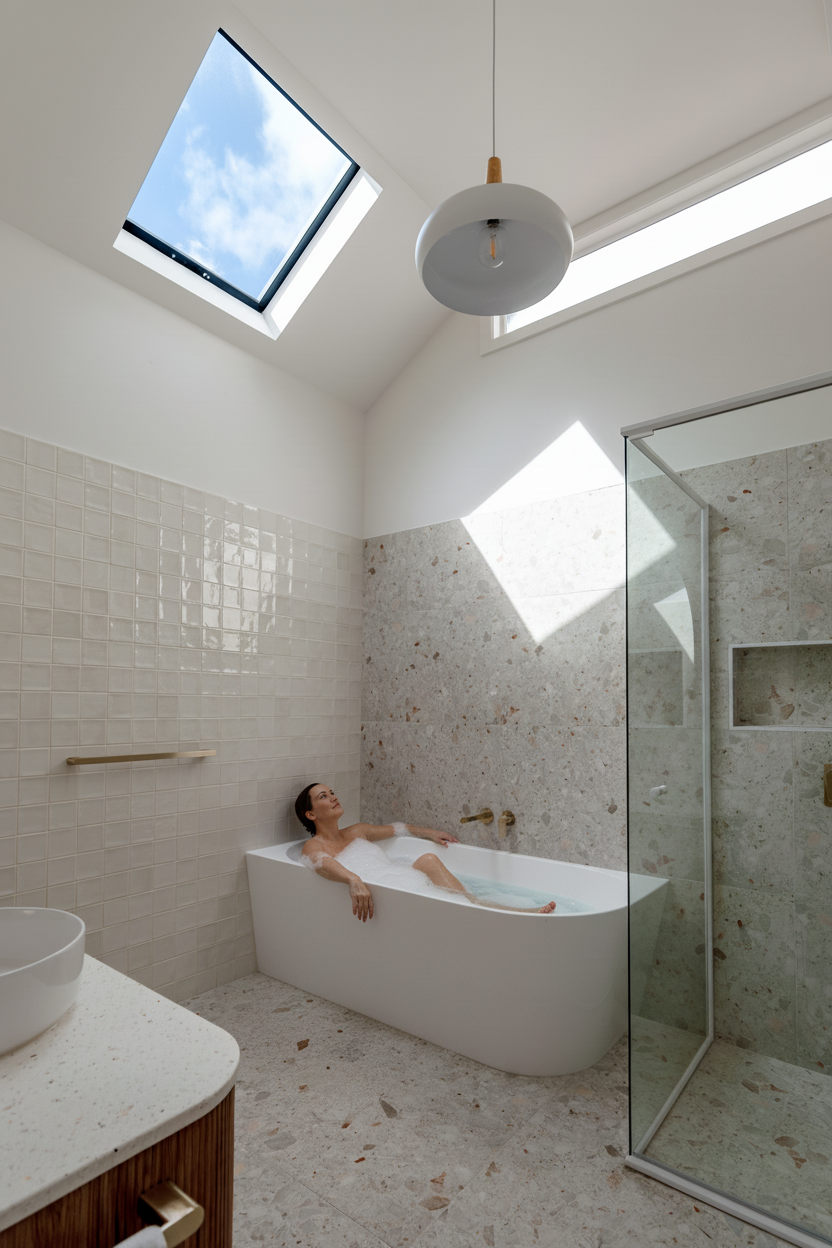
Choosing the right Melbourne skylights for your home is the secret to unlocking brighter, more inviting living spaces. From a simple fixed model that bathes a room in sunlight to an electric version offering fresh air at the touch of a button, the best fit comes down to your specific needs, the room’s layout, and your budget.
Your Quick Guide to Melbourne Skylights
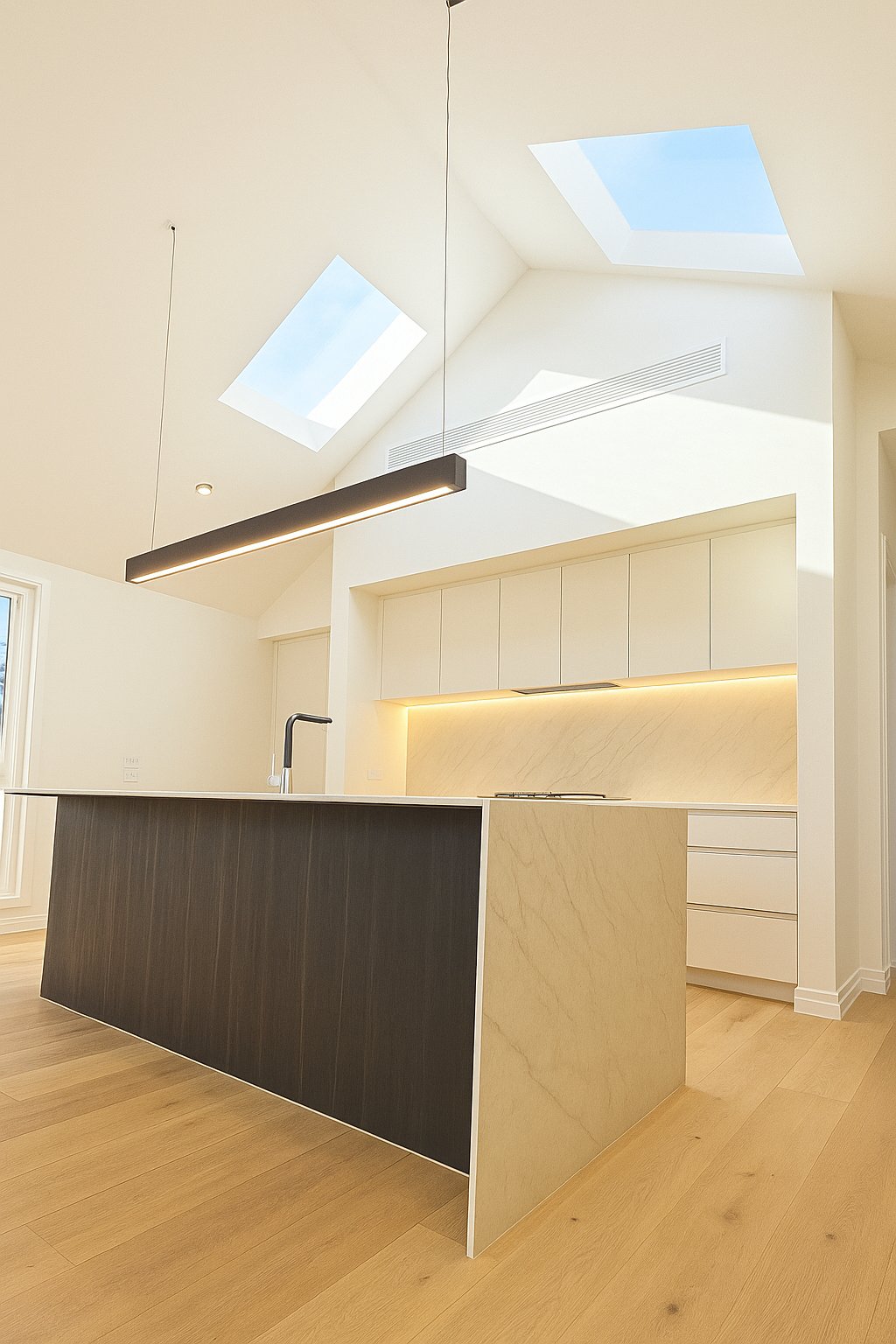
So, you’re thinking about a skylight for your Melbourne home? Great choice. A skylight is so much more than just a window for your roof; it’s a design feature that can completely reshape the feel of a room. It’s about swapping those dreary, forgotten corners for sunlit nooks and cutting down your reliance on artificial lighting day in and day out.
And in a city known for its “four seasons in one day,” modern skylights are built to perform all year round. They offer fantastic thermal efficiency, helping keep your home comfortable whether it’s a chilly winter morning or a blistering summer afternoon. This guide will walk you through the main options out there, helping you make a smart decision that boosts both your home’s look and its energy efficiency.
Understanding Your Options
Getting your head around the different types of skylights is the first—and most important—step. Each style comes with its own set of benefits tailored to different rooms and lifestyles. For instance, a simple fixed skylight might be perfect for a hallway that just needs more light, while an opening skylight can be a game-changer for a stuffy bathroom or kitchen that needs fresh air.
To make things simple, let’s break down the most popular types of Melbourne skylights:
Fixed Skylights: These are the simplest of the lot. They don’t open; their one and only job is to let in natural light. They’re a brilliant, cost-effective way to illuminate areas where ventilation isn’t a concern, like living rooms, hallways, or stairwells.
Manual Opening Skylights: Offering the best of both worlds—light and airflow—these are operated with a manual winder. They’re an excellent choice for rooms you can easily reach, like bedrooms or home offices, giving you direct control over ventilation.
Electric Opening Skylights: For the ultimate in convenience, these skylights open and close with a remote control or wall switch. Many, like ours at Vivid Skylights, come with clever rain sensors that automatically shut the skylight at the first sign of rain—absolutely perfect for Melbourne’s unpredictable downpours.
Solar-Powered Skylights: These work just like electric models but run on a small, built-in solar panel. This makes them incredibly energy-efficient and often easier to install, as there’s no need to run wiring through your walls and ceiling.
Melbourne Skylight Options at a Glance
To help you compare these options side-by-side, we’ve put together a quick summary table. Think of it as your cheat sheet for choosing the perfect skylight.
| Skylight Type | Primary Function | Best For | Key Feature |
|---|---|---|---|
| Fixed | Maximise natural light | Hallways, living rooms, dark spaces | Cost-effective and secure |
| Manual Opening | Light and controlled ventilation | Bathrooms, kitchens, easily accessible rooms | Affordable airflow control |
| Electric Opening | Light and automated ventilation | High ceilings, hard-to-reach areas | Remote operation and rain sensors |
| Solar-Powered | Light and eco-friendly ventilation | Any room seeking an off-grid solution | Energy-efficient with no wiring needed |
This table should give you a solid starting point. By matching the function and features to your specific room, you’ll be well on your way to finding the ideal solution to brighten your home.
Why Natural Light Is a Game Changer for Melbourne Homes
Bringing more natural light into your home does so much more than just brighten a dark corner—it completely changes how a space feels and works. It’s the difference between a room that just sits there and one that feels alive, breathing energy and warmth into your day. This is especially true in Melbourne, where a beautifully lit interior can be the perfect escape from one of our classic overcast days.
Imagine waking up not to the harsh flick of a switch, but to the soft, gentle glow of the sunrise filtering down from above. That simple shift immediately cuts your reliance on artificial lighting, which you’ll see reflected in your power bills. Skylights are your own personal, sustainable light source, working tirelessly from dawn till dusk.
Beyond just the look and feel, slashing your use of artificial lights means lower electricity bills. For some broader energy efficiency tips that work hand-in-hand with natural lighting, it’s always worth exploring other ways to make your home more efficient.
Boosting Your Well-being and Productivity
The link between daylight and our well-being is undeniable. Getting enough natural light helps keep our circadian rhythms in check, which is the key to a healthy sleep-wake cycle. A sun-filled home often leads to better sleep, a brighter mood, and even sharper focus.
For anyone working from home, a naturally lit space is a productivity powerhouse. Studies have consistently shown that daylight in workspaces helps cut down on eye strain and headaches, creating a much more comfortable and effective setup. A Melbourne skylight can transform a gloomy spare room into an inspiring home office or a vibrant creative studio.
A skylight doesn’t just add light; it adds life. It creates a dynamic environment where the quality of light changes throughout the day, connecting you with the natural world outside and turning your home into a more serene and calming sanctuary.
The psychological perks are just as powerful. Sunlight helps our bodies produce serotonin, that fantastic hormone that lifts our mood and helps us feel calm and focused. Flooding your living areas with daylight helps create a more positive and welcoming atmosphere for the whole family.
A Smart Financial Investment
The benefits of installing Melbourne skylights also make perfect financial sense, giving you both immediate savings and long-term value. In Melbourne’s competitive housing market, features that boost energy efficiency and lifestyle appeal are always in high demand.
Skylights have become a real game-changer here, fitting perfectly with Victoria’s push towards more sustainable homes. For Melbourne homeowners, installing skylights can cut daytime electricity use by a significant 15-20%. This is a huge deal in a city where power bills can really add up. On top of that, real estate data shows that homes with great natural light often sell for 5-10% more, making skylights a savvy investment.
This investment is also future-proofed by modern tech. Advanced glazing and smart design mean you get all the rewards without any of the old drawbacks.
Year-Round Comfort with Modern Technology
A common worry is whether a skylight will turn your home into an oven in summer or an icebox in winter. Thankfully, today’s skylights are engineered specifically for Melbourne’s four-seasons-in-one-day climate, delivering outstanding thermal performance all year round.
Double-Glazing: Every single Vivid Skylights unit comes with double-glazing as standard. This creates an insulating pocket of air between two panes of glass, massively reducing heat transfer.
Low-E Coatings: A microscopic, transparent metallic coating is applied to the glass. This clever layer reflects heat, keeping it out during summer and trapping warmth inside during winter.
Insulated Frames: We use high-quality, powder-coated aluminium frames designed to stop heat loss and prevent condensation, ensuring the whole unit works efficiently.
This powerful combination means your home stays comfortable, no matter what the weather is doing outside. You can enjoy all the bright, uplifting benefits of natural light without ever having to compromise on your home’s energy efficiency. To get a deeper dive into these features, you can explore the many benefits of skylights in our detailed article.
Choosing the Right Skylight for Your Melbourne Property
Picking the right skylight for your home in Melbourne is about more than just punching a hole in the roof. It’s a decision that needs to match your home’s design, your lifestyle, and the city’s notoriously fickle weather. Think of it like choosing the perfect lens for a camera—each one captures the light in a unique way and serves a specific purpose.
From a simple, fixed skylight designed to drench a dim hallway in sunshine to a smart electric model that lets your kitchen breathe, every option solves a different problem. Your choice will shape not just how bright your room feels, but also its airflow, temperature, and day-to-day liveability.
Let’s walk through the main types of Melbourne skylights to help you figure out what makes the most sense for your space, so you can make a choice you’ll be happy with for years to come.
Fixed Skylights: The Purest Form of Natural Light
A fixed skylight is all about one thing: letting in as much natural light as possible. It’s a clean, simple solution. Its only job is to provide a clear view of the sky and fill the room below with sunlight.
Because it doesn’t open, you get a completely secure, weatherproof seal. This makes it a fantastic, low-maintenance option for any area where extra ventilation isn’t the top priority.
Fixed skylights are perfect for:
Living Rooms and Hallways: Brighten up the core of your home and those dark corridors that don’t need extra airflow.
Stairwells: Safely and dramatically light up multi-level homes, cutting down the need to flick on a light every time you go up or down.
Rooms with High Ceilings: Capture sunlight in those grand, vaulted spaces where an opening mechanism would be impossible to reach.
They are the reliable workhorses of the skylight world—cost-effective, dependable, and brilliant at what they do.
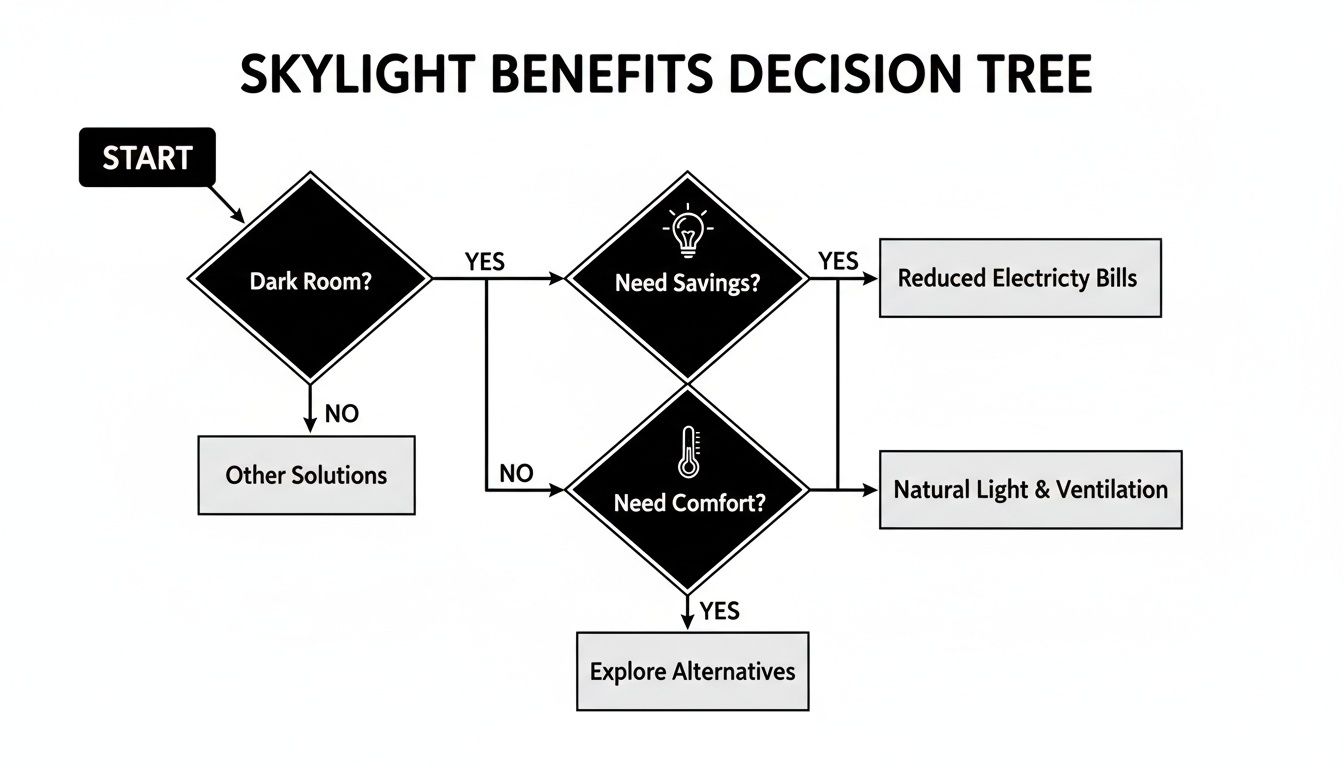
This decision tree helps you map out your needs and connect them to the right skylight benefits.
Perfect for kitchens and bathrooms. Lets you vent steam and odours while drawing in fresh air, which helps manage moisture and prevent mould. |
| Rain Sensor | Standard on Electric & Solar models | Automatically closes your skylight at the first sign of rain, so you can leave it open for ventilation without worrying about sudden downpours. |
This table shows that the right features aren’t just about convenience—they’re about making your home more comfortable, energy-efficient, and suited to our local climate.
For a complete rundown of what’s available, you can learn more about the different types of skylights and their specific features. By understanding these core components—type, operation, and glazing—you’ll be able to confidently choose the perfect skylight to transform your home.
Planning Your Skylight Placement and Sizing
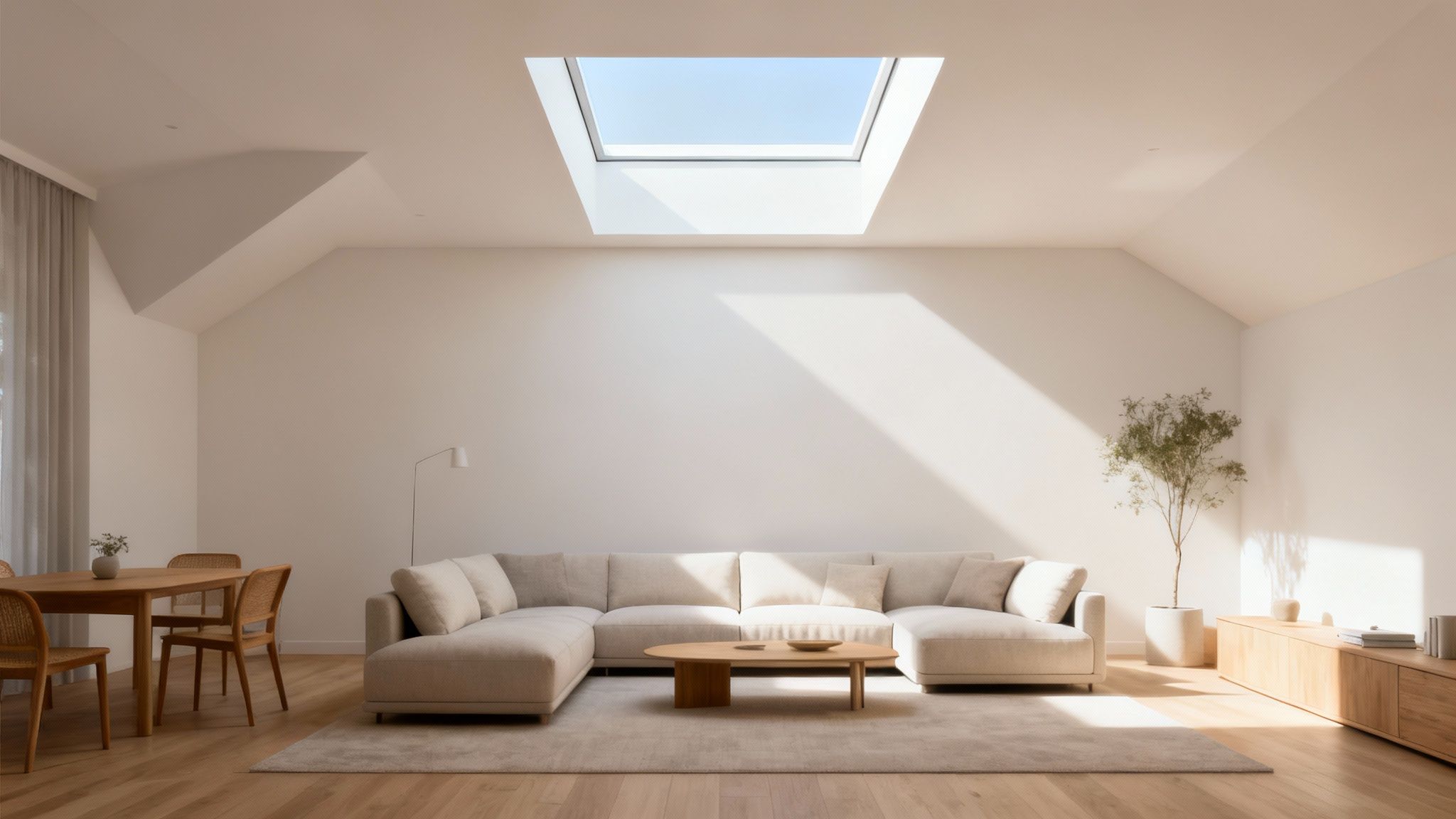
Choosing the perfect skylight is only half the battle. Where you decide to put it is just as crucial for achieving that beautiful, sun-drenched effect you’re after. The placement and size of your Melbourne skylights will shape not just the amount of light, but its quality, how it moves through the room during the day, and ultimately, the entire atmosphere of the space.
Think of a skylight as a paintbrush and the sun as your paint. Get the placement right, and you can strategically brighten up a dark corner, create a dramatic focal point over a kitchen island, or wash an entire room in soft, ambient light. But poor placement can lead to annoying glare on your TV screen or completely miss the areas that needed light in the first place.
This section will walk you through the key things to consider, from your roof’s direction to your room’s purpose, helping you map out a plan that really delivers.
Finding the Sweet Spot: Roof Orientation and Light Quality
The direction your roof faces plays a massive role in the kind of light your skylight will capture. For Melbourne homes, getting this right is the key to controlling both the mood and temperature of your rooms. Each orientation has its own unique lighting personality.
North-Facing Skylights: This is usually the sweet spot here in Australia. A north-facing skylight gives you consistent, soft, and indirect light all day long. It’s a great way to avoid the harsh glare and heat that comes with direct sun, making it perfect for living areas, kitchens, and home offices where you want balanced, usable light.
South-Facing Skylights: These capture intense, direct sun, especially during the middle of the day in winter, which can be fantastic for passively heating your home. The flip side is significant heat gain in summer, so pairing a south-facing skylight with a block-out blind is a very smart move.
East-Facing Skylights: An absolute dream for morning people. An east-facing skylight will flood your room with bright, cheerful light as the sun comes up. It’s a brilliant option for bedrooms and breakfast nooks, helping you kickstart the day with a natural energy boost.
West-Facing Skylights: These catch that strong, warm afternoon sun. While it can create stunning light late in the day, it can also bring a lot of heat with it. Using high-performance glazing and having blinds ready is pretty much essential here.
How to Calculate the Right Skylight Size
Getting the size right is a bit of a balancing act. You want enough light to make a difference, but not so much that it becomes overwhelming. If it’s too small, the effect will be lost. Too large, and you risk turning your living room into a greenhouse. Thankfully, there are some simple rules of thumb to get you started.
A widely accepted guideline is that the skylight’s glass area should be roughly 5% of the room’s floor area. If you have a room with higher, vaulted ceilings, you might want to bump that up to around 10% to make sure enough light actually reaches the floor.
For example, a living room that is 5 metres by 6 metres has a floor area of 30 square metres. Going by the 5% rule, you’d be looking for a skylight with a glass area of about 1.5 square metres (30 x 0.05). This gives you a solid starting point for picking a model.
Of course, this is just a guideline. A room with dark walls and floors will soak up more light and could probably handle a larger skylight, whereas a bright, white room might only need a smaller one. You also need to think about what the room is for – a creative studio needs much more light than a cosy media room.
Melbourne-Specific Planning Considerations
Planning for Melbourne skylights means you also have to think about some local factors. Our city’s architecture is incredibly diverse, from the classic Victorian terraces in Fitzroy to modern builds in the outer suburbs, and each presents its own challenges and opportunities.
A big one to watch out for is heritage overlays, which are common across many Melbourne councils. If your home is in a heritage-protected area, there might be restrictions on any visible changes to your roofline. It’s always best to have a chat with your local council to see what the rules are before you set your plans in stone.
On top of that, Melbourne’s roofs come in all shapes and materials—from classic terracotta tiles to modern metal sheeting. Each type requires a specific installation technique. Make sure your chosen skylight and installer are a good match for your roof material to guarantee a perfect, leak-free fit that can handle our famously unpredictable weather.
Deciding Between DIY and Professional Installation
So, you’ve picked out the perfect skylight. The next big question is, who’s going to get it up on the roof? Are you planning to roll up your sleeves for a weekend project, or is it a job for the professionals? This decision is about more than just saving a few dollars; it’s about safety, the quality of the finish, and your long-term peace of mind.
For plenty of Melbourne homeowners, especially those handy on the tools, a DIY installation has its appeal. There’s a real sense of accomplishment that comes with it, not to mention having direct control over the project. But installing a skylight is a serious bit of construction—it’s a lot more involved than just cutting a hole in the ceiling.
It’s a multi-stage job that means working at heights, cutting through roofing materials and sometimes structural supports, and then making sure the whole thing is absolutely watertight. Get any of that wrong, and you could be looking at persistent leaks or even costly structural damage down the line. Let’s break it down so you can make the right call for your home and your skill level.
The Reality of a DIY Skylight Installation
Taking on a skylight installation yourself requires a very specific skill set and a fair bit of confidence. You need to be comfortable not only with general carpentry but also with roofing work, which is a specialised trade for a reason.
Before you even think about starting, have an honest chat with yourself. Have you worked on a roof before? Are you certain you can identify and cut through rafters without compromising your home’s structure? And critically, do you have all the proper safety gear for working at heights?
Here’s a quick look at what’s really involved:
Structural Work: This means cutting an opening in your roof and ceiling. That often involves cutting through rafters and plasterboard, then correctly framing the new opening to maintain structural support.
Roofing and Flashing: This is the make-or-break step for preventing leaks. You’ll need to install the flashing kit perfectly, integrating it with your specific roof material—be it tiles, metal sheeting, or something else—to create a completely waterproof seal.
Interior Finishing: Once the skylight is secure, the job’s not done. You’ll need to build the light well or shaft, insulate it properly, and then finish the plasterboard and paint inside to make it look like it was always there.
A DIY installation can be incredibly rewarding, but the risks are real. A tiny mistake in the flashing or sealing can go unnoticed for months, slowly letting water damage your roof timbers, insulation, and ceiling. Suddenly, that cost-saving project has turned into a very expensive repair job.
Why Professional Installation Offers Peace of Mind
Choosing a professional to install your Melbourne skylights is really an investment in quality, safety, and assurance. A seasoned installer brings years of experience, all the right tools, and an expert eye for handling the unique challenges of different Melbourne roof types.
When you go down this path, it’s a great idea to chat with experienced local builders who know Melbourne’s building codes inside and out. They handle everything from the initial structural check to the final interior paint touch-ups, making sure every single step is done to the highest standard.
But perhaps the biggest win is the warranty. A professional job is usually backed by a workmanship guarantee. When you pair that with a product warranty (like our 10-year leak-free promise), you’re completely covered. If anything goes wrong, you have a clear point of contact to get it sorted—something a DIY project just can’t offer.
For property developers and builders, professional installation isn’t even a question. Using models like Vivid Skylights’ electric opening skylights ensures you’re meeting the Building Code of Australia (BCA) for thermal performance. While 30-50% of project costs can be tied to installation labour, the return on investment comes quickly through 10-15% energy savings—a crucial factor as Melbourne’s commercial operational costs continue to rise.
Understanding Skylight Costs, Warranties, and Maintenance
When you’re thinking about adding a skylight, it’s easy to focus on the upfront price. But a skylight is a long-term addition to your home, so the real value comes from looking at the bigger picture. This means getting a clear handle on the total costs, understanding what a good warranty looks like, and knowing the simple upkeep needed to keep your Melbourne skylights shining for decades.
Getting this right from the start means your new source of natural light is an investment for the life of your home, not just for today.
Breaking Down the Costs
The final figure on your quote is a blend of a few key things: the skylight unit itself, the cost of professional installation, and any extra features you might want, like block-out blinds or clever rain sensors.
Of course, the total cost will shift depending on your specific Melbourne home. A straightforward fixed skylight on a low-pitched, easily accessible tiled roof will be a lot kinder on the wallet than a large, electric-opening model installed on a steep, complex roof that needs extra structural work.
Here’s what goes into the final price:
The Skylight Unit: The size and type—whether it’s fixed, manually opens, or is fully electric—are the main drivers here.
Installation Labour: This covers the time, skill, and safety gear for the roofer or carpenter. The complexity and height of your roof will influence this part of the cost.
Optional Extras: Things like motorised blinds, fly screens, or solar-powered openers will add to the initial cost, but they also add a huge amount of comfort and convenience.
To get a better idea of what your project might cost, we’ve put together a detailed guide on how much a skylight costs that breaks it down even further.
The Importance of a Rock-Solid Warranty
A warranty isn’t just a document; it’s your safety net against Melbourne’s famously unpredictable weather. A strong warranty is a manufacturer’s vote of confidence in their own product—its materials, its design, and its ability to stand up to the elements without failing. Most importantly, it protects you from leaks.
When you’re comparing your options, a 10-year leak-free warranty should be a deal-breaker. This guarantee means that if any problems pop up because of a manufacturing fault, you’re completely covered. It saves you from unexpected, costly repairs down the track and protects the very structure of your home.
Simple Maintenance for Lasting Performance
Modern Melbourne skylights are built to be incredibly low-maintenance. The good news is, keeping them in top shape requires very little effort from you. A few simple habits will ensure they keep flooding your home with light and performing efficiently for years to come.
Vivid Skylights units, for example, feature self-cleaning glass. There’s a special coating on the outside that uses the sun’s UV rays to break down organic dirt and grime. The next time it rains, it all just washes away. All you really need to do is give the seals and flashing a quick look from the ground once a year to make sure everything looks right. That’s it—years of beautiful, effortless natural light.
Your Melbourne Skylight Questions Answered
Even after getting all the details, it’s natural to have a few questions rattling around. It’s a big decision for your home, after all. To help you feel completely confident, we’ve put together answers to some of the most common queries we get from Melbourne homeowners just like you.
Do Skylights Make My Home Hotter in Summer?
Not the good ones! This is a common worry, but modern high-performance skylights are cleverly designed with Low-E coatings. Think of it as a pair of high-tech sunglasses for your roof.
This special coating reflects a huge chunk of the sun’s heat while still letting all that beautiful visible light pour in. It helps keep your home cooler in summer and, as a bonus, traps warmth inside during winter, improving your overall energy efficiency. Add an optional block-out blind, and you’ve got total control over both light and temperature.
Are Skylights Prone to Leaking?
This is a persistent myth, usually stemming from bad experiences with old, poorly made products from decades ago. Things have changed. A lot. Today’s quality skylights are engineered with incredibly robust flashing systems, custom-made for specific Melbourne roof types like tile or metal.
When installed correctly by a professional and backed by a solid warranty, like a 10-year leak-free guarantee, you can be sure your skylight will stand up to Melbourne’s wildest downpours without a single drop getting through.
What Happens if It Hails in Melbourne?
We all know how quickly a Melbourne storm can roll in. Quality skylights are built tough for exactly that reason. The double-glazed glass in premium units is toughened for high impact resistance and is put through its paces to meet strict Australian Standards.
While no glass is completely indestructible against the most extreme, once-in-a-generation hailstorms, modern skylights are specifically designed to handle the typical hail we see around Melbourne without any issues.
This built-in resilience means you can enjoy the light without worrying about the weather.
Can I Install a Skylight on a Flat Roof?
Yes, absolutely. While older skylights were often limited to pitched roofs, there are now specialised models and installation methods perfect for flat or low-pitch roofs.
These systems use custom flashings and a raised ‘curb’ that elevates the skylight slightly. This simple but effective design ensures water runs off properly and never pools on the glass. It’s a fantastic solution for many modern Melbourne homes, extensions, and architectural builds, meaning no roof has to miss out on the magic of natural light.
Ready to swap a dark, gloomy room for a bright, inviting space? Explore the range of high-performance, double-glazed options at Vivid Skylights and find the perfect fit for your Melbourne home. Discover our full range of Melbourne skylights today.