

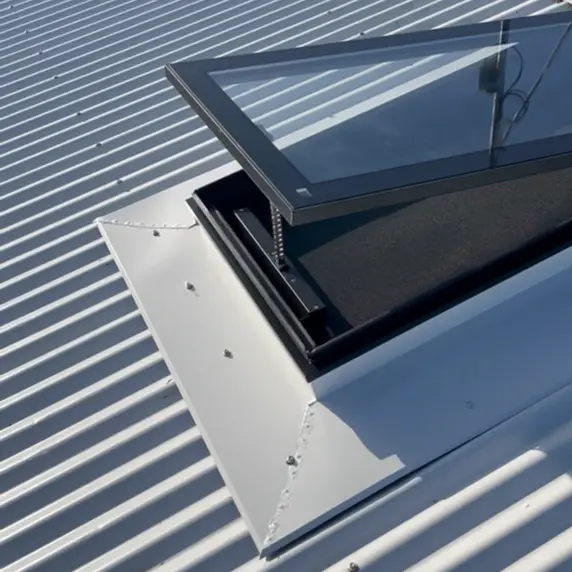
You want more daylight, but you don't want to turn your upstairs hallway, kitchen, or living room into a hot box by lunchtime. That's the Brisbane skylight dilemma. Plenty of homeowners love the idea of natural light, then hesitate because they've seen old acrylic domes make rooms feel harsher, hotter, and harder to cool.
That concern is valid in Queensland. A skylight can improve a home beautifully, or it can behave like a clear patch in the roof that lets heat pile in and comfort leak out. The difference usually comes down to glazing quality, roof integration, and whether the unit is designed for our climate instead of merely fitted into it.
The local lesson is obvious even at commercial scale. The Domestic Terminal Skylight at Brisbane Airport stretches 480 metres and uses 1,090 glass panels, and its replacement project completed in 2020 shows how important long-term durability and weather-resistant design are in this climate, as Brisbane Airport notes in its Domestic Terminal skylight upgrade project. Homeowners don't need an airport-sized system, but they do need the same mindset. Choose materials and detailing that can handle years of sun, storms, and humidity.
If you're also trying to understand how to reduce your power usage, skylights are part of the conversation. The right unit can reduce your reliance on lights and help your home feel more usable during the day, especially when paired with a sensible broader energy plan. For a closer look at the building-performance side, Vivid's guide on energy efficiency of skylights is worth reading before you choose a product.
Table of Contents
Brighten Your Brisbane Home Without Turning Up the Heat
A good skylight changes how a home feels. Dark corridors open up. Bathrooms stop relying on artificial light all day. Kitchens feel larger because the light falls from above instead of pushing in from one side.
In Brisbane, though, daylight has to be controlled. You're not just adding brightness. You're cutting an opening into the part of the house that takes the most punishment from sun, rain, and humidity. That's why skylights brisbane homeowners choose should be judged less like a decorative upgrade and more like a roof window that has to perform every day.

Light should improve comfort, not fight it
The mistake I see most often is treating all skylights as if they do the same job. They don't. Some only let in light. Better ones manage light, limit heat gain, resist pooling water, and stay clear over time.
That matters in a subtropical climate. A skylight that looks fine on install day can become the weak point in the roof if the glazing is poor, the flashing is generic, or the product was chosen on upfront price alone.
Practical rule: In Brisbane, a skylight should solve two problems at once. It should brighten the room and protect comfort.
There's a big difference between “more daylight” and “more usable daylight”. The first one is easy. The second is what you should pay for.
The real goal is balanced daylight
The best result isn't dramatic glare. It's a room that feels naturally lit without making the ceiling cavity hotter or forcing the air conditioner to work harder. That usually means choosing higher-performance glazing and placing the skylight where it improves the room for most of the day, not just for a bright half hour in the morning.
For homeowners comparing options, the practical filter is simple:
Choose comfort-first glazing: If the product doesn't address solar heat, keep looking.
Choose proper roof integration: A skylight is only as good as its flashing and installation.
Choose the right type for the room: A hallway, bathroom, and raked-ceiling kitchen don't need the same unit.
Choose long-term materials: Brisbane sun exposes shortcuts quickly.
That's the shift. Modern skylights aren't just roof openings. They're climate-control components that also happen to make the room look better.
Why Cheap Acrylic Domes Can't Handle the Queensland Sun
Cheap acrylic domes stay popular for one reason. They look like a fast, low-cost way to get daylight through the roof. In Brisbane, they're often the wrong tool for the job.
A basic dome works like a thin plastic lid sitting in full sun. It lets light in, but it doesn't do much to control what comes with that light. Heat builds, glare becomes harsh, and the room below can feel like it's sitting under a warming tray.

If you're weighing that option, it helps to compare it against a modern acrylic skylight replacement path and understand what you're really trading off.
Why they feel hotter than they look
A cheap dome often behaves like a greenhouse panel. Sun passes through, interior surfaces warm up, and that heat lingers. The issue isn't just brightness. It's uncontrolled solar gain.
In Brisbane's subtropical climate, double-glazed skylights with Low-E coatings can reduce solar heat transfer by up to 40% compared to single-glazed alternatives, and that can help prevent indoor temperatures from climbing 5 to 8°C while reducing air-conditioning reliance by 20 to 30%, according to this Brisbane skylight performance guide referencing WERS data. That's the core reason cheap domes struggle here. They don't control heat anywhere near as well.
Cheap acrylic also tends to age poorly under harsh UV. Homeowners usually notice the same pattern. The dome loses clarity, the light gets dirtier, and the product starts looking older than the roof around it.
What quality glazing does differently
Double glazing works a bit like an insulated drink bottle. One layer alone doesn't do much. Two layers, properly built, create a barrier that slows heat transfer and makes the whole system more stable.
That doesn't mean every glass skylight is automatically good. The important parts are the glazing specification, the frame, and how water is managed around the unit. In Queensland, a skylight has to cope with intense sun one week and storm-driven rain the next.
A skylight should never be the cheapest item in a roof opening. It's one of the few products that has to handle light, heat, water, and movement at the same time.
Here's the blunt comparison homeowners should keep in mind:
| Option | What it usually does well | Where it falls short in Brisbane |
|---|---|---|
| Cheap acrylic dome | Low entry cost, basic daylight | Weak insulation, harsher glare, faster visual ageing |
| Double-glazed Low-E skylight | Better comfort, clearer light, stronger thermal control | Higher upfront spend |
| Operable double-glazed unit | Daylight plus ventilation and moisture release | More components, so product quality matters even more |
The cheapest skylight often becomes expensive in slow motion. You pay for it in comfort first, then in replacement, then in the frustration of fixing a decision you already made once.
Your Guide to Fixed, Operable, and Innovative Skylight Options
Once you rule out low-performance domes, the next step is matching the skylight type to the room. That's where many Brisbane projects either work beautifully or miss the mark. A hallway doesn't need the same solution as a steamy bathroom, and a ground-floor room with no direct roof access needs a completely different approach again.
For a broad overview of types of skylights, it helps to think in terms of what the room is missing. More daylight. Better airflow. Or the look of daylight where a conventional skylight can't be installed.
Fixed skylights for pure daylight
Fixed skylights are the straightforward choice when you want light and don't need ventilation. They suit living rooms, stair voids, hallways, and other spaces where the main problem is a dark ceiling plane.
A well-placed fixed unit can soften the room rather than spotlight it. That's especially useful in open-plan homes where side windows already bring in direct sun and what's missing is balanced overhead light.
This is also where Vivid Skylights fits the conversation. The range includes double-glazed fixed skylights as well as electric and solar-powered operable units, delivered nationwide across Australia. For Brisbane homes, that gives renovators and builders access to fixed daylighting options without defaulting to older dome-style products.
Operable skylights for airflow and storm peace of mind
Bathrooms, laundries, kitchens, and upper-level bedrooms often need more than light. They need a way to dump hot, damp air that collects at the ceiling. In Brisbane, that's not a minor upgrade. It's often the difference between a room that feels fresh and one that always feels a bit sticky.
For Brisbane's muggy climate, operable skylights with rain-sensor automation are highly valuable because they release trapped hot air while automatically closing during sudden wet-season storms that can exceed 100mm/hr rainfall, helping prevent water ingress and meet Australian weatherproofing expectations, as outlined in this guide to balancing heat, light and energy efficiency in Brisbane homes.
That's why electric and solar-powered openers make sense in Queensland. They're practical, not flashy. If the skylight is mounted high over a stair or raked ceiling, a wall switch, remote, or automated function is far more useful than pretending you'll regularly open a manual unit with a pole.
A few good room matches:
Bathrooms: Operable skylights help vent steam that standard windows often can't clear effectively.
Kitchens: Heat and odours rise. A roof opening lets them escape where they collect.
Top-floor bedrooms: Releasing trapped hot air in the evening can make the room feel easier to settle in.
Stairwells: Warm air naturally gathers high. An opening unit gives it somewhere to go.
Here's a short product overview before you compare specifications:
The best operable skylight is the one you'll actually use. Automation matters because convenience changes behaviour.
AuraGlow LED skylights where a roof opening isn't possible
Some rooms can't take a traditional skylight at all. Apartments, lower-floor internal rooms, and spaces under another level don't offer a direct path to the roof. That's where an alternative like an AuraGlow LED skylight makes sense.
This isn't a roof penetration. It's a daylight-style ceiling feature that mimics the look of a skylight and shifts colour through the day to create the impression of a changing sky. In practical terms, it suits rooms where you want the emotional effect of overhead light without structural roof work.
That's useful for:
Internal bathrooms with no roof access
Hallways in multi-level homes
Apartments and lower-ground rooms
Design-led spaces where ambience matters as much as illumination
It's a different category from a conventional skylight, but for the right room, it solves a real problem cleanly.
Key Decisions on Glazing, Size, and Roof Compatibility
Once you know the type of skylight you want, the next decisions shape whether the finished result looks integrated or awkward. Most problems I see at this stage come from three mistakes. People under-spec the glazing, oversize the unit, or assume any flashing kit will suit any roof.
Start with glazing, not price
For Brisbane homes, double glazing with heat-reflective performance should be the baseline. If you start by comparing skylights purely on ticket price, you'll end up rewarding the weakest specification.
The glazing choice affects comfort every day. It influences glare, midday heat, and how pleasant the room feels in summer. That's why I'd decide on glazing standard first, then compare frames, openers, blinds, and accessories after that.
On site advice: If the product description talks a lot about brightness and very little about thermal control, it's probably skipping the part that matters most in Queensland.
Size for the room, not your first instinct
Bigger isn't always better. An oversized skylight can make a room feel exposed and top-heavy, especially if the shaft is shallow or the ceiling is low. A smaller, better-positioned unit often delivers a cleaner result than one large opening dropped in the middle of the roof because it seemed impressive on paper.
When judging size, look at:
Room purpose: A hallway can handle focused daylight. A living room often needs softer spread.
Ceiling height: Higher ceilings can take a larger unit without feeling harsh.
Orientation: Roof position affects how aggressive the light feels through the day.
Interior finishes: Pale surfaces bounce light further. Dark finishes absorb more of it.
If you're renovating a metal roof and planning a skylight cut-in, it also helps to understand how roof repairs are approached generally. This DIY metal roof hole repair guide is a useful reference for understanding why neat cuts, weatherproofing, and finish detailing matter so much around penetrations.
Roof compatibility matters more than most people think
Tile, metal, and low-pitch roofs don't shed water in exactly the same way. A skylight has to suit the roof covering and the pitch, not just the room below. That's where proper flashing kits earn their keep.
The right setup should account for how water runs around the unit and away from the opening. Good roof integration also affects appearance. A skylight should look like it belongs to the roof, not like it was inserted after a compromise.
A sensible pre-purchase checklist looks like this:
| Decision | What to check |
|---|---|
| Glazing | Double-glazed, heat-conscious specification |
| Size | Proportional to room, ceiling, and orientation |
| Roof type | Tile or metal compatibility confirmed |
| Pitch | Flashing and unit suit the roof angle |
| Access | Opening mechanism matches install height |
Understanding Costs and Your Installation Pathway
Cost matters, but skylights are one of those products where the cheapest quote can hide the biggest future headache. The total price depends less on the word “skylight” and more on the exact combination of glazing, size, opening method, shaft work, blinds, and roof conditions.
For a useful breakdown of the moving parts, Vivid has a page on skylight cost and installation that helps homeowners understand what affects pricing before they request supply or fitting.
What changes the final price
A simple fixed skylight is usually the most straightforward pathway. Once you add motorised opening, rain-sensor automation, blinds, or a more complex shaft through the ceiling, the install becomes more involved.
The roof itself also changes the job. Easy access, predictable framing, and a clear shaft line make life simpler. Tight cavities, awkward rafters, or finish-sensitive interiors increase labour and care requirements.
The practical way to budget is to separate the job into two parts:
Product cost: Skylight type, glazing level, accessories, flashing kit
Installation cost: Roof work, ceiling work, shaft finishing, electrical work if required
That gives you a clearer view than chasing a single headline number.
DIY or professional install
Some skylights are designed so capable renovators can handle the installation if they’re comfortable with roof work, flashing, and internal finishing. That can be a reasonable path when the roof is accessible and the project is technically simple.
Professional installation makes more sense when any of these apply: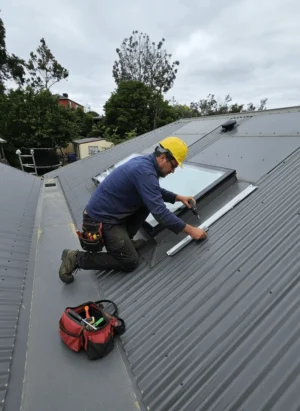
The unit is mounted high and access is awkward
The roof pitch is tricky
The ceiling shaft is long or angled
Electrical connection is required
You want one party responsible for weatherproofing and finish quality
Council considerations vary by project, so it’s smart to check local requirements before cutting. That matters more on heritage homes or jobs involving broader structural changes.
A good installer should be able to explain the flashing method, roof compatibility, ceiling finish plan, and how rain protection is managed during the job. If they can’t explain those clearly, keep looking.
Why Brisbane Homeowners Choose Vivid Skylights
By the time most homeowners reach a decision, they’re no longer asking whether a skylight will add light. They’re asking whether it will stay comfortable, stay watertight, and suit the way the room is used.
That’s the right question. In Brisbane, a skylight has to do more than look good in a brochure.
Your Brisbane skylight checklist
Use this checklist before you approve any skylight for your home:
Is the glazing suitable for Queensland heat? If not, the room may look brighter but feel worse.
Is the unit fixed or operable for the right reason? Light-only rooms and moisture-heavy rooms need different solutions.
Does the opening method suit the ceiling height? A hard-to-reach skylight shouldn’t rely on good intentions.
Is the flashing matched to the roof type and pitch? That’s central to long-term weatherproofing.
If roof access isn’t possible, is there a realistic alternative? In some rooms, an LED skylight-style solution makes more sense.
Can the supplier support the project properly? Homeowners often find it useful to compare verified reviews for home service pros when weighing installers and related trades.
If you want to compare one supplier against that checklist, the Vivid Skylights range covers double-glazed fixed and operable skylights, with electric and solar-powered opening options, plus AuraGlow LED skylights for spaces where traditional installation isn’t practical. The company also delivers nationwide in Australia, which helps if you’re sourcing for a Brisbane project but working with your own installer.
For this climate, that combination matters. The right skylight doesn’t just brighten a room. It makes the room easier to live in.
If you’re planning skylights for a Brisbane home and want a practical product shortlist, start with Vivid Skylights. Compare the glazing, opening options, flashing kits, and installation pathway against your roof and room layout first, then choose the unit that fits the climate as well as the design.