

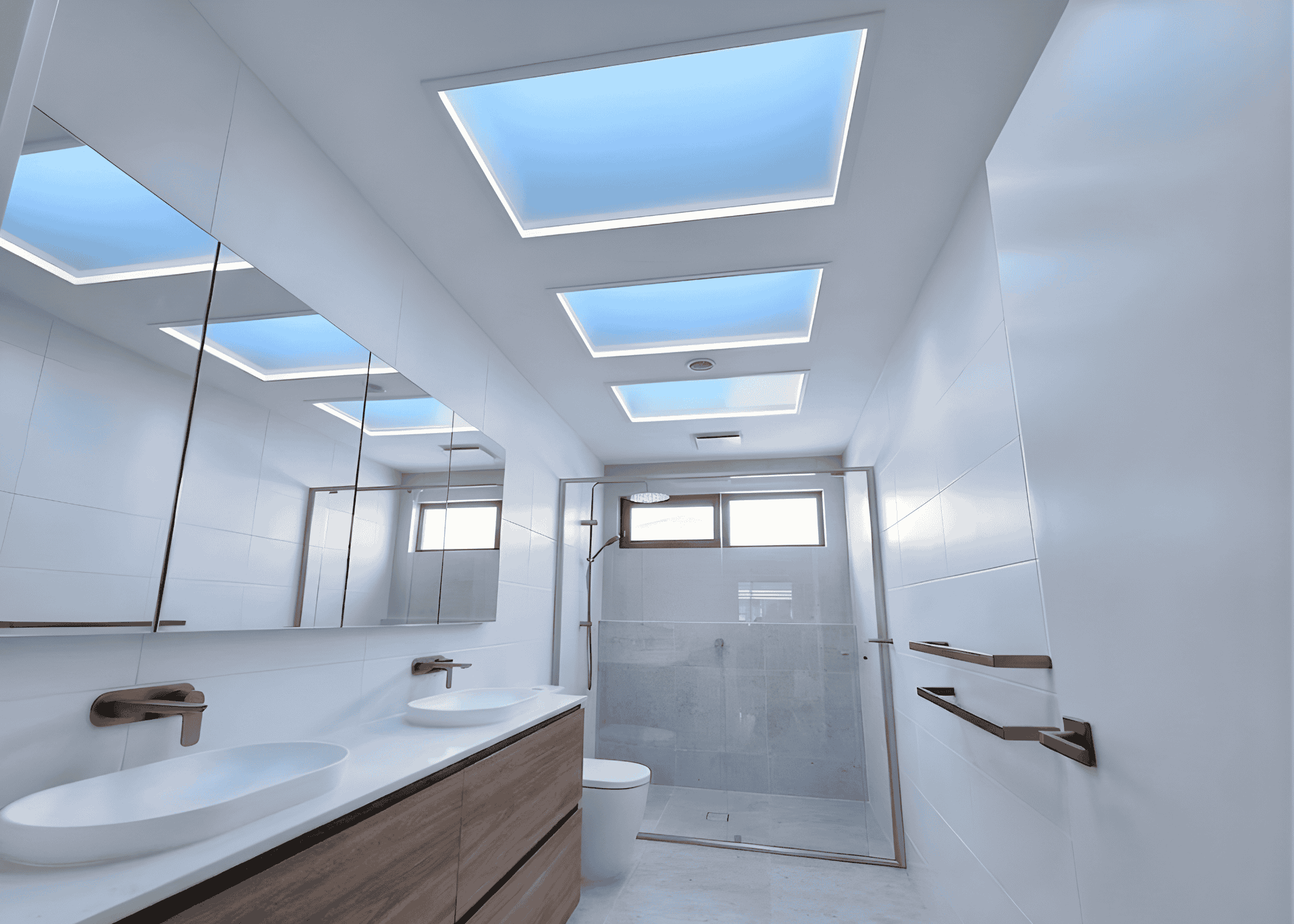
A lot of Australian homes have the same problem. The room that needs light most is often the room that can’t take a standard skylight.
It might be a ground-floor hallway under an upper level, a bathroom boxed in by trusses and services, or an apartment where roof access isn’t available. That’s where the search for a practical skylight alternative australia solution usually starts. Not because people have stopped wanting natural light, but because the roof, the budget, or the building rules get in the way.
The frustrating part is that most advice stays shallow. It lists options, but it rarely helps you weigh trade-offs for an Australian home. One of the biggest gaps is long-term value. As this Australian discussion of skylight alternatives points out, homeowners still lack detailed local ROI comparisons between $2,000-$4,000 traditional skylights and $800-$1,500 solar LED alternatives over 10-20 years. If you’re trying to decide what makes sense for your house, that gap matters.
Some homes need genuine daylight from above. Others need a convincing substitute that works where roof penetration isn’t feasible. If you’re comparing products like a traditional roof skylight, a tubular system, or an artificial option such as an LED skylight alternative for internal rooms, the smart choice depends on the room, the roof, and how long you plan to live with the result.
Table of Contents
Bringing Light In When a Skylight Won't Fit
The first thing to get clear is this. Wanting more daylight doesn’t automatically mean a traditional skylight is the right answer.
In practice, homeowners usually arrive at alternatives after hitting one hard constraint. The room sits below another storey. The roof cavity is crowded. The pitch is awkward. The budget can stretch to a ceiling light upgrade, but not to structural changes, plaster repairs, and roof work at the same time.
When the problem is access, not preference
A lot of darker spaces aren’t bad candidates because of style. They’re bad candidates because the light path from roof to ceiling is blocked or too complicated to build efficiently.
That’s common in:
Multi-storey homes where an upper floor separates the target room from the roof
Internal bathrooms and robes with no direct roofline above
Townhouses and apartments where roof ownership or access is restricted
Renovations with tight budgets where structural work creates cost blowouts
A skylight alternative isn’t always a compromise. In many homes, it’s the only option that fits the structure cleanly.
What homeowners actually need from an alternative
Homeowners often don't just want brightness. They want the room to feel more open, more usable, and less dependent on switching lights on in the middle of the day.
That creates a practical checklist:
| Need | What matters most |
|---|---|
| Daytime brightness | Whether the system uses real daylight or simulated light |
| Installation practicality | Roof access, ceiling position, and need for structural work |
| Running cost | Whether the product has ongoing power use during operation |
| Appearance | Whether it looks architectural or like a light fitting |
| Maintenance | Batteries, panels, bulbs, glazing, or roof components |
If you’re sorting through skylight alternative australia options, this is the essential decision. Not just “which one is cheaper”, but “which one solves my room properly without creating a new problem later”.
Common Roadblocks to Traditional Skylight Installation
Some houses suit a roof skylight immediately. Others fight it at every stage. The roadblocks are usually easy to identify once you know what to look for.
Structural constraints inside the roof
The biggest obstacle is often hidden above the ceiling. Trusses, rafters, ducting, plumbing vents, and electrical runs can all interfere with the shaft or opening.
In a single-storey home, this may still be manageable if there’s a clear route and enough room to frame the opening properly. In a multi-storey house, it often isn’t. You can’t install a standard skylight into a room that has another habitable room directly above it.
A common example is the downstairs hallway in a two-storey build. It feels dark all day, but there’s no direct path to the roof. In that case, a conventional skylight isn’t difficult. It’s impossible without major reconstruction.
Roof form and water management
Not every roof shape works smoothly with every skylight type. Complex hips, valleys, shallow pitches, and crowded roof lines can all make placement harder.
This matters for two reasons. First, the skylight needs a workable location. Second, it needs to drain correctly and integrate with the roofing material without creating a weak point.
Practical rule: If a proposed skylight position forces awkward flashing details or lands near problematic roof geometry, stop and reassess before cutting anything.
Homes in bushfire-prone areas add another layer. Product selection and installation details can intersect with compliance requirements, especially in higher-risk locations. If your property falls into that category, it’s worth checking bushfire-related guidance such as BAL 29 requirements for skylight selection before settling on a product type.
Site rules and ownership limits
Some barriers have nothing to do with carpentry. They come from the property itself.
These often include:
Body corporate restrictions on external roof alterations
Heritage controls that limit visible changes to the roofline
Insurance or approval concerns where unauthorised roof penetrations create complications
Shared roof arrangements in apartments or attached dwellings
Budget pressure from associated works
A homeowner may be comfortable with the skylight price, then get caught by the surrounding work. Ceiling repairs, painting, shaft construction, roof access equipment, and electrical changes can shift the job from straightforward to expensive.
That doesn’t mean a traditional skylight is poor value. It means the room has to justify the installation pathway. If it can’t, an alternative often makes more sense.
Australia's Main Skylight Alternatives Compared
The Australian market gives homeowners several workable alternatives when a standard roof skylight doesn’t fit. The key is understanding what each one does well.
Here’s a quick comparison first.
| Option | Light type | Installation pathway | Maintenance profile | Best suited to |
|---|---|---|---|---|
| Tubular skylight | Real daylight redirected through a reflective tube | Roof penetration, but usually with a smaller footprint than a full skylight | Generally low, depending on roof access and product design | Compact internal rooms and circulation areas |
| Roof window | Real daylight with outside view and potential ventilation | Requires roof integration and suitable structure | Similar to other roof glazing systems | Attics, loft-style spaces, upper-level rooms under the roofline |
| Generic solar-powered LED | Artificial light powered by a solar-linked system | Flexible and often simpler where roof structure is difficult | Ongoing part replacement and power-related components | Rooms where real skylight installation isn’t practical |
For a more detailed product-category breakdown, this guide comparing a solar tube and a standard skylight is useful background before you narrow your shortlist.
Tubular skylights
Tubular skylights sit in the middle ground. They still bring in natural light, but they do it through a reflective tube rather than a larger glazed opening.
That makes them useful where a full shaft is difficult or where the room itself is small enough that you don’t need a dramatic architectural feature. Hallways, laundries, powder rooms, and internal bathrooms are typical candidates.
The trade-off is visual impact. You get daylight, but not the same sense of sky, openness, or room expansion that a larger traditional skylight can create.
Tubular systems are functional first. They solve darkness well, but they rarely become a design feature in the room.
Roof windows
A roof window is closer to a skylight than to an alternative, but homeowners often compare it in the same shortlist because it also sits in the roof plane and can provide ventilation.
It works best where the ceiling follows the roofline, such as attic conversions or upper-storey rooms with direct roof access. In those spaces, a roof window can feel generous and practical because it delivers light, outlook, and airflow.
It’s less suited to rooms with flat ceilings below a large cavity or rooms that need long shafts. Once structural changes become complex, the appeal drops quickly.
Generic solar-powered LED systems
This category has grown because it addresses a real installation problem. Some homes can’t take roof glazing easily, but they still need more light.
The appeal is straightforward. These systems are often simpler to install, especially where roof cutting is undesirable or impossible. They’re also marketed as energy-efficient, but there’s an important distinction. According to this Australian review of skylight alternatives, solar-powered LED products still consume energy, require part replacements, and buyers should look for IC4 Certifications for insulation contact and UL Listing for safety. The same source notes that some double-glazed skylight products engineered for Australian conditions can block 80% of external heat.
That’s the practical divide. Artificial skylight alternatives may solve access and installation issues well, but they don’t stop being artificial light.
Light quality matters more than many buyers expect
When people compare options, they often focus first on installation. That’s understandable, but the lived experience of the room comes from the light itself.
A tubular skylight gives you real daylight in a concentrated way. A roof window gives you daylight plus view. A generic solar LED system gives you controllable artificial illumination that may be useful but doesn’t behave like daylight.
For Australian homes, the right choice usually comes down to one question. Are you trying to capture the sun, or are you trying to imitate it because the roof won’t cooperate?
The Gold Standard When Your Roof Allows It
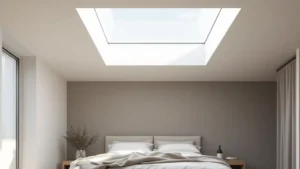
If the room has viable roof access and the structure supports it, a quality traditional skylight is still the benchmark. It gives you something alternatives can’t fully reproduce. Real light from above.
Why the performance gap is hard to ignore
Overhead light changes how a room reads. It reaches deeper, spreads more evenly, and feels less directional than a wall window.
According to Vivid Skylights’ Australian guide to home value and daylighting, modern skylights can provide up to 30% more natural light than vertical windows because of their overhead position, and that can reduce daytime artificial lighting needs while supporting stronger NatHERS outcomes. That’s a practical gain, not just an aesthetic one.
For living areas, kitchens, and open-plan zones, that difference is obvious. The room feels active through the day rather than just brighter at certain times.
The features worth caring about
Not every skylight is equal. In Australian conditions, details matter.
Look closely at:
Double glazing for stronger thermal performance
Frameless top glazing to reduce water pooling risk
Operable models if the room also needs ventilation
Rain-sensing operation where opening units may be left unattended
Self-cleaning glass if access for maintenance is awkward
A traditional skylight earns its keep when it improves both light and comfort. If it adds glare, heat issues, or maintenance headaches, the specification was wrong even if the idea was right.
Fixed versus operable in real homes
Fixed skylights make sense where the goal is daylight only. Operable units suit kitchens, bathrooms, raked-ceiling living areas, and upper rooms that trap warm air.
That’s where a supplier range matters. Vivid Skylights offers double-glazed fixed skylights as well as electric and solar-powered operable models, with nationwide delivery across Australia and options such as rain-sensing openers, blinds, and fly screens through its double glazed skylight range.
In rooms that collect heat high up, an opening skylight can improve how the space feels day to day, not just how it looks.
Where traditional skylights usually justify the cost
They tend to make the most sense in:
Main living zones where light quality affects how the whole house feels
Kitchen renovations where overhead light improves both ambience and task use
Top-floor bathrooms that also benefit from ventilation
Architectural projects where the opening itself becomes part of the design
If your roof allows a proper installation, this is usually the point where alternatives start to look like secondary solutions rather than direct competitors.
The Innovative Solution for Difficult Spaces
Some rooms will never take a true roof skylight cleanly. That doesn’t mean they have to stay dark.
Where artificial skylight systems make sense
Ground-floor bathrooms, walk-in robes, interior hallways, apartments, and basement-style spaces often have the same issue. There’s no practical path to the roof, or the cost of creating one is out of proportion to the room.
That’s where an artificial skylight can be the right answer. The important question is whether it behaves like a flat LED panel or creates a more convincing daylight effect.
Most solar LED alternatives sit in the first camp. As noted in this review of LED skylight alternatives, many deliver a fixed 4000K-5000K cool white light. That can brighten a room, but it still reads as artificial. The same review notes that traditional skylights provide full-spectrum daylight, while the AuraGlow bridges the gap by simulating the dynamic changes of natural light in rooms where roof penetration isn’t feasible.
What makes AuraGlow different
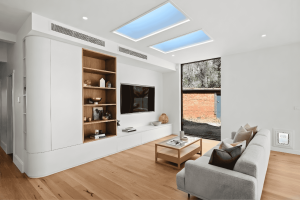
The strength of the AuraGlow LED skylight system is that it doesn’t just aim for brightness. It aims for the visual experience people want from a skylight.
That matters because static cool white light can make a room feel clinical, especially in bathrooms, corridors, and dressing spaces. A fitting that changes colour through the day gives a more believable sense of sky and movement overhead.
Key situations where that works well include:
Internal bathrooms with no roof cavity path
Lower-floor rooms beneath an upper level
Apartments where roof alterations aren’t possible
Design-led renovations that want a skylight effect without roof work
Here’s a closer look at how that visual effect works in practice.
The right expectation to set
AuraGlow solves a different problem from a traditional skylight. It doesn’t replace genuine outdoor daylight in a room that can accept roof glazing. It gives difficult spaces a more convincing overhead light effect than standard artificial alternatives.
If the ceiling can’t connect to the sky, the next best result is a fitting that behaves more like the sky than a normal LED panel does.
That distinction helps homeowners choose it for the right reasons. Not as a downgrade, but as a targeted solution for spaces where architecture says no.
Your Decision Framework for Australian Homes
The cleanest way to decide is to match the product to the room and the constraints. Don’t start with brand names or marketing categories. Start with the building.
Choose a traditional skylight if the room can properly use one
This suits homes with direct roof access above the target room, enough space for proper installation, and a clear reason to prioritise genuine daylight.
It’s usually the strongest fit for kitchens, living areas, upper-floor bathrooms, and raked-ceiling rooms. In Australia, that long daylight availability matters because lighting makes up 23-27% of household electricity costs, and traditional skylights have zero operational cost during daylight hours while delivering measurable savings over the 10+ year life of a quality unit.
If you’re thinking long-term, that operational difference matters more than the initial comparison on paper.
Choose a tubular system if the room is small and the goal is function
This option works well when you need real daylight in a compact internal space and you don’t need sky view or a large architectural opening.
Good examples include powder rooms, hallways, laundries, and smaller bathrooms. The main benefit is targeted daylight with a smaller roof intervention than a full skylight. The compromise is ambience. You gain utility more than drama.
Choose an advanced artificial skylight if roof access is blocked
Some homes have no realistic route for natural overhead light. Multi-storey layouts, apartments, lower-ground rooms, and heavily constrained roof structures all fall into this category.
That’s where a high-quality artificial skylight earns its place. It’s especially useful when you want the room to feel considered rather than brighter alone.
Factor in Australian conditions before you commit
Climate, location, and compliance can change what makes sense.
Keep these points in mind:
Hot and high-sun regions need stronger attention to glazing performance, heat control, and placement
Coastal areas benefit from durable materials and careful specification
Bushfire-prone sites may affect which roof products are suitable
Approval pathways can differ for apartments, body corporate properties, and heritage homes
The right skylight alternative australia choice isn’t just about the product. It’s about whether the product suits your roof, your room, and your regulatory context.
A simple way to make the call
If you want the shortest version, use this:
Pick a traditional skylight when the roof allows a proper installation and the room deserves real daylight.
Pick a tubular option when the space is small and practical illumination is the main goal.
Pick an artificial skylight such as AuraGlow when structural reality rules out roof glazing but you still want the visual effect of a skylight.
That approach avoids the common mistake. Comparing every lighting product as though it solves the same problem. It doesn’t. The best result comes from choosing the option that fits the building first, then the budget.
If you’re weighing a skylight alternative australia option for a dark room, Vivid Skylights offers both double-glazed fixed and operable skylights for homes that can take real roof glazing, plus the AuraGlow LED skylight for spaces where traditional installation isn’t feasible.