

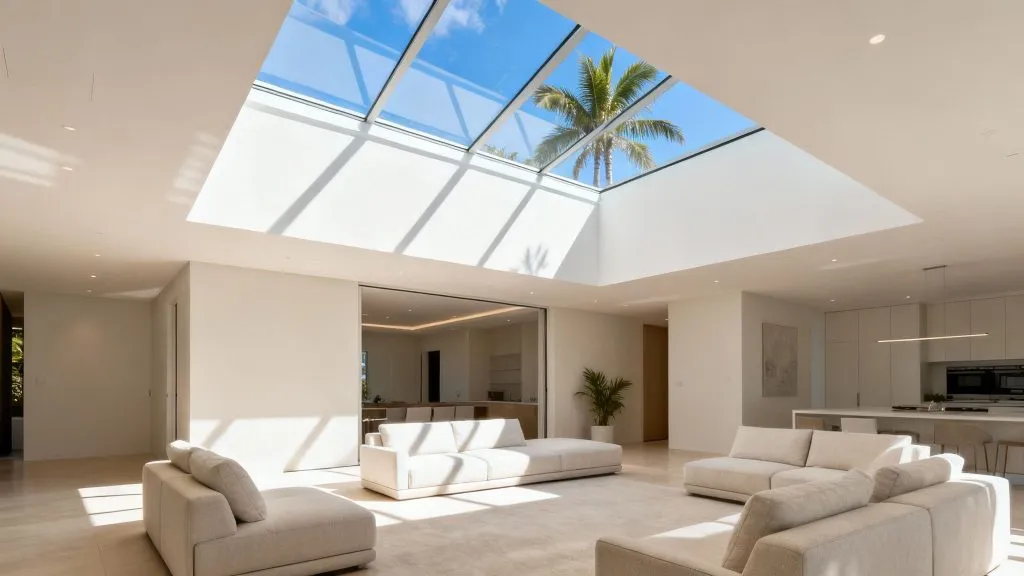
Picture your home filled with that beautiful, warm light the Sunshine Coast is famous for. Installing high-quality skylights doesn’t just cut down your reliance on flicking a switch; it creates a wonderfully airy atmosphere and connects your indoor spaces with the stunning coastal environment right outside.
Why Skylights Are a Smart Move for Your Home
Living on the Sunshine Coast is all about embracing a lifestyle built around the sun and open, breezy spaces. Bringing that feeling indoors is more than just an aesthetic choice these days—it’s a practical investment in your home’s value, your family’s well-being, and your energy bills.
A well-placed skylight does so much more than just brighten up a dark hallway. It can fundamentally change the whole personality of a room.
Think of it as adding a window to your ceiling. This simple change can make small rooms feel larger and more inviting, slash the need for daytime lighting, and create a dynamic living space where the light shifts and plays throughout the day. It’s a powerful way to deepen your home’s connection to the outdoors.
Key Benefits for Coastal Living
Putting skylights in your home offers a whole host of advantages perfectly suited to the Sunshine Coast. Beyond the immediate visual appeal, you can expect some real, tangible returns.
- Lower Energy Bills: By flooding your home with natural light, you can dramatically cut down on electricity use during the day. That means real savings on your power bills.
- Enhanced Property Value: Bright, light-filled homes are always in high demand. A professional skylight installation is a modern feature that seriously boosts your property’s appeal on the market.
- Improved Well-being: It’s no secret that natural light is linked to better moods, more focus, and a healthier indoor environment. You can explore the full range of benefits of skylights in our detailed guide.
This shift towards smarter home design isn’t just a local trend. It’s part of a much bigger movement towards more energy-conscious and sustainable building practices happening right across the country and the world.
A Growing Trend in Sustainable Building
The increasing demand for solutions like skylights on the Sunshine Coast fits right in with global building trends. The worldwide skylight market was valued at over USD $3.08 billion in 2022 and is set to grow as more people prioritise natural light and energy efficiency in their homes.
Australia is a big part of this shift, driven by our building regulations and a genuine desire for brighter, more comfortable living spaces. To see how our local trends fit into the bigger picture, you can get great insights from industry experts at Natural Lighting.
This guide will walk you through everything you need to know to make the perfect choice for your Sunshine Coast home.
Choosing the Right Skylight for Our Coastal Climate
Picking a skylight for a Sunshine Coast home isn’t just about letting in a bit more light—it’s about choosing a piece of your home that can handle our unique coastal weather. The mix of intense sun, high humidity, salty air, and the occasional torrential downpour means not just any skylight will do. You need one that’s built tough.
It’s a bit like choosing a car. A convertible is great for cruising along the coast on a perfect day, but you wouldn’t want it to be your only option in a classic Queensland summer storm. In the same way, the right skylight needs to be perfectly suited to its job and our environment, ensuring it works brilliantly for years to come.
Getting it right starts with understanding the three main players in the skylight world and figuring out where they fit best in a Sunshine Coast home. Each has its own strengths, depending on what you’re trying to achieve.
The diagram below breaks down how adding a skylight isn’t just a purchase, but an investment that pays off in property value, beautiful natural light, and even energy savings.
As you can see, a skylight is a strategic move for any local homeowner, delivering returns that go way beyond just lighting up a room.
Fixed Skylights: A Window to the Sky
A fixed skylight is the classic, straightforward choice. Think of it as a picture window for your roof, designed purely to pour natural light into a space. Because it doesn’t open, it creates an excellent seal against the elements, making it a fantastic, leak-proof option for rooms where extra ventilation isn’t the main goal.
They are absolutely perfect for bringing life to living rooms, kitchens, or stairwells where you want to create that bright, airy feeling without adding mechanical complexity. Their simple design also means they tend to have a lower, sleeker profile on the roof.
Ventilating Skylights: For Light and a Breath of Fresh Air
A ventilating (or opening) skylight is your best friend for tackling those sticky Sunshine Coast summers. It works just like a regular window, opening up (either by hand or with a remote) to let out all that hot, humid air that naturally rises and gets trapped at the ceiling.
This is a complete game-changer for bathrooms, laundries, and kitchens—places where keeping moisture under control and improving air quality is a must. Most modern electric models even come with rain sensors that automatically shut the unit at the first drop of rain, so you get all the benefits without any of the worry.
Tubular Skylights: The Clever Fix for Tight Spots
Tubular skylights, often called sun tunnels, are a brilliant bit of engineering for lighting up parts of the house where a traditional skylight just won’t fit. They use a super-reflective tube to capture sunlight from a small dome on the roof and funnel it down into hallways, walk-in robes, or small, windowless bathrooms.
While you don’t get a view of the sky, they are incredibly effective at turning dark, forgotten corners into bright, usable areas. Plus, they’re less noticeable on the roofline and often a simpler and more cost-effective installation.
Skylight Type Comparison for Sunshine Coast Homes
To make the choice a little easier, here’s a quick-reference table breaking down the three main types. It compares them on function, cost, and how well they suit our local climate.
| Skylight Type | Best For | Pros | Cons | Typical Price Range (Installed) |
|---|---|---|---|---|
| Fixed | General living areas, kitchens, stairwells needing maximum light. | Excellent weather seal, lower cost, minimal maintenance. | No ventilation. | $1,800 – $3,000 |
| Ventilating | Bathrooms, kitchens, laundries where moisture and heat build-up is an issue. | Provides both light and airflow, improves air quality. | Higher cost, more complex installation, moving parts require maintenance. | $3,000 – $5,500+ |
| Tubular | Hallways, walk-in robes, small bathrooms, or interior rooms without roof access. | Great for small/awkward spaces, cost-effective, easy to install. | No sky view, provides diffused light rather than direct sunlight. | $1,200 – $2,400 |
This table should give you a solid starting point for figuring out which direction to go, but remember to think about the specific needs of your room first.
Must-Have Features for Coastal Durability
No matter which type you lean towards, there are a few features that are simply non-negotiable for any skylight installed here on the Sunshine Coast. These are the details that ensure performance, long life, and protection for your home.
- Double Glazing: This is your first line of defence against the Queensland heat. A double-glazed unit acts as a thermal barrier, keeping the summer heat out so your air-con isn’t working overtime. It’s a key reason to learn more about the performance of double glazed skylights.
- UV Coating: Our sun is fierce, and it will fade your furniture, floors, and artwork in no time. A quality UV coating on the glass blocks over 95% of those harmful rays, protecting everything inside without dimming the beautiful light.
- Corrosion-Resistant Frames: The salty air here is relentless and will eat away at the wrong materials. Always look for skylights with powder-coated aluminium or marine-grade frames that are built to resist rust and stand up to the coastal environment.
Beyond these, proper sealing of every component is vital. When picking a skylight for our climate, its long-term resistance to moisture is a top priority. For homeowners looking to protect other parts of their home’s exterior, exploring waterproofing solutions for painted wood can offer valuable insights into fighting moisture damage. This same focus on total weatherproofing is what ensures your skylight will perform for decades.
Navigating Sunshine Coast Council Approvals
Just the thought of dealing with council regulations can feel like hitting a brick wall. But here’s the good news: for most skylight projects on the Sunshine Coast, the process is surprisingly simple. The key is knowing when you need to get the council involved and what rules apply for a smooth, stress-free installation.
For many homeowners, adding one or two skylights is considered minor building work. Think of it like repairs or maintenance—as long as you’re not cutting through major structural roof beams, you often won’t need a formal development application (DA).
Of course, the scale of your project is what really counts. If you’re planning a huge renovation with multiple skylights or making serious changes to your roof’s structure, the rules of the game change. That’s when you need to take a closer look at the Sunshine Coast Council’s planning scheme.
So, When Is a Formal Application Needed?
Understanding where your project fits is crucial. A simple like-for-like replacement is one thing, but a brand-new installation that messes with your roof’s framework is another kettle of fish.
You’ll almost certainly need a formal application if your project involves:
- Significant Structural Changes: This means cutting through major roof trusses or rafters to fit in a large skylight.
- Heritage or Character Overlays: If your home is in a protected area, any external changes will need a green light to ensure they preserve the local character.
- Large-Scale Renovations: If your skylights are just one part of a bigger extension that already needs a DA, they’ll be included in that application.
The best first step is always to do a quick check. The Sunshine Coast Council’s website is a great resource to see if your project is “accepted development” (meaning no application needed). A quick phone call to their planning department can also give you instant clarity.
Bushfire Attack Levels (BAL) and Building Codes
Beyond the local council, all building work in Australia has to meet the National Construction Code (NCC). This is the rulebook that makes sure your skylight is structurally sound, safe, and energy-efficient. For anyone living on the Sunshine Coast, a really critical piece of the puzzle is the Bushfire Attack Level (BAL) rating.
Your property’s BAL rating determines what kind of building materials you’re allowed to use to lower bushfire risk. Skylights in high-risk zones (anything from BAL-12.5 up to the intense BAL-FZ ‘Flame Zone’) must meet strict fire-resistance standards. This usually means choosing skylights with toughened glass and tough, non-combustible frames.
For instance, a standard acrylic dome skylight might be perfectly fine for a home in a low-risk suburb. But it would be completely non-compliant for a property rated BAL-40, nestled in the bushland. A professional installer who specialises in skylights on the Sunshine Coast will know exactly how to select BAL-compliant products for your home.
Your Installer Is Your Compliance Partner
This is where a professional installer becomes your most valuable player. They aren’t just there to cut a hole in your roof; they’re your guide through all the red tape.
A reputable local installer will:
- Assess Your Property: They can quickly tell you if your project is minor work or if you’ll need to chat with the council.
- Check Local Codes: They stay on top of the latest NCC requirements and the specifics of the Sunshine Coast planning scheme.
- Source Compliant Products: They’ll make sure the skylight you choose meets your property’s BAL rating and any other safety standards.
- Manage the Paperwork: If an application is needed, they can often guide you through it or even handle it for you.
Ultimately, partnering with an experienced local pro takes all the guesswork out of the equation. It’s your guarantee that the job is done right—beautiful, functional, and fully compliant. That’s true peace of mind.
DIY or Professional Skylight Installation
This is one of the biggest decisions you’ll make: do you tackle the job yourself or call in the pros? For many Sunshine Coast homeowners, it’s a classic head-versus-heart debate. The idea of saving a few bucks with a DIY project is always tempting, but let’s be honest—installing a skylight is a high-stakes job where a small mistake can lead to big, expensive problems.
Think of it like working on your car’s brakes. You might save on labour, but the consequences of getting it wrong are serious. An improperly installed skylight can cause persistent leaks, structural damage to your roof, and a whole lot of headaches you just don’t need. This section gives you a clear-eyed look at both options to help you figure out the right path for your home and your skill level.
The DIY Skylight Installation Path
For the confident home renovator with a bit of experience under their belt, a DIY installation is definitely possible. The main appeal, of course, is saving money on labour costs and having total control over when the project gets done. But this path demands precision, the right gear, and a solid understanding of how your roof is put together.
If you’re thinking about going this route, remember you’re not just cutting a hole in your roof. You’re taking on the full responsibility for making sure that opening is structurally sound and completely weatherproof. It’s a job that needs careful planning from start to finish. For those ready to take it on, our comprehensive DIY skylight installation guide walks you through the steps and shares some essential tips.
Before you climb that ladder, here’s a realistic checklist of what you’re signing up for:
- Structural Assessment: You’ll need to correctly identify roof trusses and rafters and figure out how to work around them without weakening your roof’s structure.
- Precise Cutting: This goes for both your external roofing material (whether it’s tile or Colorbond) and the plasterboard on your ceiling inside.
- Flashing Installation: This is it—the most critical step for waterproofing. The flashing kit has to be installed perfectly to create a seal that can handle a classic Sunshine Coast downpour. Get this wrong, and you’ll know about it.
- Interior Finishing: The job isn’t done when the skylight is in. You still have to build and finish the light shaft, which means framing, plastering, and painting to make it look seamless.
Why a Professional Installer Is Often the Smartest Choice
For most homeowners, hiring a professional to install skylights on the Sunshine Coast is the safest and most reliable option. Yes, the upfront cost is higher, but what you’re really paying for is expertise, efficiency, and—most importantly—peace of mind. A seasoned installer has done this hundreds of times, tackling every type of roof and unexpected challenge you can imagine.
That experience is gold, especially in our coastal climate where intense rain and high winds put every single seal to the test. A pro’s work is also backed by warranties that protect your investment against the very issues a DIY attempt might create.
A professional installation isn’t just a service; it’s an insurance policy against future problems. The workmanship warranty against leaks is often the single most valuable part of the entire project, protecting your home for years to come.
Here are the undeniable advantages of going with a professional:
- Workmanship Warranty: Reputable installers will offer a leak-free guarantee on their work. If any problem pops up because of the installation, they’re on the hook to fix it, not you.
- Product Knowledge: They know exactly which skylights and flashing systems work best on specific Sunshine Coast roof types, from old-school terracotta tiles to modern metal sheeting.
- Efficiency and Safety: A professional crew can often get an installation done in a single day, causing minimal disruption to your life. They’re also fully insured and have the right equipment to work safely at heights.
- Code Compliance: A pro ensures the whole job meets the National Construction Code (NCC) and any local council rules, including important BAL ratings for homes in bushfire-prone areas.
Ultimately, the decision comes down to a trade-off between your budget, skills, and how much risk you’re willing to take. While DIY can be incredibly rewarding, the expertise and security a professional installer brings to the table provide long-term value that’s pretty hard to overlook.
Budgeting for Your Skylight and Nailing the Installation
Getting clear on the costs is a vital first step before you let that beautiful Sunshine Coast light pour into your home. A skylight isn’t just an off-the-shelf purchase; it’s a home improvement project with a few key parts making up the final price. Thinking it through from the beginning means no nasty surprises later on.
The total investment really breaks down into three chunks: the skylight unit itself, the professional installation, and any optional features you decide to add. Knowing how each part contributes helps you build a realistic budget that fits your home and what you want to achieve.
Breaking Down the Costs of a Skylight Project
The price of the skylight unit is your starting point. A simple, fixed skylight that doesn’t open will always be the most wallet-friendly choice. As you start looking at ventilating models with electric openers, rain sensors, and slick built-in blinds, the price tag naturally climbs.
After the unit, the installation labour is the next big piece of the puzzle. This is skilled work that goes way beyond just cutting a hole in the roof. It involves expert waterproofing, understanding the roof’s structure, and finishing the interior so it looks seamless. The complexity of your roof has a big say in this cost.
- Roof Pitch and Material: A steep, tiled roof is trickier and takes more time to work on than a low-pitch metal roof. That difference will show up in the labour quote.
- Accessibility: If your roof is hard to get to, it might require extra safety gear or more time, which can bump up the cost.
- Interior Work: The length and design of the light shaft inside your home also matter. A straight, simple shaft is faster to build than a long, flared one that needs more plastering and painting.
While planning, it’s smart to think about the long-term savings. When people consider the cost of energy-efficient windows, the conversation often turns to how they reduce power bills over time. The exact same logic applies to high-performance skylights, which can slash your daytime electricity use for years to come.
Finding a Reputable Installer on the Sunshine Coast
Choosing the right installer is hands-down the most important decision you’ll make. It’s what guarantees your skylight will be leak-free and perform beautifully for decades. A quality installation is your best insurance policy against future headaches. While the Sunshine Coast has plenty of talented tradies, you really want to find a true specialist.
Start by looking for local companies with a solid reputation and a portfolio of completed jobs in your area. You want installers who are certified by the big skylight brands and can show you they have deep experience with roofs just like yours. A great local installer knows our coastal climate inside out and will use the right techniques to create a completely weatherproof seal.
A perfect example of local expertise is Coastal Skylights & Ventilation, a company that’s been serving the region since 1998. Their award as Australia’s Best Solatube Dealer in 2023 really speaks to the high standard of service we have right here on the Coast. They also prove that quality doesn’t have to break the bank, offering professionally installed tubular skylights from as low as AUD $490. This makes bringing natural light into your home a reality for a wide range of budgets. You can see more about their award-winning work and local experience.
The cheapest quote is almost never the best value. Paying a little more for a reputable installer usually gets you better warranties, superior materials, and the peace of mind that comes from a job done right the first time.
Questions to Ask Every Potential Installer
Once you’ve got a shortlist for your skylights Sunshine Coast project, it’s time to dig a little deeper. Asking the right questions will help you sort the real experts from the rest and feel confident in who you hire.
Getting at least three detailed quotes is a great strategy. It lets you compare not just the final number, but the scope of work, the products they’re proposing, and the warranties they include.
Here’s a quick checklist to run through with each installer:
- Are you licensed and fully insured? Ask to see their QBCC licence and Certificate of Currency for public liability insurance. This is an absolute must.
- What warranties do you provide? You should get two: one for the skylight unit itself (from the manufacturer) and a separate workmanship warranty from the installer guaranteeing a leak-free job.
- Do you have experience with my roof type? Ask them to show you examples or photos of their work on similar tile or metal roofs here on the Sunshine Coast.
- What flashing system will you use? A pro will be able to clearly explain the specific flashing kit designed for your roof profile that ensures a perfect, watertight seal.
- Is rubbish removal and interior finishing included in the quote? Make sure you get a clear, itemised quote that spells out every part of the job, from start to finish.
Simple Maintenance for Lasting Performance
A little bit of care goes a long way in making sure your skylight performs brilliantly for decades to come, keeping that gorgeous Sunshine Coast light streaming into your home. Think of it like looking after your car; a quick, regular check-up stops small issues from becoming big headaches and protects your investment for the long haul.
Honestly, most skylights need surprisingly little attention. A simple clean once or twice a year is usually all it takes to keep the glass crystal clear. Just use a mild, non-abrasive cleaner—a bit of gentle soap and water is perfect—and a soft cloth or squeegee to avoid scratching the surface.
The Advantage of Self-Cleaning Glass
Many modern skylights on the Sunshine Coast now come with advanced self-cleaning glass, which is a real game-changer for those hard-to-reach installations. This clever technology has a special coating that uses the sun’s UV rays to break down organic dirt and grime.
Then, when it rains, the water sheets off the glass instead of beading up, washing all that loosened dirt away with it. This natural process massively cuts down on manual cleaning, making sure your view stays clear with hardly any effort.
This self-cleaning feature is more than just a convenience; it’s a practical solution for our coastal climate. It lets the combination of sun and seasonal rain do the hard work for you, keeping your skylights looking their best.
Your Simple Annual Skylight Checklist
Beyond cleaning, a quick annual inspection is the best way to catch any potential issues before they start. It only takes a few minutes but gives you year-round peace of mind.
Just run through this straightforward checklist once a year to keep everything in top nick:
- Clear Debris from Flashing: Gently sweep away any leaves, twigs, or dirt that have gathered around the skylight’s flashing. This ensures rainwater can drain away properly and prevents any water from pooling.
- Inspect Seals and Gaskets: From inside, have a good look at the visible seals around the glass. You’re checking for any signs of cracking, shrinking, or general wear and tear that might compromise the seal.
- Test Moving Parts: If you have a ventilating skylight, open and close it a few times to make sure the mechanism is running smoothly. For electric models, give the remote a try and check that the rain sensor is clean and unobstructed.
This simple routine helps guarantee your skylight remains a source of light and comfort, not a cause for concern. It’s the easiest way to protect your home and enjoy your investment for many years to come.
Common Skylight Questions From Local Homeowners
Thinking about adding a skylight is exciting, but it naturally brings up a few questions. This is especially true for us here on the Sunshine Coast, where we have to think about summer heat and big storms.
Getting straight answers to these common worries is the best way to feel good about your decision. Let’s tackle the big ones so you know you’re making a smart, long-term investment for your home.
Will a Skylight Make My House Hotter in Summer?
This is easily the biggest concern we hear, but thankfully, modern skylights are engineered to solve this exact problem. Today’s high-performance models aren’t just a pane of glass; they use advanced double-glazing combined with a special Low-E (low-emissivity) coating.
Think of the Low-E coating as a smart filter. It’s brilliant at letting all that beautiful, visible light pour into your home while reflecting a huge chunk of the sun’s invisible infrared heat back outside. This technology is incredibly effective at stopping your home from turning into an oven on a hot summer’s day.
For even more control over the climate in your home, you can also opt for:
- Ventilating Skylights: These are fantastic because they open up, letting you release hot air that naturally rises to the ceiling. It’s a simple, passive way to cool your home.
- Block-out Blinds: Adding a purpose-built blind gives you total control. You can just close it during the most intense part of a summer afternoon to manage the light and heat.
Are Skylights Likely to Leak During Big Storms?
Absolutely not, provided it’s a quality skylight that has been installed correctly. When you hear horror stories about leaks, it’s almost always due to a dodgy installation or damaged flashing, not a fault with the skylight unit itself.
Reputable brands design their own robust flashing systems made specifically for different roof profiles, whether it’s tile or Colorbond. This creates a completely watertight seal that integrates perfectly with your existing roofing materials, standing up to the torrential downpours we get on the coast.
The single most critical factor in preventing a leak is hiring an experienced, certified installer. A professional who backs their work with a leak-free workmanship warranty is your best guarantee that the job is done right from the start.
Can I Install a Skylight on Any Roof Type?
Pretty much, yes. Skylights are incredibly versatile and can be installed on almost any roof type you’ll find on the Sunshine Coast. That includes tile, Colorbond steel, and even flat or low-pitch roofs, which just require a bit more know-how.
The secret to a successful installation on any roof is using the right flashing kit. Each kit is specifically engineered to create a secure, weatherproof seal that perfectly matches the profile of your roofing material. A good installer will always assess your roof first to make sure they’re using the right products and techniques for a durable, leak-proof fit.
Ready to transform your home with beautiful, natural light? At Vivid Skylights, we provide high-performance, double-glazed skylights designed for the Australian climate. Explore our range and get a fast, accurate price estimate for your project today at https://vividskylights.com.au.