

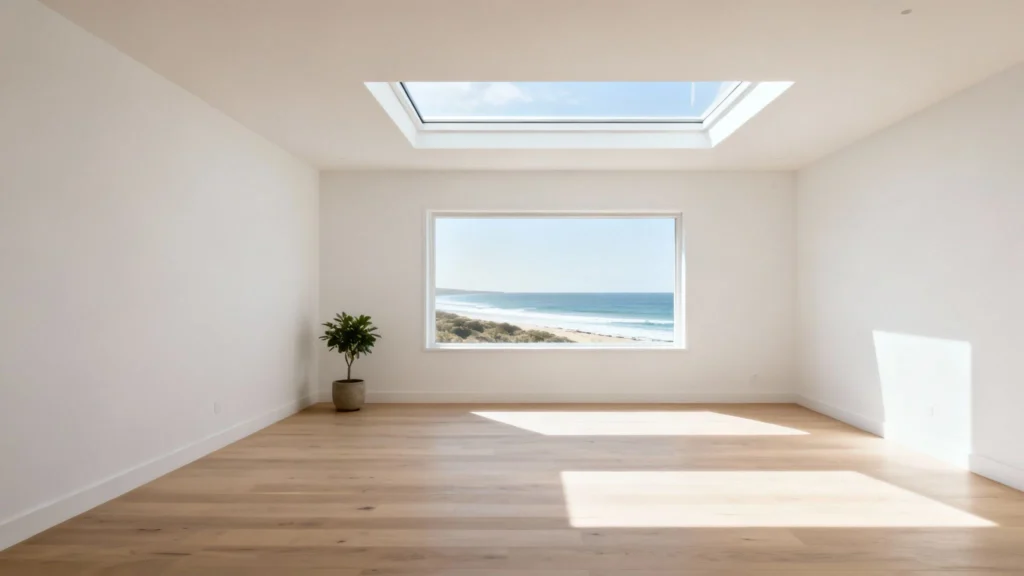
Picture this: your Mornington Peninsula home, already beautiful, now filled with the same bright, welcoming light you love about the coast. A skylight for a flat roof isn’t just a window; it’s the perfect way to transform dark, central rooms into vibrant, sunlit spaces, blurring the line between your home and the stunning outdoors.
Bringing Natural Light Into Your Mornington Peninsula Home
Homes with flat or low-pitch roofs often have a common problem: interior rooms that feel disconnected, dim, and forgotten. On the Mornington Peninsula, where life is all about embracing the sun and sea, this can feel like a huge missed opportunity. Installing a skylight designed specifically for a flat roof cuts right through this issue, creating a direct channel for daylight to pour into your home’s core.
This is about more than just brightness. It’s about completely changing the atmosphere of a room. Natural light is scientifically proven to boost our wellbeing, improve moods, and create a calmer, more productive environment. It also aligns perfectly with modern architectural trends favouring open, airy spaces and energy efficiency. By letting the sun do the work, you’ll find yourself reaching for the light switch far less often, which is great for your power bills.
Your Complete Guide to Flat Roof Skylights
Consider this your roadmap to a brighter home. We’ll walk you through every critical step, from picking the right type of skylight to ensuring a flawless, leak-proof installation. We’ll use high-quality solutions from Vivid Skylights as real-world examples to break down the technical details into simple, understandable concepts.
Before we dive deep, here’s a quick overview of what you need to keep in mind for your project.
Flat Roof Skylight At a Glance
Here’s a quick summary of the most important factors when planning a flat roof skylight installation on the Mornington Peninsula.
| Key Consideration | Why It Matters for Your Flat Roof |
|---|---|
| Superior Waterproofing | Flat roofs don’t naturally shed water. Proper upstands and flashing are critical to prevent leaks and protect your home from Mornington Peninsula’s coastal weather. |
| Skylight Functionality | Choose between fixed for pure light, or manual and electric opening models to add crucial ventilation for coastal air. |
| High-Performance Glazing | Double glazing with a Low-E coating is essential for thermal efficiency, preventing heat loss in winter and unwanted heat gain in summer. |
| Strategic Placement | Proper positioning ensures balanced, beautiful light distribution throughout your space while avoiding harsh glare. |
Getting these elements right from the start is the key to a successful project that adds lasting value and enjoyment to your home.
Understanding the Different Types of Flat Roof Skylights
Choosing a skylight for your flat roof isn’t just about picking a size off a shelf. It’s about understanding a complete system – a set of components that need to work together flawlessly to bring light into your home without any dramas. Let’s break down the options so you can find the perfect fit for your Mornington Peninsula lifestyle.
The first big decision comes down to function: do you want a skylight that just lets the light in, or one that opens up to let the air in, too?
Fixed vs Opening Skylights
Fixed skylights are the workhorses of daylighting. Their job is simple: to pour natural, uninterrupted light into a space. Because they are completely sealed with no moving parts, they are an incredibly reliable and cost-effective way to brighten up dim hallways, living areas, or any room that needs a lift.
Opening skylights, on the other hand, are the multi-taskers. Often called ventilating skylights, they do everything a fixed skylight does, plus they open to allow fresh air to circulate. For a coastal home on the Mornington Peninsula, this is a game-changer. Imagine letting that fresh sea breeze naturally cool your home on a warm afternoon.
These opening models typically come in a couple of flavours:
- Manual Opening: These are operated using a long pole, which makes them a great option for skylights that are within easy reach.
- Electric Opening: At the touch of a button, you can open or close your skylight. Many modern units, like ours at Vivid Skylights, even include clever rain sensors that automatically shut the window the moment it starts to drizzle.
Dome vs Flat Glass Designs
Once you’ve settled on the function, it’s time to think about the form. The two main looks you’ll see are the traditional dome and the sleek, modern flat glass skylight.
Older skylights often used a plastic or acrylic dome. While they did the job, these materials can turn brittle and yellow over the years, and their curved shape can sometimes distort the view of the sky above.
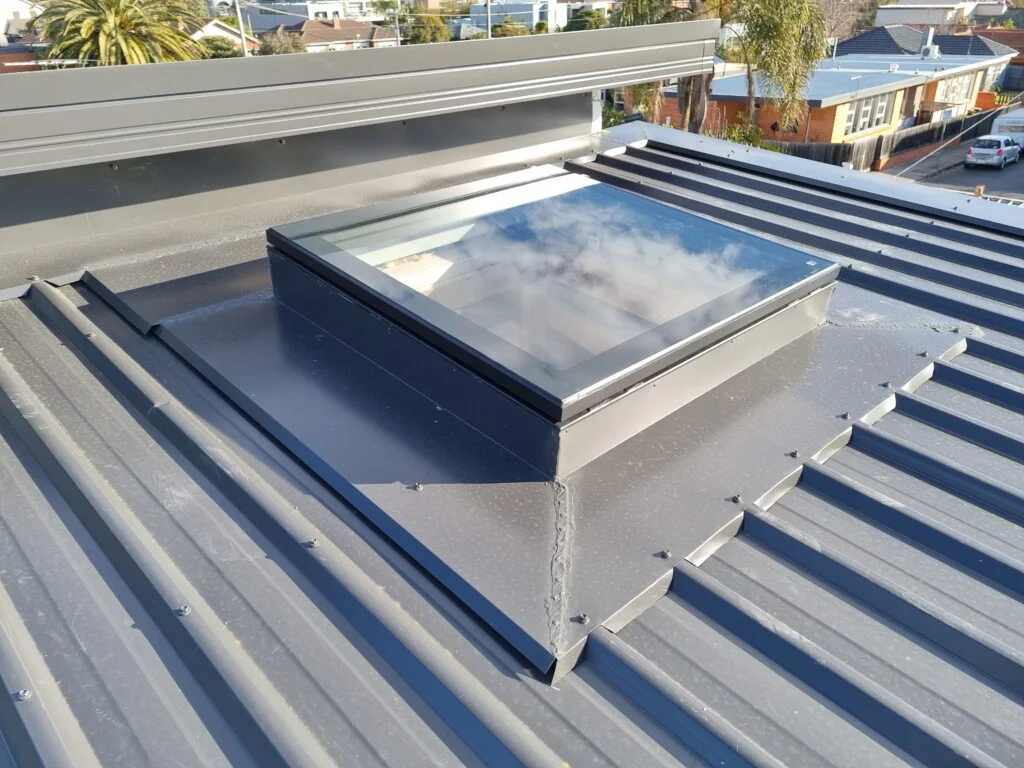
Today, the flat glass skylight for a flat roof is hands-down the better choice for both performance and aesthetics. Made with high-performance, double-glazed safety glass, these units give you a crystal-clear view and a clean, low-profile look that sits beautifully on modern rooflines common across the Mornington Peninsula. They’re far more durable and offer vastly superior thermal insulation.
A huge advantage of modern flat glass is how well it handles water. Vivid Skylights are designed with a frameless top pane of glass, which means there’s nowhere for water and debris to pool. This keeps your view clearer for longer with less cleaning.
This shift towards high-performance materials isn’t just a trend. The demand for quality flat roof skylights in Australia is booming, driven by a national focus on creating more sustainable homes. The global market, valued at around USD 3.08 billion in 2022, is set to climb, with the Australian market growing at a compound rate of about 6.3% annually. This tells us one thing: homeowners are getting serious about energy-efficient features.
The Essential Anatomy of a Flat Roof Skylight
A great skylight is more than just the glass unit itself. For a bulletproof, long-lasting installation, two other components are absolutely non-negotiable.
The Upstand (or Kerb): Think of the upstand as a tiny retaining wall for your skylight. It’s a raised frame, usually built from timber, that is fixed directly onto the roof structure. The skylight unit then sits securely on top of it. Its job is crucial: to lift the skylight high enough so that any water that might pool on the flat roof surface can never reach the skylight’s seals.
The Flashing System: If the upstand is the wall, the flashing is the raincoat wrapped around it. This is a custom-shaped metal profile that’s designed to perfectly integrate the upstand with your specific roofing material, whether it’s Colorbond sheeting or a torch-on membrane. It forms a seamless, watertight barrier that channels every drop of water safely away from the opening.
To get a better sense of the options available, you might want to explore our detailed guide on the different types of skylights available.
How to Position and Size Your Skylight for Perfect Light
Deciding where to put your flat roof skylight is just as critical as picking the right type. Think about it like placing a lamp in a room—get it wrong, and you’re stuck with harsh glare or awkward, gloomy corners. But when you get it right, you create a beautiful, ambient glow that completely transforms the space.
This isn’t just about looks; it’s about performance. The right positioning and size will fill your room with balanced light, boost your home’s thermal efficiency, and guarantee you get the most out of your investment. For your Mornington Peninsula home, that means learning to work with the Australian sun, not against it.
Finding the Perfect Position
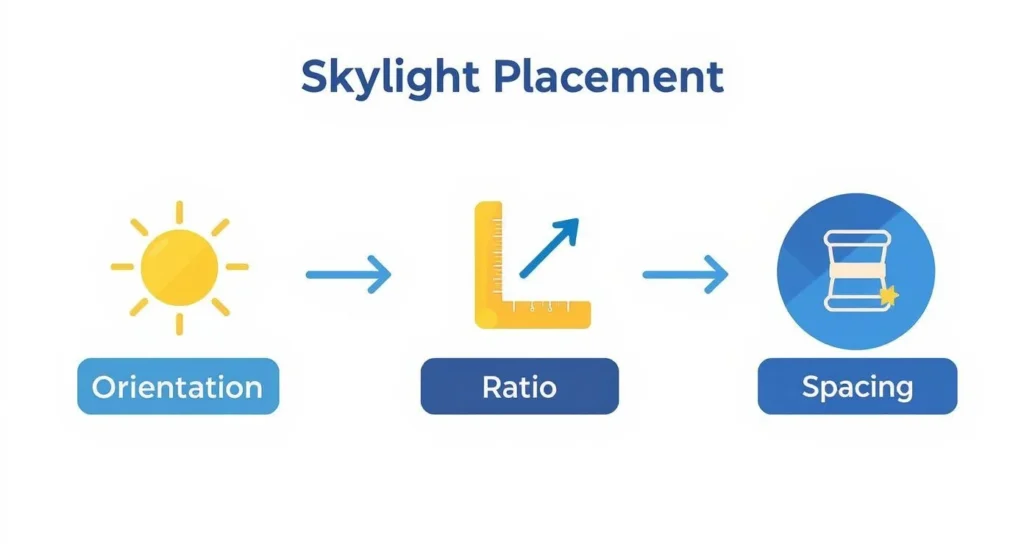
The orientation of your skylight directly controls the quality of light and the temperature of the room below. It’s a balancing act between inviting in as much daylight as possible and managing heat gain, especially during our scorching summers on the Mornington Peninsula.
Here’s a simple breakdown of how orientation can work for you:
- North-Facing Skylights: Here in the Southern Hemisphere, a north-facing skylight is your ticket to the most direct and consistent sunlight all day long. This is brilliant for bringing maximum brightness into a dark room, but you’ll probably want an integrated blind to manage the light and heat on those really hot days.
- South-Facing Skylights: This direction delivers a much softer, more diffuse ambient light. It’s an excellent choice for rooms where you want gentle, even illumination without the intensity of direct sun—think studios, offices, or main living areas.
- East-Facing Skylights: Perfect for morning people. These skylights catch the bright morning sun, helping to energise a space right at the start of the day. They’re a fantastic addition to kitchens and breakfast nooks.
- West-Facing Skylights: A west-facing skylight will catch the strong afternoon sun, which can bring a lot of warmth with it. While that might be welcome in winter, you’ll almost certainly need a block-out blind to keep the heat under control in summer.
Getting the Skylight Size Just Right
Once you’ve got a spot in mind, the next big question is size. Go too small, and the effect will be underwhelming. Go too big, and you risk overwhelming the room with light or even compromising your home’s energy efficiency. The goal is to find that perfect sweet spot.
A well-regarded guideline in Australian building is the floor-to-skylight area ratio. It’s a straightforward rule of thumb that helps you calculate the ideal amount of glazing for any room.
For most living spaces, the total glass area of your skylight should be between 3% and 5% of the room’s floor area. This provides plenty of natural light without causing too much heat gain in summer or heat loss in winter.
For instance, if you have a living room that’s 5 metres by 6 metres (that’s 30 square metres), you’d be looking for a total skylight area between 0.9 and 1.5 square metres. This simple calculation helps ensure the light feels natural and balanced, not like you’re living under a spotlight.
Spacing and Australian Standards
If you’re planning to install more than one skylight to brighten up a larger room, spacing is the key to achieving a uniform wash of light. Put them too close together and you’ll create hotspots; too far apart and you’ll be left with dark patches in between.
A great rule to follow is to space your skylights approximately 1.5 times their height from the floor. So, if your ceiling is 2.7 metres high, you should space the centres of your skylights about 4 metres apart. This will give you that lovely, even light distribution.
It’s also crucial that any installation meets Australian building codes. Here, the National Construction Code (NCC) governs how skylights are installed to ensure they’re safe and energy-efficient. For example, the NCC states that the combined area of combustible skylights can’t exceed 20% of the roof area to reduce fire risks. By sticking to these guidelines, you can be confident your installation is both effective and compliant. You can learn more about how building codes shape window and skylight decisions by exploring professional roofing and construction insights.
The Critical Steps for a Leak-Proof Skylight Installation
When you’re installing a skylight on a flat roof, one word should be at the top of your mind: waterproofing. It’s a completely different ball game compared to a pitched roof, which uses gravity to its advantage. A flat roof can hold onto moisture, so getting a perfect, bulletproof seal around your skylight is absolutely non-negotiable.
Achieving a leak-proof finish isn’t about luck. It’s about a methodical process that tackles the unique challenges of a flat surface head-on. Understanding these steps means you can have a confident, informed chat with your installer and know the job’s being done right. For anyone living on the Mornington Peninsula, where the coastal weather can turn in an instant, that peace of mind is priceless.
The whole system really comes down to two key parts working together in perfect harmony: the upstand and the flashing.
The Power of the Upstand
The first line of defence in any flat roof skylight installation is the upstand, sometimes called a kerb. The easiest way to think of it is as a small, sturdy platform built specifically for your skylight to sit on.
This timber frame gets securely fixed to the roof’s structural joists, creating a raised edge around the opening that’s typically at least 150mm high. Its purpose is simple but brilliant: by elevating the skylight well above the roof’s surface, the upstand ensures that even if water pools during a heavy downpour, it can’t reach the skylight’s critical seals. It literally lifts the entire system out of harm’s way.
Flashing: The Secret to a Watertight Seal
With the upstand built, the next crucial step is creating a seamless, impenetrable barrier between this new frame and your existing roof. This is where flashing comes in.
Flashing is a custom-fabricated metal profile designed to wrap snugly around the upstand and integrate perfectly with whatever roofing material you have. This is where precision is everything; a generic, one-size-fits-all approach just won’t work here. For a skylight for a flat roof to last, the flashing has to be tailored to your specific roof material.
The best suppliers get this. Vivid Skylights, for instance, provides custom flashing kits designed to work flawlessly with different roof types, taking all the guesswork out of it.
- For Metal Roofs: The flashing is shaped to match the exact profile of roofing sheets like Colorbond, creating a mechanical lock that channels water away safely.
- For Membrane Roofs: A different design is used, allowing the waterproof membrane to be seamlessly heat-welded or bonded directly onto it. This forms one continuous, unbroken seal.
To really see how these components are designed for different roofs, it’s worth checking out the details of a purpose-built skylight flashing kit. Looking at the parts makes it crystal clear why a professional job is so vital.
DIY vs. Professional Installation: A Critical Choice
While the concepts of an upstand and flashing might seem straightforward, the actual execution is a highly skilled job. A DIY attempt might seem like a way to save money upfront, but it carries some serious risks.
Cutting the roof opening incorrectly, building a weak upstand, or messing up the flashing installation can lead to catastrophic leaks, structural damage to your home, and repairs that will cost far more than a professional installation ever would.
A professional installation isn’t just about getting the job done; it’s about guaranteeing the outcome. An experienced installer from the Mornington Peninsula area will understand how local roofing systems behave and has the tools and expertise to create a seal that will last for decades.
Just as importantly, hiring a professional is nearly always a requirement to keep your product warranty valid. Manufacturers like Vivid Skylights offer a 10-year leak-free warranty, but this is contingent on the unit being installed correctly according to their specifications. Opting for a pro ensures your investment is protected, giving you a beautiful, light-filled space without the worry.
Maximising Energy Efficiency and Home Comfort
A modern skylight is so much more than just a window on your roof; it’s a high-performance piece of your home’s thermal envelope. For homes on the Mornington Peninsula, where the weather can swing from chilly winter mornings to scorching summer afternoons, a skylight’s ability to insulate is every bit as important as the light it lets in.
Getting this right can dramatically improve your home’s comfort and put a real dent in your energy bills.
The key is getting your head around two technical terms: U-value and Solar Heat Gain Coefficient (SHGC). Think of it this way: U-value measures how much heat escapes through the skylight, while SHGC measures how much solar heat it lets in. For both, a lower number is your best friend—it means less precious heat is lost in winter and less unwanted heat gets in during summer.
The Power of High-Performance Glazing
The real magic behind achieving these low numbers is the glass itself. A standard, single-pane window is a massive weak point for insulation, but a quality skylight for a flat roof uses clever technology to solve that problem entirely.
- Double Glazing: This is the non-negotiable standard for any energy-efficient window. Two panes of glass are separated by a sealed air gap, which acts as a surprisingly powerful insulator.
- Argon Gas Fill: To really boost that performance, the gap is filled with argon gas. Because argon is much denser and a poorer conductor of heat than plain air, it significantly slows down thermal transfer.
- Low-E Coating: This is the secret weapon. A Low-Emissivity (Low-E) coating is a microscopically thin, transparent layer of metal oxide applied to the glass. It reflects infrared heat, keeping warmth inside during winter and blocking it out during summer.
You can think of this combination like a high-tech thermal flask. It’s designed to keep the temperature inside stable, no matter what’s happening outside. For your Mornington Peninsula home, that translates to a cosier living space in July and a cooler one in January, all while leaning less on your heater and air conditioner.
Smart Features for Ultimate Comfort and Control
Beyond the glass, other features elevate a skylight from a simple window to a smart home accessory. These additions give you complete control over your indoor environment, letting you adapt to your needs throughout the day and across the seasons.
For instance, integrated blinds are a total game-changer for managing intense sunlight, especially in north or west-facing rooms. At the touch of a button, you can filter out harsh glare or black out the room completely.
Likewise, motorised opening models fitted with rain sensors offer truly worry-free ventilation. They’ll automatically close the moment rain is detected, so you can enjoy fresh air without constantly checking the weather forecast. To see how these elements fit into the bigger picture of a greener home, you can explore various sustainable architecture strategies.
Budgeting for Your Skylight Project
Figuring out the financial side of your skylight installation is just as important as picking the perfect spot for it. When you map out a clear budget from the get-go, you can tackle the project with confidence, knowing there won’t be any nasty surprises down the line. The total investment for a skylight for a flat roof isn’t a single figure; it’s really a mix of the product cost and the skilled labour needed to get it installed just right.
Several key things can nudge the final price up or down. The skylight unit itself is the starting point, and its cost will shift based on its size, whether it’s fixed or opening, and any extra features you might want, like motorised openers or built-in blinds. It makes sense that a larger, electric-opening skylight will be a bigger initial investment than a more compact, fixed model.
Then you have the installation costs, which are the other major piece of the puzzle. This can vary quite a bit depending on how complex your Mornington Peninsula roof is, the specific materials involved (like metal sheeting or a membrane roof), and how much finishing work is needed inside. This could include plastering and painting the new light well to make it look seamless.
Breaking Down the Costs
To get a realistic financial picture, it helps to list out all the potential expenses. This way, every part of the project is accounted for before anyone picks up a tool.
- Skylight Unit: The main event. The cost here depends on size, glazing type, and features.
- Flashing Kit: This isn’t optional—it’s the essential waterproofing component tailored to your roof type.
- Labour Costs: This covers the installer’s time for everything from cutting the opening and building the upstand to the final waterproofing and finishing touches.
- Additional Materials: Think timber for the upstand, waterproofing membranes, and interior supplies like plasterboard and paint.
- Potential Council Fees: Depending on how big your renovation is, some projects might need a permit from the Mornington Peninsula Shire.
Planning for these variables is the secret to a stress-free project. A clear, itemised budget lets you make smart decisions and put your money where it counts, ensuring your new skylight adds value without breaking the bank.
Planning and Preparation
Once you have a budget sorted, the next step is to handle the logistics. It’s always a smart move to check in with the Mornington Peninsula Shire about any local building rules or permit requirements that might apply to your project. A quick phone call can clear up any obligations right away.
Getting on the same page with your builder or roofer is also critical. They can give you priceless insight into your roof’s structure and make sure the installation timeline fits smoothly with any other renovation work you have going on. Lastly, always ask about the product warranty. Understanding what’s covered, like Vivid Skylights’ 10-year leak-free warranty, gives you long-term peace of mind and protects your investment for years to come.
For a more detailed breakdown and a preliminary quote, checking out a comprehensive guide to skylight installation costs is an excellent place to start your financial planning.
Your Flat Roof Skylight Questions Answered
It’s completely normal to have questions when you’re planning a home improvement project, even when you’ve done your homework. Here are a few of the most common queries we get from homeowners on the Mornington Peninsula about flat roof skylights, with some straightforward, practical answers.
Can I Install a Skylight on Any Type of Flat Roof?
Yes, you absolutely can. We can install a skylight on just about any flat roof material you’ll find on the Peninsula, whether it’s a modern metal roof, a membrane, or even concrete. The secret isn’t in the roofing material itself, but in using the right hardware for the job.
The critical component is a specialised flashing kit that’s designed to create a perfect, watertight seal with your specific roof type. A good installer will always check your roof’s structure first to make sure it can handle the skylight’s weight. From there, they’ll choose the right flashing to build a durable seal that can withstand our tough coastal weather.
How Much Maintenance Does a Flat Roof Skylight Need?
You’ll be happy to hear that modern skylights are designed to be incredibly low-maintenance. They’re meant to be enjoyed, not added to your weekend chore list. High-quality skylights, like the ones we offer at Vivid Skylights, come with a self-cleaning coating on the outside. It’s a clever bit of tech that uses rainwater to wash away dust and grime, keeping your view crystal clear.
For the inside, you just clean the glass as you would any other window. We do suggest a quick look at the exterior seals once a year, just to make sure no leaves or debris have piled up. That’s really all it takes to keep your skylight in top condition.
Will a Skylight Make My Room Too Hot in Summer?
That’s a fair question, especially with our hot Mornington Peninsula summers, but it’s a problem that modern skylight technology has well and truly solved. High-performance double glazing is now the industry standard, and it’s fantastic at preventing heat from getting through.
This is further enhanced with a Low-E (low-emissivity) coating and an argon gas fill between the two panes of glass. This combination is brilliant at blocking the sun’s heat while letting all that beautiful, natural light pour in. If you have a room that gets a lot of direct sun, you can also add an integrated blind for complete control, guaranteeing your space stays comfortable even on the hottest days.
A skylight is no longer just a piece of glass; it’s an engineered part of your home’s thermal solution. The right glazing package turns it into a source of light, not unwanted heat.
What Is the Difference Between a Skylight and a Roof Window?
While the terms are often used interchangeably, there is a clear technical difference. ‘Roof windows’ are generally made for pitched roofs (think 15 degrees or more) and are often installed low enough to be within easy reach.
‘Skylights’, on the other hand, are engineered for a much broader range of installations, including completely flat roofs. A proper skylight for a flat roof needs specific components—like an upstand (or kerb) to raise it above the roof surface and a custom flashing system to shed water effectively and eliminate any chance of leaks.
Ready to transform your Mornington Peninsula home with beautiful natural light? At Vivid Skylights, we specialise in high-performance, leak-proof skylights designed for Australian conditions. Explore our range of fixed and opening models and see how easy it is to bring the outside in. Visit us at https://vividskylights.com.au to learn more.