

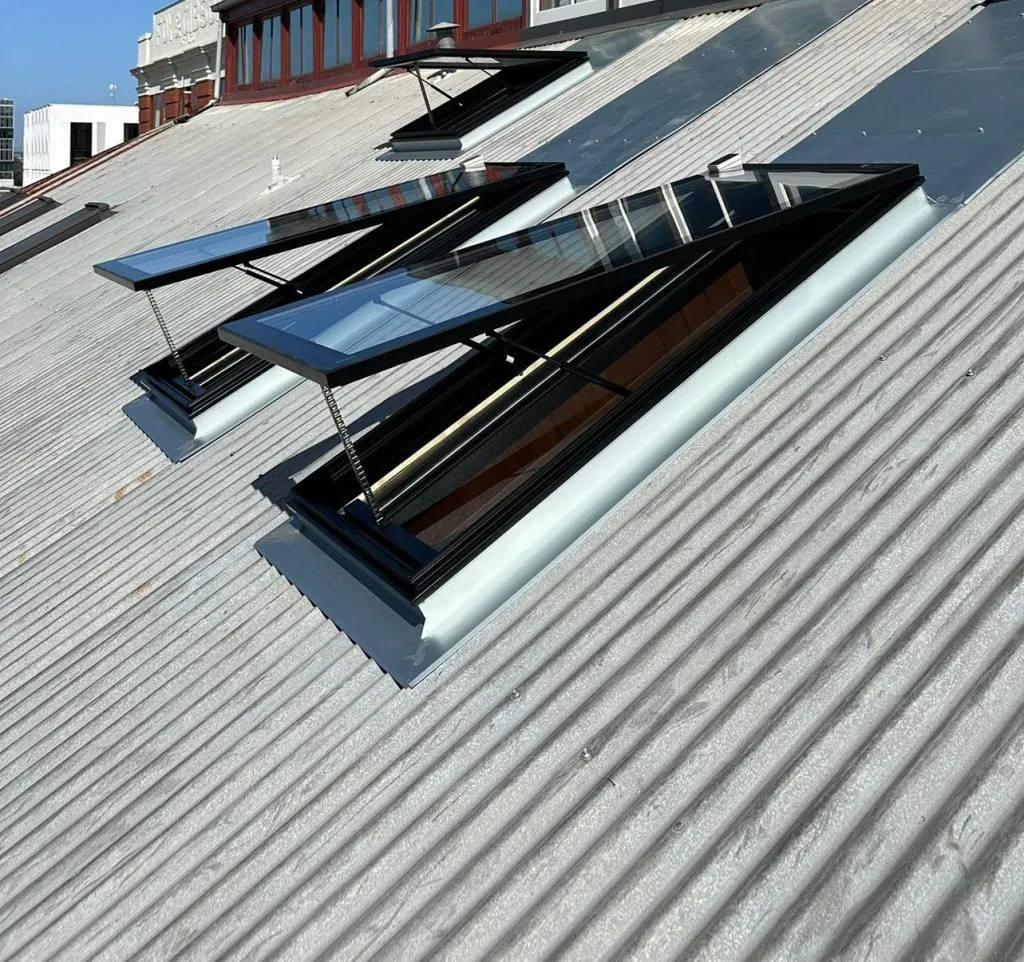
Thinking about a solar skylight from a big-box store like Bunnings? The first thing to know is you’re looking at a completely self-contained system. Unlike traditional electric models, these skylights don’t need an electrician because an integrated solar panel does all the work, powering features like remote controls and blinds. It’s modern convenience without tacking another dollar onto your energy bill.
The Smart Homeowner Shift to Solar Skylights
Australia’s love affair with solar energy has officially moved beyond just the big panels on the roof. It’s now about making every part of the home smarter, more efficient, and more comfortable. We’re seeing a real shift where savvy homeowners are looking past basic, fixed skylights and embracing a much cleverer solution.
A solar skylight isn’t just a window pointing at the sky. Think of it as an intelligent lighting and ventilation system, powered entirely by the sun. A small, discreet solar panel captures daylight and charges an internal battery. That stored energy is then on standby to power some pretty slick features that genuinely improve how you live in your home.
This usually includes things like:
- Remote-Controlled Blinds: Block out the harsh midday sun or get some privacy with the simple press of a button.
- Automatic Vents: Let fresh air in to improve air quality and get rid of that stuffy feeling.
- Rain Sensors: These are fantastic. The skylight automatically closes itself the moment it starts to rain, giving you total peace of mind.
Why Solar Skylights Just Make Sense for Australian Homes
This move towards solar skylights perfectly mirrors the country’s wider obsession with solar power. In September 2025 alone, Aussies added a staggering 302 megawatts (MW) of new rooftop solar. With nearly one in three homes now using solar panels—which contribute 12.4% of the nation’s total energy—it’s obvious we value energy independence.
This mindset makes solar skylights the logical next step. They tap into that same free, abundant resource—our sunshine—to add function and value to your home without needing complex wiring or costing you anything to run.
By harnessing solar power, these skylights offer a standalone solution that perfectly blends convenience with sustainability. They represent a smart investment in a brighter, more energy-efficient living space, directly addressing the demand for greener home improvements.
Exploring the many benefits of skylights shows how they can turn dark, forgotten corners into vibrant parts of your home. By choosing a solar-powered model, you’re not just lighting up a room; you’re adopting forward-thinking tech that fits a modern, eco-conscious lifestyle. This guide will walk you through everything you need to know to make the right call for your home.
Solar, Electric, or Fixed? Choosing the Right Skylight for Your Home
Walking down the lighting aisle can be a bit much. When it comes to skylights, thankfully, the choice usually boils down to three main contenders: solar-powered, electric (hardwired), and the traditional fixed models. Each one strikes a different balance between function, cost, and convenience.
Getting your head around these differences is the key to picking the right one for your home. It’s not just about letting light in; it’s about finding the perfect match for your budget, how you want to use it, and what your long-term plans are.
The Core Differences Explained
At its heart, a fixed skylight is just what it sounds like—a window for your roof. It’s sealed shut, and its one job is to let that beautiful natural light pour into your home. It’s the simplest and often the most budget-friendly option upfront.
An electric skylight takes things up a notch. It’s hooked into your home’s wiring, allowing a motor to open and close it for ventilation, usually with a switch on the wall. This adds a fantastic new layer of function, but it does mean you’ll need a sparky for the installation.
And then there’s the solar-powered skylight. This clever design really offers the best of both worlds. It operates completely off-grid, using its own small, built-in solar panel to power everything from the opening mechanism and blinds to smart features like rain sensors. You get all the convenience of an electric model without the complex wiring.
Comparing Your Options Side-by-Side
To lay it all out clearly, let’s break down how each type stacks up on the factors that matter most to Aussie homeowners. Whether you’re eyeing up a solar skylight from Bunnings or a specialist supplier, seeing a direct comparison makes the decision a whole lot easier.
Skylight Type Feature Comparison
| Feature | Solar-Powered Skylight | Electric (Hardwired) Skylight | Fixed (Non-Opening) Skylight |
|---|---|---|---|
| Installation | No electrician needed. It’s a self-contained unit, making it much simpler for a builder or a confident DIYer to install. | Requires a licensed electrician to connect to your home’s main power, adding cost and complexity. | The simplest installation, but still involves cutting into the roof and ensuring it’s perfectly waterproofed. |
| Running Costs | Zero. It’s powered entirely by the sun, so it won’t add a single cent to your energy bills. | Minimal, but it does draw a small amount of power from your grid every time you use it. | Zero. There are no electrical components to run. |
| Ventilation | Yes. You can open and close it with a remote control to let hot air escape and improve airflow. | Yes. Usually operated by a wall switch for easy, on-demand ventilation. | No. It is permanently sealed and does not open. |
| Extra Features | Often includes remote-controlled blinds and automatic rain sensors as standard features. | Can often be fitted with blinds and rain sensors, but these usually add to the cost and wiring complexity. | None. Its sole purpose is to provide natural light. |
| Best For | Homes wanting modern convenience, energy independence, and a simpler, more cost-effective installation. | Rooms that need frequent ventilation where getting access to mains power is straightforward. | Areas where the main goal is just to get maximum daylight for the lowest possible initial cost. |
Why Solar Often Offers the Best Long-Term Value
While a fixed skylight is cheapest to buy and an electric model gives you that robust, hardwired control, the solar skylight often comes out as the clear winner for all-around value. The biggest reason? It cuts out the installation complexity and cost.
The ability to install a fully functional, remote-controlled skylight without needing to hire an electrician is a massive advantage. It not only saves you hundreds of dollars in trade costs but also dramatically simplifies the entire project.
Better yet, the running costs are non-existent. An electric skylight’s energy draw might be small, but a solar model’s complete independence from the grid fits perfectly with the big push in Australia towards energy self-sufficiency and lower household bills. For many homeowners, this blend of advanced features, easy installation, and $0 running costs makes a solar skylight the smartest long-term investment for brightening up their home.
What to Look for in a Quality Solar Skylight
When you’re standing in a store aisle looking at a solar skylight, it’s easy to get lost in the marketing jargon. To make a smart choice, you need to look past the shiny display and understand the core components that make a skylight durable, efficient, and—most importantly—leak-proof.
Think of it as knowing what to look for under the bonnet of a car. The real quality is in the engineering, not just the paint job. This is your practical checklist for assessing any solar skylight, whether it’s from a big-box store like Bunnings or a specialist supplier. We’ll break down the essential features into plain English so you can evaluate them with confidence.
Getting these details right is what separates a fantastic purchase from a future headache. This simple decision tree can help you quickly figure out which type of skylight might be the best starting point for you.
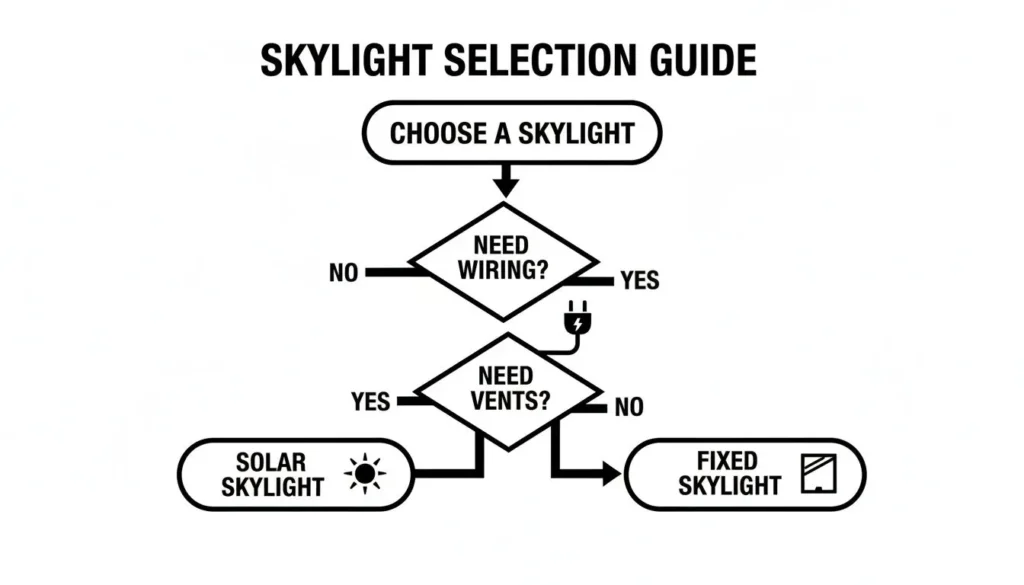
As you can see, if avoiding an electrician and extra wiring is a priority, a solar skylight is the clear winner, offering advanced features without the fuss.
Why High-Performance Glazing is a Must
The glass, or glazing, is the heart of your skylight. In Australia, where we swing between intense summer heat and chilly winter mornings, single-pane glass just doesn’t cut it. It acts like a thermal weak spot in your roof, letting heat pour in during summer and escape during winter, which only drives your energy bills up.
That’s why double-glazing is non-negotiable. It’s made of two panes of glass separated by a sealed air or gas-filled gap. This gap acts as a powerful insulator, much like a thermos keeps your drink hot or cold. It can slash heat transfer by up to 50%, keeping your home more comfortable all year round and saving you real money.
Choosing a skylight with high-quality double-glazing is one of the most effective ways to ensure it improves your home’s comfort and energy efficiency, rather than compromising it. It’s a fundamental feature for any modern Australian home.
The Frame and Flashing: Your Defence Against Leaks
While the glass manages light and heat, the frame and flashing kit are your frontline defence against the elements—especially rain. These two components work together to create a completely weatherproof seal with your roof.
A cheap frame can rust, warp, or crack over time, creating a perfect pathway for water to get in. Always look for frames made from powder-coated aluminium. This material is naturally rust-proof, and the powder coating adds an extra layer of durable protection against harsh UV rays and moisture, ensuring it lasts for decades.
The flashing kit is arguably the most critical part for preventing leaks. Think of it as the high-tech, waterproof collar on a premium raincoat. It’s a set of custom-shaped metal pieces designed to interlock perfectly with your specific roofing material—whether it’s corrugated iron, tile, or slate—and channel water safely away. A one-size-fits-all approach just doesn’t work here; you must use the flashing kit designed for your roof type to guarantee a watertight seal.
Smart Features That Actually Add Value
The real magic of a solar skylight lies in its intelligent, self-powered features. While they might seem like luxuries, they offer practical benefits that make daily life easier.
- Integrated Blinds: Perfect for managing light and privacy. Solar-powered blinds can be opened or closed with a remote, letting you block the harsh midday sun in a living room or plunge a bedroom into darkness.
- Rain Sensors: This is a brilliant set-it-and-forget-it feature. A small external sensor detects the first drops of rain and automatically closes the skylight. It gives you complete peace of mind, even if you’re not home.
- Self-Cleaning Glass: Many premium models have a special coating on the glass that uses the sun’s UV rays to break down organic dirt. When it rains, the water sheets off, washing the grime away. This drastically reduces how often you need to get on the roof for cleaning.
The demand for these kinds of smart home technologies is growing fast. Australia’s investment in related tech, like solar street lighting, is projected to jump from USD 176.12 million in 2024 to USD 757.08 million by 2033. This massive public sector investment fuels homeowner interest in similar solar-powered solutions, boosting the popularity of products like a solar skylight from Bunnings. You can explore the full market analysis on OpenPR to learn more. By understanding these key features, you’re now equipped to look beyond the price tag and assess the true quality and long-term value of any solar skylight you’re considering.
Deciding on Installation: DIY or Professional Help?
You’ve found the perfect solar skylight, and it’s just been delivered. Now for the big question standing between you and that beautiful, sun-drenched living room: who’s going to install it? This decision usually boils down to a mix of your own skills, your budget, and how comfortable you are working up on the roof.
Both the DIY path and hiring a pro have their own clear advantages. The good news is that a solar skylight, by its very nature, removes a massive hurdle—the need for an electrician—making a DIY installation a genuine option for many Aussies.
The DIY Installation Route
For the hands-on homeowner, installing your own solar skylight can be a seriously satisfying and wallet-friendly project. Unlike electric models that demand a licensed sparky, a solar unit is completely self-contained. That lack of mains wiring is a huge plus, turning a potentially complex job into a much more manageable construction task.
But let’s be realistic about what’s involved. This isn’t like assembling a flat-pack bookcase; it requires a steady hand and real precision, especially when you’re up on your roof.
A typical DIY job breaks down into these key stages:
- Careful Planning: Measuring twice (or three times!) and marking the exact spot on both your interior ceiling and the roof.
- Cutting the Openings: Making precise cuts through your ceiling plasterboard and your roof structure.
- Fitting the Skylight: Securing the unit in place and ensuring it’s perfectly level.
- Installing the Flashing Kit: This is the most critical step. Get this right, and you have a guaranteed watertight seal. Modern flashing kits are designed to be quite user-friendly, but you still need to follow the instructions to the letter.
Safety is non-negotiable. Working on a roof carries obvious risks. Always use the proper safety gear, including a harness, and make sure your ladder is rock-solid. And never, ever work on a wet or windy day.
If you’re leaning this way, a good set of instructions is your best friend. For a detailed walkthrough of the entire process, check out this comprehensive DIY skylight installation guide that takes you through every single step.
Calling in a Professional Installer
If the thought of working on your roof makes you a bit queasy, or you just want the job done quickly and flawlessly, then hiring a professional is absolutely the way to go. The peace of mind that comes with a pro installation is often worth every cent.
An experienced installer will have the job knocked over in a fraction of the time it would take most DIYers. Plus, they know how to handle those little curveballs, like finding a roof truss right where you wanted your skylight to go.
Even better, a key benefit is the installation warranty. Most reputable installers will guarantee their workmanship against leaks for a certain period, giving you an extra layer of protection on top of the product warranty. This is a massive advantage, as one tiny mistake in the seal can lead to costly water damage down the track.
When you’re getting quotes, be sure to ask for:
- Proof of insurance, especially public liability.
- Examples of previous work or contactable references.
- A detailed breakdown of what the quote covers (labour, materials, rubbish removal).
- Confirmation of their experience with your specific roof type, whether it’s tile, Colorbond, or something else.
Ultimately, the choice is yours. A successful DIY installation of a solar skylight from Bunnings or a specialist supplier can bring immense satisfaction and save you a few hundred dollars. On the other hand, a professional ensures a flawless, stress-free result with the backing of a workmanship guarantee—a sound investment in your home’s future.
Bunnings vs Specialist Brands What’s the Difference
When you’re ready to buy a solar skylight, you’ll quickly find yourself at a fork in the road. One path leads to the broad convenience of a big-box retailer like Bunnings, and the other to the focused expertise of a specialist supplier. There’s no single “right” answer here; the best choice really boils down to what matters most for your project.
Think of Bunnings as the ultimate hardware superstore. It’s incredibly handy to walk in, grab a standard-sized solar skylight off the shelf along with your paint and timber, and have it ready to go that same day. This approach is fantastic for straightforward jobs where an off-the-shelf product fits the bill perfectly.
Specialist brands, on the other hand, are more like a bespoke tailor. They live and breathe skylights. This deep focus means they can offer a much wider array of options, including premium features and custom sizes that you simply won’t find sitting on a general retail shelf.
Convenience vs Customisation
At its core, the decision comes down to this trade-off. Big-box stores are masters of providing popular, standardised products right now. You get the familiar shopping experience and the simple satisfaction of grabbing a box and heading to the checkout.
A specialist, however, is your go-to when your project has specific needs. Maybe you need a non-standard size to fit perfectly between your roof trusses, or you’re chasing a high-end architectural look with completely frameless top glazing. This is where they shine.
Here’s a quick way to think about it:
- Bunnings: Perfect for standard sizes, immediate pickup, and bundling your purchase with other hardware supplies.
- Specialist Supplier: The best choice for custom dimensions, advanced material options, and getting direct access to in-depth product knowledge.
Looking Beyond the Price Tag
While the initial cost is always on your mind, the real value of a solar skylight reveals itself over its entire lifespan. A slightly cheaper upfront price can easily become a false economy if it means you’re compromising on quality or long-term performance.
When you’re comparing your options, it’s crucial to look at the total package. A great price means very little if the warranty is short, the frame is prone to weathering, or the flashing kit for your specific roof type isn’t included.
To make a truly smart decision, you need to weigh up these key factors:
- Material Quality: Are the frames made from durable, powder-coated aluminium? Is the glazing high-performance double-glazing designed to handle the tough Australian climate?
- Included Components: Does the price include the essential flashing kit for your roof type? This is non-negotiable for a leak-proof installation.
- Warranty Terms: Compare the length and coverage of the warranties. A solid warranty (like 10 years) is a clear sign that the manufacturer has real confidence in their product.
- Expert Advice: Can you speak directly with someone who actually understands the technical details of installation, roof pitch compatibility, and local building codes?
Australia’s incredible embrace of solar technology is shaping what homeowners expect. With a staggering 1.828 million rooftop solar systems installed between 2020-2025 alone, people are more informed and demand better quality. This trend is pushing both big retailers and specialists to offer advanced features like self-cleaning glass, which can cut lighting bills by 25% on sunny days by maximising every bit of light. You can find more insights into Australia’s solar boom over at Green.com.au.
Ultimately, whether you choose a solar skylight from Bunnings or a specialist, doing your homework is the key to making sure you get the best possible value for your home.
Got Questions About Solar Skylights?
As you get closer to a decision, it’s completely normal for a few last-minute questions to pop up. Choosing the right skylight is a big investment in your home, and feeling confident about the details is key.
This last section is all about giving you quick, straightforward answers to the most common queries we hear from Aussie homeowners. We’ll cover how these units handle cloudy days to what little maintenance you can actually expect, making sure you’ve got all the info you need.
How Well Do Solar Skylights Work When It’s Cloudy?
This is easily one of the first questions people ask, and the answer is better than you might think. On an overcast day, the main job of the skylight—letting in natural light—works perfectly. In fact, many people prefer the softer, more diffused light that a cloudy day brings.
The solar panel’s only job is to power the extras, like the motor for the blind or the vent. It does this by charging a small, high-capacity battery tucked away inside the unit. This battery acts like a power bank, holding more than enough charge to open and close the skylight many times over, even after several days of miserable, rainy weather. You won’t get stuck with an open window just because the sun isn’t blazing.
Think of the solar panel as a trickle charger for a powerful little battery. It doesn’t need intense, direct sunlight every day to keep the system topped up and ready to go, making it perfectly reliable for Australia’s famously unpredictable weather.
This clever design means you have full control whenever you need it, no matter what the sky looks like.
Do I Need to Hire a Sparky to Install a Solar Skylight?
Nope, and this is probably one of the biggest wins of going solar. A solar skylight is a completely self-contained, off-grid unit. There’s no wiring to connect to your home’s main power supply whatsoever.
This brings a couple of major benefits:
- You save money. You completely avoid the cost of hiring a licensed electrician, which can easily save you hundreds of dollars in labour.
- The install is much simpler. The job becomes a straightforward roofing or building task. This makes it a much more realistic project for a confident DIYer or a general carpenter, taking a whole layer of complexity (and scheduling headaches) out of the equation.
By cutting out the need for an electrician, a product like a solar skylight from Bunnings or a specialist supplier makes the entire process easier, from buying it to enjoying the finished result.
What Kind of Maintenance Does a Solar Skylight Need?
Modern solar skylights are built to be incredibly low-maintenance—pretty much a “set and forget” feature for your house. The days of dragging a ladder out to clean your skylight every few months are well and truly over.
Many top-quality models now feature advanced self-cleaning glass. This is a special coating on the outside that uses nature to do the work for you. First, the sun’s UV rays break down organic dirt. Then, when it rains, the water sheets off the glass instead of forming droplets, washing all the loosened grime away.
The rest of the unit is built tough. The frames are usually made from powder-coated aluminium, chosen specifically because it won’t rust, warp, or fall apart under the harsh Aussie sun. Your only real job is to glance up at the roof every now and then to make sure leaves or twigs haven’t piled up around the flashing, which is good practice for anything on your roof.
Can a Solar Skylight Be Installed on Any Kind of Roof?
Yes, they’re designed to be extremely versatile and can be installed on almost any common Australian roof. Whether you have a classic tiled roof or a modern metal one like Colorbond, there’s a solution that will work. This flexibility makes them a great option for a huge range of homes.
The secret to a perfect, leak-proof installation is using the right flashing kit. Think of the flashing as a custom-made waterproof collar, specifically shaped to mesh perfectly with your roof’s profile. A kit for corrugated metal will be shaped very differently from one designed for terracotta tiles.
When you buy your skylight, you must get the matching flashing kit for your roof material. This isn’t an optional extra; it’s the single most important part for guaranteeing a watertight seal that will last for decades. Any good supplier will make it crystal clear which kit you need.
Ready to bring beautiful, natural light into your home without the hassle? The team at Vivid Skylights specialises in high-quality, double-glazed solar skylights designed for Australian conditions. Discover the perfect fit for your home by visiting https://vividskylights.com.au today.