


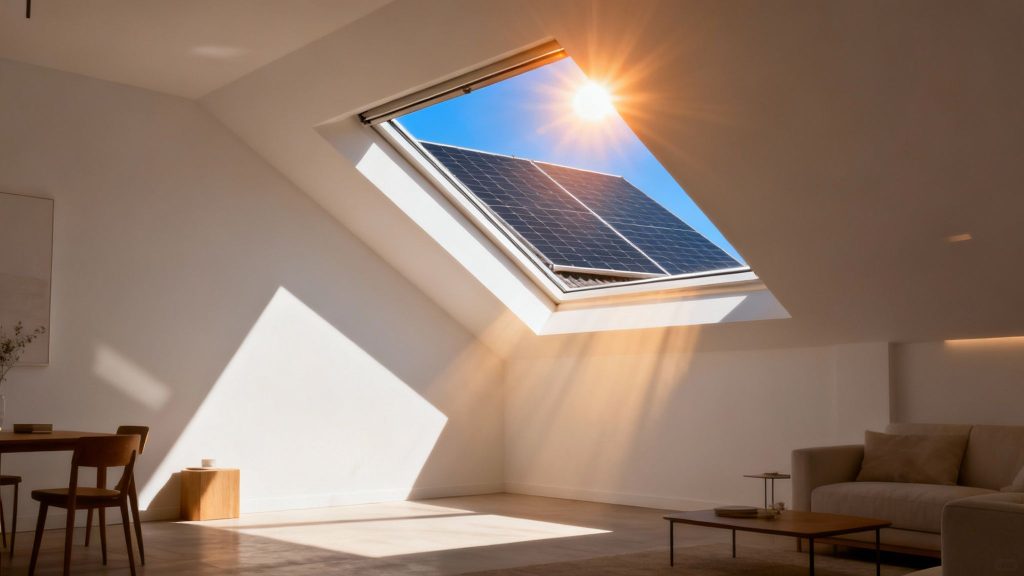
 Think of a solar-powered skylight not just as a window, but as a smart, self-sufficient portal to the sky. It’s an elegant solution that floods your home with natural light and fresh air, completely independent of your home’s electrical grid.
Your Guide to a Brighter, Smarter Home
Imagine turning a dark, forgotten corner of your house into the most inviting room. That’s the magic of a modern solar-powered skylight. It’s more than just a piece of glass; it’s an intelligent system designed for practical, everyday living, powering its own features without adding a single cent to your energy bills.
This guide breaks down everything you need to know about these clever systems. We’ll look at the simple genius behind their design—a high-performance skylight, a compact solar panel, and a discreet battery, all working in perfect harmony. The result is effortless control over your home’s light and airflow, completely off-grid.
What You’ll Discover
We’ll walk through the key benefits that make a solar-powered skylight such a brilliant addition to any home, whether you’re renovating or building from scratch. You’ll learn about:
- Effortless Operation: See how remote controls and clever rain sensors bring a new level of convenience to your fingertips.
- Energy Independence: Understand the freedom of a system that runs entirely on stored solar energy, meaning zero running costs. Ever.
- Installation Simplicity: Discover why the absence of electrical wiring makes installation quicker and often more affordable for builders and DIYers alike.
A solar-powered skylight is more than just a home improvement—it’s a lifestyle upgrade. It connects you with the outdoors, cuts down your reliance on artificial lighting, and actively creates a healthier, more sustainable home.
By the end of this guide, you’ll have a clear picture of how this technology can transform your living space, lower your energy consumption, and boost your home’s value. Let’s dive in and explore how you can bring intelligent, natural light into your home.
How Solar Powered Skylights Actually Work
You might think a solar-powered skylight is complicated, but the technology is surprisingly simple. It’s a clever, self-contained energy system that makes smart home features accessible without needing an electrician or adding to your power bill. The entire process is a seamless loop: capture, store, and use the sun’s energy.
It all starts with a small, high-efficiency photovoltaic (PV) solar panel built right into the skylight’s external frame. This panel works away all day, quietly capturing sunlight and converting it directly into electricity.
That captured energy isn’t used straight away. Instead, it gets sent to a compact, built-in battery which acts as a power bank. Think of it as a tiny energy reserve, saving up power for whenever you need it – day or night, rain or shine.
The Smart Components in Action
This stored power is what brings the skylight’s best features to life. When you grab the remote to open the skylight for a bit of fresh air or close a block-out blind, you’re using that free, stored solar energy.
The automated rain sensor is a perfect example. Picture a sudden Melbourne downpour while your skylight is open.
The built-in sensor instantly detects the first drops of rain and tells the motor to securely close the sash. This all happens automatically, powered entirely by the energy the skylight stored earlier. It protects your home without you lifting a finger.
This simple diagram shows how it all flows together, from sunlight capture to feature activation.
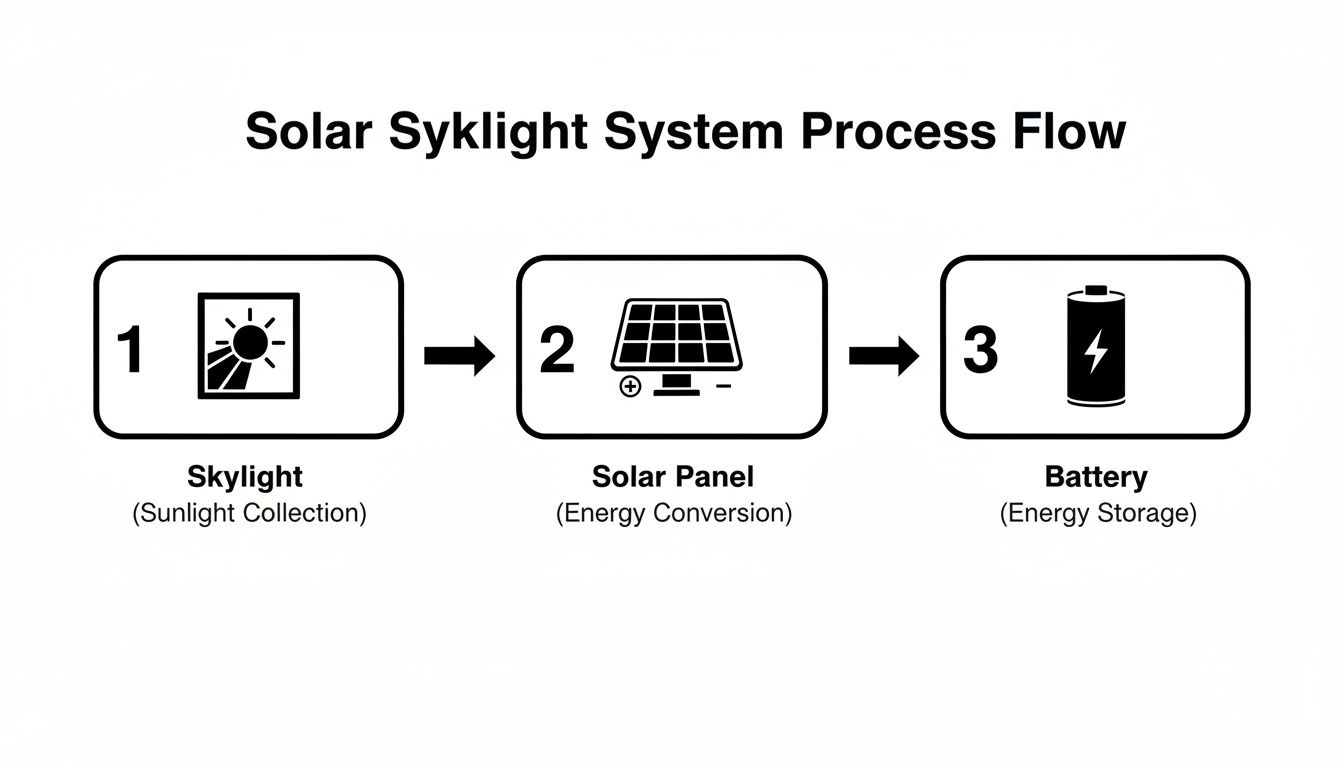
It’s a neat way to see how the sun’s rays are turned into usable power for smart features, completing a fully independent energy cycle.
Tapping into Australia’s Solar Boom
This kind of self-sufficient design fits perfectly with Australia’s love for solar. With the rooftop solar boom adding a record-breaking 302MW in September 2023 alone, solar-powered skylights are the next logical step for energy-savvy homes.
Introducing natural daylight can slash lighting needs by up to 30-50%, making your other energy-saving investments work even harder. For rooms without direct roof access, a solar powered LED skylight alternative can be a fantastic solution. Adding energy-efficient features like double-glazing also boosts home values, making them a smart choice in a green-conscious market.
It’s not just about convenience; it’s a practical way to make your home brighter and more energy-independent.
Comparing Skylight Types: Which Is Best for You?
Picking the right skylight is about more than just finding the right size. It’s about choosing the technology that fits your home, your budget, and how you want to live. While traditional fixed and hard-wired electric models definitely have their place, the solar-powered skylight brings a unique blend of convenience, savings, and installation ease that really sets it apart.
Think of a solar-powered skylight as a completely self-sufficient unit. It captures, stores, and uses its own energy, which means it costs absolutely nothing to open, close, or power its blinds. Over the life of the skylight, that adds up to real, tangible savings on your electricity bills.
An electric skylight, on the other hand, needs a direct connection to your home’s mains power. This not only adds a little bit to your energy consumption every time you use it but also makes the installation process a whole lot more involved.
The Clear Advantage of Wireless Installation
One of the biggest real-world benefits of choosing a solar-powered skylight is the installation itself. Because there’s no need to run complex wiring through your ceiling cavities and down your walls, you don’t need to hire an electrician.
This single factor streamlines the entire project, making it faster, cleaner, and often more cost-effective. For builders, it means fewer trades to coordinate on-site, and for DIY renovators, it turns a complex electrical job into a much more manageable installation.
This hassle-free setup makes it a fantastic choice for both new builds and retrofits. Hard-wired models, in contrast, always require professional electrical work, which adds time, cost, and disruption to your project. For those looking at a range of modern solutions, reading up on Velux conversions can offer some great insights into what’s possible.
To make the choice clearer, let’s break down how these three popular types of skylights stack up against each other. Each has its strengths, but understanding the differences is key to finding the perfect fit for your home.
Solar Powered vs Fixed vs Electric Skylights
| Feature | Solar Powered Skylight | Manual/Fixed Skylight | Electric (Hard-Wired) Skylight |
|---|---|---|---|
| Ventilation | Yes, motorised opening | No (fixed) or manual with a rod | Yes, motorised opening |
| Running Costs | Zero – runs on stored solar energy | None | Minor electricity usage |
| Installation | No electrician needed | Simpler installation | Electrician required for wiring |
| Convenience | Remote control, rain sensor | Manual operation or none | Remote control operation |
| Smart Features | Standard rain sensor | None | Possible with smart home integration |
| Best For | Convenience, energy savings, retrofits | Maximising light on a budget | New builds where wiring is simple |
This table shows that while a fixed skylight is a great, simple way to bring in light, and an electric model offers push-button convenience, the solar option truly delivers the best of both worlds. You get all the high-tech features without the installation complexity or the ongoing running costs.
Everyday Convenience and Smart Features
Beyond the installation, it’s the day-to-day experience where solar models really come into their own. They arrive packed with features designed for an effortless lifestyle.
- Remote Control Operation: Open or close your skylight with the simple touch of a button. It’s perfect for managing airflow and ventilation from anywhere in the room.
- Automated Rain Sensors: Every opening solar model includes a built-in sensor that automatically closes the skylight at the first sign of rain, giving you complete peace of mind. No more dashing home in a panic!
- Integrated Blind Options: You can easily add motorised block-out blinds that run on the same stored solar power. They’re ideal for bedrooms or media rooms where you need total light control.
While an electric skylight offers similar remote-controlled features, it’s still tethered to your home’s grid. A fixed skylight, the most basic option, simply provides light without any ventilation or smart capabilities. And for tricky spaces where a traditional skylight won’t fit, alternatives like solar tube skylights can be a brilliant solution.
Ultimately, the solar-powered skylight pulls ahead by offering advanced functionality with zero ongoing running costs—a smart investment in both comfort and efficiency.
Is Your Home a Good Fit for a Solar Skylight?
A solar-powered skylight can be a brilliant addition to just about any home, but it pays to check a few things first to make sure you get the best possible result. Answering a few quick questions about your property will give you the confidence that it’s the right move. The good news? Modern designs are incredibly versatile.
The first thing people usually worry about is their roof. You might be wondering if your roof’s pitch or material is up to the job, but today’s advanced flashing kits make solar skylights compatible with almost any Australian roof out there. It doesn’t matter if you have a classic pitched tile roof or a modern low-pitch metal one; there’s a reliable, weatherproof solution ready to go.
This flexibility opens the door for a huge range of properties, from older homes getting a facelift to brand-new builds. The whole game is about getting a secure, watertight seal, and that’s precisely what these custom-designed kits are built for.
Getting the Placement Just Right
Where you put your skylight is crucial for two big reasons: catching enough sun for the solar panel and controlling the light and heat that comes into your home. In an ideal world, the small integrated solar panel would face north to soak up the most sunlight all day, keeping the battery topped up.
But, a north-facing window can also let in a fair bit of heat during summer. This is where high-performance glazing really proves its worth.
All Vivid Skylights units feature double glazing as standard. Think of it like insulation for the window—it dramatically cuts down heat transfer, keeping your home cooler in summer and warmer in winter, no matter which way the skylight is facing.
This means you can focus on the best spot for charging the panel without having to stress about your home’s comfort.
Finding the Perfect Size and Fit
Picking the right size is all about striking a balance between the amount of light you want and the scale of the room. A small skylight can look a bit lost in a big living area, while a massive one might overwhelm a smaller space. With eleven standard sizes available, it’s easy to find the perfect match for any room, from a compact bathroom to an open-plan kitchen.
Keep these points in mind when you’re thinking about size and placement:
- Room Dimensions: A good rule of thumb is that the skylight’s glass area should be around 5-10% of the room’s total floor area.
- Light Direction: Picture how the light will move across the room at different times of the day and year. This helps you create the exact mood you’re after.
- Local Climate: Melbourne’s climate really shows why smart, energy-efficient solutions are a must. In Victoria, where homeowners added a massive 230MW of new rooftop solar in the first half of the year alone, people are embracing energy independence. Products like double-glazed, solar-powered skylights fit this trend perfectly, suiting both renovators and DIY enthusiasts on all roof types. You can read more about Australia’s growing solar capacity and its impact on residential energy solutions.
By working through these factors—your roof type, the skylight’s orientation, and the right size—you can confidently decide if a solar skylight is the perfect move for you. The next step is getting a proper assessment to bring your vision to life.
Understanding the Costs and Long-Term Value
When you’re looking at any upgrade for your home, the numbers have to make sense. A solar-powered skylight tells a compelling financial story that goes well beyond its initial price tag, blending upfront savings with fantastic long-term value.
Let’s talk about the initial outlay first. The main costs are the skylight unit itself and any extras you might want, like a motorised block-out blind for a bedroom. While a solar-powered model might have a slightly higher sticker price than a basic fixed skylight, it has a massive advantage over its hard-wired electric cousin.
The Hidden Savings in Installation
Here’s the real game-changer: the installation process. A traditional electric skylight needs a licensed electrician to run wiring all the way from your switchboard, fishing it through ceiling cavities and up to the roof. It’s a job that adds significant time, labour costs, and a whole lot of complexity.
A solar model, on the other hand, is a completely self-contained unit. Because it doesn’t need to be connected to your home’s mains power, you eliminate the need for an electrician entirely.
This one factor can actually make the total project cost for a solar-powered skylight lower than a hard-wired electric model. It simplifies scheduling for builders, causes less disruption, and makes it a much more manageable project for a skilled DIYer.
To get a clearer picture of what your project might involve, you can explore a detailed breakdown of skylight installation cost factors to help you plan your budget.
Your Return on Investment Over Time
The financial perks keep coming long after the installation is finished. The most obvious saving is on your energy bills. A solar-powered unit operates with zero running costs. Everything from opening it for a fresh breeze to closing the blinds is powered by free energy from the sun.
On top of that, by flooding your home with beautiful natural light, you’ll find yourself flicking on fewer lights during the day, which chips away at your electricity consumption. This consistent, year-after-year saving contributes directly to the skylight’s return on investment.
Beyond just energy savings, a high-quality, energy-efficient upgrade like a double-glazed skylight actively increases your home’s market value. It’s a genuinely attractive feature for potential buyers who appreciate modern convenience and sustainability. This investment is protected by our 10-year leak-free warranty, giving you complete peace of mind and securing the long-term value of your decision.
How to Choose the Right Solar Skylight Features
Choosing the perfect skylight solar powered system is about more than just picking a size. It’s about matching the features to your home and lifestyle, making sure your new skylight genuinely improves your day-to-day life, not just adds light. Thankfully, modern skylights are designed with practical, low-maintenance living in mind.
Take features like self-cleaning glass, for example. It cleverly uses rainwater to wash away dirt and grime, keeping your view crystal clear without you ever having to climb up on the roof. When you pair that with frameless top glazing, leaves and other debris have nowhere to build up, so you’re always getting the maximum amount of sunlight pouring through. It’s this combination of smart design that keeps your skylight looking great and working perfectly with almost no effort from you.
Customising for Comfort and Control
Beyond the standard build, customisation is where you really make a skylight your own. The right accessories can turn a simple source of light into a central part of your home’s comfort and climate control system.
Think about how you use each room. For a kitchen or bathroom, you’ll want to let fresh air in without inviting every fly and mosquito in the neighbourhood. An integrated fly screen is a non-negotiable here. It lets you ventilate your home with confidence, enjoying a natural breeze without any unwanted guests.
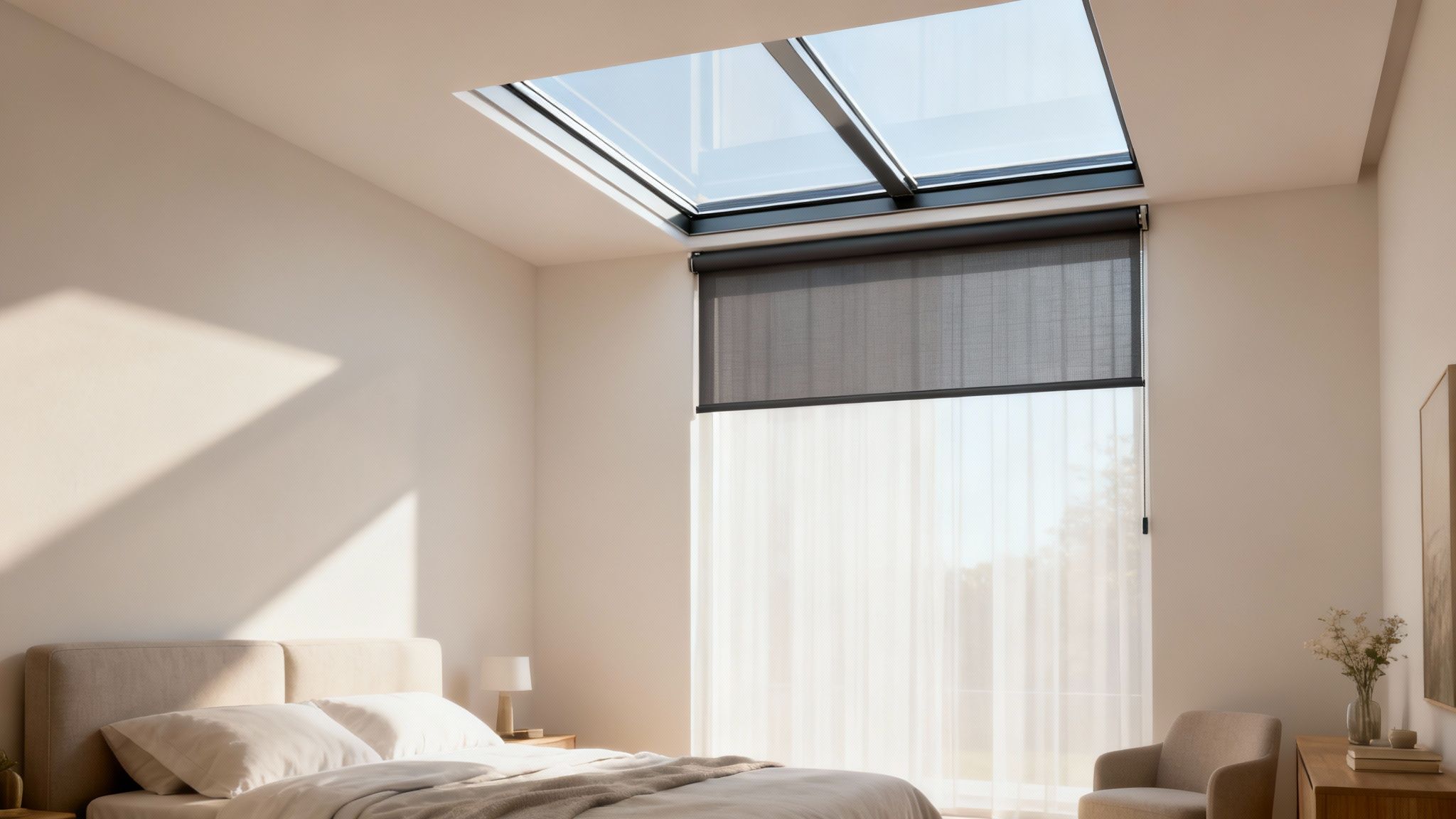
Then there are bedrooms, home cinemas, or any room where you need total darkness on demand. A motorised block-out blind is an absolute game-changer. These blinds run off the very same solar panel and battery as the skylight opener, giving you complete light control with just the press of a button.
Choosing the right features is about anticipating your needs. A skylight in a living area might prioritise maximum light, while one in a bedroom demands total light control for a good night’s sleep.
Thinking long-term, it’s also worth considering features that help you how to manage heat and reduce solar gain, something people often look for with traditional blackout curtains. A quality blind gives you that control, helping to keep your home comfortable all year round.
Ultimately, by carefully thinking through these features, you’re not just installing a window in your roof; you’re creating a tailored lighting and ventilation solution. This thoughtful approach ensures your investment is a perfect fit for your home and makes your daily life that much better.
Of course. Here is the rewritten section, crafted to sound completely human-written and natural, following the style and tone of the provided examples.
Your Solar Powered Skylight Questions, Answered
Deciding to bring a feature like a solar-powered skylight into your home is exciting, but it’s natural to have a few questions first. We get it. You want to be sure it’s the right fit for your home and the Australian climate. Let’s walk through the most common queries we hear from homeowners just like you.
Will It Still Work on Cloudy Days?
Yes, absolutely. This is one of the biggest misconceptions we see. These skylights aren’t just designed for perfect, sunny days; they’re built for real-world reliability.
The small, integrated solar panel is constantly charging an onboard battery anytime there’s daylight—even when it’s grey and overcast. That stored power means your skylight’s motorised blind or opener is ready to go whenever you need it, day or night.
What Happens if It Rains When the Skylight Is Open?
You can relax, your home is completely protected. Every single one of our opening solar-powered models comes standard with a built-in rain sensor.
The moment this clever little device detects the first drops of rain, it automatically triggers the motor to close the skylight. It’s a seamless, worry-free feature that gives you total peace of mind.
This intelligent feature means you never have to rush home in a panic if you’ve left the skylight open. It protects your home from water damage without you having to lift a finger.
How Complicated Is the Installation?
It’s far more straightforward than most people think. Because the entire unit is self-contained, there’s absolutely no need for complex electrical wiring.
This is a huge plus. It means you can skip the cost and hassle of hiring an electrician, which simplifies the whole project and often lowers the overall installation cost. It’s a job that any experienced DIYer or professional builder can manage with confidence.
What Kind of Maintenance Does It Require?
Honestly, very little. These skylights are designed to be incredibly low-maintenance. The exterior glass has a special self-cleaning coating that cleverly uses rainwater to wash away dust and grime.
Combine that with a frameless design that prevents leaves and debris from getting stuck, and your view stays crystal clear with almost no effort. The solar panel and motor are fully sealed units, so they don’t require any regular servicing either.
Ready to bring effortless natural light into your home? Explore the full range of options at Vivid Skylights and get a personalised quote today. Learn more at https://vividskylights.com.au.