


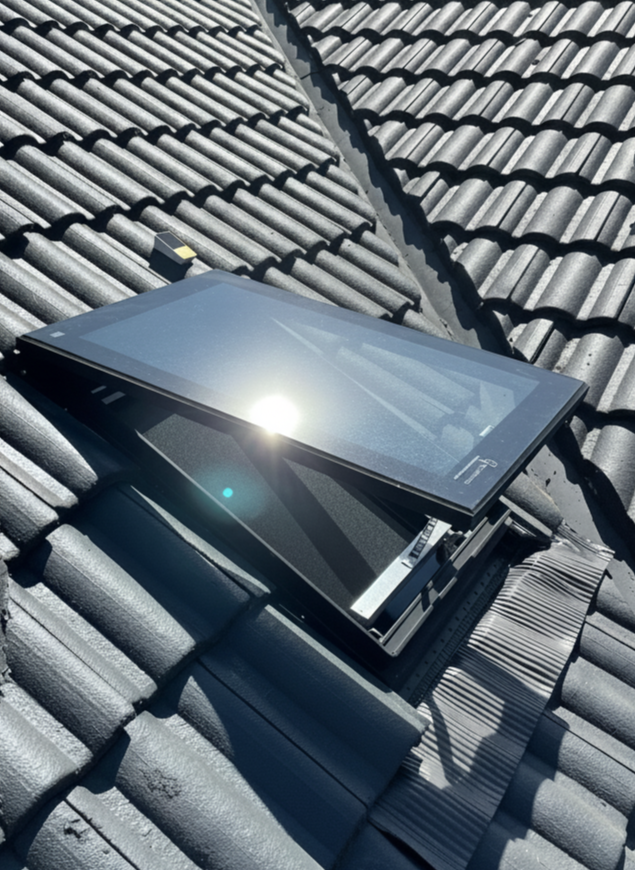
 Ever thought about putting a smart window on your roof? One that floods your home with natural light, airs out rooms, and even powers itself with the sun. That’s exactly what a skylight solar system does. It’s a completely self-contained unit that uses its own little solar panel to open, close, and run any other smart features.
This means you get all the perks of daylight and fresh air without ever needing to call an electrician or seeing a bump in your energy bills.
How a Skylight Solar System Works
A solar-powered skylight is a brilliant, self-sufficient little ecosystem for your roof. It runs completely independently, drawing all the energy it needs straight from the sun to deliver light and fresh air whenever you want it. It helps to think of it less like a window and more like a small, off-grid appliance.
The whole process is beautifully simple. It all kicks off with a high-efficiency photovoltaic (PV) panel that’s built right into the skylight’s exterior frame. This panel is the system’s tiny power plant, capturing sunlight all day long—even when it’s overcast.
The Core Components Working Together
That captured energy doesn’t just disappear. It’s channelled into a hidden, rechargeable battery that works like a power bank. This battery stores more than enough juice to operate the skylight multiple times, so you can count on it working day or night, rain or shine.
When you want to open the skylight to let in a breeze, the process is seamless:
- The Command: You grab a remote and send a signal.
- The Power Source: The battery kicks in, releasing its stored solar energy.
- The Action: A quiet, hidden motor uses that energy to smoothly open or close the skylight.
This clever design means the skylight never pulls power from your home’s electrical grid. It’s completely off-grid, which is why installation is so straightforward—there’s no need for complicated wiring.
At its heart, a solar skylight brings together three key technologies: a solar panel to capture energy, a battery to store it, and a motor to put it to work. It’s this teamwork that delivers automated comfort powered entirely by the sun.
This self-sufficiency is what makes a skylight solar system such a game-changer for both new builds and renovations. It lets you add automated ventilation and light to spots that were once dark or stuffy—like hallways, bathrooms, and kitchens—without the cost and mess of running new electrical lines through your walls and ceilings. It’s an instant upgrade to your home, fuelled purely by sunlight.
Real Benefits of Solar Powered Skylights
A solar powered skylight is much more than just a window in your roof; it’s a smart, long-term investment that brings a powerful mix of practical advantages to any home. The most immediate payoff you’ll notice is a serious drop in your energy use. By flooding your rooms with natural daylight, you can finally switch off those artificial lights during the day.
This simple change can lead to some pretty substantial savings on your electricity bills. Rooms that used to be dark and gloomy, relying on lamps and overheads, are transformed into bright, welcoming spaces powered entirely by the sun. It’s not just a win for your wallet, either—it completely enhances your living environment, making rooms feel bigger and more inviting while positively boosting mood and productivity.
Simplified Installation and Lasting Value
One of the standout perks of a skylight solar unit is just how straightforward the installation is. Because the entire system is self-contained and wire-free, there’s no need for an electrician to cut into your walls or run complicated wiring back to your home’s main power supply. This makes it a perfect solution for new builds and retrofits alike, saving a heap of time, money, and mess.
This infographic breaks down the core components that make this wire-free magic happen.
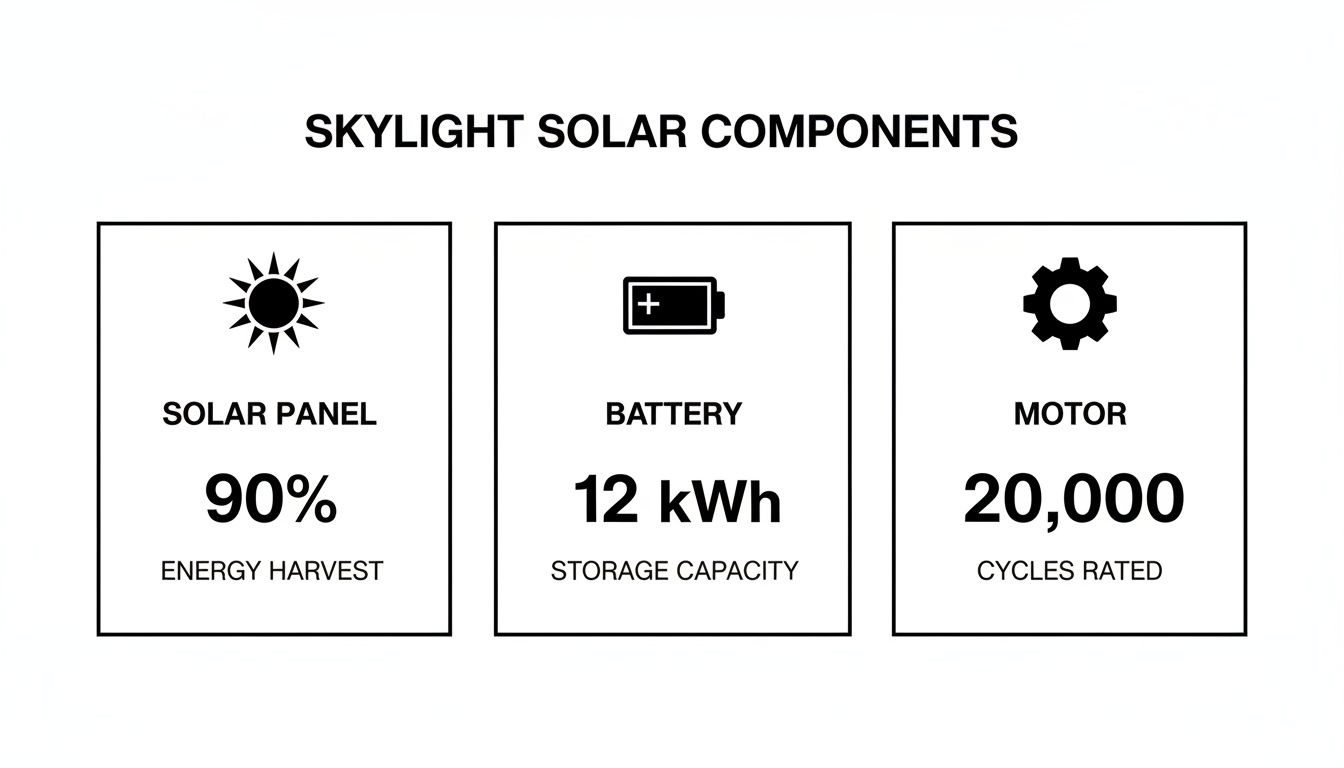
The clever synergy between the solar panel, battery, and motor creates a completely self-sufficient system that delivers convenience without the running costs. These benefits add up to more than just daily comfort; they actively contribute to a higher property value and a smaller carbon footprint. Here in Australia, the demand for energy-efficient home features is on the rise, and solar skylights are leading the charge. In Melbourne, where Vivid Skylights operates, we’ve seen renovators reduce their daytime lighting energy use by up to 40%.
Compound Returns on Your Investment
The good news doesn’t stop there. The benefits of a solar powered skylight actually compound over time. The advanced thermal efficiency you get from double-glazing helps maintain comfortable indoor temperatures, which means less strain on your heating and cooling systems. Plus, clever features like automatic rain sensors offer total peace of mind, closing the skylight at the first sign of a downpour without you having to lift a finger.
A solar skylight is an asset that pays you back in multiple ways: lower energy bills, improved wellbeing, easier installation, and increased home equity. It’s a single upgrade that delivers ongoing returns.
Ultimately, choosing a skylight solar system is an investment in a more sustainable, comfortable, and valuable home. And for those tricky spaces without traditional windows, like internal bathrooms or long hallways, a solar powered LED skylight can deliver a similar daylighting effect where a standard installation just isn’t possible.
Choosing the Right Skylight for Your Space
Picking the right skylight is one of those decisions that completely changes how a room feels and works. It’s not just about popping a window in your roof; it’s about getting the right mix of light, fresh air, and smart tech for your home. The choice usually boils down to three main contenders, and each one brings something different to the table.
Your starting point is understanding these core options. A Fixed skylight is the simplest of the lot. Think of it as a pure, uninterrupted window to the sky, designed to do one thing brilliantly: flood a space with natural daylight. It’s the perfect solution for areas where light is the only priority, like hallways, stairwells, or walk-in robes, where you don’t need extra airflow.
Comparing Your Skylight Options
Next, you have the Electric Opening skylight. This model steps things up by adding ventilation into the mix. With just the press of a button, you can let hot, stuffy air escape and pull in a cool breeze. It’s a fantastic upgrade for rooms like kitchens and bathrooms where managing steam and odours is a must. The only catch is that it needs a professional electrician to wire it into your home’s mains power, which adds a bit of complexity and cost to the installation.
This leads us to the solar powered skylight, which really does offer the best of both worlds, minus the hassle. It gives you the same fantastic ventilation as an electric model, but it’s completely self-sufficient. Powered by its own little solar panel, it needs no wiring, costs nothing to run, and doesn’t require an electrician. It’s the ultimate set-and-forget solution, blending smart features with an incredibly simple installation.
The core difference really comes down to power and purpose. Fixed models are all about light. Electric models add powered ventilation. And Solar models deliver that same ventilation, wire-free, with zero running costs.
To make things clearer, let’s see how these three types stack up against each other. For a deeper dive into the specific models available, you can explore the different types of skylights we offer to find the perfect match.
Skylight Model Feature Comparison
To help you weigh your options, this table breaks down the key differences between Fixed, Electric, and Solar Powered skylights across the most important decision-making factors.
| Feature | Fixed Skylight | Electric Opening Skylight | Solar Powered Opening Skylight |
|---|---|---|---|
| Primary Function | Natural light only | Light and ventilation | Light and ventilation |
| Ventilation | No | Yes, button-operated | Yes, remote-controlled |
| Power Source | None required | Mains power (240V) | Integrated solar panel |
| Installation | Simple, no wiring needed | Requires a licensed electrician | Simple, no wiring needed |
| Running Costs | None | Minimal electricity usage | Zero |
| Smart Features | None | Wall switch operation | Remote control, rain sensor |
| Best For | Hallways, stairwells, rooms needing only light | Kitchens, bathrooms, laundries | Any room needing ventilation, especially where wiring is difficult |
Seeing the features side-by-side makes it easier to see which skylight aligns best with your project’s goals and your home’s needs.
Making the Final Call
So, which one is for you? It all comes down to the room and your lifestyle. If you just want to brighten up a dark hallway, a fixed model will do the job beautifully. If you’re overhauling a bathroom and need to get that steam out, an opening model is non-negotiable.
But for most homeowners looking for the biggest impact with the least amount of fuss, the solar powered skylight is the clear winner. It gives you all the benefits of ventilation and handy features like rain sensors, but without the complicated installation or the ongoing energy bills. It’s a smart, forward-thinking investment in your home’s comfort and efficiency.
Navigating Installation and Roof Types
One of the first questions we always get is about compatibility. Will this actually work on my roof? Thankfully, today’s skylight solar systems are designed with incredible flexibility, making them a great fit for the vast majority of Australian homes. Whether you’ve got a classic steep pitch or a more modern, low-slope design, there’s a solution ready to go.
High-quality skylights are built to integrate flawlessly with all sorts of roofing materials. The real secret to this universal fit—and more importantly, a completely weatherproof seal—is a purpose-built component called a flashing kit. Just think of it as a custom raincoat for your skylight, perfectly moulded to divert every drop of water away from the unit and safely down your roof.
The Role of a Flashing Kit
A flashing kit isn’t just a nice-to-have accessory; it’s a critical part of the whole system. Each kit is specifically engineered for a particular roofing material, which is how you get that perfect, watertight barrier. This precision is what gives you peace of mind and guarantees a leak-free skylight for years.
- For Tiled Roofs: The flashing is designed to interlock with the surrounding tiles, creating a secure seal that works with the roof’s natural water flow, not against it.
- For Metal Roofs: Kits for corrugated or profiled metal roofing are shaped to match the exact profile of the sheets, leaving absolutely no gaps for water to sneak in.
To take the guesswork out of it, Vivid Skylights includes the right flashing kit with every single purchase. Getting this part right is everything, and you can see just how it works by learning more about installing a skylight on a tile roof.
The flashing kit is the unsung hero of a successful skylight installation. Its precise engineering is what provides the confidence of a leak-free guarantee, regardless of your roof type.
DIY vs Professional Installation
Because a skylight solar unit is completely wire-free, a DIY installation is definitely possible for those who are confident and experienced with roofing work. But let’s be honest, working at heights and cutting a hole in your roof comes with some obvious risks.
For most homeowners, bringing in a professional is the smarter move. An experienced roofer or carpenter will make sure the skylight is positioned perfectly for the best light, secured properly into the structure, and sealed tight against the weather. If you’re curious about the level of expertise involved in bigger jobs, you can get a sense of it by looking into various commercial roof installation services. At the end of the day, a professional installation protects your investment and gives you total peace of mind.
Understanding the Costs and Long-Term Value
When you’re looking at installing a skylight solar system, the conversation always turns to the numbers. But it’s best to think of this as an investment in your home’s future, not just another expense. While there’s an upfront cost for the unit and installation, the real story is how that value grows over time, eventually far outweighing what you initially paid.
The biggest payback comes from the energy you’ll save day in and day out. By letting natural light flood your rooms, solar skylights mean you can flick on the artificial lights far less often. Over the years, this adds up to serious savings on your electricity bills, letting the skylight essentially pay for itself.
Calculating Your Return on Investment
It’s not just about cutting down on lighting costs, either. Premium features add even more value to the equation. High-performance double-glazing, for example, is fantastic for thermal insulation. It helps keep your home cooler in summer and warmer in winter, which means your air conditioning and heating systems don’t have to work nearly as hard—delivering even more savings.
When you’re weighing up the long-term value, think about how solar skylights fit into broader smart home strategies for reducing utility bills. A solid warranty, like the 10-year leak-free guarantee we offer at Vivid Skylights, also protects your investment. It gives you lasting peace of mind and guards against unexpected repair costs down the track.
Investing in a solar skylight isn’t just a home improvement project; it’s a financial asset. It can boost your property value, slash utility bills, and genuinely improve your quality of life. The returns are measured in both dollars and daily comfort.
Boosting Home Value and Market Appeal
Energy-efficient features are becoming a huge deal in Australia’s property market. Homes with a skylight solar unit are simply more appealing to potential buyers. In fact, data shows these homes can see their resale value jump by 8-15%. This is especially true in competitive markets like Melbourne, where sustainable upgrades are a major selling point.
With the current renovation boom across the country, solar-powered skylights are really taking off. Forecasts suggest this market segment will grow by over 7% annually in Australia. It’s all driven by a growing demand for energy efficiency that can cut a household’s electricity use by 25-40%. So, installing a solar skylight is a smart move that pays off now and adds real value when it’s time to sell. You can explore the full skylight market analysis on arizton.com to dig deeper into this trend.
Exploring Smart Features and Customisations
Today’s solar powered skylights have come a long way from being just simple windows in the roof. They’re now intelligent, automated additions that adapt to your lifestyle and the environment around them. This level of convenience is what truly sets them apart.
These smart features are what take a great product and make it an essential part of a modern, comfortable home.
One of the most impressive innovations is the automatic rain sensor. Think of it as your skylight’s own personal weather forecaster. The moment it detects the first few drops of rain, the sensor tells the motor to smoothly and automatically close the skylight. This gives you incredible peace of mind, letting you leave your skylight open for ventilation without a second thought about a sudden downpour while you’re out.
Tailoring Light and Airflow
Beyond just protecting you from the weather, a skylight solar system puts you in complete control of your home’s environment. High-quality models give you options to fine-tune the amount of light and airflow to perfectly suit any room, at any time of day.
These customisations often include:
- Integrated Block-Out Blinds: Absolutely perfect for bedrooms or media rooms. These solar-powered blinds let you switch from bright daylight to total darkness with just the touch of a button, ideal for blocking out the harsh midday sun or getting a restful night’s sleep.
- Included Fly Screens: You can enjoy all the fresh air without inviting in unwanted guests. A built-in fly screen allows for bug-free ventilation, which is a must-have for Australian homes, especially during summer.
Modern solar skylights are built around a simple idea: you should be able to control your home’s light and air with zero effort. Smart features like rain sensors and motorised blinds make this a reality.
On top of all that, clever design choices help minimise your upkeep. Many premium skylights feature self-cleaning glass with a special coating that uses the sun’s UV rays and rain to break down dirt and wash it away. This means less time spent on maintenance and more time enjoying those beautiful, clear views. It’s how all these features work together that creates a truly customised, low-maintenance solution for your home.
Your Top Questions About Solar Skylights, Answered
Deciding to invest in your home often comes down to getting solid answers to those final few questions. When it comes to solar skylights, most homeowners have similar thoughts about how they work in the real world, what they can handle, and how much looking after they need.
We’ve pulled together the most common questions we hear to give you the confidence you need to move forward.
How Much Sun Does a Solar Skylight Actually Need?
This is a big one, but the answer is usually a pleasant surprise. Solar-powered skylights are incredibly efficient and don’t need bright, direct sunshine all day long to do their job. The high-quality solar panel is designed to charge the built-in battery even on grey, overcast days by capturing ambient light.
A fully charged battery typically stores enough juice for dozens of open-and-close cycles. That means a few gloomy days in a row won’t stop it from working, ensuring your skylight is always ready when you need it.
Can I Install a Solar Skylight on a South-Facing Roof?
Absolutely. While it’s true that north-facing roofs get the most direct sun here in Australia, a solar skylight is effective on any roof orientation. Its main purpose is to bring daylight into your home, and it does that brilliantly from any angle.
The integrated solar panel is sensitive enough to generate power from indirect and ambient light. This ensures the motor for opening the skylight, powering the blinds, and running any smart features always has the power it needs, no matter which way your roof faces.
The key takeaway is that modern solar panels are not just for sunny days. Their efficiency ensures year-round operation, providing both light and power regardless of weather or roof direction.
What Kind of Maintenance Does a Solar Skylight Need?
Solar skylights are designed to be almost completely hands-off. Many premium models, including those from Vivid Skylights, feature self-cleaning glass. This clever coating uses the sun’s UV rays and the rain to naturally break down and wash away dirt and grime.
The motor and solar components are factory-sealed, so they don’t require any servicing. For most homeowners, the only upkeep is an occasional wipe of the interior glass and a quick check to make sure the exterior flashing is clear of leaves or debris.
Ready to bring beautiful, cost-free daylight into your home? Vivid Skylights offers premium solar-powered skylights designed for Australian conditions. Explore our range and get a fast, accurate quote today. Learn more at https://vividskylights.com.au.