

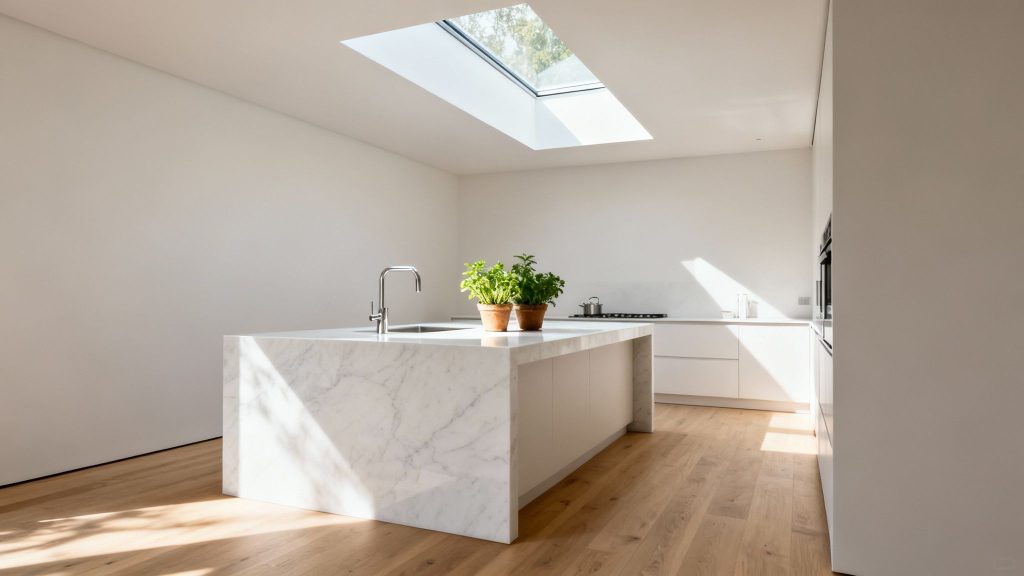
Picture this: your kitchen, the very heart of your home, is bathed in beautiful, natural light. What was once a potentially dim, functional room is now a bright, airy space that invites everyone to gather. A skylight kitchen isn’t just an aesthetic upgrade; it’s a fundamental shift in how your home feels and functions, boosting its atmosphere, energy efficiency, and even its value.
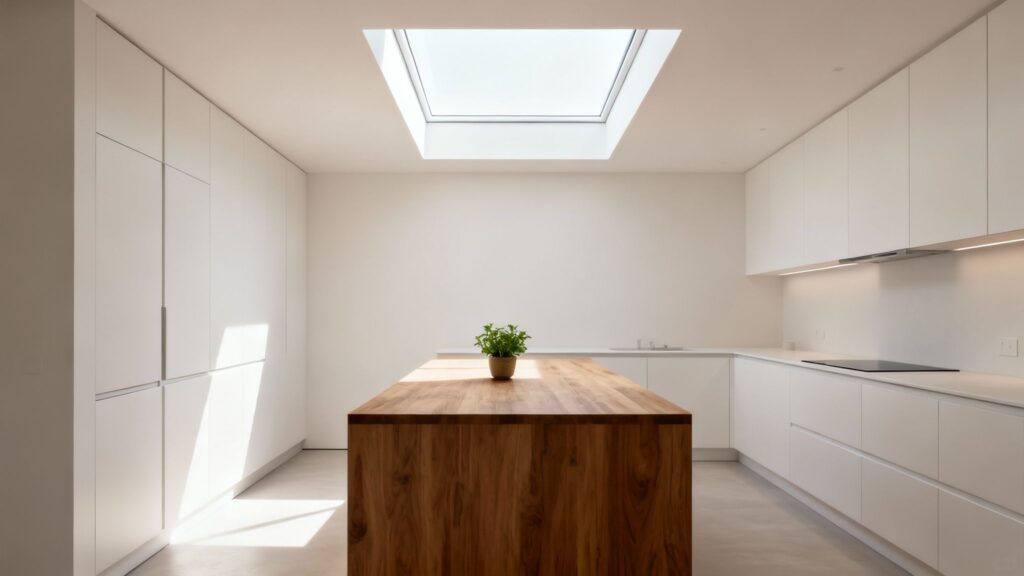
Why a Skylight Kitchen Is a Game Changer
Let’s move past the visuals for a moment and think about the practical magic a skylight brings to the kitchen. This isn’t just about making the room look pretty. It’s a strategic design choice that solves real problems, like shadowy countertops or a space that feels small and closed in. A skylight doesn’t just add light; it completely changes the room’s character.
This move toward brighter, more open kitchens isn’t just a trend we’re seeing on the ground; the numbers back it up. In 2024, the Australian kitchen lighting market hit a value of USD 155.15 million, and a huge part of that growth is driven by smart, natural light solutions like skylights. It’s clear they are reshaping what a modern kitchen can be.
Of course, adding a skylight is often part of a bigger picture. If you’re planning a full overhaul, getting the foundations right is key. This a simple guide to planning your kitchen remodel is a great place to start, offering a wider perspective on the entire process.
More Than Just a Window
Thinking of a skylight as just another window is missing the point. It’s a dynamic, overhead light source that lamps and pendants simply can’t match. This guide is here to walk you through everything you need to know to make this brilliant change with confidence.
A well-placed skylight acts like a natural spotlight, turning a kitchen island into a stage for culinary creation or a breakfast nook into a sun-drenched café corner. It’s an architectural feature that serves a deeply practical purpose.
We’ll cover the complete journey, looking at:
- The real benefits of daylighting for your well-being and cooking.
- How to choose the right type of skylight for your specific kitchen.
- The nitty-gritty of costs, installation, and long-term value.
By the time you’re done reading, you’ll understand exactly why a skylight kitchen is a powerful investment in your home’s functionality and your daily quality of life.
The True Power of Natural Light in Your Kitchen
Think about the lights in your kitchen. Your pendants, downlights, and strip lighting are essential, no doubt. But they’re a bit one-dimensional. Artificial light is static; it does its job, but it doesn’t change. Natural light, on the other hand, is like a symphony that shifts throughout the day, completely changing the mood and feel of your skylight kitchen.
It’s this constant, subtle evolution that’s truly magical. It’s not just about brightening the room—it’s about making it feel alive. This dynamic quality can turn a purely functional space into an uplifting one, influencing everything from the way you feel while you make your morning coffee to how you prep dinner in the evening.
See Your Food in Its True Colour
Ever notice how the brilliant red of a capsicum or the deep green of fresh spinach can look a bit… off under your kitchen lamps? Artificial lighting often casts a yellow or blueish tint, washing out the true colours of your beautiful ingredients. Natural light, with its full, balanced spectrum, shows colours with absolute accuracy.
This isn’t just a small aesthetic detail; it fundamentally changes the experience of cooking. When you can see the real, vibrant colours of your produce, herbs, and spices, cooking becomes a much richer, more sensory process. It helps you gauge ripeness and freshness by sight, connecting you more deeply with the food you’re preparing.
A skylight kitchen basically gives you the best task lighting possible, completely naturally. Chopping, mixing, and plating are all easier and more enjoyable when your workspace is bathed in clean, honest daylight.
Natural light doesn’t just illuminate your kitchen; it brings it to life. It shows off the true texture of a timber benchtop and the subtle sheen of stainless steel—details that artificial light often flattens.
Boost Your Wellbeing and Energy
The benefits of a skylight kitchen go way beyond the food. Getting enough natural daylight has a massive and positive impact on our health. Our bodies run on an internal clock, our circadian rhythm, which manages our sleep-wake cycles, energy, and even our mood.
Sunlight is the main thing that keeps this internal clock in check. Starting your day in a kitchen filled with natural light helps to sync up your body’s rhythm, telling it that it’s time to be awake and energetic. Plenty of studies show that regular exposure to daylight leads to better sleep at night and a better mood and more productivity during the day. It’s such a simple, passive way to look after your family’s wellbeing.
This makes the kitchen, which is often the heart of morning activity, the perfect place to get your daily dose of sunshine.
Create an Illusion of Space
One of the most immediate and stunning effects of installing a skylight is the incredible sense of space it creates. Natural light pouring in from above naturally draws your eyes upward, making ceilings feel higher and the whole room feel bigger and more open. It’s a fantastic architectural trick, especially for smaller or narrower kitchens that might otherwise feel a bit cramped.
Here’s how it works:
- Vertical Light: Unlike windows that cast light sideways, skylights direct it straight down. This washes over walls and floors, erasing the dark, shadowy corners that can make a room feel closed in.
- A Connection to the Outdoors: A view of the sky—whether it’s a brilliant blue or full of fluffy clouds—creates a constant link to the world outside. This visual connection is a powerful antidote to feeling cooped up.
- Enhancing Open-Plan Living: In an open-concept home, a skylight over the kitchen helps to define the zone while making sure it feels seamlessly connected to the dining or living areas next to it.
Ultimately, flooding a kitchen with daylight does more than just brighten it up. It transforms the room into a more welcoming, energetic, and expansive space where everyone will naturally want to hang out.
How to Choose the Perfect Kitchen Skylight
Choosing the right skylight for your kitchen can feel like a huge decision, but it’s simpler than you might think. By breaking it down into a few key choices—the type, the glazing, and the frame—you can easily pinpoint the perfect fit for your space, your home’s style, and your budget. This isn’t about finding a one-size-fits-all solution; it’s about matching the right features to what your kitchen truly needs.
The goal is to move from a general idea of a “brighter kitchen” to a clear vision of the exact product that will make it happen. Let’s start by looking at the three main types of skylights, each designed to solve a different kind of problem.
The Three Core Skylight Types
Every skylight kitchen starts with a choice between three fundamental categories. Think of them as good, better, and best—not in terms of quality, but in how their features line up with what you want to achieve. Do you just need light, or do you also need airflow? Is your kitchen directly under the roof, or is there an attic in the way?
To help you decide, here’s a quick comparison of the main options.
Skylight Type Comparison for Kitchens
This table breaks down the three main skylight types to help you figure out which one is best suited for your kitchen’s specific needs, whether that’s all about light, ventilation, or dealing with structural challenges.
| Skylight Type | Best For | Key Benefit | Consideration |
|---|---|---|---|
| Fixed Skylight | Maximising natural light in kitchens with existing, adequate ventilation. | Pure, uninterrupted daylight at a cost-effective price point. | It doesn’t open, so it won’t help with venting steam or cooking odours. |
| Opening Skylight | Kitchens where heat, steam, and odours build up. | Provides both natural light and fresh air circulation, improving comfort. | Can be manual or electric, with the latter adding to the overall cost. |
| Tubular Skylight | Kitchens located beneath an attic or another floor. | Bounces sunlight down a reflective tube to brighten hard-to-reach spaces. | The light is more diffused and doesn’t offer a direct view of the sky. |
Each type serves a distinct purpose. A fixed skylight is your go-to for pure, uninterrupted daylight—essentially a sealed window for your roof designed solely to let light pour in. It’s a brilliant, cost-effective choice for kitchens that are already well-ventilated but are crying out for more natural light.
An opening (or ventilating) skylight takes things a step further by offering both light and fresh air. With the ability to open, either manually or with an electric motor, it’s perfect for a kitchen. You can quickly vent steam, cooking odours, and excess heat, dramatically improving air quality and comfort.
But what if your kitchen isn’t directly below the roof? That’s where tubular skylights come in. They use a highly reflective tube to funnel sunlight from a small dome on your roof down through an attic or ceiling cavity, delivering it into your kitchen through a diffuser that looks a lot like a standard light fixture. It’s a genuinely clever solution for tricky layouts.
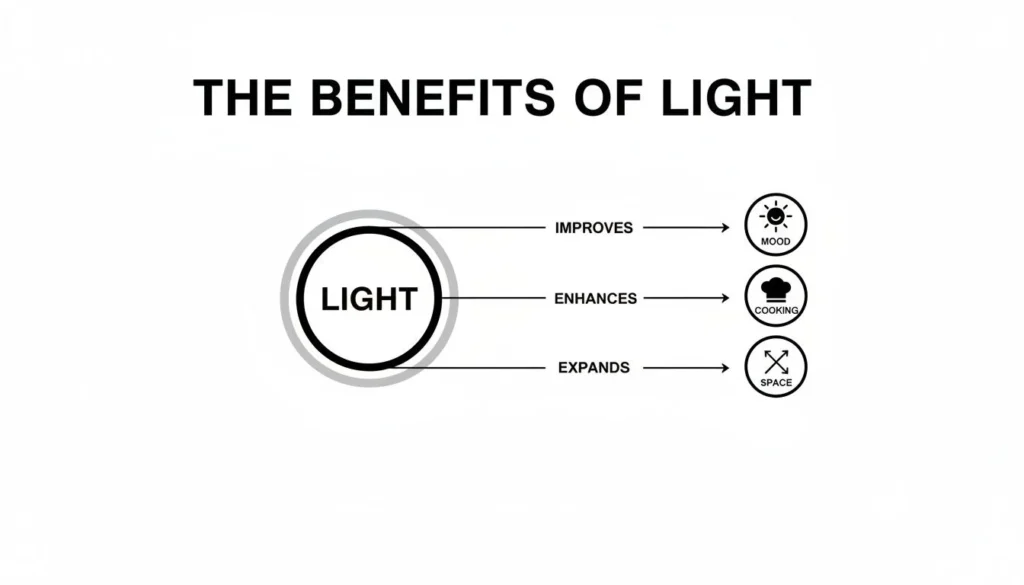
As you can see, a skylight is about so much more than just light; it’s a holistic upgrade to the heart of your home. You can explore more about these options in our detailed guide on the types of skylights available.
Decoding Glazing Options
Once you’ve settled on a type, the next critical element is the glass itself, or the glazing. This choice is crucial for managing temperature, blocking harmful UV rays, and ensuring your home stays energy-efficient, especially in the Australian climate. It’s what makes a modern skylight so much more than a simple pane of glass.
Think of glazing as the high-tech filter between your kitchen and the sun. Poor glazing can let in a punishing amount of heat in summer and let all your warmth escape in winter. Quality glazing, on the other hand, creates a comfortable, stable environment all year round.
High-performance glazing is the unsung hero of a great skylight. It’s what transforms a potential ‘hot spot’ or ‘cold spot’ into a source of perfectly balanced, usable natural light.
Here are the key glazing features you absolutely should look for:
- Double-Glazing: This is the non-negotiable standard for quality skylights. Two panes of glass are separated by a sealed air or gas-filled gap, which acts as a powerful insulator. This simple feature drastically reduces heat transfer, keeping your kitchen cooler in summer and warmer in winter.
- Low-E (Low-Emissivity) Coatings: This is a virtually invisible metallic coating on the glass that reflects infrared and ultraviolet light. A Low-E coating is essential in Australia. It blocks a huge amount of solar heat while still letting all the beautiful visible light through, which also protects your cabinetry and flooring from fading over time.
Choosing the Right Frame Material
The final piece of the puzzle is the frame that holds it all together. The frame material contributes to the skylight’s durability, insulation, and overall look. You need something that can stand up to the harsh Australian weather without warping, cracking, or demanding constant upkeep.
For most homeowners, there are two main choices:
- Aluminium: Known for its strength and durability, aluminium is a very popular choice. Modern aluminium frames, like those we use at Vivid Skylights, are powder-coated for extra protection against the elements. They offer a sleek, contemporary look that fits well with most architectural styles.
- uPVC (unplasticised polyvinyl chloride): uPVC is a fantastic insulator and is highly resistant to moisture and corrosion. It’s a low-maintenance option that provides excellent thermal performance, helping to prevent condensation and improve energy efficiency.
Strategic Sizing and Placement for Maximum Impact
Deciding on the type of skylight is a great first step, but it’s really only half the story. The questions that follow—’how big?’ and ‘where exactly?’—are just as critical. The size and placement of your skylight are what truly unlock its potential, transforming it from a simple window into a powerful design element that shapes the whole feel of your kitchen.
Think of it like lighting a stage. You wouldn’t just point a spotlight in any random direction; you’d aim it with precision to highlight the main action and create drama. In the same way, the location of your skylight kitchen window determines whether you get a soft, ambient glow that fills the room or a focused, functional light right where you need it most.
Getting this part right is the difference between a kitchen that’s just a bit brighter and one that feels thoughtfully designed, balanced, and perfectly lit by the sun.
Finding the Right Skylight Size
It’s a common misconception that when it comes to skylights, bigger is always better. The truth is, an oversized skylight can flood a room with too much glare or unwanted heat in summer. Go too small, on the other hand, and you might not get the bright, airy impact you were hoping for. The real goal is to find that sweet spot—a size that works in harmony with your kitchen’s unique proportions.
A fantastic rule of thumb to start with is the “5% rule”. It suggests that the skylight’s glass area should be about 5% of the kitchen’s total floor space. So, for a 20-square-metre kitchen, you’d be looking at roughly 1 square metre of skylight glazing.
This rule is a brilliant starting point, not a strict law. If you have soaring ceilings or want to create a real showstopper, you might push that number closer to 10% of the floor area to ensure that beautiful light reaches your benchtops and floor.
A few other things to consider when dialling in the perfect size:
- Ceiling Height: The higher your ceiling, the larger the skylight needs to be for the light to effectively travel down and illuminate the space.
- Room Shape: For a long, narrow kitchen, you might find that two smaller, evenly spaced skylights create a more balanced look than one large one in the middle.
- Desired Effect: Are you after a gentle lift in ambient light, or do you want a bold, architectural feature that commands attention?
To get a better sense of how different sizes look in a real home, checking out a guide on skylight dimensions can be incredibly helpful. It gives you the context needed to visualise what will work best in your own space.
Pinpointing the Perfect Placement
With a size in mind, the next puzzle piece is placement. The orientation of your roof and the layout of your kitchen are going to have a massive say in the quality and direction of light you get throughout the day.
Here in Australia, a north-facing skylight is almost always the gold standard. It delivers consistent, soft, indirect light all day long, avoiding the harsh glare and intense heat that can come from skylights facing east or west. It’s the kind of beautiful, usable light you can enjoy from sunrise to sunset.
An east-facing skylight, by contrast, will give you a blast of bright morning light—perfect for early risers—while a west-facing one can drench your kitchen in intense afternoon sun, which might become a bit much without good blinds.
Here are a few tried-and-true placement strategies for a skylight kitchen:
- Over the Island Bench: This is a classic for a reason. Centring a skylight above the kitchen island instantly makes it the hero of the room. It delivers incredible task lighting for chopping and prep work while creating a bright, welcoming hub for family and friends to gather around.
- Above the Main Workstation: Positioning a skylight directly over the high-traffic zone between your sink and stove guarantees your primary workspace is bathed in natural light, cutting down your reliance on artificial lights during the day.
- For General Ambient Light: If you’re looking for a more diffuse, room-filling glow, placing a skylight in the centre of the kitchen’s main walkway will brighten the whole area, making it feel more spacious and open.
Ultimately, smart sizing and thoughtful placement work hand-in-hand. They ensure your skylight doesn’t just add light, but adds it with purpose, elevating both the function and the sheer beauty of your kitchen.
Integrating Blinds, Screens, and Smart Controls
A modern skylight is so much more than a window in your roof; it’s a dynamic system you can customise to precisely manage light, air, and comfort. By integrating the right accessories, your skylight kitchen goes from being a passive feature to an intelligent, responsive part of your home. It’s all about giving you complete control over your kitchen’s environment.
Think of it like this: the skylight itself is the hardware, but the blinds, screens, and smart controls are the software that unlocks its true potential. These additions let you fine-tune the amount of daylight, boost energy efficiency, and welcome in fresh air without inviting unwanted pests inside.
Mastering Light and Temperature with Blinds
Skylight blinds are your most powerful tool for controlling the light and heat flooding your kitchen. They’re not just for looks; they perform a crucial job, especially under the intense Australian sun. Different types of blinds offer unique benefits, allowing you to tailor your skylight’s performance to your exact needs, whatever the time of day or season.
Here are the main options you’ll come across:
- Blackout Blinds: These are the ultimate solution for completely blocking sunlight. They’re fantastic for open-plan living areas where you need to cut glare on TV screens or create a darker, more calming atmosphere.
- Thermal Blinds: Designed with energy efficiency top of mind, these blinds have an insulating layer that helps keep your kitchen cooler in summer and warmer in winter. That can lead to some very welcome savings on your energy bills.
- Light-Filtering Blinds: These blinds soften and diffuse harsh sunlight, cutting out the glare while still letting a beautiful, gentle glow fill the room. They give you privacy without sacrificing brightness.
When you’re thinking about the specifics, exploring a range of available blind products and services can help you find the perfect match for your skylight kitchen. For anyone after effortless control, we offer options that operate with a simple remote or wall switch. To dive deeper into seamless automation, check out our guide on motorised skylight blinds.
Adding Screens and Smart Automation
For an opening or ventilating skylight in Australia, an insect screen is non-negotiable. A high-quality, durable screen means you can enjoy a refreshing breeze while keeping flies, mosquitoes, and other pests firmly outside. It’s a simple addition that makes a huge difference to your comfort.
Going beyond blinds and screens, smart home integration takes your skylight to a whole new level of convenience. This is where your kitchen skylight gets truly intelligent.
Smart controls turn your skylight into an automated climate control system. It can react to the weather without you having to do a thing, ensuring your home is always comfortable and secure.
Just imagine your skylight is fitted with sensors that automatically close it at the first drop of rain, so you never have to scramble or worry about leaving it open. You could also program it to open for a short time each morning to air out the kitchen, then close before the day really heats up. This level of automation doesn’t just add convenience; it contributes to a more energy-efficient and comfortable home.
Working Out the Costs and Return on Investment
Adding a skylight to your kitchen is more than just a purchase; it’s a smart upgrade that pays you back in both immediate enjoyment and long-term financial wins. Getting a clear picture of the total cost and the real returns you can expect is the key to making a decision you’ll feel great about for years to come.
The total budget for a kitchen skylight project really comes down to a few key parts. First, there’s the skylight unit itself, with the price tag shifting based on its size, whether it’s fixed or can be opened, and the type of glass you choose. Then you have the professional installation – a non-negotiable investment if you want a leak-proof result that lasts. Lastly, some roofs might need minor tweaks to the trusses, something a qualified installer can spot right away.
Breaking Down the Budget
To help you plan, it’s good to have a realistic idea of what you might invest in the Australian market. Every project has its own unique quirks, but these figures should give you a solid starting point.
- The Skylight Itself: For a quality, double-glazed unit, you’re typically looking at anywhere from $800 to $2,500. The final cost depends on the size and any extras, like motorised opening systems.
- Professional Installation: A standard install by a certified pro usually falls between $1,000 and $3,000. This covers all the labour, the essential flashing kits, and the expertise to create a perfect weatherproof seal.
- Potential Extras: If the job involves tricky structural work or needs an electrician to wire up smart controls, it’s wise to budget an extra $500 to $1,500.
Think of these numbers as an investment not just in a product, but in the quality, safety, and durability of the entire setup.
Calculating Your Return on Investment
While the upfront cost is easy enough to calculate, the return you get is where a kitchen skylight really starts to shine. This payback comes in two main forms: a boost in your property’s value and genuine, day-to-day energy savings. A light-filled kitchen is a huge selling point and can seriously lift a home’s market appeal.
The data backs this up. In Australia, homes that have been retrofitted with kitchen skylights have seen a significant jump in property value. A great example is the heritage properties in Victoria’s Caulfield North, which saw an average property value increase of 12% after adding skylights. This is further supported by the Nationwide House Energy Rating Scheme (NatHERS), which shows that skylights can boost a home’s star rating and even lead to faster sales—up to 18% quicker in some competitive markets. You can find more insights into what’s trending in the world of skylights on keyliteskylights.com.au.
Hiring a professional installer isn’t just a suggestion—it’s the single best way to protect your investment. A pro makes sure everything is up to code, the fit is perfect, and your manufacturer’s warranty is activated. That’s your ticket to a leak-free result for years to come.
Beyond the resale value, the daily energy savings really start to add up. When your kitchen is flooded with natural light, you’ll find yourself reaching for the light switch far less often, leading to a noticeable drop in your power bills. Over time, these savings directly chip away at the initial cost, making a skylight a clever and sustainable upgrade for any home.
Got Questions About Kitchen Skylights? We’ve Got Answers.
Even after seeing all the benefits, it’s natural to have a few questions buzzing around your head before you commit to a skylight kitchen. After all, making any change to your roof is a big step, and you want to be completely confident in your decision. We’ve heard all the common concerns from homeowners just like you, and we’re here to give you clear, straightforward answers.
Think of this as your final peace-of-mind checklist. Let’s get these practical worries out of the way so you can start getting excited about the incredible change that’s coming.
Will a Skylight Make My Kitchen Too Hot?
This is a really fair question, especially with the Aussie sun beating down. The short answer? Not if you choose a modern, high-performance skylight. Older models were often just a single sheet of glass that let in a ton of heat, but today’s technology is in a completely different league.
High-quality skylights, like the ones from Vivid Skylights, come standard with double-glazing and advanced Low-E (low-emissivity) coatings.
A Low-E coating is like an invisible heat shield for your window. In summer, it reflects the sun’s harsh infrared heat away from your kitchen, but in winter, it cleverly works in reverse, stopping your home’s precious warmth from escaping. All this, without dimming that beautiful natural light.
When you pair this clever glazing with smart placement (like avoiding the harsh western sun) and maybe even add optional thermal blinds, your kitchen stays comfortable and bright all year round.
Are Kitchen Skylights Prone to Leaking?
The fear of a leaky skylight is probably the most persistent myth out there, a hangover from the days of cheap products and dodgy installations. The reality is, modern skylights are engineered to be completely watertight when they’re installed properly. A leak-proof finish really comes down to two key things: a top-quality product and an expert installation.
This is where a purpose-built flashing kit is absolutely essential. It’s a system of metal pieces precisely engineered to create a seamless, weatherproof barrier between the skylight’s frame and your specific roof material, whether you have tiles or metal sheeting. When a certified professional uses the right flashing kit for the job, the risk of a leak becomes practically zero. That’s why we always say a professional installation isn’t just a suggestion—it’s your guarantee of a weather-tight seal built to last for decades.
How Much Maintenance Do They Actually Need?
You’ll be pleasantly surprised—it’s not much at all. A well-designed skylight needs about the same amount of attention as any other window in your home. Thanks to their slanted position, the rain does most of the heavy lifting, washing away the majority of dust and grime from the outside glass.
For the inside, a quick wipe-down with a standard window cleaner once or twice a year is typically all it takes to keep it sparkling. The frames, usually made from tough, powder-coated aluminium, are built to handle the elements without needing any special care. This makes your skylight kitchen a simple, low-maintenance source of daily joy.
Ready to transform your kitchen with beautiful, natural light? The team at Vivid Skylights is here to help you choose the perfect solution for your home. Explore our range of high-performance skylights and get a customised estimate today!