


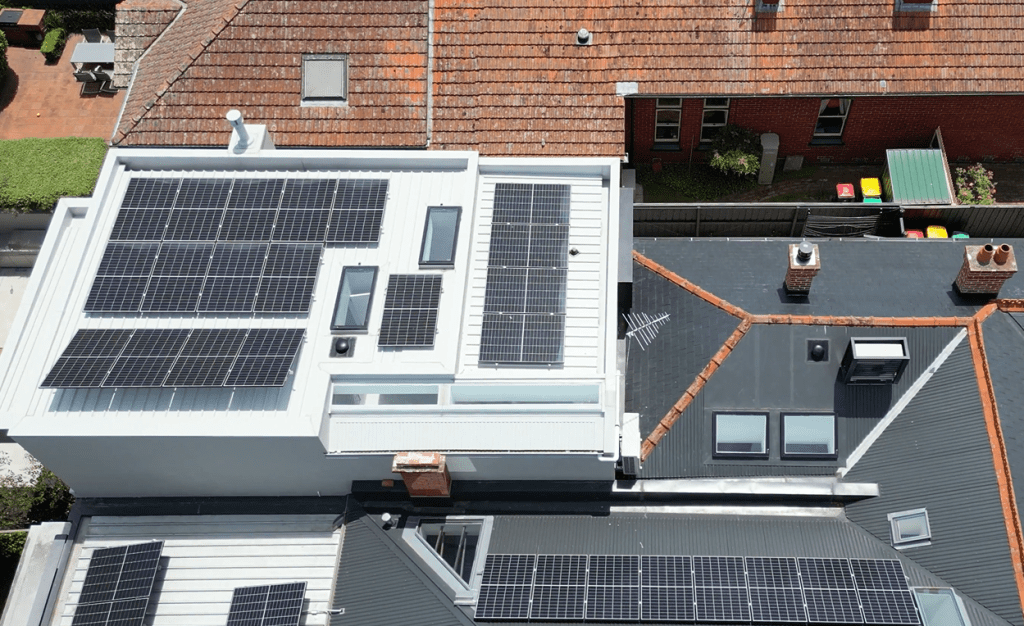
 Living on the Gold Coast is all about soaking up that incredible sunshine, and one of the best ways to bring that bright, airy feeling inside is with a skylight. Think of it as more than just a window on your roof; it’s a genuine lifestyle upgrade. It can totally change the vibe of your home, slash your reliance on artificial lights, and create a real connection to the stunning coastal environment just outside.
Why a Skylight is the Perfect Match for the Gold Coast Lifestyle
For anyone living on the Gold Coast, natural light isn’t just a nice-to-have—it’s woven into the very fabric of our local style. A well-placed skylight can take a dark, forgotten room and turn it into a vibrant, inviting space that instantly feels bigger and more alive. It literally changes the character of your home, making dim hallways or gloomy living areas bright, useful spaces you’ll actually want to spend time in.
This desire for more natural light is a huge part of local building trends. With residential construction booming, the demand for skylights Gold Coast solutions has really taken off. In the 2022-2023 financial year alone, Queensland saw over 45,000 building approvals for new homes. On top of that, home renovation permits involving roof work have jumped by a massive 28% since 2020.
More Than Just a Pretty View
A modern skylight brings a whole lot more to the table than just beautiful light, especially when you consider our local climate. They can seriously boost your home’s energy efficiency and overall comfort.
Here’s what you get:
- Lower Power Bills: When your home is flooded with natural light all day, you can turn off the lamps and overhead lights. It’s a simple change that makes a real difference to your electricity usage.
- A Healthier Home: It’s no secret that natural daylight is good for us. It’s been shown to lift your mood, help you focus, and even improve your sleep.
- Better Airflow: This is a big one for our humid summers. An opening skylight lets you vent out all that trapped heat and moisture, bringing in fresh air and making your home feel instantly fresher.
When you thoughtfully add skylights to your home, you’re tapping into the very soul of coastal living—bright, open, and connected to the outdoors. It’s an architectural touch that perfectly complements the relaxed, sun-filled lifestyle that makes the Gold Coast so special.
To get some great ideas on how skylights can fit into the local aesthetic, it’s worth checking out some of the broader Coastal Home Design Trends. From there, the big decision is choosing the right product for your needs, like a fixed or an opening model. This guide will walk you through everything you need to know, so you can confidently choose the perfect skylight for your Gold Coast home.
Choosing Your Ideal Skylight Type
Picking the right skylight for your Gold Coast home is a lot like choosing the right window. Some are purely for letting in that beautiful Queensland sun, giving you a fixed, stunning view of the sky. Others open up to catch the coastal breeze, actively freshening up your home and making it more comfortable. It’s all about matching the skylight’s job to your lifestyle and what you need for a specific room.
Let’s walk through the main options you’ll come across, breaking down what makes each one tick. This will help you land on the perfect model that not only floods your space with light but genuinely adds value to your day-to-day life.
First, let’s simplify things with a quick visual guide.
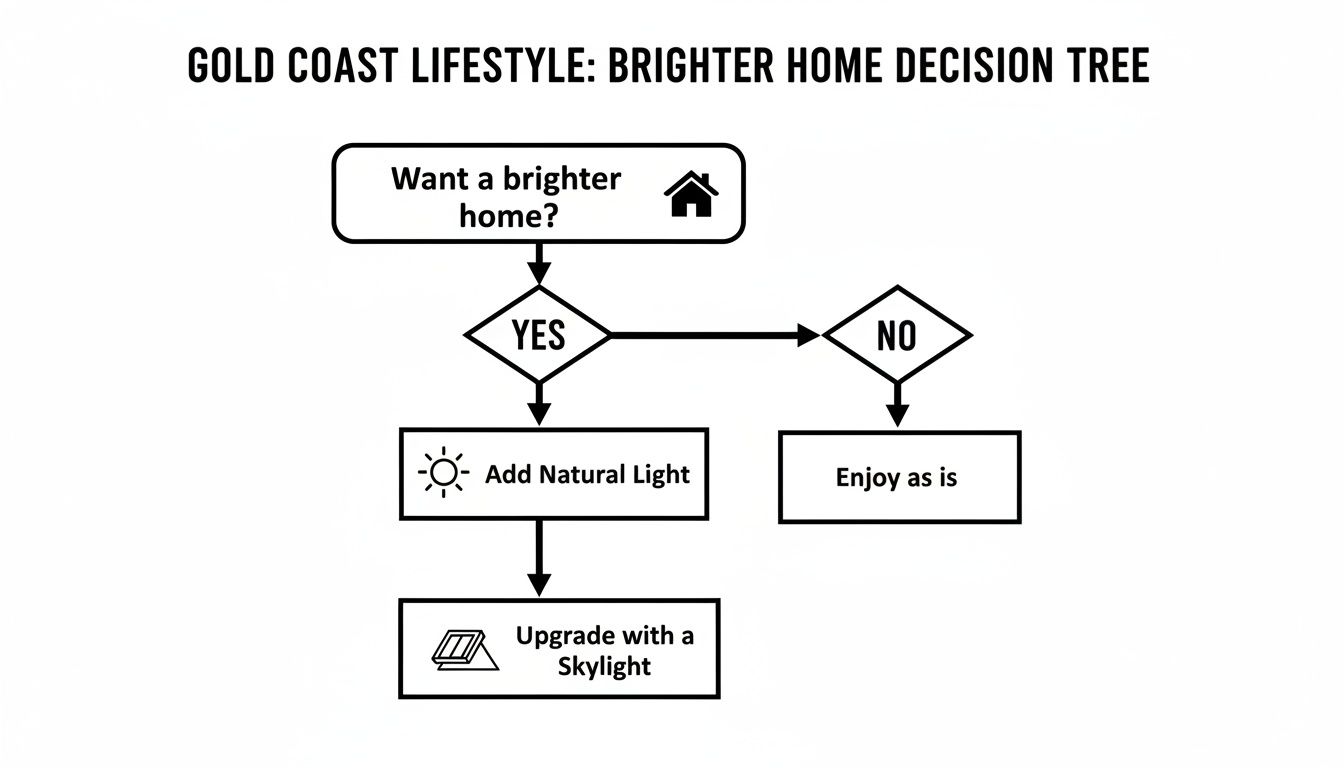
This decision tree shows just how simple the path is from wanting a brighter home to upgrading your space with a functional, beautiful skylight that’s a perfect fit for the Gold Coast lifestyle.
Fixed Skylights: The Pure Light Solution
Think of a fixed skylight as a picture window for your roof. Its one and only job is to pour as much natural light into a room as possible. This makes it a brilliant, cost-effective choice for spaces where extra ventilation isn’t the top priority.
They’re a game-changer for:
- Dark Hallways: Instantly turning a dim, narrow corridor into a bright, welcoming path.
- Living Rooms: Creating that open, airy feeling we all love and making architectural features pop.
- Stairwells: Safely lighting up the steps while making the whole area feel bigger and less closed-in.
The beauty of a fixed skylight is its simplicity. With no moving parts, it’s an incredibly reliable and budget-friendly way to pull sunshine right into the heart of your home. It’s the ultimate set-and-forget solution for pure, uninterrupted daylight.
Solar Powered Opening Skylights: The Smart and Sustainable Choice
For anyone who wants the best of both worlds—light and fresh air—a solar powered opening skylight is a fantastic way to go. It runs completely off-grid, using a small, built-in solar panel to charge a hidden battery. That battery then powers the opening and closing mechanism, all controlled with a simple remote.
This skylight is a smart investment in your home’s comfort and eco-footprint. It gives you ventilation without adding a single cent to your power bill, which is why it’s such a popular choice for savvy Gold Coast homeowners.
What makes this model absolutely perfect for our coastal climate is the built-in rain sensor. If one of those unexpected southerly showers rolls in while you’re out, the sensor detects the first few drops and automatically closes the skylight for you. It’s total peace of mind, built right in.
Electric Opening Skylights: The Ultimate in Convenience
When you want effortless control at your fingertips, an electric opening skylight is the answer. These models are hardwired into your home’s electrical system, opening and closing with the push of a button. This makes them ideal for rooms with high ceilings or spots where a solar panel might not get enough direct sun.
Imagine venting steam from the bathroom or cooking smells from the kitchen in seconds. In the Gold Coast’s humid climate, where the average humidity often sits around 70%, this kind of active ventilation is a lifesaver for preventing mould and keeping your home feeling fresh and healthy.
Skylight Type Comparison for Gold Coast Homes
To help you decide at a glance, here’s a quick comparison of how each type stacks up for a typical Gold Coast home.
| Skylight Type | Best For | Key Benefit | Consideration |
|---|---|---|---|
| Fixed | Hallways, living areas, or any space needing only light. | Maximum daylight for the lowest cost; no moving parts. | Doesn’t offer ventilation for humid areas like bathrooms. |
| Solar Opening | Kitchens, bedrooms, and eco-conscious homes. | Free ventilation powered by the sun; automatic rain sensor. | Needs good sun exposure on the roof to charge effectively. |
| Electric Opening | Bathrooms, laundries, and hard-to-reach high ceilings. | Powerful, on-demand ventilation at the touch of a button. | Requires professional electrical installation. |
Ultimately, choosing between these three comes down to your priorities for each room.
Skylights are fast becoming a cornerstone of sustainable Gold Coast home upgrades, especially as energy bills continue to climb. A well-placed installation can slash your daytime lighting costs by 30-40%. For a deeper dive into the specific features of these models, you can explore the various types of skylights in our detailed guide. Vivid Skylights’ electric opening models, which can be fitted with block-out blinds and fly screens, are perfectly designed for our local climate.
By thinking about how you use each space—whether you just need light or if ventilation is equally important—you can pick a skylight that truly enhances your home and your lifestyle.
Essential Features for a Coastal Climate
Not all skylights are cut out for the unique demands of the Gold Coast. Our blend of intense sun, salty air, high humidity, and sudden downpours means you need a product that’s built tough, with specific, high-performance features.
Choosing the right materials and design isn’t just about how it looks; it’s about making sure your investment lasts for decades without causing headaches like leaks, rust, or turning your living room into a sauna. Think of these features as the absolute must-haves for any Gold Coast skylights installation. They’re what separate a skylight that just lets in light from one that genuinely improves your home’s comfort and durability.
Double Glazing: Your Defence Against Heat
The number one feature you absolutely need is double glazing. Think of it like a high-quality thermos—it’s brilliant at keeping the outside temperature from messing with the inside. A double-glazed skylight uses two panes of glass separated by a sealed air or gas gap, creating a powerful thermal barrier.
On a classic Gold Coast summer day, an old-school single-pane skylight can act like a magnifying glass, pouring unwanted heat into your home and sending your air-con bills through the roof. Double glazing, especially when paired with a Low-E (low-emissivity) coating, reflects a huge chunk of that solar heat while still letting all that beautiful, natural light stream in. This keeps your home dramatically cooler and more comfortable when it’s scorching outside.
To get a deeper understanding of how this tech works, check out our guide on double glazed skylights.
Self-Cleaning Glass: A Must for Coastal Homes
Living this close to the ocean means dealing with a constant film of salt spray and dust that can make windows and skylights look grimy in no time. This is where self-cleaning glass stops being a luxury and becomes a practical necessity. It has a special microscopic coating that reacts with sunlight to break down organic dirt.
Then, when it rains, the water doesn’t bead up into droplets. Instead, it “sheets” off the glass, taking all that loosened grime with it. This means your skylight stays cleaner for much longer, giving you a crystal-clear view without having to constantly climb up on the roof. It’s a simple, clever solution perfectly suited to our local conditions.
Frameless Top Glazing for Superior Drainage
One of the biggest worries with anything you put on your roof is the risk of leaks, especially during the torrential downpours we get here. A frameless top glazing design is a simple but incredibly smart feature that helps prevent water issues before they can even start.
Unlike older skylights with chunky frames that act as a trap for leaves, debris, and water, a frameless design lets rainwater flow smoothly and completely unobstructed right over the surface. This design eliminates any chance for water to pool on top of the skylight—a common cause of seal degradation and, eventually, leaks. You get a clean, modern look with a critical functional benefit.
By choosing a skylight with a frameless top, you are investing in a design that is inherently better at managing heavy rainfall. It’s a small detail that provides significant long-term peace of mind.
The Unsung Hero: A Quality Flashing Kit
Finally, let’s talk about the flashing kit. It might not be the most exciting part, but it is without a doubt the most critical component for a leak-free installation. This is the custom-engineered weatherproofing system that creates a bulletproof, watertight seal between the skylight and your specific roof material.
A quality flashing kit is never a one-size-fits-all product; it’s designed specifically for your roof type, whether that’s corrugated metal or classic terracotta tiles. When installed correctly, the flashing directs every drop of water away from the skylight frame and safely down your roof. This is where a professional installation really shows its worth—an experienced fitter knows exactly how to integrate the flashing for a permanent, secure seal that will withstand any Gold Coast storm you can throw at it.
Designing with Light: Sizing and Placement
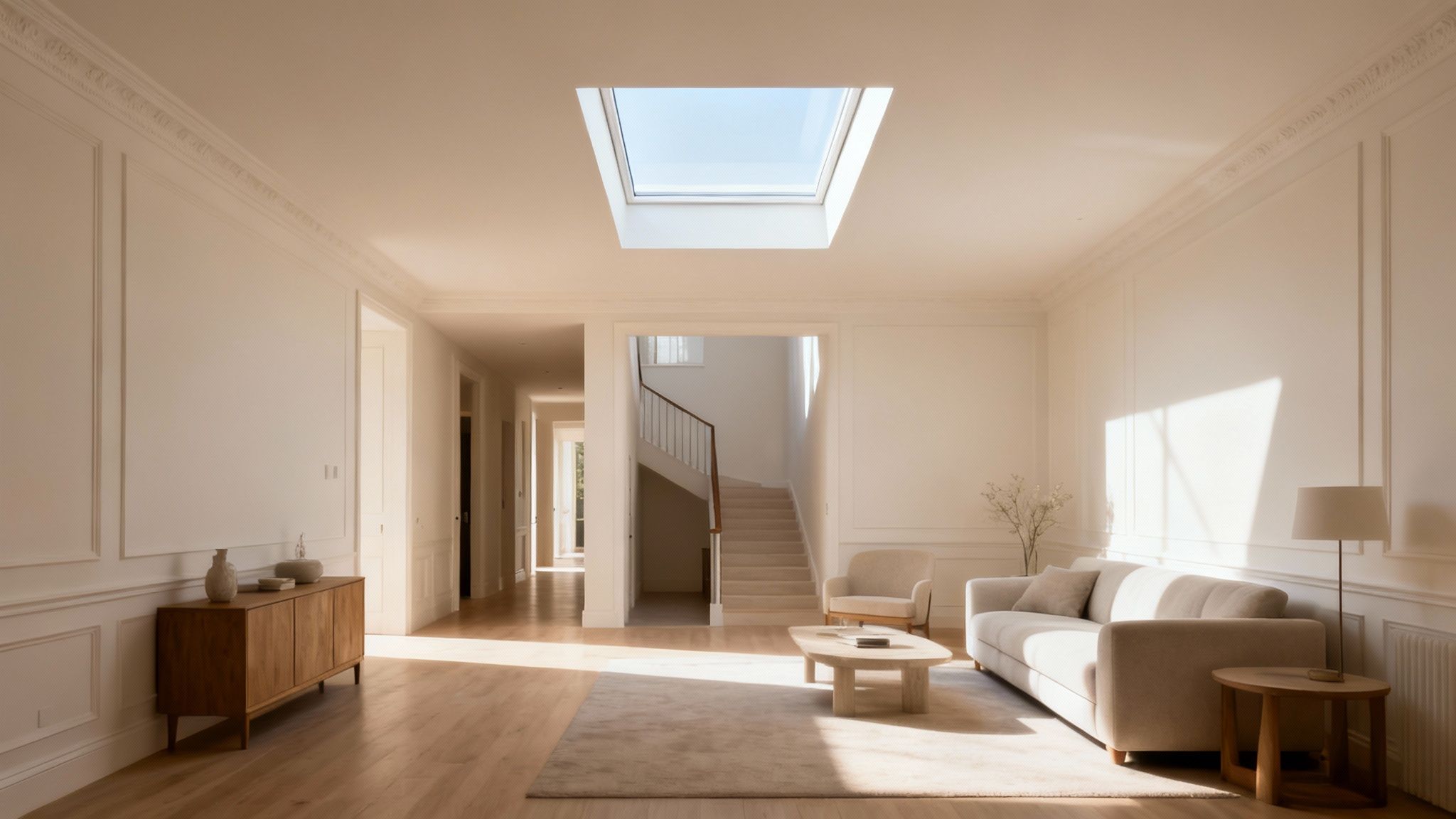
Once you’ve got the technical specs sorted, it’s time for the fun part: using natural light to genuinely reshape your home. Installing Gold Coast skylights isn’t just about making a room brighter; it’s about thoughtful design. With the right size and placement, you can start thinking like an architect, using light to create mood, enhance space, and add a stunning visual element to any room.
This is where you move from a simple home improvement to a true design feature. The goal is to make the light feel intentional, balanced, and perfectly suited to how you actually live in the space.
Finding the Perfect Skylight Size
One of the first questions everyone asks is, “How big should my skylight be?” It’s a great question. Go too small, and the effect is lost, leaving the room feeling underlit. Go too large, and you risk overwhelming glare and heat. Luckily, there’s a simple rule of thumb that we professionals use to get it just right.
This guideline is often called the “5% rule.” It suggests that the total glass area of your skylights should be roughly 5% of the room’s total floor area.
Let’s break it down with a quick example:
- Say your living room is 6 metres by 5 metres, which gives you a floor area of 30 square metres.
- To get 5% of this, you just multiply 30 m² by 0.05.
- This gives you a target glass area of 1.5 square metres.
So, you could opt for one large skylight with 1.5 m² of glass or maybe two smaller units that add up to that total. It’s a straightforward calculation that ensures the room gets a beautiful, balanced amount of natural light without feeling washed out.
The 5% rule is a fantastic starting point, but it’s not set in stone. For rooms with high, vaulted ceilings or darker interior finishes, you might want to aim a little higher—perhaps around 7-10%—to achieve that same bright, airy feeling.
Strategic Placement for Maximum Impact
Once you’ve got a handle on the size, the next crucial step is figuring out where to put it. The placement of your skylight determines not just how much light comes in, but also the quality and direction of that light as it moves through the day. This is how you create specific moods and highlight your home’s best features.
Think about what you use the room for and the sun’s path across our Gold Coast sky.
Common Placement Strategies
- Central Placement for Even Light: Sticking a skylight in the centre of the room is a classic for a reason. It provides the most balanced, general illumination. This is a go-to choice for living rooms, kitchens, and bedrooms where you want consistent brightness all day long.
- Task Lighting Over Key Areas: You can use a skylight like a natural spotlight. Positioning one directly over a kitchen island illuminates your food prep area perfectly, while one above a desk in a home office can seriously reduce eye strain.
- Wall Washing for Architectural Effect: This is a brilliant design trick. Placing a skylight closer to a wall allows the light to “wash” down its surface. It can make a small room feel much larger, highlight a piece of art, or add beautiful texture and drama to a feature wall.
By thinking through these placement options, you can tailor the natural light to perfectly suit the function and style of each room. It turns your skylight into a powerful design tool. It’s about more than just seeing better; it’s about living better in a home designed around light.
Understanding Installation Costs and Approvals
Budgeting your project and dealing with the paperwork are two of the biggest hurdles in any home renovation. When it comes to installing Gold Coast skylights, getting a handle on what drives the final price and knowing when you need to chat with the local council makes for a smooth, stress-free process. Let’s break it all down so you can plan with total confidence.
The final figure on your quote is a mix of two key things: the skylight unit itself and the labour to get it installed. It’s easy to focus on the product price, but the installation is where most of the variables pop up.
Breaking Down Installation Costs
The complexity of the job is the single biggest factor affecting the final price. A simple install on a standard-pitch roof will always be more budget-friendly than a tricky one that needs extra structural work. Think of it this way: a simple job is a straight road, while a complex one has a few detours that add time and demand more skill.
Here are the main things that will shape your installation quote:
- Roof Pitch and Material: Putting a skylight on a nearly flat or a very steep roof takes more time and specialised techniques compared to a standard-pitch roof. Likewise, a tile roof often needs more careful, fiddly work than a metal one, as tiles have to be removed, cut, and perfectly replaced.
- Ceiling Complexity: Your ceiling type definitely matters. A basic plasterboard ceiling is the most straightforward. But if you have a raked or cathedral ceiling, the internal shaft—the tunnel connecting the roof to your room—will be longer and more complicated to build.
- Structural Work: For most standard-sized skylights, no major structural changes are needed because they fit neatly between your existing roof trusses. However, if you’re dreaming of a huge skylight, a roof truss might need to be cut and reinforced. That’s a job for a qualified builder and will add to the cost.
DIY vs Professional Installation
If you’re a homeowner with solid roofing and carpentry skills, a DIY installation is definitely on the cards, especially with modern kits designed to be user-friendly. It can be a fantastic way to save on labour costs, provided you have the right tools and the know-how.
For most people, though, hiring a professional installer is the way to go. An experienced fitter guarantees a leak-free, perfectly finished job and can navigate any curveballs that pop up. Their expertise is your peace of mind.
A professional installation is more than just a service; it’s an investment in the long-term integrity of your roof. A correctly installed skylight, backed by a warranty, protects your home from the elements and ensures flawless performance for decades.
Do You Need Council Approval?
This is a really common question, and for Gold Coast locals, the answer is usually pretty simple. For most standard skylight installations, you do not need to get approval from the Gold Coast City Council. The reason is that it’s generally seen as a minor alteration that doesn’t fundamentally change the building’s structure.
However, there are a few situations where you should absolutely check first:
- Heritage-Listed Properties: If your home is heritage-listed, any external changes, including adding a skylight, will almost certainly need a green light from the council.
- Major Structural Changes: If your project involves cutting major roof trusses or significantly altering the roofline, you will likely need a building permit.
- Complex or Unit Developments: Living in a strata-titled property like an apartment or townhouse? You’ll need to get approval from the body corporate before you start.
When in doubt, a quick call to the Gold Coast City Council’s planning department is the easiest way to get a definitive answer. By getting clear on these costs and rules upfront, you can budget properly and get your skylight project underway without any hassles.
Your Simple Guide to Skylight Maintenance
One of the best things about a modern, high-quality skylight is just how little you have to think about it. Thanks to clever design and seriously durable materials, your main job is to sit back and enjoy the natural light flooding your home.
That said, a few quick and simple checks each year will make sure your Gold Coast skylights perform perfectly for decades. Think of it as protecting your investment and keeping your home bright, dry, and secure.
Most of the heavy lifting is already handled by the skylight’s built-in features. Self-cleaning glass, for instance, is a game-changer in our coastal environment. It uses the sun’s UV rays and a bit of rain to break down and wash away dirt, salt, and grime. That means less time on a ladder for you and more time enjoying that beautiful, clear view.
Your Annual Skylight Checklist
This is basically a quick health check for your skylight. It only takes a few minutes once a year, but it’s brilliant for catching small issues before they ever become big problems.
- Indoor Visual Check: From inside, have a good look at the ceiling and wall area around the skylight. You’re looking for any hint of moisture, discolouration, or peeling paint. A properly sealed skylight won’t leave any trace of water getting in.
- Outdoor Debris Clearance: It’s a good idea to check the roof around your skylight after a big storm or during autumn. Safely clear away any buildup of leaves, twigs, or other debris from the flashing so that rainwater can drain away properly.
- Operational Test: If you have an opening skylight or one with blinds, give them a workout. Open and close them a few times to make sure everything is moving smoothly and the remote or switch is working as it should. This keeps the mechanism in top shape.
A strong warranty is more than just a piece of paper; it’s a manufacturer’s promise of quality and durability. For a skylight on the Gold Coast, this provides invaluable peace of mind that your unit is built to withstand our sun and storms.
Keeping the Glass Crystal Clear
While that self-cleaning glass does an amazing job on the outside, you might occasionally want to give the interior pane a wipe-down to get rid of any dust or fingerprints.
For a perfect result every time, it’s worth checking out a professional guide on how to clean skylights for a streak-free view. Following expert advice helps you use the right tools and techniques to avoid scratches and get a flawless finish. Taking these small maintenance steps guarantees your skylight will continue to be a brilliant source of light and comfort in your home for years to come.
Got a Few Questions About Skylights? We’ve Got Answers
Deciding to bring more natural light into your home with a skylight is an exciting move. But it’s perfectly normal to have a few final questions before you go all in. We hear a lot of the same queries from Gold Coast homeowners, so we’ve put together some straight-up answers to help you feel completely confident in your choice.
We’ll cover everything from how they hold up in our wild coastal weather to whether they’ll turn your living room into a sauna in summer. Let’s get into it.
Are Skylights Tough Enough for Gold Coast Storms?
This is probably the most critical question for anyone living on the coast, and the answer is a definite yes—as long as you choose a quality product. The best Gold Coast skylights aren’t just thrown together; they’re engineered to meet, and often blow past, the strict Australian Standards for wind and water resistance.
You’ll want to look for units with beefy, powder-coated aluminium frames and make sure they’re installed with the right flashing kit for your specific roof type. When a licensed professional handles the job, the entire system is designed as one solid unit to stand up to the lashing rain and cyclonic winds our coastal storms throw at us, keeping your home safe and dry.
Will a Skylight Make My House Hotter in Summer?
It’s a fair question in our sunny climate, but a modern, well-designed skylight won’t cook your home. The one thing you absolutely must avoid is single-pane glass, which is like an open door for heat. Any high-performance unit worth its salt will feature double glazing paired with a Low-E (low-emissivity) coating.
Think of this advanced glazing as a transparent heat shield. It brilliantly blocks a huge chunk of the sun’s infrared heat from getting inside while letting all that beautiful, natural light pour through. This keeps your rooms much cooler and stops your air-con from having to work overtime.
For those scorching heatwave days, you can also add an internal block-out blind for ultimate control. It lets you completely cut out both light and heat gain during the hottest parts of the day, giving you total command over your indoor climate.
Can I Put a Skylight on a Flat Roof?
You sure can. While a classic pitched roof is the most common home for a skylight, installing one on a low-pitch or totally flat roof is a standard job for any experienced installer. The process is just a little different to make sure water drains away perfectly.
To get the job done, installers usually build a small, angled frame on the roof called a “curb.” The skylight is then mounted onto this curb, creating the slight slope needed for rainwater to run off freely without pooling. From there, specialised flashing kits are used to create a permanent, watertight seal around both the curb and your roofing material. Just be sure to flag your roof type with your supplier so they can hook you up with all the right gear for a flawless, leak-free result.
Ready to bring beautiful, natural light into your home? The team at Vivid Skylights offers premium, double-glazed skylights designed for Australian conditions. Explore our range of fixed, solar, and electric models today. https://vividskylights.com.au