

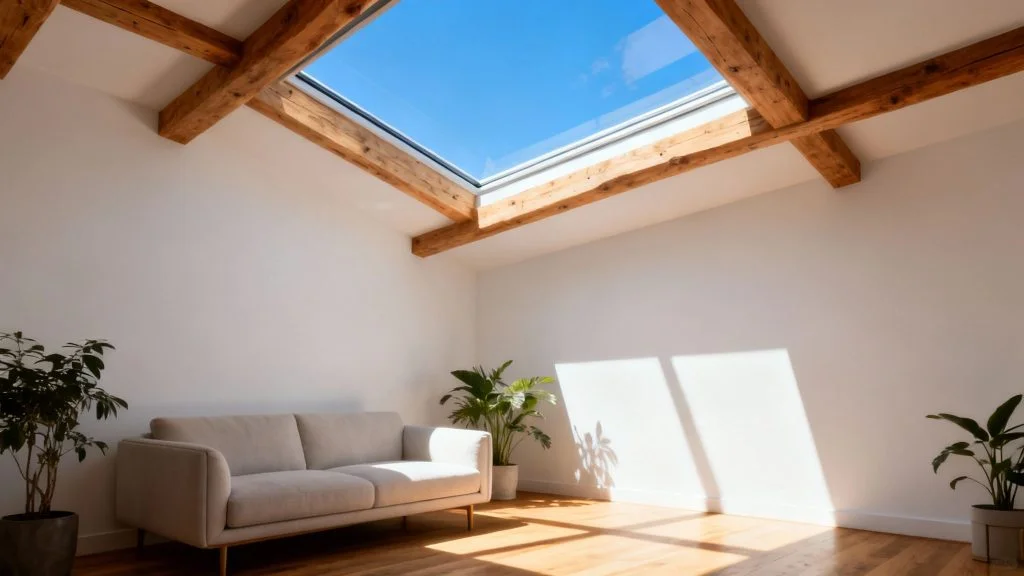
Ever wondered how you can get natural sunlight into those stubborn, dark corners of your home? That’s where blue sky windows come in. It’s a modern way of describing high-quality skylights and roof windows, but thinking of them as just windows doesn’t quite do them justice. They’re more like architectural sun catchers, cleverly designed to pull daylight down and spread it right through your living spaces.
How Blue Sky Windows Can Truly Change Your Home
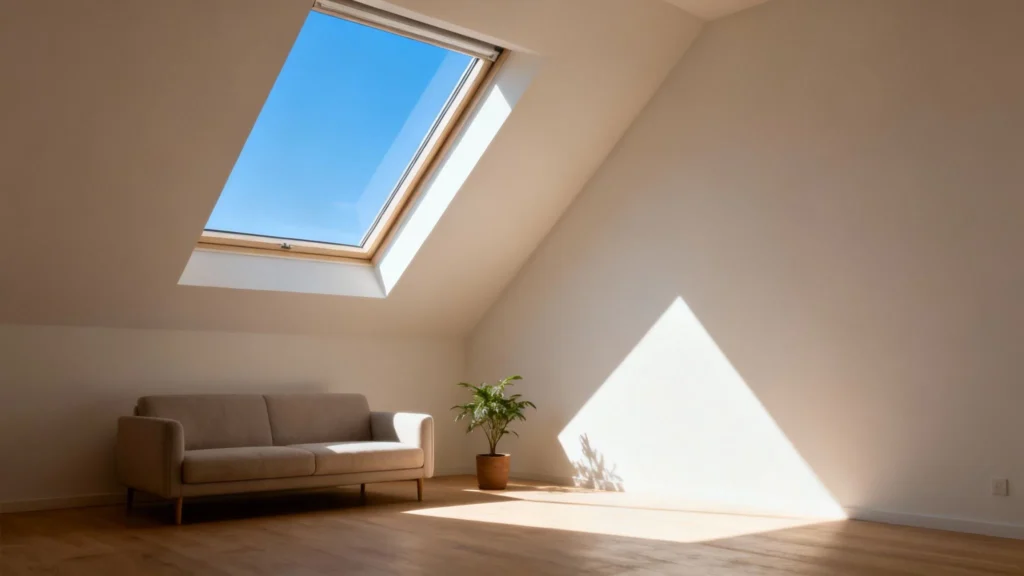
A skylight isn’t just a pane of glass in your ceiling; it’s a dynamic feature that completely shifts the feel of a room. It forges a direct link to the outdoors, letting the changing light of the day paint your interior walls—from the soft glow of sunrise to the rich colours of sunset. This constant, subtle change makes a space feel so much more alive and in tune with the world outside.
The effect is immediate and atmospheric. Hallways that always needed a light on suddenly feel open and inviting. Kitchens become brighter, more vibrant places for cooking and catching up. Even a poky bathroom can feel surprisingly spacious and luxurious when it’s filled with natural light from above. This is what blue sky windows do best: they solve lighting problems in a way that feels completely organic and uplifting.
Creating the Feeling of More Space
One of the most impressive tricks a skylight pulls off is making a room feel bigger than its measurements suggest. By drawing your gaze upwards and flooding the area with light, it visually lifts the ceiling and pushes the walls out.
This works wonders in homes with compact floor plans or lower ceilings, which are pretty common across many Melbourne suburbs. A well-placed roof window can transform a cramped attic into a grand master suite or turn a dim living room into an airy, expansive retreat.
Boosting Your Mood and Your Home’s Look
It’s no secret that natural light has a powerful, positive effect on our mood and wellbeing. Bringing more of it into your home is a direct investment in your quality of life. That clear view of the sky overhead brings a sense of calm and openness, which can be a real game-changer during Melbourne’s grey winter months.
The real value of a skylight isn’t just in how it functions, but in how it makes you feel in your own home. It’s an architectural touch that deepens your emotional connection to your space.
Beyond the good vibes, these windows seriously elevate a home’s design. They create a natural focal point, adding a touch of modern sophistication. A sleek, frameless unit might perfectly complement a minimalist interior, while a row of skylights can create a stunning architectural statement in a large, open-plan room.
While blue sky windows offer their own unique advantages, getting to know other types of windows can give you a fuller picture of your options. To really dive into what these installations can do for your property, check out the many benefits of skylights in our detailed guide.
What Are the Real Benefits of a Roof Window?
Putting a roof window in your home is about so much more than just a nice new feature. It’s an upgrade that delivers real, tangible benefits you’ll feel every day, from your mood to your back pocket. This isn’t just about looks; it’s about improving your quality of life and making a smart investment in your property.
Let’s break down the three biggest wins you get when you let the light in.
1. A Boost for Your Health and Wellbeing
There’s no substitute for natural light. Our bodies are wired to respond to the sun, and bringing more of it indoors has a direct line to our physical and mental health. The flood of natural light from a skylight helps to reset our circadian rhythms—that’s our internal body clock—which is the key to a proper sleep-wake cycle. Waking up to soft, natural light instead of a blaring alarm can mean deeper rest and more energy throughout the day.
It’s also a powerful mood booster. Sunlight helps our brains produce serotonin, which makes us feel calmer and happier. This can be a game-changer for beating the winter blues, especially during Melbourne’s grey and overcast months. A bright, sunny home simply feels more positive and inviting.
On top of that, sunlight is a natural enemy of mould and mildew. By brightening up previously dark or damp corners, you’re creating a healthier indoor environment for your whole family.
2. Slash Your Bills with Smarter Energy Use
This is where a roof window really starts to pay for itself. By channelling daylight deep into the heart of your home, you’ll find yourself reaching for the light switch far less often. Think about how often the lights are on in the kitchen or living room, even when it’s bright outside. A well-placed skylight can light up these spaces for free.
But it’s not just about lighting. Modern, high-performance blue sky windows are brilliant for your home’s thermal efficiency.
In winter, a north-facing skylight acts like a passive heater, capturing the sun’s warmth and taking some of the load off your heating system. Come summer, a venting skylight is your best friend—it lets you release all that trapped hot air that rises to the ceiling, creating a natural cooling flow that reduces your reliance on air conditioning.
This clever, two-way energy management is a huge part of what makes these windows such a smart choice. If you want to dive deeper into the nuts and bolts, you can learn more about skylight energy efficiency and how it all works.
3. A Serious Bump in Property Value
In a hot property market like Melbourne, anything that makes a home stand out is a major advantage. Skylights do exactly that, adding a touch of luxury and a feeling of space that potential buyers love. A home that feels bright, open, and airy will always have an edge over one that’s dark and cramped.
This isn’t just a feeling; it’s a solid financial return. The global market for high-quality windows and doors is projected to hit USD 270.39 billion by 2030, and premium features like skylights are a big part of that growth. Studies have shown that advanced window installations can lead to whole-building energy savings of up to 15.9%—a number that smart buyers definitely notice. You can read more about these trends in this detailed industry report.
When you install blue sky windows, you’re not just making your home better for you right now. You’re adding a premium feature that makes your property more desirable, justifies a higher asking price, and can help you sell faster when the time comes. It’s an investment in your lifestyle today and your bottom line tomorrow.
Choosing the Right Features for Your Skylight
Picking the perfect skylight involves more than just getting the size right. Modern roof windows are seriously clever pieces of engineering, packed with features designed for performance, durability, and sheer convenience. Getting your head around these options is the key to making a confident investment that’s a perfect match for your home, your lifestyle, and the Melbourne climate.
Think of it like buying a new car. You wouldn’t just choose one based on its colour; you’d look under the bonnet and check the safety features and fuel economy. It’s the same with a skylight. The real value is in the technical details—the bits and pieces that work together to deliver beautiful light, comfort, and peace of mind for years. Let’s break down the most important features to have on your radar.
Double Glazing: The Heart of Performance
If there’s one non-negotiable feature for any modern skylight, it’s the glazing. Single panes of glass are a relic of the past for a good reason—they’re terrible insulators, letting heat pour out in winter and stream in during summer. That’s why double glazing is the undisputed industry standard for any quality roof window today.
A double-glazed unit is simply two panes of glass separated by a sealed air gap, which is usually filled with an inert gas like argon. This creates a powerful thermal barrier that dramatically cuts down on heat transfer.
- Winter Benefit: It keeps the precious warmth from your heater inside your home where it belongs, instead of letting it escape straight through the roof.
- Summer Benefit: It helps block the intensity of the Melbourne sun, preventing your living spaces from overheating and easing the load on your air conditioner.
This push for better thermal performance is a huge deal in Australia right now. The market for energy-efficient windows, valued at a massive USD 185.99 Million in 2024, is projected to more than double by 2033, with double glazing leading the way. You can explore more data on this trend in this market analysis. We also have a detailed guide on double-glazed skylights that dives even deeper into how this fantastic technology works.
To help you navigate the key features, we’ve put together a quick comparison table. This breaks down what each feature does and why it might be the right choice for your project.
Skylight Feature Comparison
| Feature | Description & Benefit | Ideal For |
|---|---|---|
| Double Glazing | Two panes of glass with a sealed, gas-filled gap. Provides excellent thermal insulation, keeping heat in during winter and out during summer. Also reduces noise. | Essential for all Australian homes, especially in Melbourne where energy efficiency is key to managing heating and cooling costs. |
| Aluminium Frame | A strong, lightweight, and highly durable material. Modern frames are powder-coated to prevent corrosion and come in various colours. | Homeowners looking for a sleek, modern aesthetic combined with long-lasting, low-maintenance performance. |
| uPVC Frame | A type of plastic known for its superb thermal insulation and moisture resistance. It won’t rot, rust, or warp. | Perfect for high-humidity areas like bathrooms, laundries, and kitchens where condensation could be an issue for other materials. |
| Timber Frame | Offers a classic, warm, and natural aesthetic that brings a touch of traditional craftsmanship to a room. | Heritage-listed homes or interiors aiming for a warm, natural look. It does require more periodic maintenance than metal or uPVC. |
| Custom Flashing Kit | A purpose-built metal collar that creates a watertight seal between the skylight and your specific roofing material (e.g., tile, corrugated iron). | A non-negotiable for every installation. Using the correct flashing kit is critical for a leak-free result and maintaining your warranty. |
| Self-Cleaning Glass | A special coating on the glass uses UV rays to break down dirt, which is then washed away by rain, leaving the glass almost spotless. | Anyone who wants a truly low-maintenance home upgrade. It drastically reduces the need for manual cleaning on the roof. |
Choosing the right combination of these features ensures your skylight isn’t just a window in the roof, but a high-performing part of your home’s overall building envelope.
Materials Matter: Frame and Flashing Kits
While the glass is doing the heavy lifting for temperature control, the frame and flashing kit are the unsung heroes of the system. They provide the structural integrity and, most importantly, the weatherproofing. The frame gives the skylight its rigidity, and the flashing creates that crucial watertight seal between the window and your roof.
A skylight is only as good as its installation, and the flashing kit is the single most critical component for a leak-free result. It’s an absolutely non-negotiable part of the system.
Different frame materials offer unique benefits, which is especially important in Melbourne’s famously variable climate. Aluminium is a popular choice for its strength, durability, and low-maintenance appeal, fitting perfectly with modern homes. uPVC is a fantastic insulator and resists moisture, making it ideal for steamy areas like bathrooms or kitchens. For a more traditional look, Timber frames offer a classic, warm aesthetic that’s hard to beat in a heritage home, though they do require a bit more upkeep.
Crucially, the flashing kit must be specifically designed for your roof type. A kit made for a Colorbond roof is completely different from one designed for terracotta tiles. Using the correct flashing is the only way to guarantee a leak-proof installation and protect your home from water damage.
Low-Maintenance Living with Self-Cleaning Glass
One of the best practical innovations in skylight technology has to be self-cleaning glass. This isn’t just a marketing gimmick; it’s clever science that genuinely minimises how often you’ll need to get up on the roof with a squeegee.
The glass is treated with a special dual-action coating. First, it reacts with UV rays from daylight to break down organic dirt and grime that lands on the surface. Then, when it rains, the coating causes the water to “sheet” off in a wide film rather than forming droplets. This sheet of water carries the loosened dirt away with it, leaving the glass remarkably clean. It’s the perfect feature for anyone after a truly set-and-forget home upgrade.
Finding the Perfect Placement and Size
Deciding where to put a skylight is just as important as which one you choose. It’s the secret to unlocking the full potential of your blue sky windows, making sure they don’t just add light, but actually improve your home’s comfort and efficiency. Think of it like placing a speaker in a room – moving it a few centimetres can be the difference between muddy sound and crystal-clear audio.
In the same way, a well-placed skylight works with your home’s orientation and your daily rhythm, turning a room from simply lit to truly alive. Getting it right means balancing two key things: picking the right size for the space and understanding how your roof’s unique shape will influence the light coming in.
Sizing Your Skylight Correctly
A great rule of thumb in the building industry is that your skylight glazing should cover about 5-10% of the room’s total floor area. So, for a 20-square-metre living room, you’d be looking at somewhere between 1 and 2 square metres of skylight.
Of course, this isn’t a hard-and-fast rule, but it’s a brilliant starting point. A room with high, dark-coloured ceilings might need to push closer to the 10% mark to feel bright and spacious. On the other hand, a smaller room with crisp white walls might only need 5% to get that beautiful, light-filled look without feeling washed out.
The goal is to create a balanced, ambient light that feels natural, not a harsh spotlight. Sizing is the first step in achieving that perfect, gentle wash of daylight throughout the space.
Nailing this balance makes the light feel like a deliberate, integrated part of the room’s design.
How Your Roof Pitch Affects Light and Performance
The angle of your roof, known as its pitch, is a huge factor in both how much light a skylight can capture and how well it sheds rainwater. A steeper roof naturally tilts the skylight towards the sun, which is fantastic for catching more direct light, especially in winter when the sun sits lower in the sky.
A lower-pitched or nearly flat roof needs a bit more thought. For these, the skylight must be installed on a raised curb. This creates enough of an angle for rainwater to run off properly and stops any water from pooling—a non-negotiable detail for a long-lasting, leak-free installation.
North vs South Facing Roofs in Melbourne
Here in Melbourne, the direction your roof faces dramatically changes the type of light your skylight will get. It’s a critical piece of the puzzle.
- North-Facing Roofs: In the Southern Hemisphere, a north-facing roof is the jackpot for passive solar gain. It catches the most sunlight during winter, helping to warm your home naturally. In summer, the sun is higher overhead, so the light is less direct, which cleverly prevents the room from overheating. This is the perfect orientation for living areas where you want bright, consistent warmth.
- South-Facing Roofs: Skylights on a southern slope deliver a softer, more consistent, and indirect light throughout the day. This is ideal for spaces where you want gentle, ambient light without any risk of glare or too much heat, like a home office, artist’s studio, or a bedroom.
By choosing the right orientation, you can tailor the light to suit the room’s purpose, effectively turning your blue sky windows into a smart part of your home’s heating and cooling system.
Fixed vs. Electric: Choosing Your Skylight’s Functionality
Today’s blue sky windows are far more than just a pane of glass in your roof; they can be an active part of your home’s climate control system. The decision between a simple fixed unit and a smart, operable model really boils down to one question: are you just after more light, or do you want control over airflow and convenience, too?
A fixed skylight is the simplest, most cost-effective way to go. Its job is singular and it does it brilliantly: flooding a room with gorgeous natural daylight. With no moving parts, it’s a robust, set-and-forget solution. It’s perfect for spaces where extra ventilation isn’t a top priority, like hallways, stairwells, or rooms that already have plenty of windows.
On the other hand, a venting skylight—which can be manual, electric, or even solar-powered—adds a whole new layer of functionality. Being able to open the window is a genuine game-changer for managing your home’s air quality and temperature.
Harnessing Natural Ventilation
Venting skylights are absolute masters at creating what’s known as the ‘chimney effect’ (or stack ventilation). It’s a simple concept based on pure physics: hot air rises. By placing an operable skylight at the highest point in a room, you give all that trapped, stale air an easy escape route.
This process naturally creates a gentle air current, pulling cooler, fresher air in through lower windows and doors. The result is a consistent, subtle breeze that cools your home without you ever having to touch the air conditioner. On one of Melbourne’s sweltering summer days, this can make a massive difference to your cooling bills and overall comfort.
Think of it like a natural exhaust fan for your entire house. Just by opening your skylight, you’re actively flushing out heat and pulling in fresh air, making your whole home feel lighter and more pleasant.
This passive cooling strategy isn’t just energy-efficient; it makes your home a healthier place to live.
Upgrading to Smart Functionality
This is where modern blue sky windows really come into their own, transforming from a simple window into an intelligent part of your home. Electric and solar-powered models unlock a world of automated convenience that a fixed unit just can’t compete with.
These advanced features aren’t just gimmicks; they’re designed to make life easier and your home more responsive to the world outside. They take all the guesswork out of managing light and airflow.
Here are a few of the most popular smart features we see people choosing:
- Remote-Controlled Blinds: With the push of a button, you can dial in the perfect amount of light and heat for any room. Blackout blinds are a dream for bedrooms and media rooms, while light-filtering options can soften that harsh midday sun without plunging the space into darkness.
- Automatic Rain Sensors: For Melbourne’s famously unpredictable weather, this is a non-negotiable. The sensor detects the very first drops of rain and automatically closes the skylight for you. It’s total peace of mind, whether you’ve just popped out to the shops or you’re away for the day.
- Full Smart Home Integration: Many electric models can be synced with your existing home automation system. This lets you schedule your skylights to open and close at set times of the day, or even link them to your thermostat for a truly automated climate control system.
These smart upgrades turn a skylight from a passive source of light into an active, responsive tool for creating the perfect indoor environment, all at your fingertips.
Getting to Grips with Installation and Upkeep
Putting a skylight in is easily one of the most satisfying upgrades you can make to your home. But to make sure the project goes off without a hitch, it helps to understand the full picture – from the initial cost to the simple care it needs down the track. Your journey doesn’t stop once you’ve picked the perfect unit; installation and long-term maintenance are what guarantee your skylight will pour beautiful, hassle-free light into your home for decades.
Thinking about the cost is a bit like buying a new kitchen appliance. There’s the price of the unit itself, of course, but you also need to factor in getting it to your door and having a professional fit it. The final quote for installing a skylight can shift depending on a few key things, which ensures you only pay for the work your specific home actually needs.
What Goes into the Cost?
A few different elements can shape the total price of getting a skylight installed. Knowing what they are helps you make sense of your quote and plan your budget properly.
Here are the main things to consider:
- Roof Complexity and Access: It stands to reason that a simple, single-storey home with easy roof access will be more straightforward—and therefore more affordable—to work on. A steep, multi-storey property that needs special safety gear will naturally involve more work.
- Roofing Material: The type of roof you have definitely matters. Popping a skylight into a standard tiled or Colorbond roof is a common job for installers. But working with materials like slate, for instance, might require a more specialised touch and a bit more time.
- Structural Work: Sometimes, an installer might need to cut through a roof rafter or add some extra timber support in the roof cavity to frame the skylight perfectly. This is all a normal part of the process, but it will add to the labour time and overall cost.
While a DIY installation might seem like a clever way to save a few dollars, getting a professional to fit your skylight is the only way to guarantee a leak-proof finish and keep your warranty intact. A tiny mistake during installation can lead to major water damage later on, making a pro’s expertise an investment that pays for itself.
Warranties for Long-Term Peace of Mind
Any quality skylight should come with a solid warranty, giving you real confidence in your purchase. It’s important to look for two separate guarantees: one covering the product itself, and another for the installation workmanship.
A strong product warranty, like a 10-year guarantee, covers the skylight unit against any defects in the materials or manufacturing. This has your back if there’s ever a fault with the frame, the glass, or any of the built-in mechanisms. Separately, your installer should offer their own workmanship warranty, which is their promise that the installation has been done correctly and, most importantly, will be completely leak-free.
A Simple Maintenance Checklist
Honestly, one of the best things about modern blue sky windows is how little you have to do to look after them, especially if you’ve gone for self-cleaning glass. Still, a tiny bit of care goes a long way in keeping your skylight looking and performing its best for years.
Your maintenance routine is as simple as this:
- Annual Cleaning: Just give the inside glass a wipe-down like you would any other window in your house. On the outside, self-cleaning glass handles most of the hard work, but a gentle wash with soapy water once a year will shift any stubborn grime.
- Inspect the Seals: Once a year, when you’re up on the roof, take a quick peek at the flashing and seals around the skylight. You’re just looking for any build-up of leaves or twigs that might stop water from draining away properly.
- Check for Obstructions: Make sure any nearby trees haven’t grown branches over the skylight. This can block that precious light and drop debris onto the glass.
The Australian commercial cleaning market is huge, which shows just how much we value keeping our properties looking sharp. You can even check out some local industry statistics and trends to see how big it is. Thankfully, for your own skylight, this simple checklist is all you’ll ever need to keep that beautiful view of the sky crystal clear.
Your Skylight Questions Answered
Taking the leap to install a skylight is an exciting move, but it’s completely normal to have a few last-minute questions. To make sure you’re feeling confident about your decision, we’ve put together answers to some of the queries we hear most often from Melbourne homeowners.
Will My Skylight Make My Room Hotter in Summer?
It’s a fair question, but a modern, well-engineered skylight is designed to stop that from happening. Every unit we offer features high-performance double glazing with a special low-E coating that acts as a thermal shield. This reflects the majority of the sun’s heat, keeping your room comfortable even in the middle of a summer heatwave. For total control, you can pair it with a blockout blind.
Can a Skylight Be Installed on Any Type of Roof?
Just about! We have specialised flashing kits designed to create a completely weatherproof seal on all common Melbourne roof types, from tiles to metal profiles like Colorbond. It doesn’t matter if your roof has a steep or low pitch; a professional installation ensures everything is secure and, most importantly, leak-free.
The key thing to remember is that the right flashing kit is just as crucial as the skylight itself. It’s the piece that guarantees a watertight fit with your specific roofing material, protecting your home for years to come.
How Much Maintenance Does a Skylight Actually Need?
Honestly, very little. Thanks to a clever self-cleaning glass coating, mother nature does most of the work. Rain and UV light team up to break down and wash away dirt and grime. All you’ll really need to do is give the inside an occasional wipe-down and do a quick annual check outside to clear away any leaves or debris that might have gathered around the frame.
Ready to bring beautiful, natural light into your home? The team at Vivid Skylights is here to help you find the perfect solution for your space. Explore our range of high-performance skylights at https://vividskylights.com.au.