

You know the room. It’s the hallway you switch on at noon. The bathroom that never feels fresh. The middle of the house that looks flat and tired no matter how nicely you furnish it.
Most homeowners make the same mistake. They treat a dark room like a decorating problem when it’s a light access problem. Paint helps a bit. Mirrors help a bit. Better fittings help a bit. But if the space never gets convincing overhead light, it still feels shut in.
That’s where the right skylight choice changes everything. In some homes, a real roof skylight is the clear winner. In others, roof access, structure, ceiling layout, or upper-storey rooms make that impossible. That’s when an artificial skylight becomes the smart move, not a compromise.
Table of Contents
Is a Dark Room Dimming Your Home's Potential?
A dark room drags down more than itself. It makes the whole home feel smaller, older, and less inviting.
People notice this most in the spaces they can’t easily fix. Internal bathrooms. Walk-in robes. Hallways. Stair voids. Lower-ground rooms. The rear section of an older home with a deep floor plan. You end up burning electricity during the day just to make the room usable, and it still doesn’t feel like daylight.
The right answer depends on one thing first. Can the room connect to the roof?
If it can, a real skylight usually gives the best result. You get actual daylight, shifting sky conditions, and in some cases ventilation as well. If it can’t, an artificial skylight can create the overhead glow the room is missing without opening the roof.
Start with the problem, not the product
Don’t ask, “Which skylight should I buy?” Ask these three questions instead:
Is there direct roof access above the room?
Do I want real daylight, or do I need a smart substitute because structure rules out a roof opening?
Does the room need light only, or light plus airflow?
That’s the practical way to make the decision.
Practical rule: If you can install a real skylight safely and properly, that should be your first option. If you can’t, an artificial skylight is the cleanest way to brighten the space without forcing a structural workaround.
For homeowners dealing with gloomy interiors, this guide on how to brighten a dark room is a useful starting point before you choose a product.
Why this matters more in Australian homes
A lot of Australian houses have exactly the kind of layout that creates dim internal zones. Older homes often have deeper plans, smaller windows in service areas, and extensions that leave the centre of the house starved of daylight.
You feel that every day. The room becomes one you pass through, not one you enjoy. Better overhead light changes that quickly. It makes the space feel cleaner, calmer, and more finished.
Comparing Your Skylight Options
Most homeowners hear “skylight” and think there’s only one category. There isn’t. You’ve got three very different tools, and they solve different problems.

What each option does
A traditional glass skylight is a roof window. It brings in genuine daylight from above. If it’s operable, it can also release hot air and improve airflow.
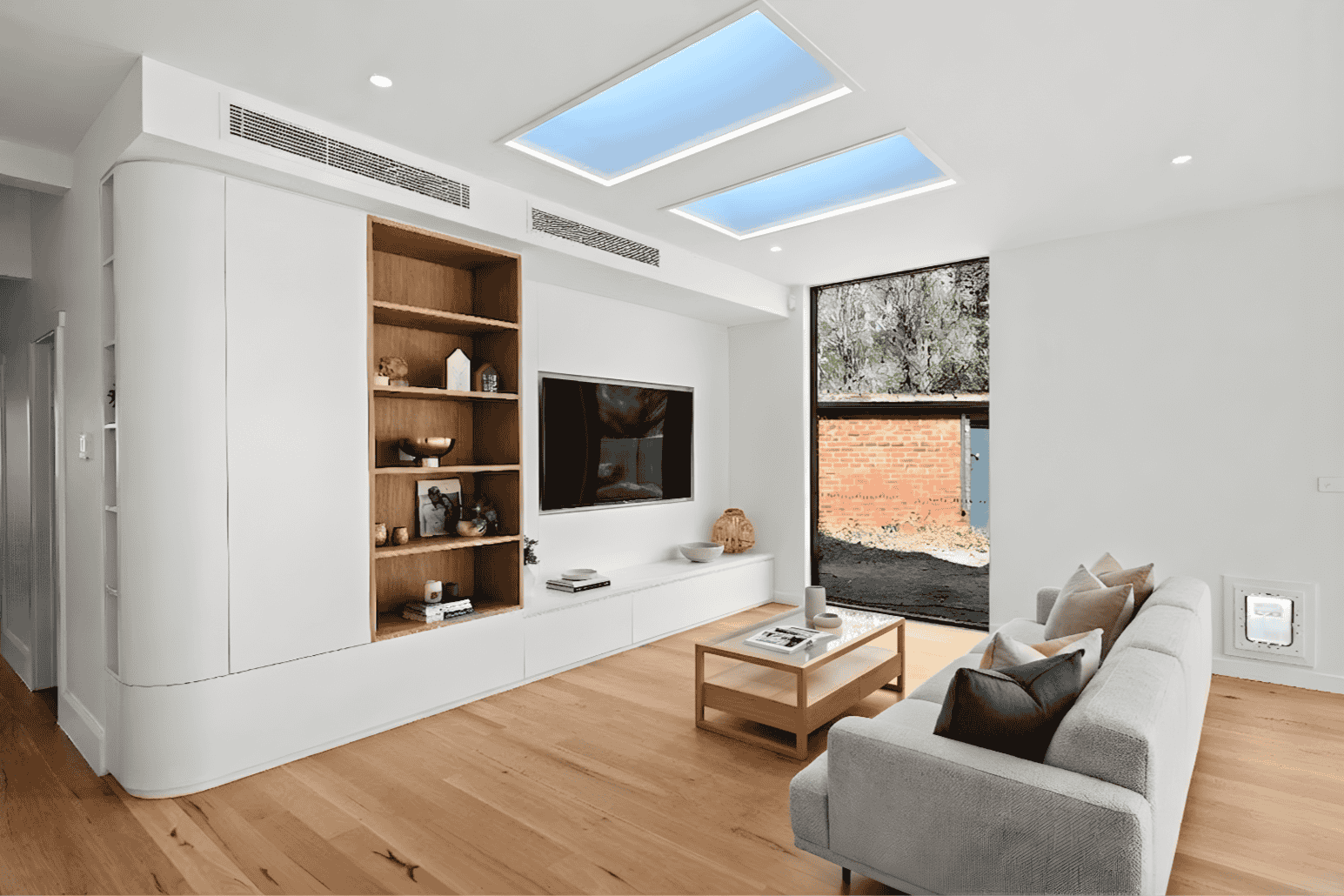
An artificial skylight is an advanced ceiling-mounted lighting system designed to imitate the look and feel of daylight from overhead. It doesn’t need a roof opening, which makes it ideal for places where a real skylight can’t go.
A tubular skylight sits somewhere in between in terms of use case. It channels daylight through a reflective tube from the roof to the ceiling below. It can work well in tight spaces, but it doesn’t give the same open-sky visual effect as a glass skylight, and it doesn’t deliver the design presence of a premium artificial skylight either.
If you want a broader look at categories and configurations, this guide to types of skylights is worth reading.
Skylight Technology at a Glance
| Feature | Vivid Traditional Skylight (Fixed/Operable) | Vivid AuraGlow LED Skylight | Tubular Skylight |
|---|---|---|---|
| Light source | Real natural daylight | Simulated daylight from LED technology | Natural daylight channelled through a tube |
| Roof opening required | Yes | No | Yes |
| Best for | Living rooms, kitchens, bathrooms, raked ceilings, renovations | Internal rooms, basements, apartments, lower floors, spaces with no roof access | Small bathrooms, hallways, compact service areas |
| Visual effect | True sky connection | Skylight-style ceiling glow with changing colour through the day | Functional daylight point |
| Ventilation option | Yes, if operable | No | No |
| Design impact | Strong architectural feature | Clean modern feature for difficult spaces | Usually more subtle and utilitarian |
| Best choice when | You can access the roof and want the highest-quality result | You want the skylight effect without structural roof work | You need daylight in a tight or narrow cavity |
How to choose fast
If you want the shortest possible decision tree, use this:
Choose a traditional skylight if the room sits under the roof and you want the best visual and lifestyle result.
Choose an artificial skylight if there’s another storey above, the room is buried in the plan, or structural work would be excessive.
Choose a tubular skylight if the room is small and you care more about function than visual impact.
A good skylight decision isn’t about chasing a trend. It’s about matching the technology to the room’s constraints.
One more point. Don’t let anyone sell you an artificial skylight as “the same” as a real skylight. It isn’t. It solves a different problem. That doesn’t make it second-rate. It makes it useful in places where real daylight can’t physically reach.
The Unmatched Quality of Traditional Skylights
If your room has roof access, a traditional skylight is still the benchmark. Nothing matches real daylight coming through glass from the sky above.
Why real daylight still wins
Real skylights don’t just brighten a room. They change its character through the day. Morning light is different from late afternoon light. Cloud cover softens the room. Blue sky sharpens it. That variation is part of what makes a space feel alive.
There’s also a strong building-performance case for them. The 2003 introduction of Australia’s Green Star rating system, where skylights earn points for daylight factors exceeding 2%, led to 35% of certified homes specifying rooflights, according to this report linked in the brief from Science Advances. The same verified data notes that in Victoria, demand has been pushed further by emissions targets, and in Melbourne suburbs, powder-coated aluminium skylight frames help reduce artificial light needs by 40% in the daytime.
That tells you something important. Skylights aren’t a luxury add-on anymore. They’re part of how better homes are being designed and upgraded.
What matters in the unit itself
Not all traditional skylights are equal. The details decide whether the skylight feels premium in ten years or becomes a maintenance headache.
Here’s what I’d insist on:
Double glazing: Better suited to Australian conditions and a smarter long-term choice than a basic single-skin unit.
Powder-coated aluminium framing: Strong, stable, and better prepared for harsh weather.
Frameless top glazing: Helps shed water cleanly rather than encouraging pooling.
Self-cleaning glass: Reduces the amount of upkeep most homeowners want to avoid.
Operable options: Worth serious consideration in bathrooms, kitchens, and high-ceiling spaces where trapped heat builds up.
A fixed skylight is simple and effective. An operable one adds another layer of value because it can improve comfort as well as light quality. Electric and solar-powered opening models make sense when the skylight is out of reach.
The best rooms for a real skylight
Traditional skylights are strongest in spaces where the sky connection matters:
Living areas: They make the room feel taller and more open.
Kitchens: Bench areas and central islands benefit from top-down light.
Bathrooms: Privacy stays intact while the room feels brighter and cleaner.
Stairwells: A skylight can pull light through multiple levels of the home.
If the structure allows it, this is the option I’d back every time.
AuraGlow The Smart Artificial Skylight Solution
Some rooms will never take a real skylight without major structural work. That’s exactly where an artificial skylight earns its place.
Where an artificial skylight makes more sense
Think about the awkward spaces. A ground-floor room in a two-storey home. A basement retreat. A hallway boxed in by trusses and services. A room in the middle of the floor plan with no clean route to the roof.
In those cases, trying to force a traditional skylight can get expensive, messy, or impossible. An artificial skylight solves the problem. It gives you that overhead daylight effect without roof penetration.
This is a category where the new AuraGlow LED skylight is so useful. It isn’t trying to be a standard ceiling light with a fancy name. It’s designed to create the impression of a skylight overhead and brighten the room in a more natural-looking way than a flat downlight layout ever will.
If you want to see the product range directly, the dedicated page for LED skylights gives a clearer sense of where this type of system fits.
Why colour-changing light matters
The best artificial skylight systems don’t stay stuck on one harsh white tone all day. Verified data in the brief notes that advanced artificial skylights use Tuneable White Circadian Rhythm systems via DALI-2 protocols, shifting through a 1800K to 6500K range and reducing melatonin suppression by up to 50% compared with static lighting.
That matters in plain English because light affects how a room feels and how your body responds to it. Cooler light works better earlier in the day when you want clarity and alertness. Warmer tones feel calmer later on.
Here’s a closer look at the effect in action:
An artificial skylight works best when it behaves like daylight, not when it behaves like a bright office panel.
Style matters too
A lot of homeowners reject artificial lighting solutions because they look obviously fake. That’s fair. Bad versions do.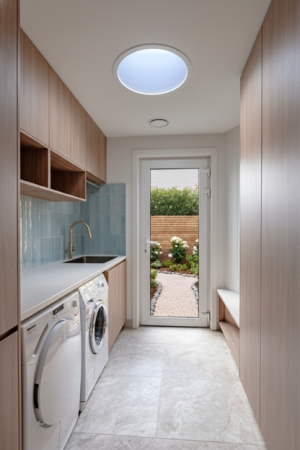
A better-designed artificial skylight uses soft diffusion, clean framing, and changing colour through the day so the ceiling reads more like a skylight opening than a luminaire. In practical terms, that makes it a strong option for media rooms, studies, internal living zones, dressing rooms, and renovated lower-ground spaces.
If you’re still planning the room itself, visualising furniture, finishes, and ceiling features before you commit is smart. This guide to Interior Design with AI is useful if you want to test how a brighter overhead feature could change the look of the space before installation.
Returns of Investing in Better Light
Good light pays you back. Not in a vague lifestyle-magazine way. In the daily running of the house, in how the rooms feel, and in what buyers notice later.
The financial side is tangible
Verified data in the brief states that installing double-glazed skylights can cut daytime electricity use by up to 30%, and that this can enhance home values by 4 to 6% in Melbourne regions, based on the cited reference for skylight performance and property value.
That’s not surprising. Brighter homes photograph better, inspect better, and feel more liveable immediately. Buyers respond to that.
If you’re weighing the resale case specifically, this article on whether skylights increase home value is worth your time.
Better light changes how rooms get used
There’s another return homeowners often miss. Once a room is properly lit, people start using it differently.
A gloomy study becomes somewhere you’ll work. A dim bathroom starts feeling cleaner. A central sitting room becomes a place people drift into naturally during the day. The home works better because the room works better.
That matters whether you choose real or artificial overhead light.
For daily comfort: Better overhead light reduces dependence on switched lighting during the day.
For aesthetics: Rooms look bigger, fresher, and less boxed in.
For liveability: You stop designing around the dark spot and start using the whole floor plan.
Better light doesn’t just improve visibility. It changes whether a room feels worth being in.
If you’re deciding between options, I’d put the returns in this order. First, solve the room properly. Second, protect efficiency. Third, think about resale. Homeowners who do it in that order usually make the better long-term choice.
Your Guide to Installation and Ownership
A skylight project goes well when you make the practical decisions early. Most problems come from guessing, rushing, or choosing the wrong product for the roof type.
Start with the roof and ceiling
For a traditional skylight, check the roof structure, the ceiling cavity, and the path between them. Roof pitch matters. So does the location of rafters, services, insulation, and ceiling framing.
You also want the right glazing and flashing details for Australian conditions. A skylight isn’t just the visible glass. The installation system matters just as much if you want a clean, watertight result.
For homeowners planning the practical side, this guide on installation of skylight helps clarify what’s involved.
DIY or professional install
Some projects suit a capable DIY renovator. Others don’t.
A straightforward install on the right roof can be manageable if the product is designed for it and the installer understands roofing, flashing, and internal finishing. But if the roof is difficult, access is poor, or the ceiling buildout is more complex, bring in a professional.
I’d split it this way:
DIY is more realistic when the roof is accessible, the opening is straightforward, and you’re confident with precise layout and weatherproofing.
Use a professional when the roof is steep, the ceiling shaft is complex, or you’re fitting an operable unit and want the cleanest finish.
For artificial skylights, installation is usually simpler because there’s no roof penetration, but ceiling placement, wiring, and final appearance still matter.
Think beyond day one
The cheapest unit can become the most expensive one to live with if it ages badly. Durability matters more in Australia because roofs take real punishment from UV, heat, and storms.
The verified data provided in the brief says that a University of Melbourne study found some artificial units lost 18% illuminance in 2 years, while premium skylights with powder-coated frames and self-cleaning glass retained 95% integrity, based on the linked article about artificial skylight durability and harsh Australian conditions.
That’s exactly why I tell homeowners to look past the showroom impression and ask tougher questions:
What is the frame made from?
How is water managed on the roof?
What glazing or diffuser quality am I getting?
What warranty backs the product?
Will this still look good after years of Australian weather?
A long warranty matters. So does easy access to parts, clear install guidance, and sensible aftercare. Ownership should feel simple, not fragile.
Frequently Asked Questions
Can I use both a real skylight and an artificial skylight in the same home
Yes, and in many homes that’s the smartest approach. Use real skylights where the roof allows it, then use an artificial skylight in rooms that can’t physically connect to the roof.
Do artificial skylights still help on cloudy days
They do, and they can complement natural skylights well in these situations. The verified data in the brief notes that a CSIRO study on Melbourne pilot homes found a 22% reduction in daytime LED usage when artificial skylights supplemented real ones during cloudy periods, based on the linked reference discussing hybrid skylight use in overcast conditions.
Which rooms are best for an artificial skylight
Internal bathrooms, basements, hallways, lower floors in two-storey homes, and any room where roof penetration isn’t practical.
Which gives the better result overall
If the room can take a proper roof skylight, real daylight is still the better result. If it can’t, an artificial skylight is a far better answer than leaving the room dependent on standard ceiling lights.
If you’re ready to brighten a dark room properly, Vivid Skylights offers both premium double glazed fixed and operable skylights, plus the new AuraGlow LED skylight range for spaces where traditional skylights can’t be installed. We supply electric and solar powered opening skylights and deliver nationwide across Australia, so you can choose the right solution for your home instead of forcing the wrong one.