

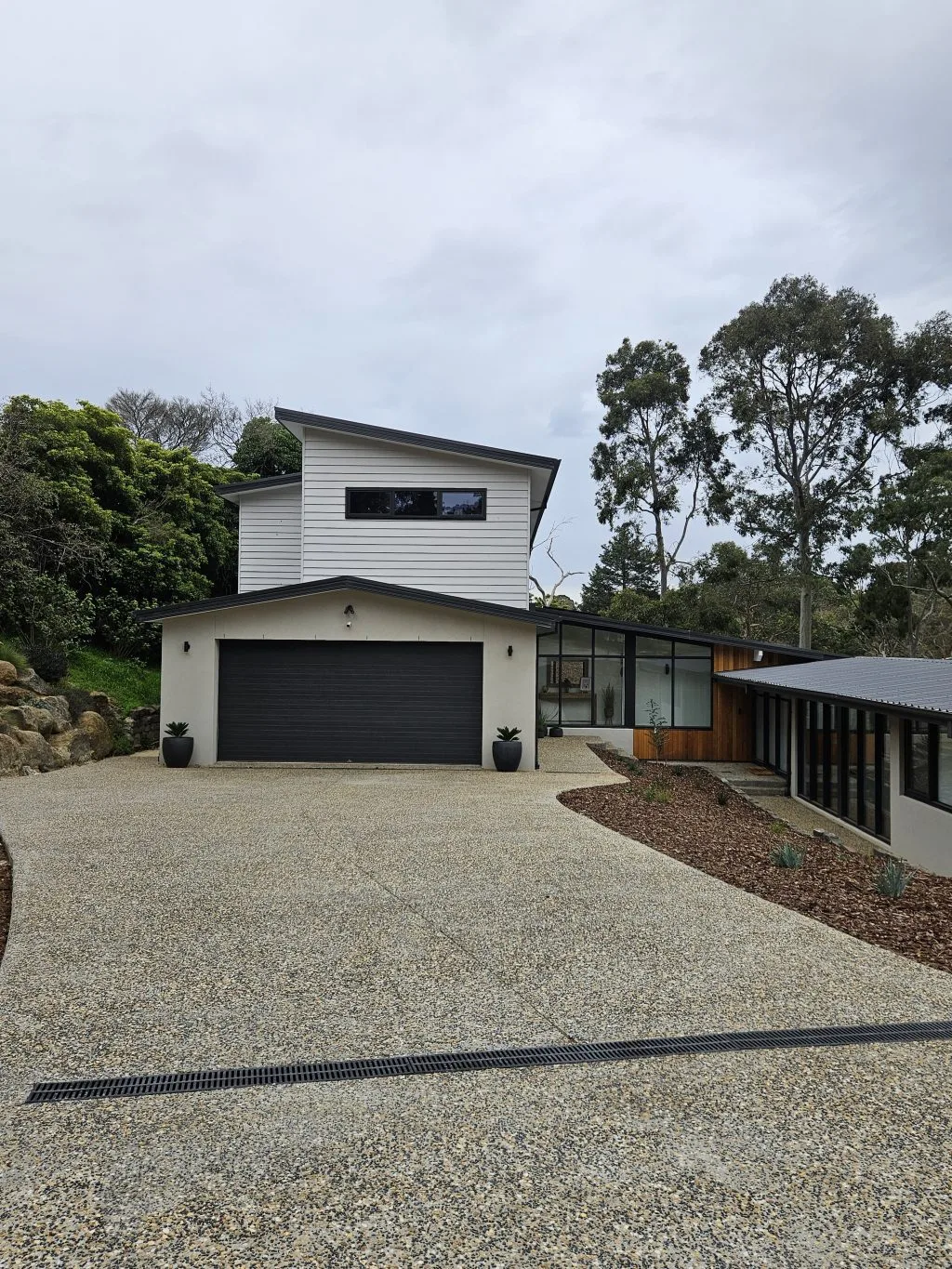
Building in a bushfire-prone area comes with a unique set of rules, and understanding BAL 29 requirements is absolutely critical. These aren’t just suggestions; they are specific construction methods and materials mandated by Australian Standard AS 3959 to give your home a fighting chance against high levels of radiant heat and ember attack.
If you’re building or renovating in a zone with significant bushfire risk, getting this right is non-negotiable.
What a BAL 29 Rating Really Means for Your Home
Before we get tangled up in building codes, let’s break down what a BAL 29 rating actually means for your property. BAL stands for Bushfire Attack Level, and a BAL 29 classification flags your home as having a ‘high’ risk. This isn’t just some technical jargon; it’s a serious safety benchmark that dictates how your home has to be constructed.
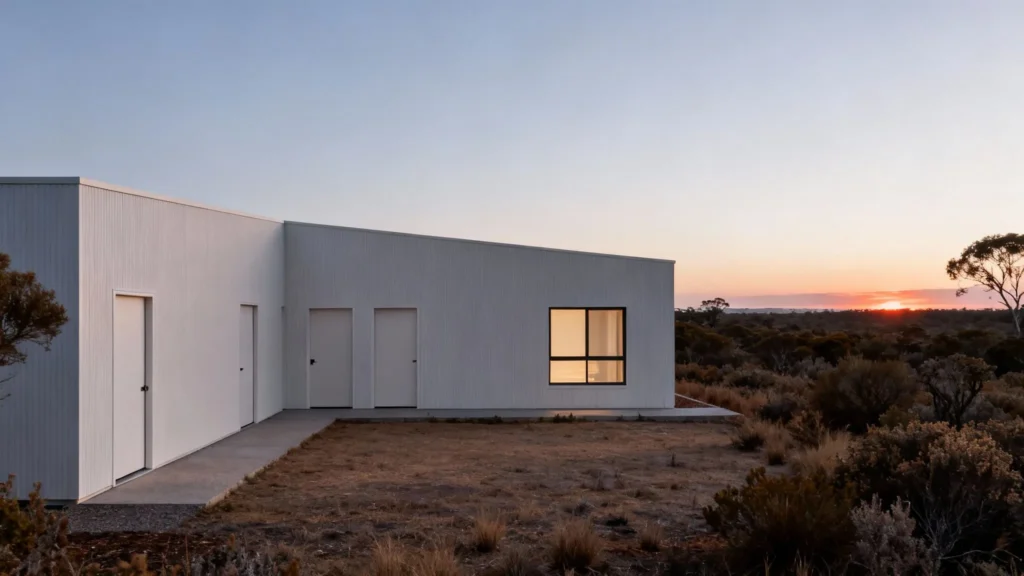
Think of it as a permanent, severe weather warning for bushfires. It means your property is expected to face a triple threat: a barrage of airborne embers, burning debris, and a punishing level of radiant heat.
The “29” in BAL 29 isn’t an arbitrary number. It represents the maximum radiant heat exposure the building is designed to handle: 29 kilowatts per square metre (kW/m²). That’s an incredible amount of heat, enough to ignite flammable materials from a distance without any direct flame contact.
The Three Core Bushfire Threats at BAL 29
To meet BAL 29 standards, your home needs to be fortified against three distinct forms of bushfire attack. Each one targets a different weakness in a building’s design.
- Ember Attack: This is the silent killer and the number one reason homes are lost in a bushfire. Fierce winds can carry tiny, glowing embers for kilometres ahead of the main fire front. They sneak into gutters, under eaves, and through the smallest gaps, igniting the structure from the inside out.
- Radiant Heat: This is the invisible wave of intense heat you feel from a large fire, even when the flames are far away. At 29 kW/m², it can pre-heat walls and shatter ordinary window glass, making it much easier for the home to catch fire.
- Burning Debris: It’s not just embers. Wind can also blow burning leaves, twigs, and other debris right up against your house or under your deck, creating a direct ignition point.
The construction requirements laid out in Australian Standard AS 3959 are specifically designed to counteract these threats. Following these rules isn’t just about legal compliance; it’s about building a home that’s resilient enough to stand up to the harsh realities of the Australian bush. Getting a handle on the full Bushfire Attack Level (BAL) rating system gives you the bigger picture of why these measures are so vital.
Key Construction Upgrades for BAL 29 Compliance
Getting your home to meet BAL 29 standards is about more than just a few minor tweaks. It’s a complete upgrade of your home’s outer shell, turning it into a structure hardened against the brutal conditions of a bushfire. Think of it as putting on a suit of armour. The whole process is guided by the Australian Standard AS 3959, and it boils down to two main goals: sealing every single gap where a stray ember could sneak in, and using materials that simply won’t catch fire when faced with intense radiant heat.
Let’s walk through the essential upgrades for each part of your home, starting from the ground up. This makes it much easier to see how the complex building code translates into a real-world checklist for you or your builder.
Securing the Subfloor and Foundations
That space underneath your home’s ground floor—the subfloor—is a massive weak point in a bushfire. It’s a perfect trap for embers, which can easily blow in and set fire to leaf litter or even the floor joists themselves. The BAL 29 requirements are all about creating a sealed, fireproof barrier right at the base of your house.
If your subfloor is unenclosed, meaning you can see right under the house, the posts and framework holding it up have to be made from either:
- Non-combustible materials: Steel, concrete, or brick are the go-to choices here.
- Bushfire-resisting timber: Certain dense Australian hardwoods like Spotted Gum, Red Ironbark, or Merbau have been given the green light.
On top of that, if the gap between the ground and your floor bearers is less than 400mm, you have to enclose it completely. This is usually done with non-combustible sheeting or a proper masonry wall, effectively building a shield that stops embers dead in their tracks.
Fortifying External Walls and Cladding
Your walls are your home’s main defence against the sheer force of radiant heat. To get a BAL 29 rating, the outside surface must be tough enough to handle 29 kW/m² of heat without igniting. This really narrows down your choice of materials compared to a standard build.
Acceptable materials for external walls include:
- Non-combustible options: Brick, stone, rammed earth, and concrete are fantastic choices, offering top-tier fire resistance.
- Fibre cement or steel sheeting: These are popular in modern designs and are highly non-combustible.
- Bushfire-resisting timber: If you’re set on a timber look, it has to be a species approved under AS 3959. Even then, every joint in the cladding must be perfectly sealed to block out embers.
It’s not just the cladding you need to think about. The standard insists that any gaps or joints in the wall system are sealed tight. This prevents embers from getting into the wall cavity, where they could smoulder away unseen and eventually ignite the frame.
A classic mistake is to focus only on the main cladding material. BAL 29 compliance is about the details—sealing around every pipe, tap, and vent that pokes through the wall. An unsealed gap of just a few millimetres is like leaving the door wide open for an ember.
To really see the difference, let’s compare what you’d find on a standard home versus what BAL 29 demands.
Standard Build vs BAL 29 Construction Requirements
The table below breaks down the step-up in materials and methods required to move from a standard build in a low-risk area to one that’s BAL 29 compliant. It highlights just how significant the changes are.
| Building Element | Standard Construction | BAL 29 Requirement |
|---|---|---|
| Subfloor Supports | Any suitable timber or steel. | Non-combustible materials or specific bushfire-resisting timber. |
| Underfloor Space | Often left open or screened with basic lattice. | Must be fully enclosed if the clearance is under 400mm. |
| Wall Cladding | Wide range of options including softwood timbers. | Non-combustible material or specific bushfire-resisting timber. |
| Roofing | Any compliant material; sarking is optional. | Non-combustible covering (tiles, metal) with fully sealed sarking underneath. |
As you can see, every BAL 29 requirement is a deliberate, strategic measure designed to reinforce a potential weak point and make your home safer.
Constructing a Fire-Resistant Roof System
The roof is arguably the most vulnerable part of a house during an ember attack. Embers can land right on top, get funnelled into gutters, or find their way into the roof space through tiny gaps. A BAL 29 compliant roof is designed as a completely sealed unit.
The key requirements are:
- Non-Combustible Covering: Your roof has to be covered with materials like concrete tiles, terracotta tiles, or metal sheeting (like Colorbond).
- Full Sarking: A protective, non-combustible membrane called sarking must be installed directly under the roof covering.
- Sealed Gaps: Any gaps between the roof material and the sarking must be sealed up. This is crucial at the fascia, valleys, and ridges to stop wind-driven embers from getting into your roof cavity.
Finally, your gutters and downpipes must be made from non-combustible metal. It’s also a very good idea to install a quality metal gutter guard. This stops flammable leaves and twigs—a major source of ignition—from building up. By tackling the subfloor, walls, and roof as a system, you create a tough outer shell that can stand up to the serious demands of BAL 29.
Choosing Compliant Windows and Skylights
Windows and skylights are often called the eyes of a home, but in a bushfire, they can become its biggest weakness. Standard glass can shatter from intense radiant heat long before flames even get close, creating an open door for embers to pour inside. But don’t worry, meeting the strict BAL 29 requirements doesn’t mean you have to board up your windows and live in the dark.
Modern glazing solutions are engineered from the ground up to handle the brutal conditions of a bushfire. The trick is to choose products where every single component—from the glass and frame to the screens and seals—works together as one cohesive, fire-resistant system. This ensures your home stays bright and beautiful while being fundamentally secure.
The Anatomy of a BAL 29 Window
Think of a BAL 29 window not just as a pane of glass, but as a multi-layered shield. It’s a complete assembly designed to fend off extreme heat and stop embers in their tracks. The Australian Standard AS 3959 lays out very clear rules for every part of the window or skylight.
Here’s what goes into making them compliant:
- Toughened Safety Glass: The glass itself must be toughened safety glass with a minimum thickness of 5mm. This isn’t your average glass; it’s heat-treated to be incredibly strong, specifically so it can withstand the thermal shock from intense radiant heat without failing.
- Robust, Non-Combustible Frames: The frame holding the glass is just as critical. Compliant materials include powder-coated aluminium, steel, or specific bushfire-resisting timbers. The key is that these materials won’t ignite or warp when the heat is on.
- Ember-Proof Seals: Any part of the window that opens must be fitted with tight-fitting seals. These are made from non-combustible or fire-retardant materials designed to prevent tiny, wind-driven embers from sneaking through the gaps.
Screening Isn’t an Optional Extra
For any part of a window or skylight that you can open, a protective screen is non-negotiable. Embers are incredibly opportunistic, and any small gap is a potential entry point for fire.
The rule is simple: if it opens, it needs a screen. And these aren’t your typical insect screens; they are heavy-duty ember guards built to stop a firestorm.
The screens themselves must be made from corrosion-resistant steel, bronze, or aluminium and have a mesh with holes no larger than 2mm. This fine mesh is small enough to block even the tiniest embers that get whipped up by the wind, effectively sealing off your home’s most vulnerable openings. High-quality windows and skylights designed for bushfire zones will have these screens seamlessly integrated right into their design.
This flowchart shows how these window and skylight upgrades fit into the bigger picture of protecting your home, starting from the ground up.
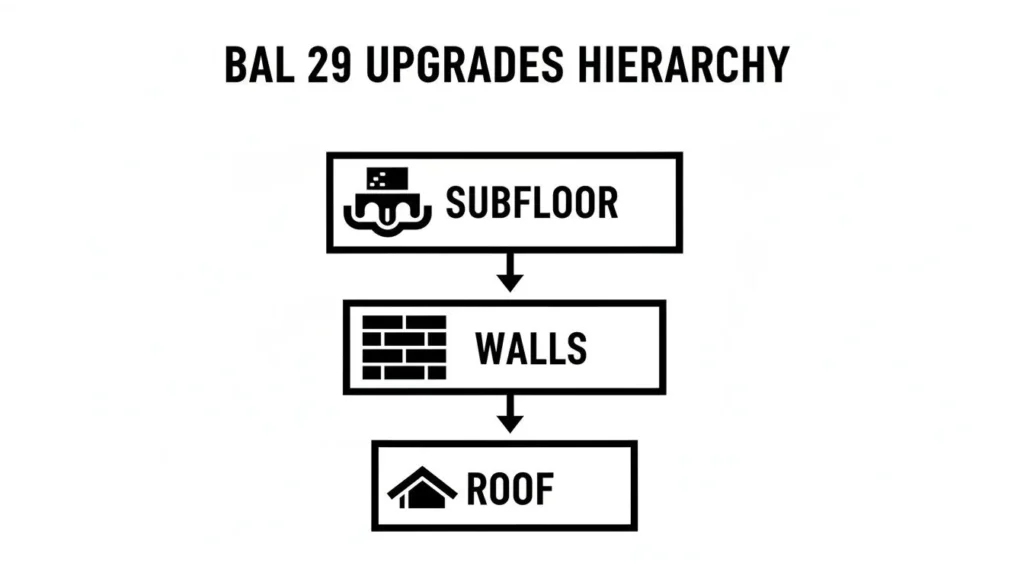
As you can see, a home’s resilience is built in layers. Every element, from the subfloor right up to the roof, plays a vital role in the overall protective strategy. A BAL-29 rating means your property could face radiant heat up to 29 kW/m², which is why these construction upgrades are so stringent.
And they work. Analysis from the 2019-2020 Black Summer fires showed that Victorian properties built to BAL-29 or higher standards suffered 40% less structural damage from radiant heat compared to lower-rated homes. That’s a powerful testament to why these measures matter.
By choosing fully compliant products, you ensure that the very features designed to bring light and air into your home don’t become a liability when you need protection the most.
Securing Your Roofline Against Ember Attack
Embers are the stealthy advance guard of a bushfire. Long before the main fire front arrives, these tiny, glowing threats can travel for kilometres on the wind, silently lodging themselves in the most vulnerable parts of a home. Your roofline—with its collection of gaps, vents, and joints—is their number one target. Fortifying this area is one of the most critical parts of meeting BAL-29 requirements.
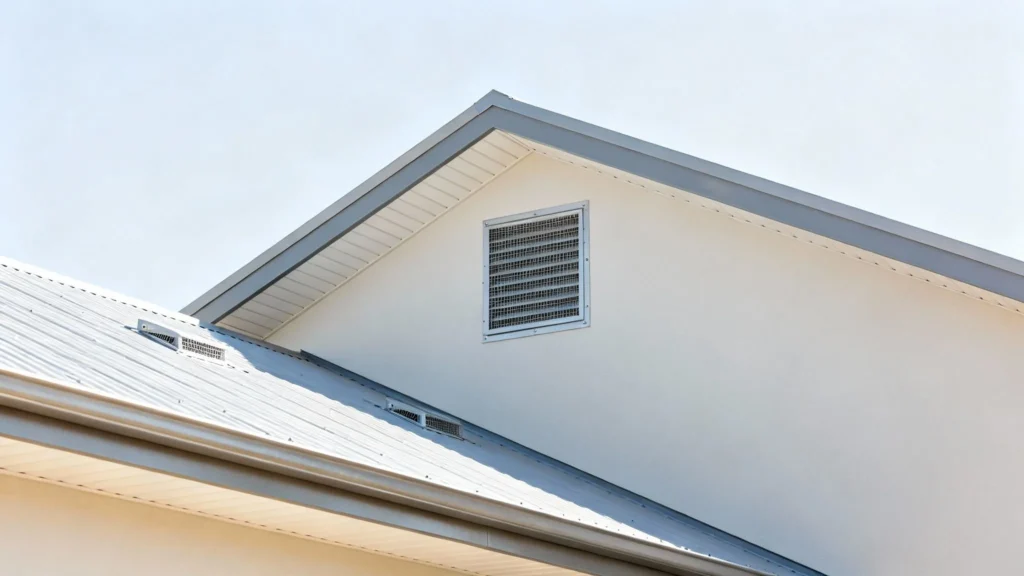
Think of your roof as a shield. An effective shield has no chinks in its armour. The entire goal of BAL-29 is to find and seal every potential entry point, turning your roof cavity into a secure, ember-proof zone.
This involves a lot more than just choosing the right tiles. It’s a detailed approach that covers everything from your eaves and vents to anything that happens to break the roof’s surface.
Sealing Eaves and Gables
Eaves, the overhanging section of your roof, are notorious for catching and trapping embers. To comply with BAL-29, any openings in the underside of your eaves must be sealed with a non-combustible material or specific bushfire-resisting timber. This simple step creates a solid barrier that stops embers from being swept up under the roofline where they can ignite the timber structure.
The same logic applies to gables—the triangular section of wall at the end of a pitched roof. If your gables have vents, they need the exact same level of protection as any other opening, meaning robust ember guards are mandatory.
Protecting Vents with Ember Guards
Your home needs to breathe, but vents for roof spaces, wall cavities, or subfloors can become direct highways for embers if left unprotected. The Australian Standard AS 3959 is crystal clear on this point.
Every vent or opening on the external face of the building must be screened with a mesh made from corrosion-resistant steel, bronze, or aluminium. This mesh must have a maximum aperture (hole size) of 2mm.
This fine mesh is small enough to stop even the tiniest embers in their tracks while still allowing for essential airflow. It’s a simple but incredibly effective defence that neutralises one of the most common failure points for homes during a bushfire.
Managing Roof Penetrations
Anything that pokes through your roof—from skylights and flues to extractor fans—creates a potential weak spot. Each and every one of these penetrations must be meticulously sealed to maintain the integrity of your roof’s protective layer.
- Flues: The gap between a chimney or flue and the surrounding roof material must be sealed with a non-combustible flashing. Getting this detail right is crucial. A comprehensive roof flashing installation guide can offer valuable insights into creating a seal that is both weathertight and ember-proof.
- Skylights: Just like windows at this BAL rating, skylights must have toughened safety glass and non-combustible frames. If they can be opened, they also require the standard 2mm ember mesh to prevent embers from getting in.
- Evaporative Coolers: If an evaporative cooler is mounted on the roof, it must also be protected with a non-combustible cover.
This systematic approach of sealing, screening, and shielding ensures your entire roofline is hardened against the relentless threat of ember attack. It’s this painstaking attention to detail that elevates a building from a standard structure to a resilient, BAL-29 compliant home. By methodically eliminating the small gaps that embers exploit, you give your property its absolute best chance of survival.
Getting Your BAL 29 Project Over the Line
Knowing the construction rules is a huge win, but it’s really only half the battle. Now comes the paperwork—the reports, permits, and professional sign-offs needed to make your BAL 29 project official. This part of the process ensures every last detail, from the window seals to the ember guards, meets the legal standard, giving you total peace of mind that your home is compliant.
Think of it as the project’s paper trail. Every step creates a formal record proving your build follows the strict BAL 29 requirements of Australian Standard AS 3959. Getting this right from the very beginning is the key to avoiding frustrating, expensive delays and cruising through to final approval.
First Things First: The BAL Assessment
Before you even dream of ordering materials, you need to get your property officially assessed. This is absolutely not a DIY job; it has to be done by an accredited bushfire consultant. It’s their role to professionally analyse your property’s specific fire risk using a standardised methodology.
The assessment hinges on a few key factors:
- Region: Your area’s specific fire danger index.
- Vegetation: The type, amount, and proximity of surrounding bushland.
- Slope: The gradient of the land where the vegetation is, because fire loves to race uphill.
- Setbacks: How far your home will be from that vegetation.
The consultant will then issue a formal Bushfire Attack Level (BAL) Assessment Report. If it confirms a BAL 29 rating, that report becomes the cornerstone document for your entire build, dictating exactly which construction methods you’ll need to use.
Pulling Your Documentation Together
With your BAL Assessment Report in hand, it’s time to prepare your building permit application. This is where you, your designer, and your builder need to be on the same page, creating a set of plans that spell out precisely how you’ll meet every single BAL 29 requirement.
Typically, your application needs to include:
- The BAL Assessment Report: The non-negotiable proof of your property’s official rating.
- Architectural Plans: Your blueprints must clearly specify all BAL 29 features. That means calling out the right materials for walls, windows, and roofing, and detailing things like ember screening methods and sealed eaves.
- Material Specifications: A detailed list of the exact products you plan to use, showing they are fully compliant with AS 3959.
This collection of documents shows the building certifier or your local council that you have a rock-solid plan for compliance before a single shovel hits the dirt.
Working with Your Builder and Certifier
Once your plans get the green light, the focus shifts to the build itself. Your relationship with your builder and building certifier during this phase is absolutely critical. The certifier is an independent expert whose job is to inspect the build at key stages, making sure what’s being built perfectly matches the approved plans.
A classic mistake is seeing a product labelled “fire-resistant” and just assuming it’s good to go for BAL 29. Your certifier will be checking that every component—from the window frames right down to the wall sarking—has the specific test reports and compliance certificates required under AS 3959.
To keep everything running smoothly, keep the lines of communication wide open. Check in with your builder regularly to confirm they’re using the specified materials and installation techniques. And be ready for stage inspections where the certifier will need to see the work before it gets covered up, like subfloor enclosures or wall system details.
For anyone building in Victoria, the Victorian Building Authority (VBA) is an invaluable resource for understanding your obligations and finding registered professionals. Making sure your team is accredited and has real-world experience in BAL construction is the best insurance against compliance headaches later on.
By following this structured path—assessment, documentation, and certified construction—you can confidently take your BAL 29 project from a plan on paper to a fully approved, resilient home.
Got Questions About BAL 29? You’re Not Alone.
When you’re building or renovating in a bushfire-prone area, the broad strokes of BAL 29 make sense—toughened materials, ember protection, fire-rated windows. But it’s the little details that often leave homeowners and even builders scratching their heads.
This section is all about tackling those common “what if” scenarios. We’ll get into the practical, real-world questions that pop up on-site to give you the clear, straightforward answers you need to move forward with confidence.
Can I Still Have a Timber Deck in a BAL 29 Area?
The classic Aussie deck is an outdoor living staple, but in a BAL 29 zone, it’s seen as a potential weakness. A deck can act like a giant, horizontal fuel source for a fire, easily catching embers that get swept underneath or settle on top.
This doesn’t mean timber is completely off the table, but the rules are strict. If you can fully enclose the subfloor space of your deck, the requirements are a bit more relaxed. For an unenclosed deck, however, all your supporting structures—posts, bearers, and joists—must be either non-combustible (like steel) or made from specific bushfire-resisting timbers (BRTs).
AS 3959 gives a thumbs-up to a few dense Australian hardwoods for this job, including:
- Spotted Gum
- Red Ironbark
- Merbau
- Silvertop Ash
The decking boards themselves also need to be a compliant BRT or a non-combustible alternative. It’s why you’ll often see homeowners going for fire-rated composite boards or fibre cement decking, which give you the look without the fire risk.
Does My Small Renovation Need to Meet BAL 29 Standards?
This is a really common question, and the answer boils down to the scale of your project. If you’re doing a purely internal update, like a bathroom remodel, it’s unlikely to trigger a full BAL compliance review for the whole house.
But the game changes as soon as you touch the building’s external shell. Any major extension, adding a new storey, or making significant structural changes will almost certainly require the new work to meet current BAL 29 requirements.
As a rule of thumb, if the work needs a building permit, your local council or certifier will be checking it against the latest bushfire construction standards for your area.
The best advice is always to have a chat with your local council or a private certifier before you start drawing up plans. They’ll give you the final word based on your specific project, helping you avoid some very expensive headaches down the line.
How Does a BAL 29 Rating Affect My Home Insurance?
Your BAL 29 rating has a direct and pretty significant impact on your home and contents insurance. Insurers use BAL ratings to figure out the risk profile of your property, which then influences everything from whether they’ll offer you cover to how much your premiums will cost.
A higher BAL rating means higher risk, which can often lead to higher premiums. However, this is where your compliance really pays off. A home that is fully compliant with all the mandated BAL 29 requirements is seen as a much safer bet than an older, non-compliant house in the exact same spot.
When you’re applying for insurance, make sure you provide all your compliance paperwork, like the BAL assessment report and final building certification. This documentation proves you’ve done everything required to protect your home and can make getting cover easier and potentially help keep your premiums in check.
It’s also worth thinking about what happens long-term. If your home were damaged and needed rebuilding, codes might have changed again. Exploring options like building code upgrade coverage can be a smart move, ensuring your policy covers not just what you have now, but what you’d be required to build in the future.
Ready to bring beautiful, compliant, and safe natural light into your BAL-rated home? The experts at Vivid Skylights offer a range of high-quality, double-glazed skylights designed to meet stringent Australian standards. Explore our options and find the perfect fit for your project at https://vividskylights.com.au.